
Portugal keeps showing up on every list of the world’s top retirement destinations, and for good reason. But the numbers behind that reputation have shifted quite a bit over the past couple of years, as rents climb, tax rules change, and the visa system tightens in small but meaningful ways. Anyone seriously weighing a move needs the actual figures, not just the postcard version of Portuguese retirement.
Monthly budget: what retirees actually spend

The honest answer depends heavily on where you settle. Portugal remains one of the more affordable places to retire in Western Europe, as long as you’re realistic about housing, with many retirees living comfortably on around 1,400 to 1,800 euros per month depending on location and whether they own their home. That range holds up whether you’re in a smaller town or stretching a bit further with extra comforts.
Bigger cities push that number higher. In contrast, larger cities like Lisbon, Porto, and the Algarve region are more expensive, with a comfortable lifestyle in these areas typically requiring a monthly budget ranging from 1,900 to 3,200 euros, depending on the neighbourhood and personal lifestyle choices. For couples in quieter inland regions, the math looks different again: a retired couple can live comfortably on 1,400 to 2,000 euros per month, with rent, utilities, and regular dining out included.
Housing: the single biggest variable

Housing is where Portugal’s budget-friendly reputation starts to wobble. Portugal has some of the most overvalued house prices in the EU at the moment, and house prices have doubled in only 15 years, making the property market more precarious and expensive than ever. Rents have followed the same trajectory, particularly in the coastal hotspots retirees tend to favor.
In practical terms, rent prices in Portugal averaged about 16.4 euros per square meter in December 2025, so a typical 80 square meter apartment would cost around 1,312 euros per month nationally. Lisbon sits well above that baseline, with average rents around 19.6 euros per square meter, making an 80 square meter flat roughly 1,568 euros per month. Head inland to the Centro region and the picture changes dramatically, where the average was closer to 9.9 euros per square meter, so the same sized apartment would be about 792 euros per month.
Healthcare: public system plus private backup

Healthcare costs in Portugal are refreshingly modest compared with the US, though most foreign retirees end up paying for some form of private coverage anyway. Residents can use the public SNS system, paying small user fees for some services, and many retirees add private insurance to shorten waiting times and get more choice of doctors. The public system alone rarely breaks the bank, but it’s the waiting lists that push people toward private plans.
Private insurance pricing depends a lot on age and health history. For healthy retirees in their early to mid-60s, entry-level policies with major Portuguese insurers tend to start around 60 to 90 euros per month, while more comprehensive cover or policies taken out at older ages can run from 120 to 250 euros or more per month. Since Portugal’s D7 visa requires proof of health coverage anyway, most applicants budget for this from the start rather than treating it as optional.
Food, groceries, and dining out

Food remains one of the genuine bargains of retiring in Portugal, and it’s often the line item that surprises new arrivals in a good way. Local produce, fresh seafood, and inexpensive wine keep grocery bills well below what most North American or Northern European retirees are used to paying. Even with recent price increases, a weekly grocery run for a couple rarely dents the budget the way housing does.
Eating out has gotten pricier, but it’s still reasonable by Western European standards. A basic meal in an inexpensive restaurant usually falls in the 11 to 14 euro range per person, while a three course meal for two at a mid-range restaurant is now more often between 45 and 70 euros. That’s noticeably cheaper than equivalent meals in London, Paris, or most major US cities.
Utilities and everyday bills

Monthly utilities in Portugal sit comfortably below the Northern European average, though older homes without modern insulation can bring surprises in winter. Numbeo estimates that basic utilities, including electricity, heating, cooling, water and rubbish, for an 85 square meter apartment sit at around 114 euros per month for typical usage. Air conditioning during summer months in the Algarve or Alentejo can push that figure up a bit further.
Internet and mobile plans remain inexpensive relative to most of Western Europe, and bundled packages from major providers rarely exceed a modest monthly fee. Retirees who choose older properties should factor in occasional heating costs during the cooler, damper winter months, especially in the north. It’s a small detail that catches people off guard after they’ve been sold on the “sunny Mediterranean climate” pitch.
Transportation costs, from buses to cars

Getting around Portugal without a car is entirely doable, particularly in Lisbon and Porto, where public transit networks are dense and reasonably priced. Public transport remains comparatively economical, especially for residents, and in the Lisbon metropolitan area, the over 65 Navegante Urbano pass continues to be free for residents, and only 15 euros for others. That’s a meaningful perk for retirees who qualify by age.
Rural and Algarve living tells a different story. According to cost breakdowns from retirement planning sites, transportation in areas like Lagos or Tavira often runs noticeably higher than in the cities, largely because a car becomes close to a necessity rather than a convenience. Anyone settling outside a major urban center should plan for fuel, insurance, and maintenance as a recurring monthly cost rather than an occasional one.
Visa costs: the D7 and what it actually requires

Most non-EU retirees enter through the D7 visa, commonly called the passive income or retirement visa, and its financial threshold is tied directly to Portugal’s minimum wage. As of January 1, 2026, the Portugal D7 Visa minimum passive income requirement is 920 euros per month, totalling around 11,040 euros per year, and this income can come from pensions, transferable equity, real estate, intellectual property, or financial investments. That threshold rises for family members joining the application.
Specifically, applicants need to earn a stable passive income of 920 euros per month in 2026 and hold a minimum savings amounting to 11,040 euros annually. A retired couple faces a slightly higher bar: a retired couple applying together would need to prove a combined monthly passive income of at least 1,380 euros, which comes out to 16,560 euros for the year. Beyond the income test, applicants should budget for smaller but real expenses, since certified translation runs 20 to 50 euros per page, a basic health insurance policy costs 30 to 60 euros per month, and a NIF tax number typically costs 50 to 150 euros through a fiscal representative.
Taxes: life after the old NHR regime

The tax landscape for new retirees looks quite different than it did a few years back. Portugal’s tax rules for new foreign retirees have shifted since the end of the original Non-Habitual Resident regime in late 2023, and the classic NHR scheme is closed to new applicants, although those already approved generally keep its benefits. The replacement program isn’t built for pensioners at all.
That replacement, known as IFICI, is aimed at certain active professional incomes and does not offer reduced rates for foreign source pensions or most passive income. Practically speaking, this means from 2025 onwards, foreign retirees who become Portuguese tax residents should expect their foreign pensions to be taxed as ordinary income under Portugal’s progressive resident rates, roughly 12.5% to 48% in 2025. It’s a real shift from the tax holiday earlier waves of retirees enjoyed, and it changes the math for anyone comparing Portugal against other retirement havens purely on tax grounds.
Regional comparison: Lisbon, Porto, and the Algarve

Where you choose to retire inside Portugal matters almost as much as the decision to retire there at all. Portugal’s three most popular retirement destinations offer meaningfully different cost profiles, with Lisbon the most expensive, running overall costs 20 to 40 percent above the Algarve’s interior and 15 to 25 percent above Porto. Housing drives most of that gap.
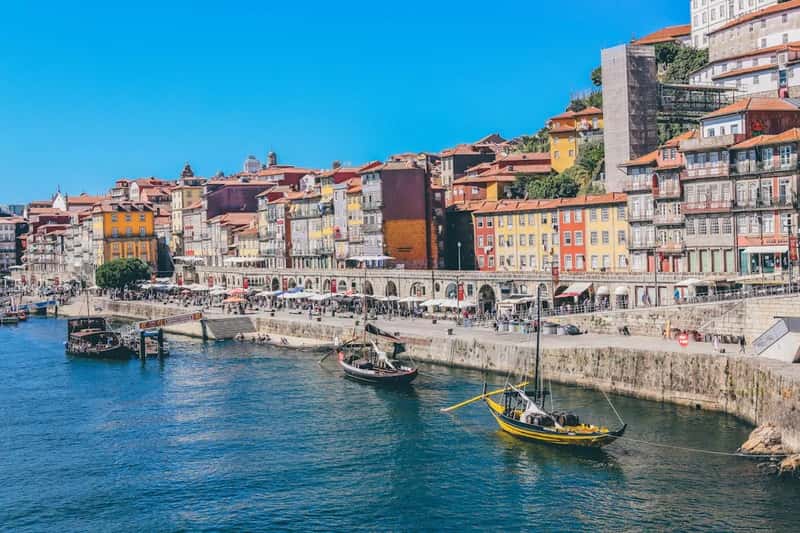
Porto tends to strike the best balance for retirees who still want city amenities without capital city prices. Porto offers the best balance of urban amenities and affordability, with excellent healthcare, a vibrant cultural scene, beautiful architecture, and costs 15 to 25 percent below Lisbon, meaning a single retiree in Porto can live comfortably on 1,600 to 2,400 euros per month. The Algarve, by contrast, often demands a car and slightly higher transportation costs, even as housing outside the main tourist strips stays relatively reasonable.
One-time relocation and setup costs

Beyond the recurring monthly budget, retirees need a cushion for the costs of actually getting settled. This includes rental deposits, which typically run one to three months’ rent upfront, movers or shipping for belongings, furniture for an unfurnished rental, and setting up phone, internet, and utility accounts. None of these are enormous individually, but they add up quickly in the first few months.
It’s also worth setting aside an emergency fund beyond the strict visa savings requirement, since unexpected costs, from a delayed paperwork process to a sudden need to travel home, are common during the first year abroad. Retirees who buy property rather than rent face additional one-time costs tied to property transfer tax and notary fees, which can meaningfully affect the total price tag of settling into a new home in Portugal.
What it all adds up to
Retiring in Portugal in 2026 still costs meaningfully less than staying put in most of the US, UK, or Western Europe, but the gap has narrowed from what it was five years ago. Housing and tax changes are the two forces reshaping the calculation most, while food, transit, and everyday healthcare remain genuine bargains. The country hasn’t stopped being a smart retirement choice; it’s just become one that rewards careful budgeting over blind optimism.