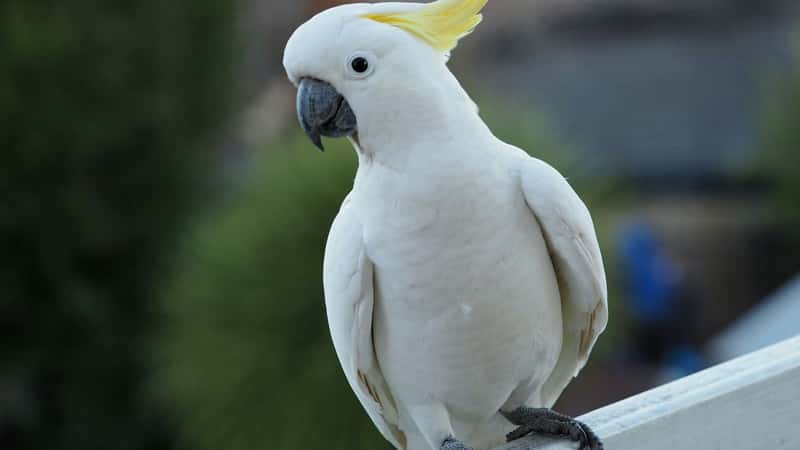
Hong Kong’s urban cockatoos could be a genetic lifeline for Indonesian ancestors – Image for illustrative purposes only (Image credits: Unsplash)
A small group of yellow-crested cockatoos has taken root in Hong Kong’s crowded streets and parks. These birds, all descendants of escaped pets, now number around 200. Their presence may prove decisive for a species on the brink in its native range.
The Species Faces Severe Decline
The yellow-crested cockatoo remains critically endangered across Indonesia and Timor-Leste. Fewer than 2,000 individuals survive in the wild. Habitat destruction and decades of trapping for the pet trade have driven the losses.
Four subspecies exist, yet several island populations have already disappeared. One lineage once found on Lombok is now considered locally extinct. Without new sources of genetic material, recovery options narrow quickly.
Urban Birds Reveal Unexpected Diversity
Researchers examined the DNA of Hong Kong’s feral population and compared it with museum specimens. The city birds carry genetic signatures from every recognized subspecies. More than half trace to the Lombok lineage that no longer exists in the wild.
Despite their small size and city setting, the birds show high genetic diversity. This level matches many established wild parrot groups. The finding challenges the usual view of introduced urban animals as biologically limited.
Study lead author Astrid Andersson of Hong Kong University noted the broader lesson. “Instead of dismissing urban, introduced populations as ecologically redundant, we should view them as potential ‘Biodiversity Ark’ that can actively help prevent extinction,” she said in a press release.
Conservation Value and Remaining Questions
The Hong Kong group represents roughly 10 percent of the species’ global population. Its mixed heritage could supply missing genetic variation for future breeding or reintroduction programs. Such input might strengthen resilience against disease or environmental change.
Uncertainty remains about how well these urban birds would adapt if moved to Indonesian forests. Their long isolation in a dense city raises questions about behavior and disease exposure. Further field tests and health screenings would be needed before any transfer.
Still, the genomic data already shifts the conversation. Urban feral populations can serve as living repositories rather than simple curiosities.
Next Steps for Protection
Wildlife managers now have a clearer picture of where key genetic lineages persist. Targeted monitoring in Hong Kong could track breeding success and health trends. Parallel efforts in Indonesia might explore safe ways to incorporate this diversity into recovery plans.
The case illustrates how escaped pets can sometimes become unexpected assets. Continued study will determine whether this particular ark delivers lasting results.