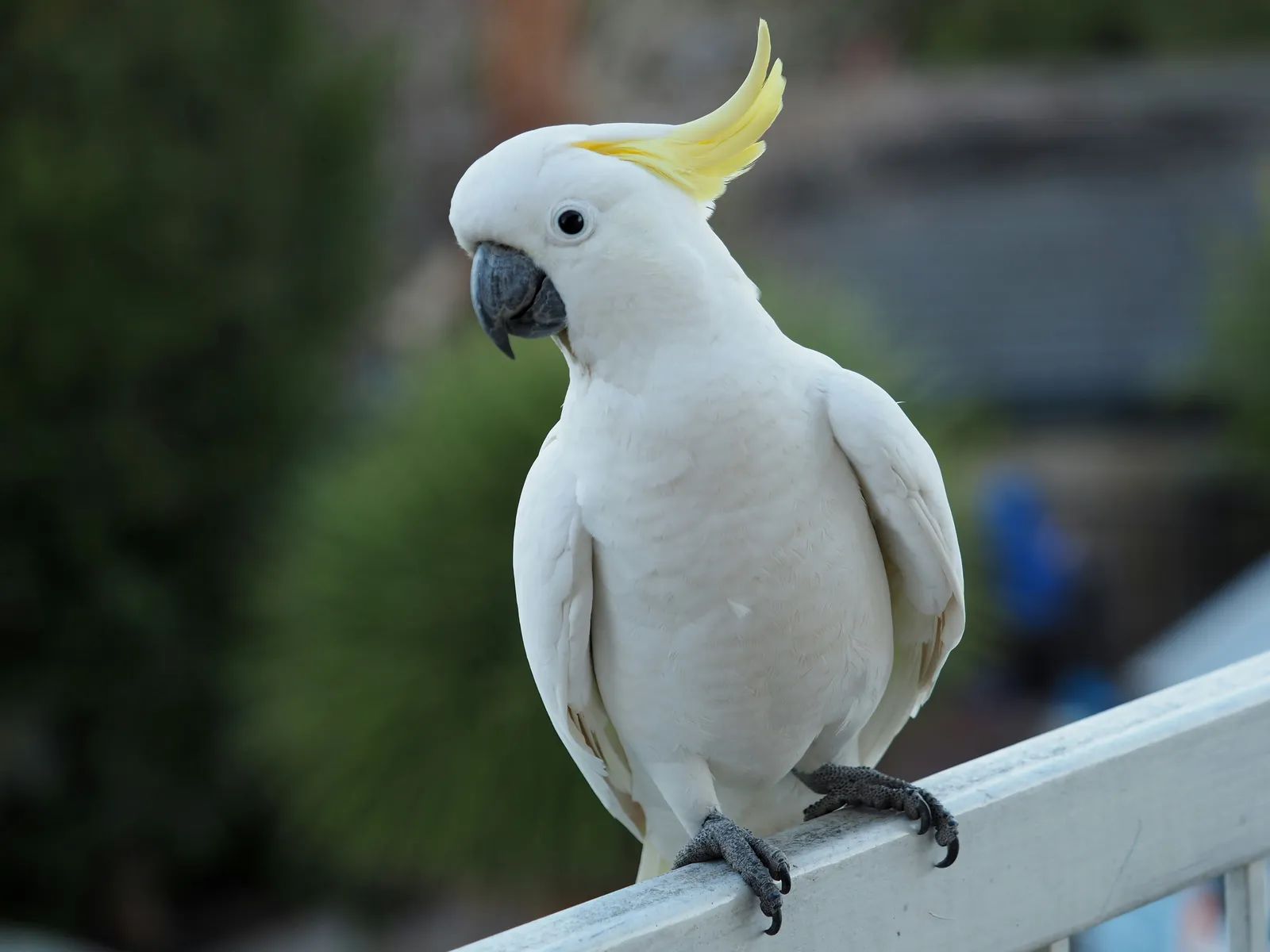
Hong Kong – Urban development and severe weather have sharply reduced the natural nesting options for one of the world’s rarest parrots. The yellow-crested cockatoo remains critically endangered, with fewer than 2,000 individuals left in its native range across eastern Indonesia and Timor-Leste. Roughly 200 of the birds now live in Hong Kong, descendants of escaped or released pets, and their numbers have held steady thanks to legal protections and the absence of predators. Yet more than 60 percent of the tree hollows they once used have disappeared, creating what researchers describe as a housing crisis for the foot-long species. ([1])
Loss of Natural Nesting Sites
Tree hollows serve as the primary breeding sites for these cockatoos, offering protection from the elements and predators. In Hong Kong’s dense cityscape, however, storms and routine tree maintenance have eliminated most of those cavities. The birds lack the option to relocate to less crowded areas, forcing them into competition for the remaining suitable spots. This shortage directly limits breeding success and places additional pressure on an already small population.
Response Through Artificial Nest Boxes
Biologist Astrid Andersson of the University of Hong Kong and arborist Harry Wong responded by forming HK Cockatoo Watch. They adapted nest-box designs originally developed in Australia to suit Hong Kong’s humid conditions and equipped the boxes with internal cameras for remote monitoring. The first installations took place in March 2025. By late 2026 the team had placed 15 boxes in public parks and on school grounds, including St. Louis School and ISF Academy. The effort focuses on providing immediate shelter while gathering data on breeding behavior that can guide future conservation steps.
Community and Research Benefits
Schools and local residents participate directly in the project, giving students hands-on exposure to wildlife monitoring. The cameras allow researchers to observe nesting activity without repeated disturbance, improving the quality of collected information. Wong, who previously worked on bee conservation, has emphasized practical coexistence between the birds and the city. The boxes also create opportunities to study how the Hong Kong population adapts to an entirely artificial nesting environment.
Looking Ahead
The initiative demonstrates how targeted interventions can address specific habitat gaps in highly modified urban settings. Continued monitoring will show whether the boxes support higher breeding rates and whether the approach can be expanded. For now, the project offers both immediate relief for the cockatoos and a clearer picture of what the species needs to persist in one of the world’s most built-up environments.