The room is dark, the shower won’t start and the TV is a black rectangle. So you call the front desk and quietly blame the hotel. Hotel engineers get these calls constantly, and many end the same way: someone walks in, presses one button or taps one card, and everything suddenly works.
These 16 “breakdowns” were really safety features, energy savers or design choices nobody explained to the guest. A few take ten seconds to fix. One is a building-wide decision that no thermostat can override. And the #1 culprit is the one nearly every traveler has blamed on the hotel.
#16 – The “Dead” TV That Was Just Listening to the Wrong Input
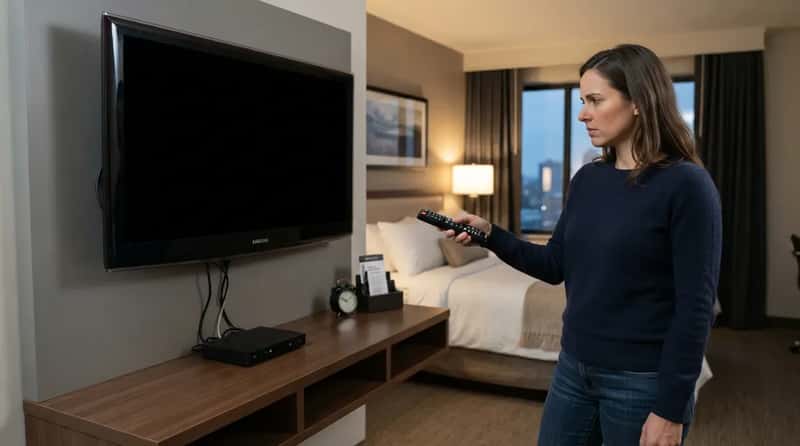
A black screen feels like a hard failure, so guests call the desk. But many hotel TVs are tied into a central system. If the last guest switched to a game console, a casting device or an HDMI port, the screen can sit there looking dead. The TV is frequently fine. It’s just tuned to the wrong source.
A drained remote battery is another common cause. Some rooms also use a hotel-specific box that needs a minute or two to restart after a power blip. Cycling through the inputs, or unplugging the set for a moment, often brings it right back. Plenty of guests give up in under a minute, long before the fix would have kicked in.
#15 – The Key Card That “Stopped Working” Because Another One Was Made
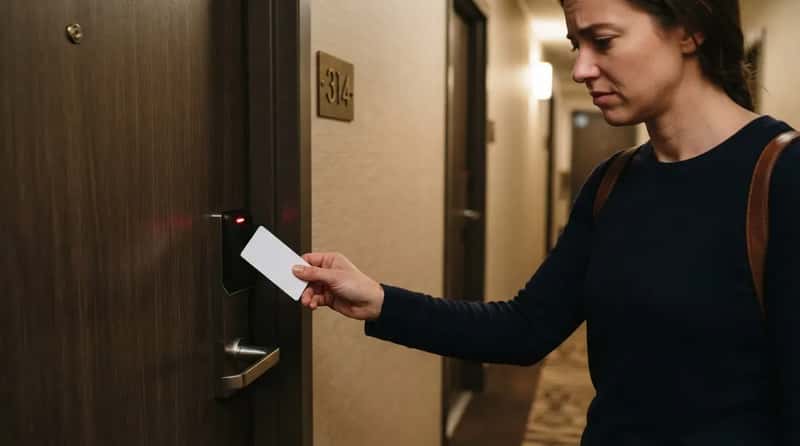
Few things feel worse than a blinking red light on your own door after a long travel day. Yet the lock is usually doing exactly what it was built to do. A card encoded for different dates or a different room simply won’t open the door. On some systems, a newly issued key can also cancel the older one.
Card damage is real, but it’s rarer than people think. Many modern cards use RFID rather than a magnetic stripe, so the old “my phone wiped it” story often doesn’t hold up. A low lock battery is a separate problem. A quick re-encode at the desk usually settles it before anyone declares the room broken.
Worth Knowing
- A card made for the wrong dates or room is the most common reason for a red light.
- Asking for a duplicate key can quietly cancel the card already in your pocket.
- Many newer cards are RFID, so a phone in the same pocket is rarely the villain.
- If several cards fail in a row, the lock’s battery is the more likely suspect.
#14 – The Pitch-Black Room That Wakes Up When You Slot the Card In
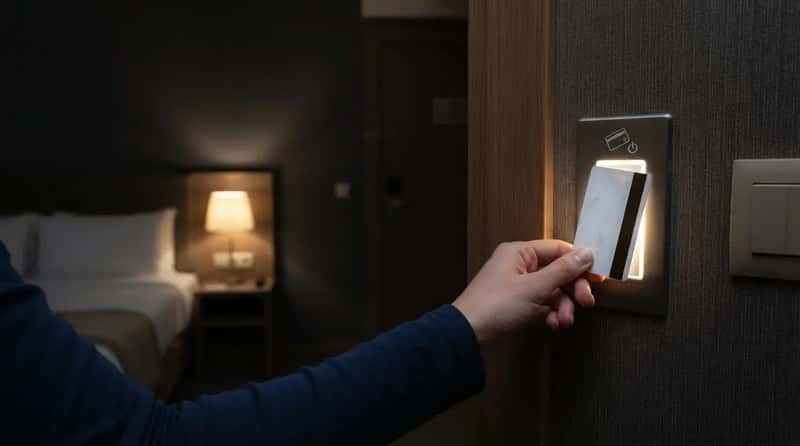
You step inside, flip every switch and get nothing but darkness. Cue the power-outage report. The truth is that many rooms use a card-slot energy saver that cuts power to the lights and some outlets whenever a key isn’t inserted.
It keeps lamps and TVs from burning all day in an empty room. Some travelers hate it and call it a gimmick, while many engineers see it as one of the cheapest efficiency tools a hotel can install. Other rooms use a motion sensor instead, and those can briefly lose track of someone sitting very still.
#13 – The Dead Bathroom Outlet That Needed One Button Pushed
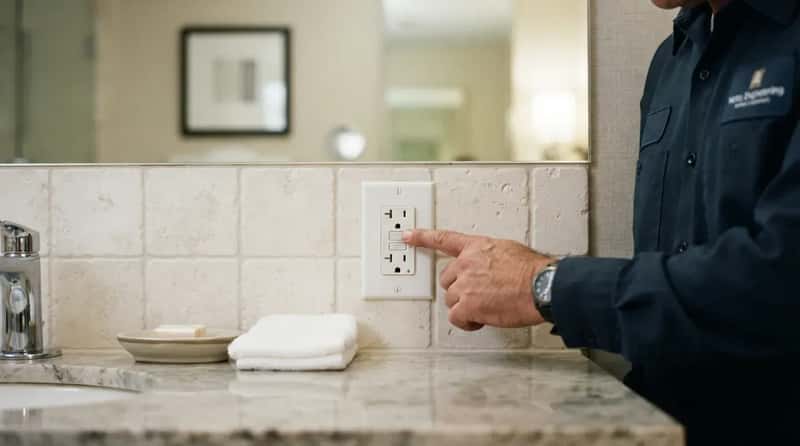
Bathroom outlets are usually built to shut off at the first sign of trouble. These are GFCI outlets, and they can trip from moisture or a surge and look completely dead until someone presses the reset button. In many rooms, that button sits right on the outlet.
Sometimes the “broken” outlet is simply switched, tied to a wall switch or the key-card system. Engineers often say the first move is to look for the little TEST and RESET buttons. A tripped GFCI is the device doing its job, not failing at it.
#12 – The Hair Dryer That “Died” With a Reset Button Hiding on the Plug
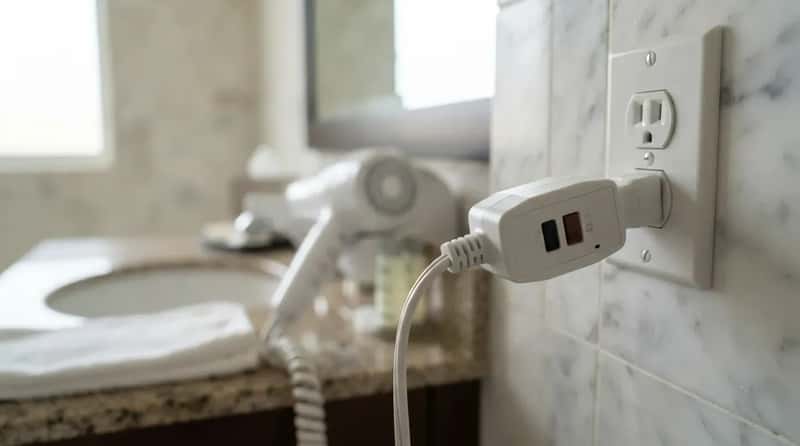
You switch it on and get silence. Guests often report a dead dryer, and it feels like the perfect way to ruin a morning. But many hair dryers have a safety plug with a small reset button built in, and it can trip if the cord gets wet or something shifts.
Look at the plug, or the cord just behind it, and you may spot a tiny TEST/RESET module. This kind of protection is common on U.S. hair dryers and is meant to reduce shock risk around sinks and tubs. Another frequent cause is a lint-clogged filter at the back, which triggers the overheat protection. Let it cool, wipe off the lint, and it often comes back to life.
#11 – The Shower That Wouldn’t Start Until Someone Pulled a Tiny Knob
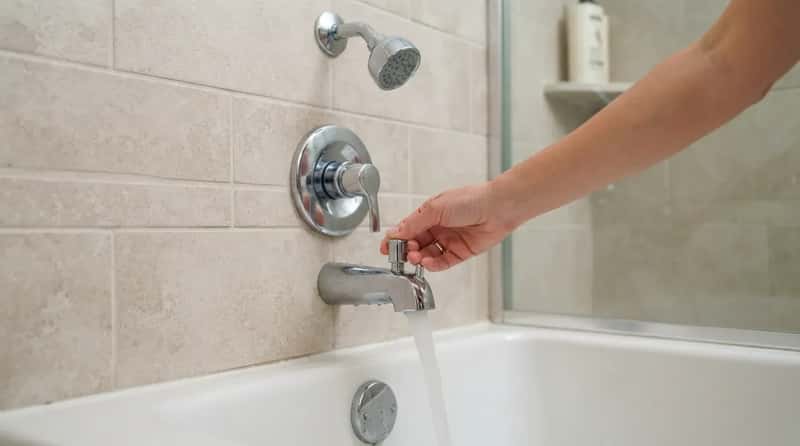
Water pours out of the tub spout while the showerhead stays bone dry. This is the classic diverter. Plenty of tubs rely on a small knob or lever that you pull up or push to send water to the showerhead. Newer designs can be sneaky, with a button on the spout or a lever you rotate.
A sticky diverter can happen with mineral buildup, but a true failure isn’t the usual story. Many guests also read the handle backwards, especially on pressure-balancing valves that don’t work like old two-handle faucets. Spending a minute exploring the handle’s full range often solves it.
#10 – The Water That Takes Forever to Get Hot Because the Boiler Is Miles Away (Almost)
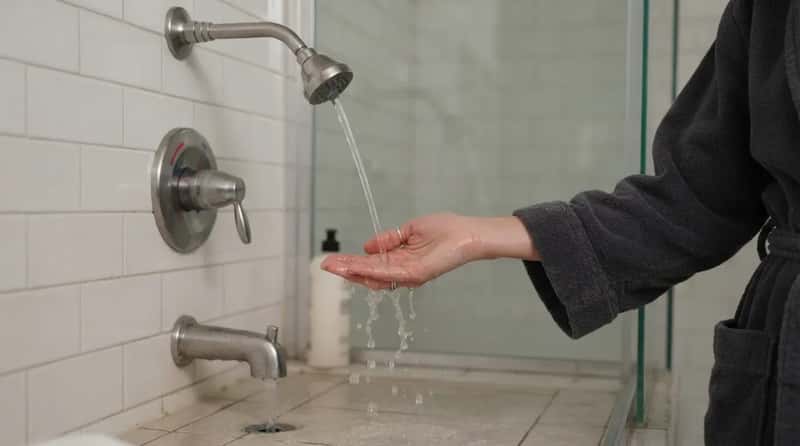
You stand there watching cold water run and assume the heater is down. In a big hotel, though, the hot water may have to travel a very long way from the central boiler to your tap. Many buildings use a recirculating loop to keep it close to the rooms, but long pipe runs still add delay.
Peak times make it worse. At 7 a.m., when dozens of rooms are showering at once, the wait can stretch. Federal rules also cap showerhead flow at 2.5 gallons per minute, so water moves through the pipes more slowly. A call to the desk makes sense only if you’ve waited several minutes with no change at all.
At a Glance
- Distance: long pipe runs mean more cold water has to clear out before hot arrives.
- Timing: early morning is when the most showers run at once.
- Flow: federal showerhead limits mean a slower trip through the pipes.
- When to call: several minutes of cold water with no change at all.
#9 – The Weak Flush That’s Really a Water-Saving Design
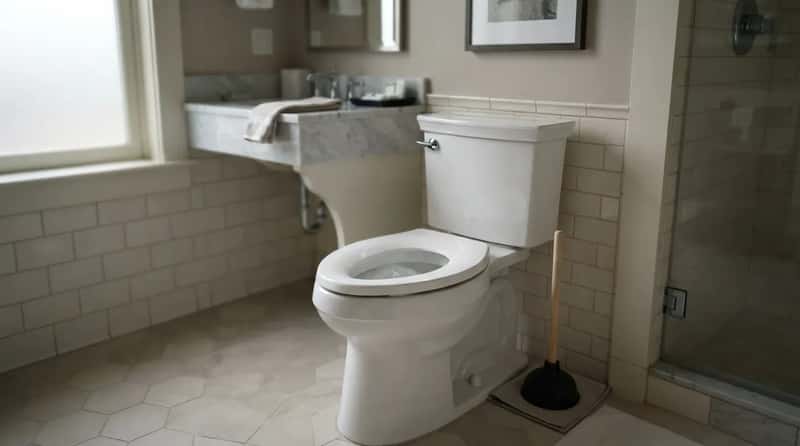
A toilet that doesn’t flush with a roar feels wrong, so guests report it. But modern toilets are built to use far less water. The federal maximum is 1.6 gallons per flush, and WaterSense-labeled models use 1.28 or less. In a building with hundreds of flushes a day, that adds up fast.
Some people say low-flow toilets are a downgrade. Engineers counter that today’s bowl designs do more with less water. A true clog is still possible, which is why a plunger sits in the bathroom. A slow refill, on the other hand, is usually perfectly normal.
#8 – The Mini-Fridge That Isn’t Icy Because It Was Never Built to Chill Fast
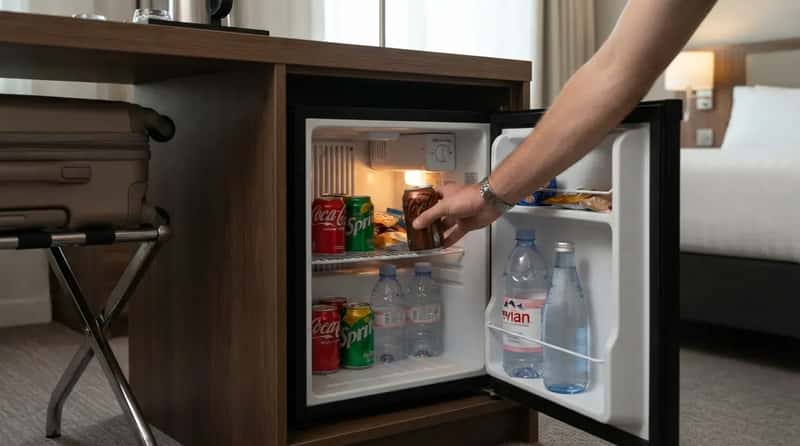
You slide in a warm soda, and an hour later it’s still not cold. Reports of a broken fridge pour in. Many mini-fridges are small, quiet units that aren’t designed to cool a pile of warm drinks quickly. They’re far better at keeping cold things cold.
Some rooms use thermoelectric or absorption models that run silently but cool less than a standard compressor fridge. A dial set too low or a door left slightly ajar can make things worse. Give it a few hours, and don’t pack it so tight that air can’t circulate.
#7 – The Window That Won’t Open Because Someone Decided It Shouldn’t
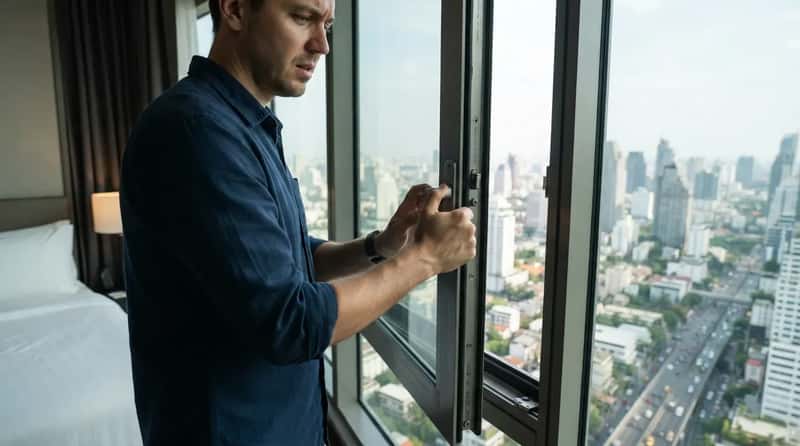
You reach for the latch, push, and nothing moves. Many guests feel trapped and report a stuck window. In truth, fixed windows are often intentional, tied to safety on upper floors, climate control and building codes. An open window can also upset the HVAC balance and let in humid air that invites mold.
Critics say a sealed room with no fresh air is a rip-off, especially with a gorgeous view outside. Engineers point out that a closed building lets the air conditioning work the way it was designed to. Where windows do open, they often have limiters that stop them after a few inches.
#6 – The Sewer Smell That Was Really a Bone-Dry Drain
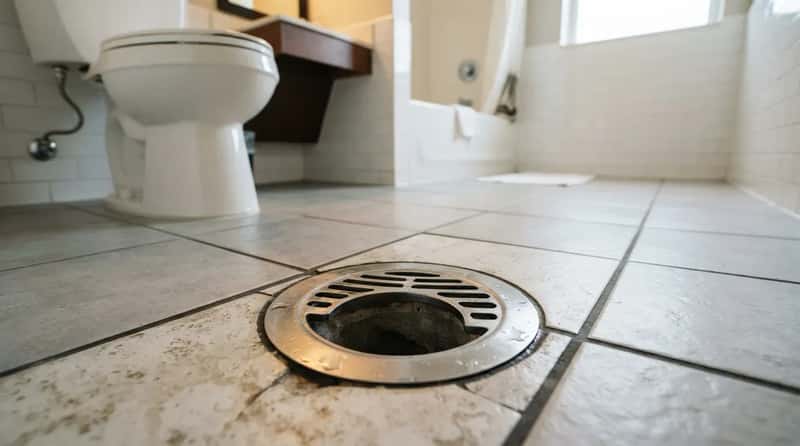
You step into the bathroom and catch a whiff of sewage. Naturally, you assume a pipe has burst. In reality, the usual cause is a dry P-trap, the curved piece of pipe that normally holds a small plug of water to block sewer gases.
In a room that sat empty, that water can evaporate and let the smell creep up. Rarely used tubs and floor drains can do the same thing. Running the taps and flushing for a while refills the trap, often within minutes. A smell that sticks around after that is worth reporting.
#5 – The Elevator That Ignored You Until You Tapped Your Key Card
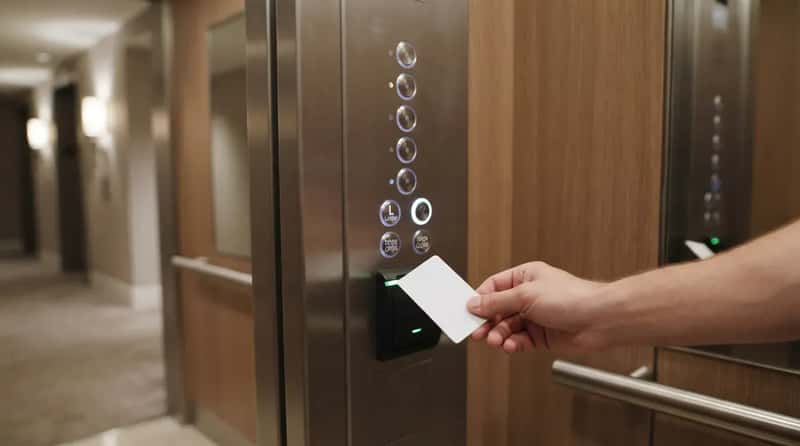
You press the button for your floor and nothing happens. Reports of a broken elevator follow. In fact, many hotels use card readers that only let guests reach certain floors. That’s a security feature, not a malfunction.
Skip the card tap and the button may do nothing, or the car may head somewhere else entirely. Elevators can also slip into special modes like fire service, maintenance or priority runs. Some hotels use destination dispatch, where you choose your floor on a keypad before you ever step inside. Tapping your card first can save you a very awkward call.
Fast Facts
- Card readers limit which floors a guest can reach, usually for security.
- Fire service and maintenance modes can override normal button behavior.
- Destination dispatch asks for your floor before you board.
- If the buttons are lit but the car won’t move, a card tap is the first thing to try.
#4 – The Hot Tub That’s “Not Hot Enough” on Purpose

You slip in expecting a steaming soak and get something closer to a warm bath. Guests report that the heater is out. But the recommended maximum for hot tubs is 104°F, a safety limit in the Model Aquatic Health Code.
That can feel mild next to a spa at home. A closed sign can also look like a breakdown when it’s really a water-chemistry check, such as disinfectant or pH levels being off. Engineers would rather keep a pool closed for an hour than risk anyone’s health.
#3 – The “Dying” Air Conditioner That’s Just Doing Its Cycle
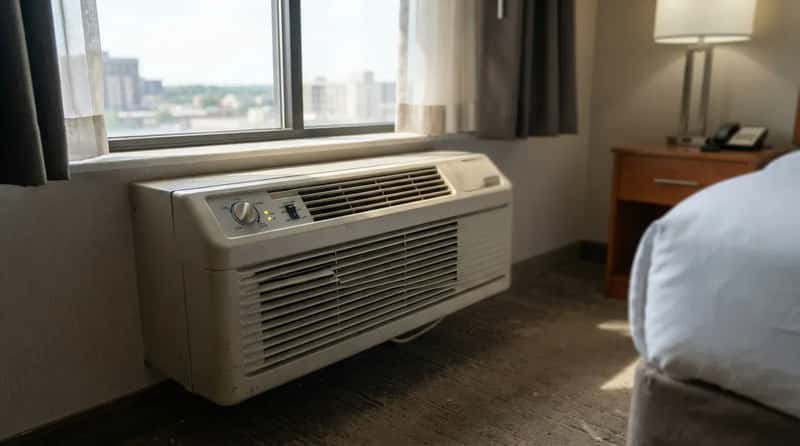
Many rooms use a through-the-wall unit, often called a PTAC. You hear a hum, a click and then a rumble, and you assume the machine is on its last legs. That on-and-off pattern is the compressor and fan cycling to hold your set temperature.
Some noise is normal, especially a fan on high or a compressor starting up. A rattle or grinding is different and worth reporting. The “fan auto” setting produces more clicks as the unit starts and stops, while “fan on” hums steadily. Travelers argue endlessly about which one is better.
Quick Compare
- Fan auto: quieter stretches, with clicks and rumbles each time the unit starts or stops.
- Fan on: a steady hum that some guests find easier to sleep through.
- Rattle or grinding: not part of the normal cycle, so report it.
#2 – The Room That Blows Cold on a Freezing Night Because the Whole Building Is Set One Way
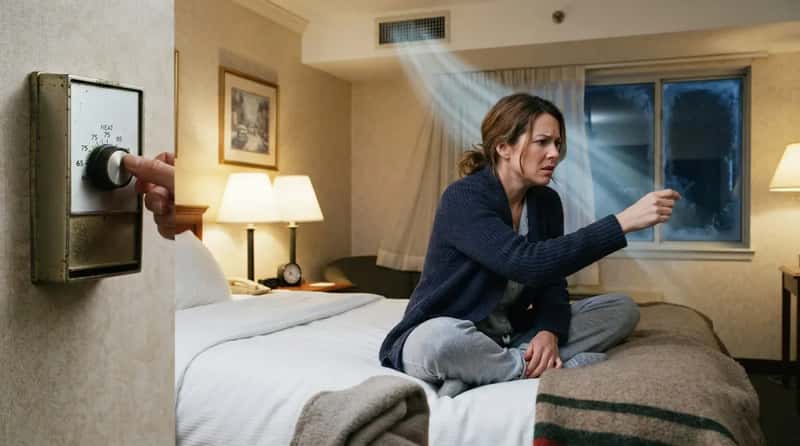
It’s a chilly evening, so you crank the heat and cold air keeps blowing. Many guests call it a broken system. But some buildings use a two-pipe system that can supply either hot or chilled water to every room, but not both at once.
During shoulder seasons, the building may be set to cooling while the nights turn cold, or the other way around. Switching over is a big job for the engineers and can’t be done on a whim. Guests feel ignored, but the hotel may be waiting for the weather to settle. Extra blankets are a common fix, and some hotels will move you to a room on a different system.
#1 – The “Down” Wi-Fi That Was Really a Login Page Hiding From You

You connect and nothing loads, so you report the internet as down. But a lot of hotel Wi-Fi problems come from the login page never appearing, not from the network itself. Phones can skip the pop-up if they’re using a private address or a VPN.
Many phones now randomize their hardware address for privacy. That can make the hotel network treat your phone as a brand-new device and ask you to sign in again. Too many devices on a single room login can cause trouble too. Forgetting the network and reconnecting, or opening a plain web page to trigger the login, often fixes it. If it still fails after that, the network may really be the issue.
Look back over all sixteen and a pattern shows up. A hidden reset button, a card slot, a dry drain and a two-pipe system all look like failures from the bed. Most were safety features, energy savers or building limits that nobody bothered to explain.
Real faults do happen, and a problem that won’t quit deserves a call. But next time the room goes dark or the water won’t run, take one breath first. The fix might be a single button away.