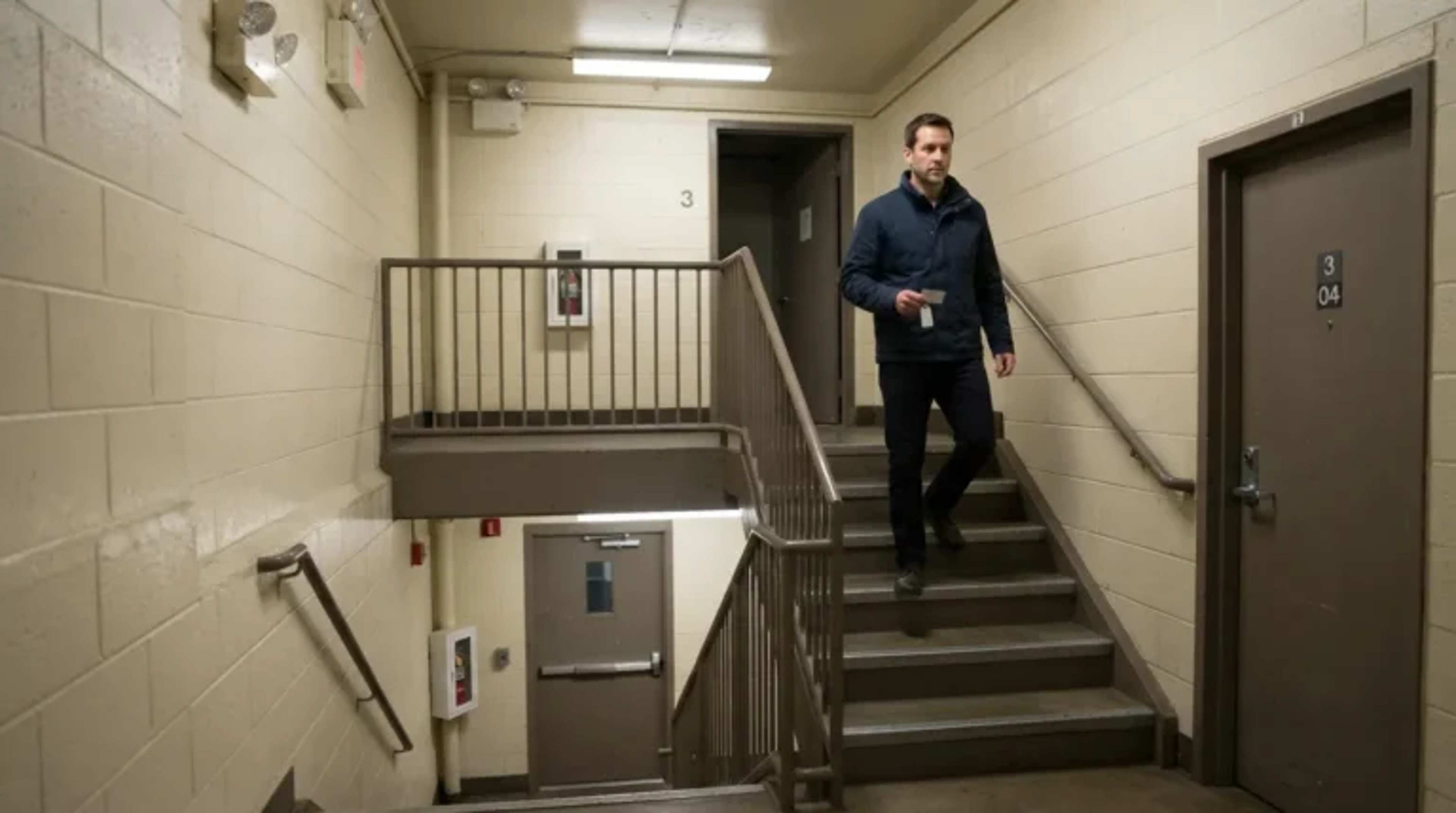
You checked in, you fell asleep, and you woke up assuming nothing happened while you were out cold. Meanwhile, the person behind the front desk was running a financial closeout, playing security guard, and talking someone off a ledge emotionally, sometimes all in the same ten minutes.
Ask anyone who’s actually worked the graveyard shift at a hotel, and they’ll tell you the real chaos doesn’t start at check-in. It starts right after midnight, when the lobby goes quiet and everything guests never see starts breaking loose. Here’s what actually happens behind that desk while the building sleeps.
#24 – The Ice Machine Meltdown Nobody Warns Guests About
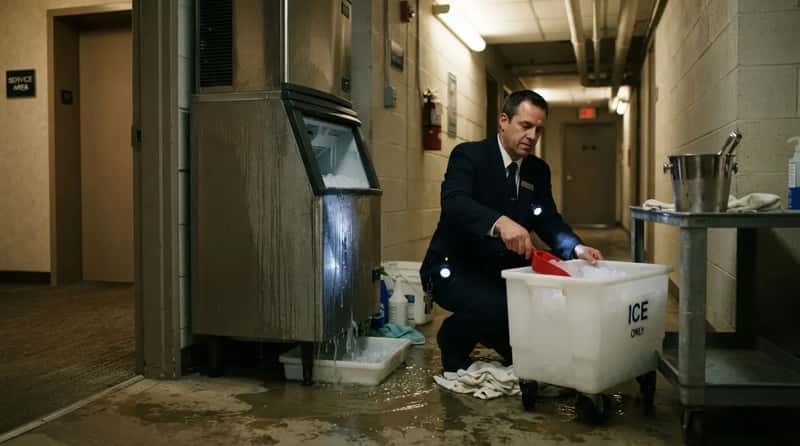
It sounds trivial until it’s 1 a.m. and forty guests from a wedding block all want ice at the same time. Night managers keep a mental map of every working machine on property, because the “official” one on the guest floor plan is usually the one that’s broken.
The fix is rarely glamorous. It’s a bucket run from the kitchen freezer, a borrowed cart from banquets, or a quiet voicemail left for engineering to handle in the morning. Guests never see any of it. They just notice their drink is cold.
#23 – Wake-Up Calls That Almost Didn’t Happen
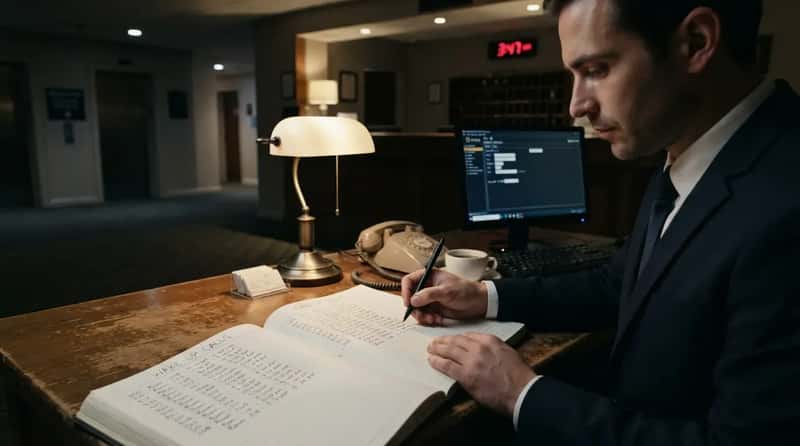
Automated wake-up systems fail more often than hotels like to admit, especially after a power blip or a software update overnight. A missed 4 a.m. call can mean a guest misses a flight, so night managers often quietly build a manual backup list just in case.
Some properties still hand-write the wake-up sheet on paper as insurance against the software glitching. It’s an old-school habit that survives for one reason: it works when the technology doesn’t.
#22 – The Lost Phone That Turns Into a 3 a.m. Investigation
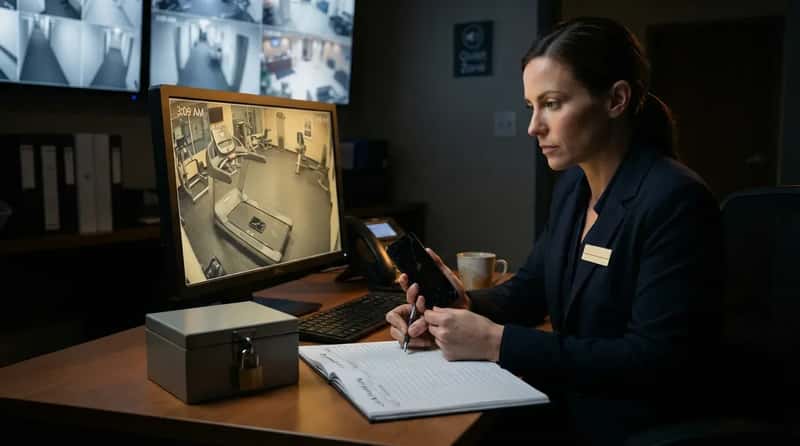
Lost and found doesn’t sleep, and neither does the guest who left their phone in the gym at 11:45 p.m. Night managers pull hallway camera footage, check the fitness center log, and page housekeeping supervisors just to track down one item.
Most hotels quietly keep a locked overnight lost-and-found box separate from the daytime one, because items reported after midnight get mixed up otherwise. It’s a small system, but it can save someone’s entire morning.
#21 – Wi-Fi Outages That Spark More Complaints Than Broken AC
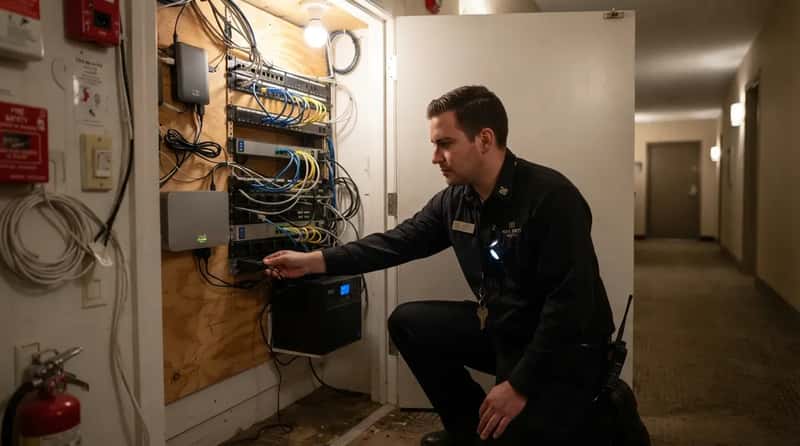
Internet drops are one of the most common overnight complaints in hotels, and a technician almost never shows up to fix them until sunrise. Night managers instead reboot routers floor by floor, a manual process most guests never realize is happening in a utility closet somewhere above their heads.
A single router reset can quiet ten angry emails before they’re ever written. It’s unglamorous work, but it’s often the actual difference between a five-star review and a one-star rant.
Fast Facts
- Internet complaints are one of the most frequently logged issues on overnight shift reports.
- Router resets are usually done remotely, sometimes from a closet far from the guest floor.
- Full IT support is rare after midnight outside of large convention or business hotels.
- A five-minute reset often resolves the complaint before a guest even finishes typing an email.
#20 – The Valet and Parking Lot Standoff
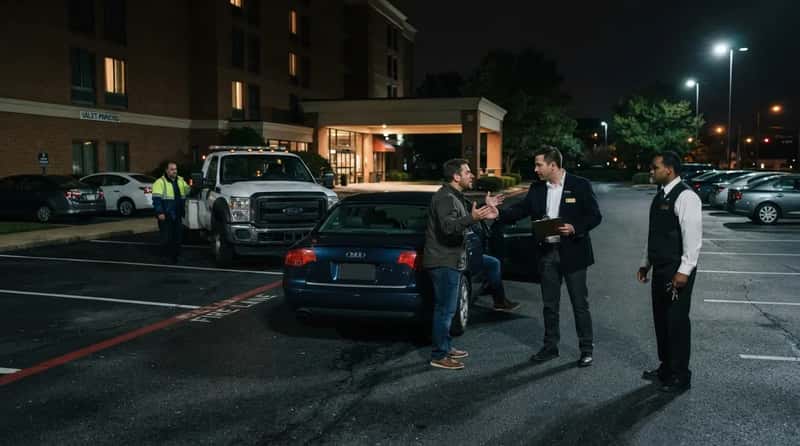
Overnight parking disputes happen more than most guests expect, especially at hotels near stadiums or nightlife districts where non-guests try to sneak into the lot. Night managers are frequently the ones walking outside at 2 a.m. to sort out a towing situation or a car blocking the fire lane.
Many properties quietly tow non-guest vehicles overnight without ever telling daytime staff it happened. It’s logged, handled, and forgotten by sunrise.
#19 – The Key Card That Stops Working at the Worst Time
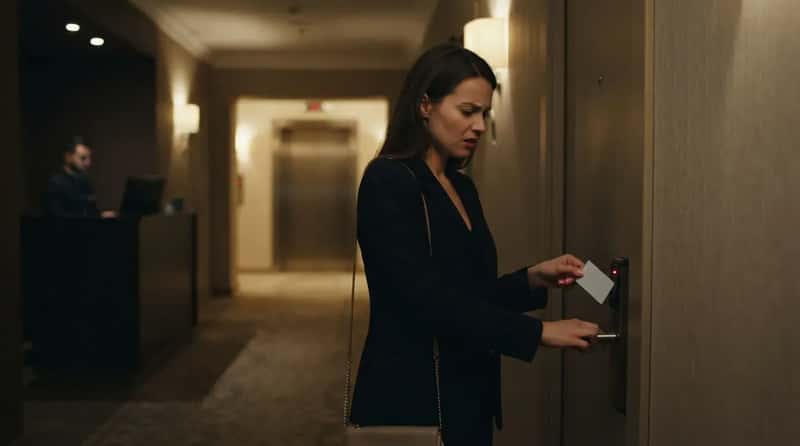
Magnetic key cards demagnetize easily near phones, other cards, and even some room safes, and it almost always happens the moment a guest gets back from a late night out. Night managers reissue keys constantly overnight, sometimes multiple times for the same room in a single night.
Longtime front-office staff say the overnight desk resets more keys between midnight and 6 a.m. than the front desk does during the entire rest of the day combined. It’s one of the quiet reasons the “quiet” shift stays so busy.
#18 – The Smell Complaint That Triggers a Room Reassignment

Smoking in a non-smoking room is one of the most common overnight disputes, and it usually surfaces only after a new guest checks in and immediately smells it. Night managers have to relocate the incoming guest, document the violation, and flag the room for a deep clean before it can be resold.
Some brands charge a cleaning fee north of $250 for this exact violation, and the night manager is often the one who has to break that news to a stunned guest at 1 a.m.
#17 – Late-Night Room Service Requests When the Kitchen Is Closed

Not every hotel runs 24-hour dining, but guests still ask for food well after the kitchen shuts down for the night. Night managers often keep a small stash of snacks, coffee, or basic amenities behind the desk specifically for these moments.
It’s rarely written into any job description, but it’s one of the fastest ways to defuse a hungry, frustrated guest before a complaint turns into a bad review the next morning.
#16 – The Room That Housekeeping Never Finished
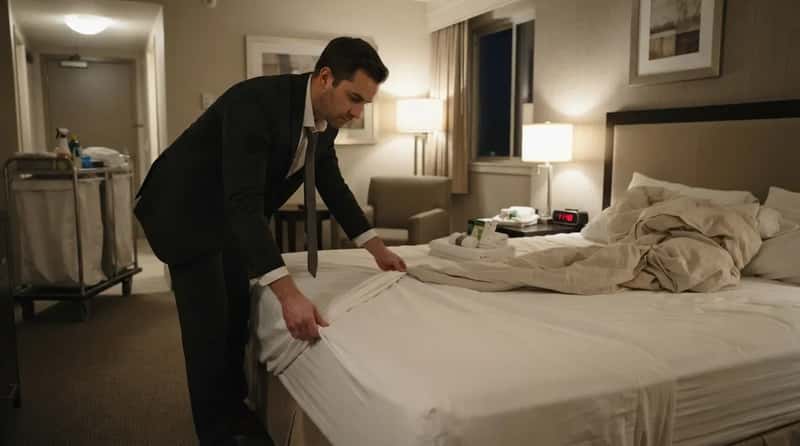
A late checkout or a callout on the evening housekeeping shift can leave a room unready for a guest arriving after 11 p.m. Night managers are often the ones stripping beds or doing a rush clean themselves, simply because there’s no housekeeping staff left on property.
In smaller and mid-scale hotels, the overnight employee is expected to step into almost any role the night demands, from housekeeping to maintenance to security, purely because no one else is there to do it.
#15 – The Declined Card That Nearly Ends in a Police Call
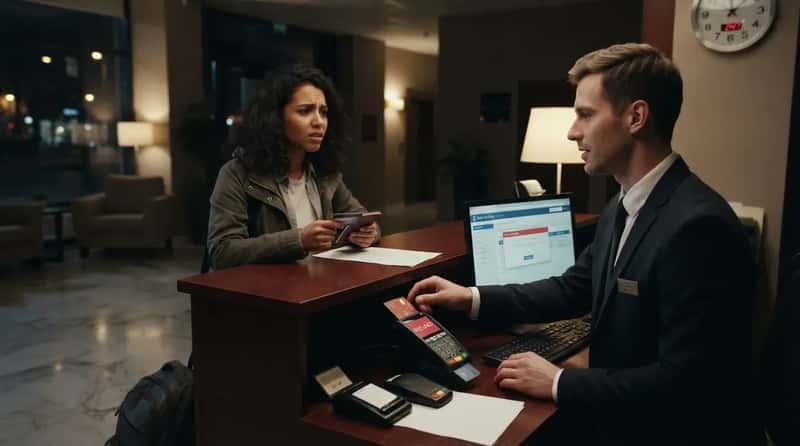
Credit card declines happen constantly overnight, especially with international travelers whose cards get flagged for fraud after a time-zone jump. Night managers have to calmly explain the situation, try backup payment methods, and sometimes hold a room without full payment until morning.
Disputed charges can be reversed through a card issuer’s chargeback process, and most issuers give guests roughly 60 to 90 days to file one if a hotel fails to deliver what was booked. Night managers know this, which is exactly why they try to resolve payment issues on the spot instead of letting them escalate into a formal dispute.
#14 – The Double-Booked Room Nobody Caught Until Check-In
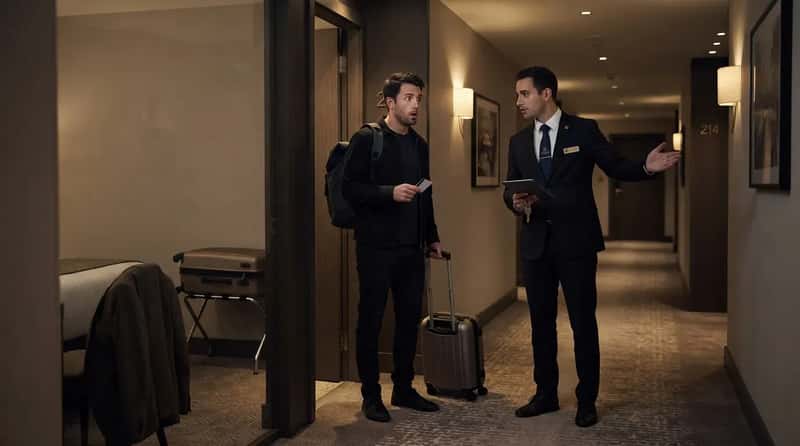
Property management systems occasionally assign the same room to two different reservations, usually from a glitch between the booking engine and the front desk software. It almost always surfaces at night, when the second guest arrives to find someone else’s luggage already sitting in “their” room.
The fix usually means a last-minute upgrade or a quiet relocation, handled so smoothly that neither guest ever realizes the system made the mistake in the first place.
Quick Compare
- Software glitch: Booking engine and front-desk system fail to sync in real time.
- Manual override: A staff member re-assigns a room without updating the system.
- Third-party sync delay: An online travel agency booking posts late, landing on top of an existing reservation.
- The fix: A quiet upgrade or relocation, handled before either guest notices the overlap.
#13 – The Wedding Party That Won’t Go Back to Their Rooms

Group blocks and wedding afterparties are one of the most predictable overnight headaches in the hotel business. Night managers are the ones fielding noise complaint calls from other guests, then physically walking the hallway to break things up themselves.
Many hotels now require a security deposit specifically for wedding room blocks, a policy that exists almost entirely because of what happens after midnight, not during the reception itself.
#12 – The Air Conditioning Unit That Dies in July
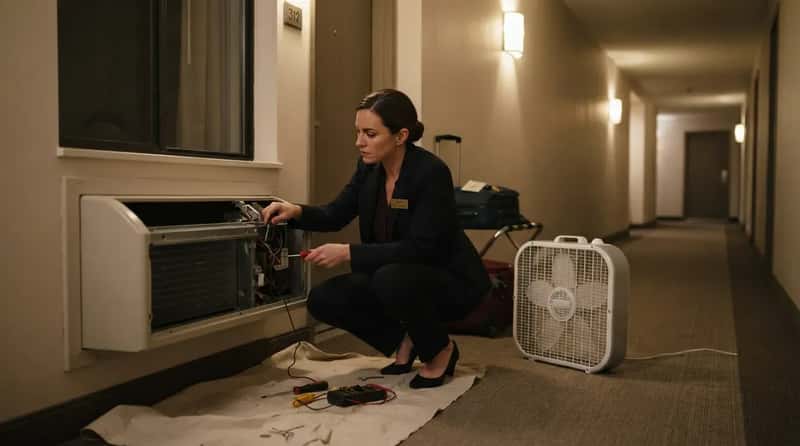
HVAC failures overnight are one of the top maintenance emergencies in hotels, especially in older properties running unit-by-unit systems instead of centralized climate control. With no engineering staff on-site until morning, night managers often have to relocate guests or drag in portable fans themselves.
A single broken unit on a sold-out summer night can trigger a chain of room moves across an entire floor, all coordinated by one person standing at the front desk.
#11 – The Elevator That Gets Stuck Between Floors
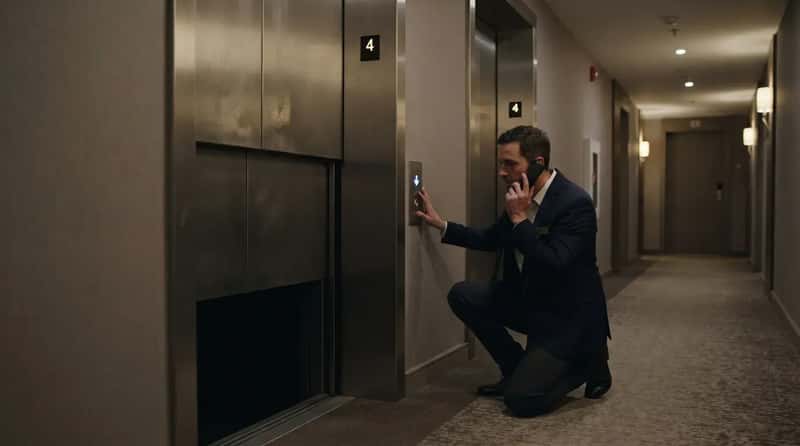
Elevator entrapments are rare, but not as rare as guests assume, and they almost always happen during off-peak hours when fewer people are around to notice quickly. Night managers are trained to call the elevator maintenance line immediately and stay on the phone with trapped guests until help physically arrives.
Most properties treat this as a top-priority safety incident, on par with a fire alarm, precisely because it involves a guest who cannot free themselves without outside help.
#10 – The Flood That Starts With One Loose Pipe
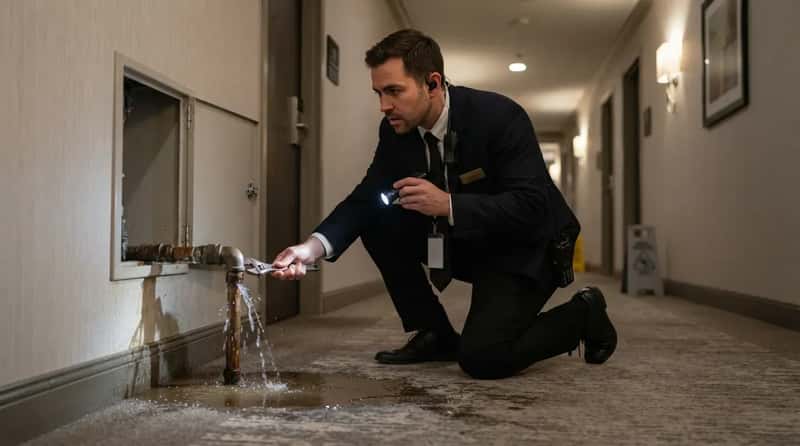
Plumbing failures overnight can escalate fast, turning a slow drip into a flooded hallway within an hour if nobody catches it early enough. Night managers often do their own late-night walkthroughs specifically to catch leaks before they reach a guest room below.
A single unnoticed leak can damage multiple floors overnight, which is exactly why hallway checks are treated as essential, not optional, in most full-service hotels.
#9 – The Power Outage That Tests Every Backup System
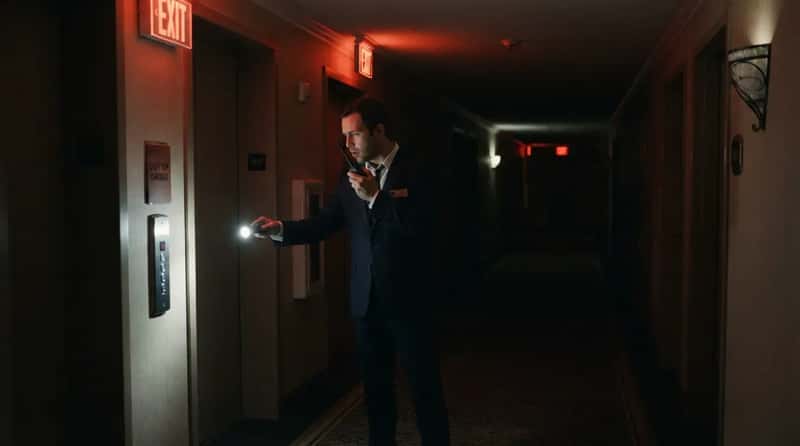
Outages hit harder overnight because guests are asleep, elevators may be occupied, and exit lighting suddenly becomes critical instead of decorative. Night managers activate emergency protocols, check elevators for trapped guests, and call the local utility for a restoration estimate, often all within the first few minutes.
Backup generators don’t always cover every system in the building, which means the overnight team sometimes has to manually check room by room to make sure nobody is stuck in the dark.
#8 – The Fire Alarm That Goes Off for No Reason
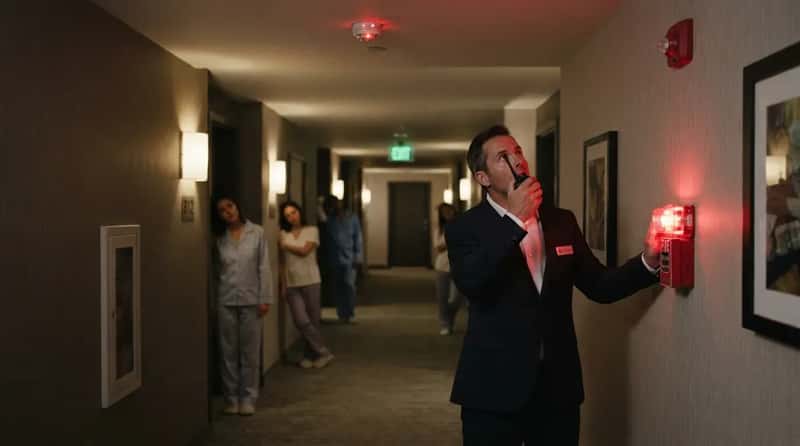
False fire alarms are one of the most common overnight disruptions in hotels, often triggered by shower steam, burnt microwave popcorn, or a sensor that’s simply worn out. Night managers still have to treat every single alarm as real until it’s confirmed otherwise, which means evacuating hallways and calling the fire department regardless of the odds.
Ignoring even a suspected false alarm is against protocol at almost every branded hotel, because the cost of being wrong once is far higher than the inconvenience of checking every single time.
#7 – The Noise Complaint That Turns Into a Confrontation
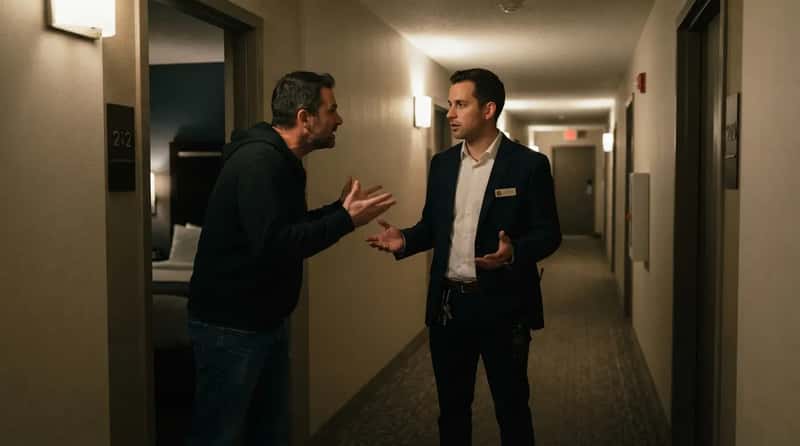
Noise disputes between rooms are one of the most frequent calls night managers field, and they require a level of in-person conflict resolution daytime staff rarely deal with. In smaller properties, the overnight employee handles it completely alone, with no security backup and no manager to call if things go sideways.
You’re the manager, the security guard, and the peacekeeper all at once, and there’s nobody else coming to help you at 3 a.m.
Anonymous hotel night auditor, industry forum testimonial
It’s one of the least discussed parts of the job, and by most accounts, one of the most stressful.
#6 – The Books That Have to Close at Midnight, No Matter What
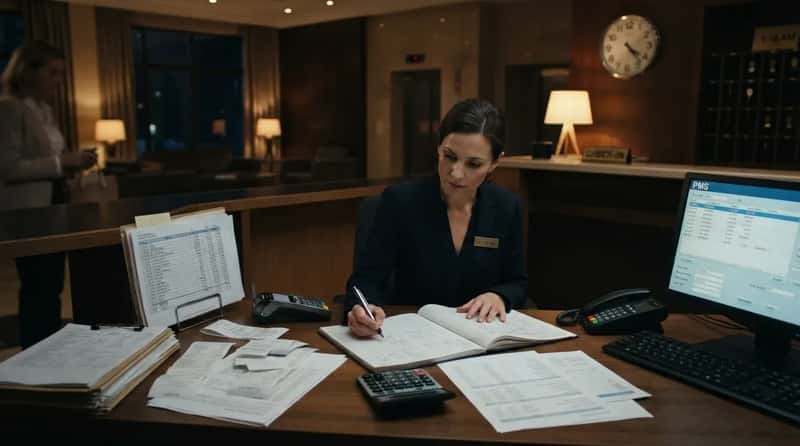
Every single night, hotel revenue technically closes at midnight, whether or not the front desk happens to be slammed handling guests at that exact moment. Night managers are responsible for reconciling room revenue, cash, and card transactions from the day that just ended, even while a late check-in is standing at the counter.
A guest walking in at 1 a.m. still has to be recorded against the night that already closed, which means the auditor is essentially working two calendar days at once. It’s one of the strangest quirks of hotel accounting, and almost no guest ever realizes it’s happening around them.
Worth Knowing
- Room revenue technically closes at midnight regardless of how busy the front desk still is.
- A guest checking in at 1 a.m. is recorded against the day that already closed on paper.
- The night auditor effectively balances two calendar days during a single overnight shift.
- Cash, card, and room-revenue totals all have to reconcile before the new business day officially opens.
#5 – The Guest Who’s Had Too Much and Won’t Leave the Lobby

Intoxicated guests are one of the most delicate situations night managers deal with, because the goal is always de-escalation, never confrontation. Calling the police is treated as a last resort, used only when safety is genuinely at risk for staff or other guests nearby.
Many properties train overnight staff to quietly walk a guest back to their room rather than making a scene in a public lobby, protecting both the guest’s dignity and everyone else trying to sleep upstairs. It rarely makes the morning shift report, but it happens far more often than most travelers assume.
#4 – The Stranger Who Shouldn’t Be in the Building
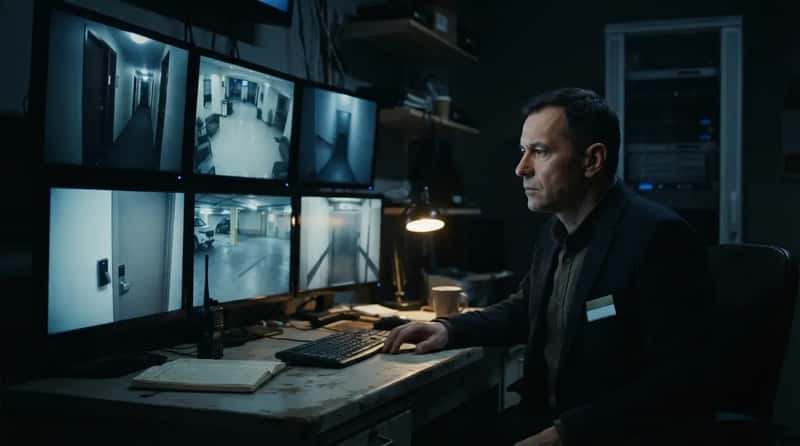
Unauthorized visitors and trespassers are a real overnight security concern, especially at hotels near entertainment districts or highway exits. Monitoring cameras, alarm systems, and access control is a core part of the overnight role, and in smaller hotels, the front desk employee is effectively the only security guard on property.
Some hotels have quietly upgraded key-card access to stairwells and side entrances specifically because of overnight incidents guests never hear about. It’s one of the least visible parts of hotel safety, and one of the most important.
#3 – The Card That Was Used Fraudulently at 3 a.m.
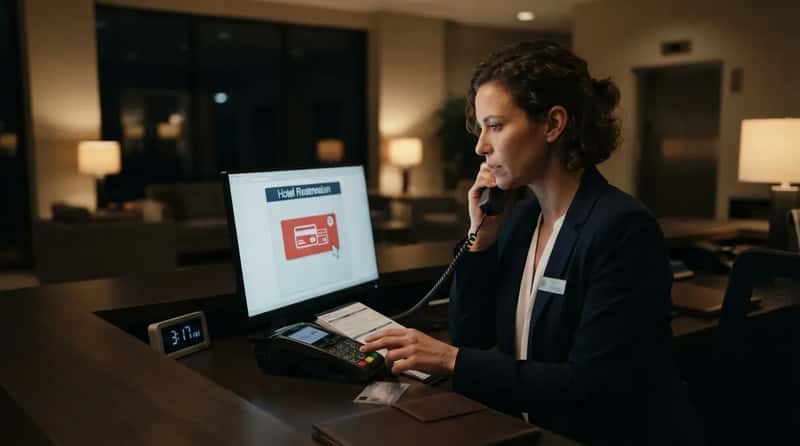
Overnight is a common window for stolen or cloned card attempts, since fraud monitoring teams and bank fraud departments are often slower to respond in the middle of the night. Night managers frequently have to hold a reservation, request a second form of payment, or quietly flag a transaction for review once the sun comes up.
A disputed overnight charge can trigger a chargeback claim if the payment turns out to be fraudulent or the service wasn’t delivered as promised. It’s a financial safety net most guests never think about until the moment they actually need it.
#2 – The Overbooked Night That Ends With a Guest Getting “Walked”
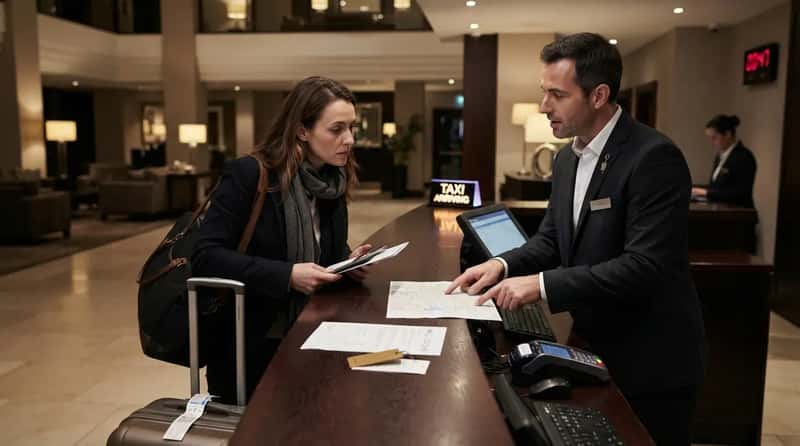
Hotels routinely overbook rooms by anywhere from 5 to 15 percent to offset no-show rates, and most nights the math works out just fine. But on the nights it doesn’t, a night manager has to tell an exhausted guest, sometimes fresh off a delayed flight, that their confirmed room simply isn’t there anymore.
Getting “walked” to another hotel is more common than the industry likes to admit, and outside of a handful of states like Florida, there’s no federal law requiring hotels to compensate guests for it. Compensation is almost entirely up to brand policy and the night manager’s own judgment call, which is why some guests walk away with a free night and points, while others get little more than an apology.
At a Glance
- Hotels typically overbook by roughly 5 to 15 percent to offset expected no-shows.
- Only a few states, including Florida, have specific walked-guest compensation rules.
- Most brands leave compensation entirely to manager discretion and loyalty program policy.
- A “walk” usually includes a comparable or better room at a nearby property, paid for by the original hotel.
#1 – The Medical Emergency No One Saw Coming
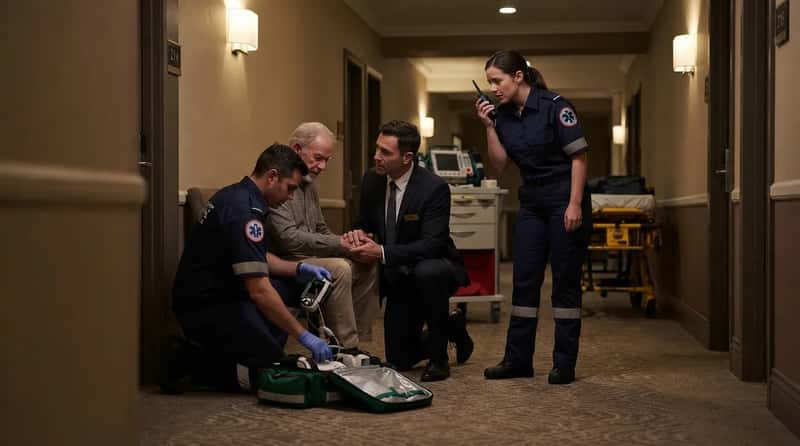
Of everything a night manager handles, a guest medical emergency carries the highest stakes and the least room for error. Whether it’s a fall, a cardiac event, or an allergic reaction, the overnight employee is often the first person on scene, calling 911, guiding paramedics through unfamiliar hallways, and staying with a frightened guest until help arrives.
There’s no daytime manager to hand this off to at 3 a.m., and in many smaller properties, the night auditor is the only staff member on the entire floor. It’s the single moment the job quietly becomes something closer to first responder than front desk clerk, and it’s the reason experienced night managers say this shift changes how they see the job for good.
Add it all up, and the overnight shift looks less like a quiet babysitting job and more like a one-person emergency room, accounting office, and security post rolled into a single desk. Guests sleep through almost all of it, which is exactly the point. The best night managers make chaos invisible by morning, and you never even know their name.