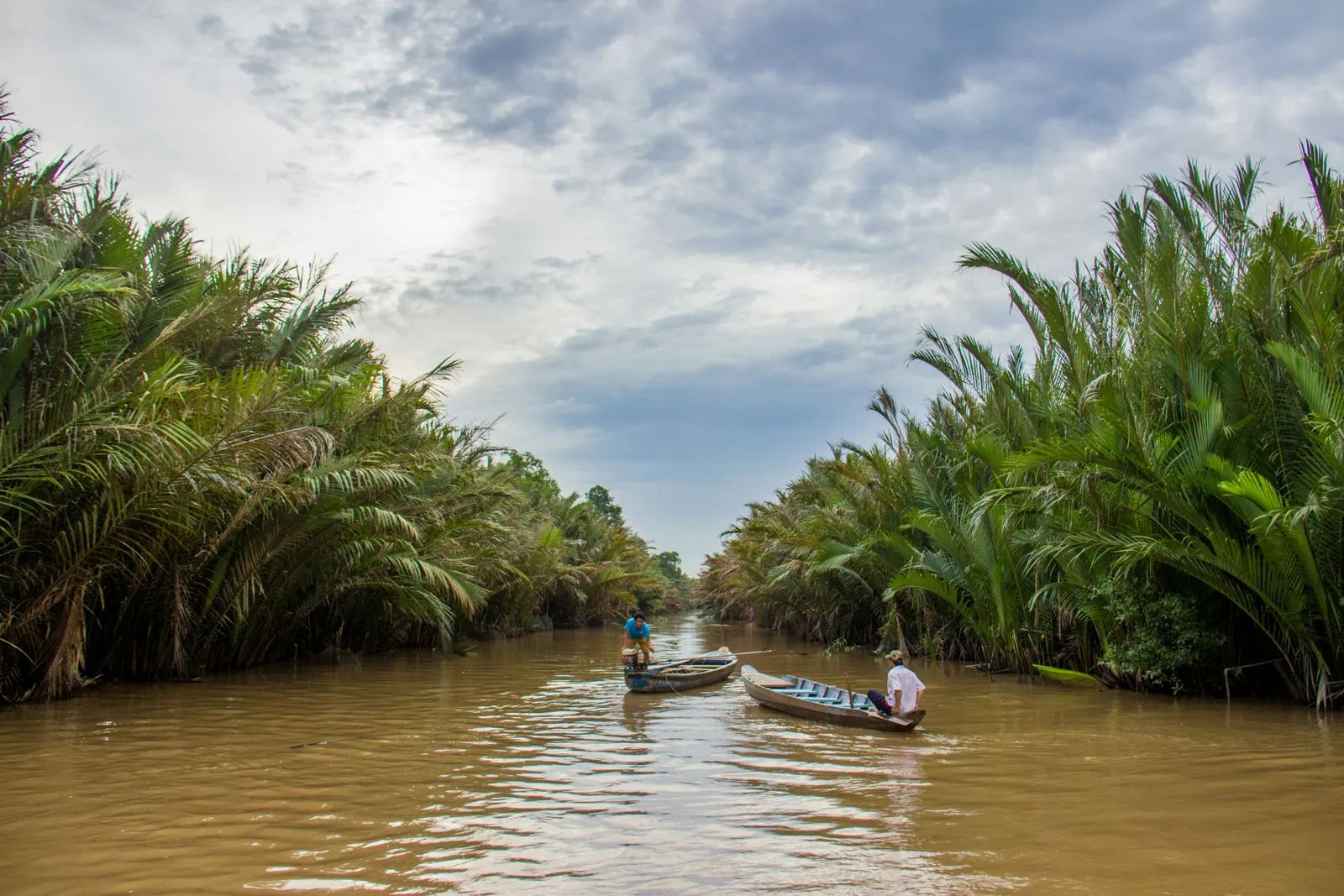
For centuries, the Mekong River reached the South China Sea through nine vast estuaries, a network that gave the river its Vietnamese name, Cửu Long, meaning “Nine Dragons.” Two of those channels now tell a story of loss, and the consequences are reaching the farmers who work along them. Mongabay has documented how a large structure in southern Vietnam is reshaping the delta ([1]).
The first dragon disappears under sand
During the 1960s, sand that built up through natural processes buried the Bassac River, the first of the branches to be lost. The river’s course was closed off by forces that no one planned or controlled.
The Ba Lai River now faces a different kind of threat. Rather than slow sediment, the pressure comes from a structure built by people, and its effects have been swift enough to alarm those who live beside the water.
A gate meant to keep out salt
More than two decades ago, a sluice gate began operating near the mouth of the Ba Lai. Its purpose was to hold back salt water and protect the surrounding land. Instead, the river has become a stagnant body of water where pollutants collect, and erosion along the coast has accelerated.
The project has also set local farmers against authorities. Resistance has at times become open, adding instability to a region that is already vulnerable to climate pressures.
- Shrimp farmers in Bình Đại, who must time their harvests around the gate’s water releases
- Fruit growers in the freshwater zone, whose pesticides and herbicides wash toward canals and the river
- Coastal residents, who face faster erosion and a waterway that no longer flows freely
Timing the harvest around the gate
On a cloudy day in September, a shrimp farmer in Bình Đại commune, in Vĩnh Long province, was working out when to pull his catch. He feeds two ponds, and during the rainy season, water pollution is his biggest worry. A single miscalculation could wipe out his entire stock. He asked to be identified by a pseudonym because the issue is sensitive.
His schedule depends on when the sluice releases water. That month, the gate was set to discharge on specific dates, so he planned to harvest a few days before them.
He also pointed to the fruit growers in the freshwater zone. In his account, the chemicals they apply stay on the ground, and when it rains, the runoff carries them into canals and the river. He summed up the problem in a short phrase: “The chemicals linger on the ground.”
A river still carrying its old name
The Mekong still bears the name of nine dragons, but the people living on its branches are more concerned with the next harvest than with the legend. Their daily decisions now depend on a gate that was built to solve one problem and has created several others.
The coming years will show whether the balance between protection and damage can be reset. For the farmers of the Ba Lai region, the question is practical. They want to know which channels will still support a living, and whether the water they depend on will remain usable for the generations that follow.