
A transatlantic ticket usually costs hundreds of dollars. A cash price in the teens sounds like a typo or a scam, so it helps to know where that number could come from. The answer is less dramatic than the headline suggests, and a lot more reproducible.
The $18 describes the cash a traveler hands over at checkout. It doesn’t describe the full value of the seat, because points do most of the work. This article walks through how that arrangement works in 2026, what the real costs look like, and where the numbers fall apart.
It Isn’t Really a Loophole

The trick is the transfer partner system that major banks run. Chase’s public pages name ten airline programs[1] you can move Ultimate Rewards points into, including Air France KLM Flying Blue, Virgin Atlantic Flying Club, Iberia, Aer Lingus and the British Airways Club. Most of these move at a one to one ratio[2], so a thousand bank points becomes a thousand airline miles.
Chase isn’t alone. Capital One Miles, Bilt Rewards, Citi ThankYou Points and Amex Membership Rewards[3] work the same way. The “loophole” is simply that bank points are flexible, while airline miles can be redeemed for seats priced far below the cash fare.
Why the Cash Price Can Shrink So Far

On an award ticket, the miles cover the fare, and you still pay government taxes and any carrier surcharges. Government taxes run from about $5.60 on a US domestic one way to $150 or more on long haul flights through high tax countries.[4] That range is the whole story behind a very small checkout total.
Surcharges are the wild card. Carrier imposed surcharges can range from nothing to well over a thousand dollars depending on the program[4], which means the same seat can cost wildly different amounts in cash. An $18 total only appears when both layers stay close to the floor.
Choosing a Program With Low Fees

Program choice matters more than most people expect. Flying Blue on a JFK to Paris economy award on Air France carries roughly $241 in taxes and fees[5], so it’s rarely the route to a tiny cash bill. Aeroplan, LifeMiles and United awards typically run under $100[6], which is a much better starting point.
Turkish Miles&Smiles sits in the middle. It passes along fuel surcharges that typically add $200 to $250 each way[6], though its mileage prices are low. For a rock bottom cash total, United metal is the cleaner target, since surcharges there typically land between $5.60 and $50 one way across the Atlantic[7].
Where You Start the Trip Changes the Bill

Departure country is a quiet but powerful variable. The UK is the most expensive place to start an award flight to the US[8], since Air Passenger Duty stacks on top of high airline surcharges. Southern Europe and Ireland barely tax departures at all.[8]
That pattern is why a flight home from Madrid or Lisbon can be so cheap. US airlines add no fuel surcharge on their own transatlantic award seats[8], so pairing a low tax departure city with a US carrier is the best case. One guide estimates that cash fees can stay under a hundred dollars even in business class[8] when surcharges are avoided.
Flying Blue Promo Rewards and the Monthly Discount
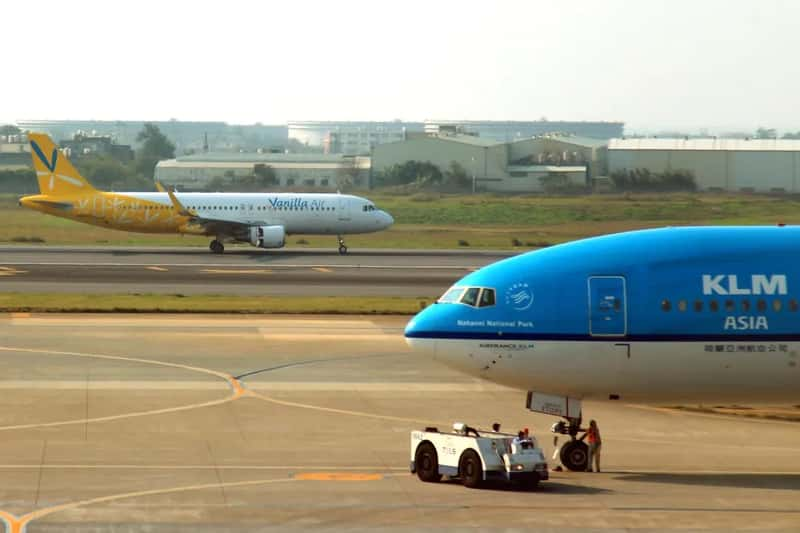
Flying Blue earns its reputation through discounts rather than low fees. On the first day of every month, it publishes Promo Rewards with up to a quarter off on selected routes.[9] Economy starts at 18,750 miles each way, and business class at 45,000.[10]
The October 2026 batch was valid for bookings through October 31[11], so a fresh list should appear in November. Routes rotate, which means your home airport may or may not be on the list in any given month. Promo awards carry the same 70 euro change and cancellation penalty as regular Flying Blue awards.[12]
Timing Your Transfers Around Bonuses

Banks periodically sweeten transfers, and patience pays. Flying Blue and Virgin Atlantic are bonused most often, twenty to thirty percent is the usual range, and offers tend to appear at the start of each month.[13] A twenty percent bonus means a 45,000 mile award costs 37,500 bank points.
Recent history shows how this plays out. Chase ran a thirty percent bonus to Virgin Atlantic from June 9 to July 14, 2026, and a twenty percent bonus to Flying Blue in May.[14] A Capital One bonus to the British Airways Club was also flagged this month, the first in close to a year.[13]
Confirm Seats Before Moving Any Points
Transfers can’t be undone. Never transfer points before confirming saver space, because transfers are one way.[15] Search the airline’s own site first, and note the flight numbers and dates.
Dynamic pricing makes this step more important than it used to be. Flying Blue has had no fixed award chart since 2018, and the price varies by flight, day and cabin.[9] A promo price you saw yesterday may not hold tomorrow, so verify the exact total before you commit.
Paying the Taxes With the Right Card

Even a tiny cash bill is a chance to earn something back. Using a card with bonus categories for travel can multiply the return. On a bill of about $408, a one point per dollar card earns 408 points, while the Amex Platinum would earn 2,042 Membership Rewards points.[16]
Credits can help too. Chase codes award taxes and fees as travel spend, which can trigger the Sapphire Reserve’s $300 annual travel credit.[16] Small amounts add up when the same card covers several trips.
Running the Numbers Before You Book
A low cash price doesn’t automatically mean a good deal. One 2026 analysis suggests that for transferable points, a redemption only makes sense when the cash fare divided by miles beats about four cents per mile[17]. If a fare is cheap in cash, points may be better saved for something pricier.
Surcharges can also wipe out apparent savings. A $382 fuel surcharge can erase the benefit of an award that looks $92 cheaper on paper.[18] Compare two programs and a cash quote on total out of pocket, counting points at what they cost you to earn.