
I’ve always wanted to visit Lichtenstein. If truth be told, there are no countries I don’t want to visit, but Lichtenstein has always fascinated me.
There’s something about Europe’s tiny duchies and principalities which I’ve long found enthralling. When I recently saw a video by travel creator Drew Binsky dubbing Lichtenstein the most boring country in the world, I was even more determined to visit. Even if just to prove him wrong.
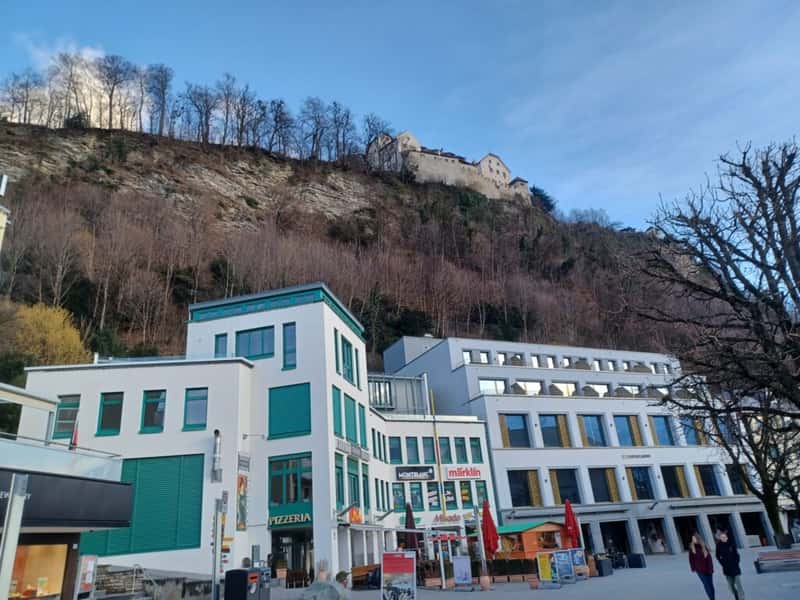
Where is Lichtenstein?
Lichtenstein occupies a 62-square-mile section of the Rhine Valley, along with some of the surrounding Alps. It’s hemmed in by Austria to the north and east, and Switzerland to the south and west. This makes reaching Lichtenstein at once both easy, and difficult.
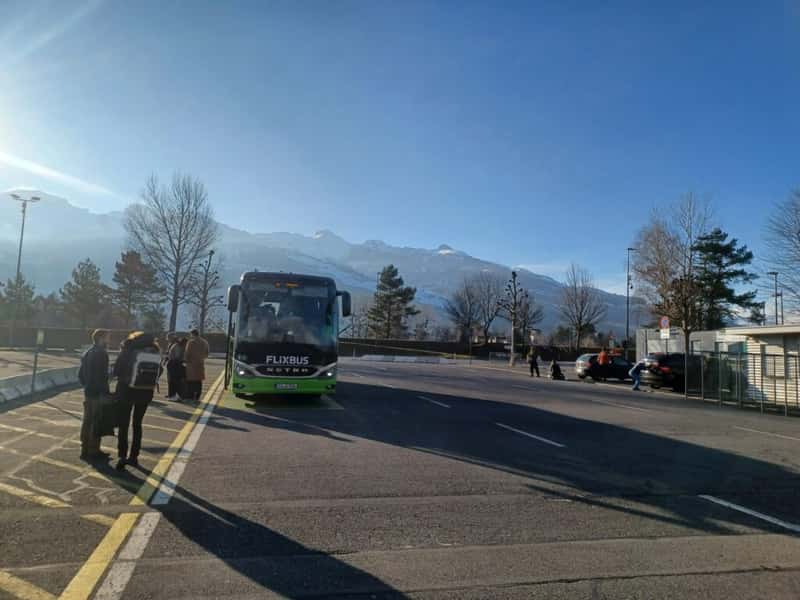
Although a very convenient stopping off point on an overland trip through Alpine Europe, visiting Liechtenstein on its own is rather time-consuming. There is no airport in the country, the nearest major gateways are Zurich, Switzerland and the smaller Friedrichshafen Airport in Germany. From there, you’ll need to drive or take a train.
Lichtenstein does have five railway stations, including one serving the capital, Vaduz. The only problem with the railway is that it doesn’t run at weekends and isn’t on a line that goes anywhere useful. For most, the way to reach Lichtenstein is to take the train to a border town in Switzerland or Austria, then hop on a bus.
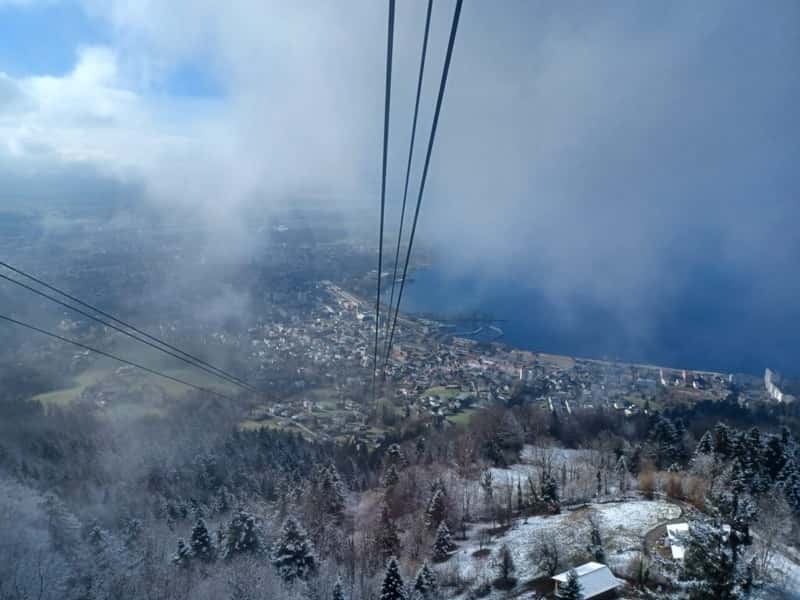
I’d spent a couple of nights in Friedrichshafen and worked my way along Lake Constance, or Bordersee in German, through Austria to Liechtenstein. My original plan had been to take a train to Feldkirch then cross the border by bus. Along the way though, I took a notion to get off the train at Bregenz for a trip on the Pfanderbahn cable car.
I then discovered there was a FlixBus from Bregenz to Vaduz which tied in perfectly with my timings. I booked one of the last few seats for the bargain price of €8.99 for a stunning ride through the Alps with an unusually cheerful driver who gave us all a guided tour along the way.
A Night in Vaduz
It was late afternoon by the time I checked into Hotel Vaduzerhof, so I dumped my bags and went straight out to make the most of what was left of the day. My first port of call, the tourist office. It’s almost a rite of passage for visitors to the principality to stop by for a gimmicky passport stamp. These cost €3 and are also available from a handful of souvenir shops.
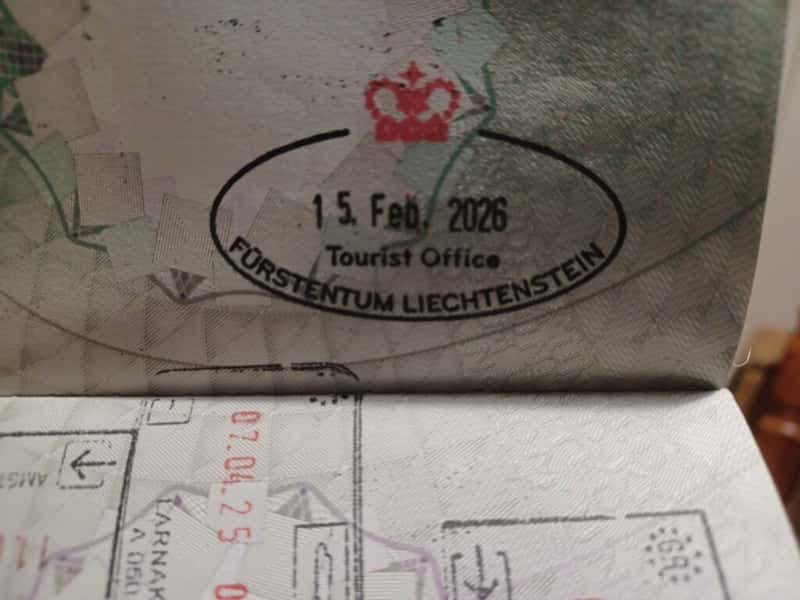
Somehow, my quick dash to the tourist office for a stamp left me €128 lighter and a bag of goodies heavier. When you’re told Lichtenstein is expensive, you’d better believe it. This tiny country is extremely wealthy and something of a tax haven. Indeed, Lichtenstein has more registered companies than it does citizens.
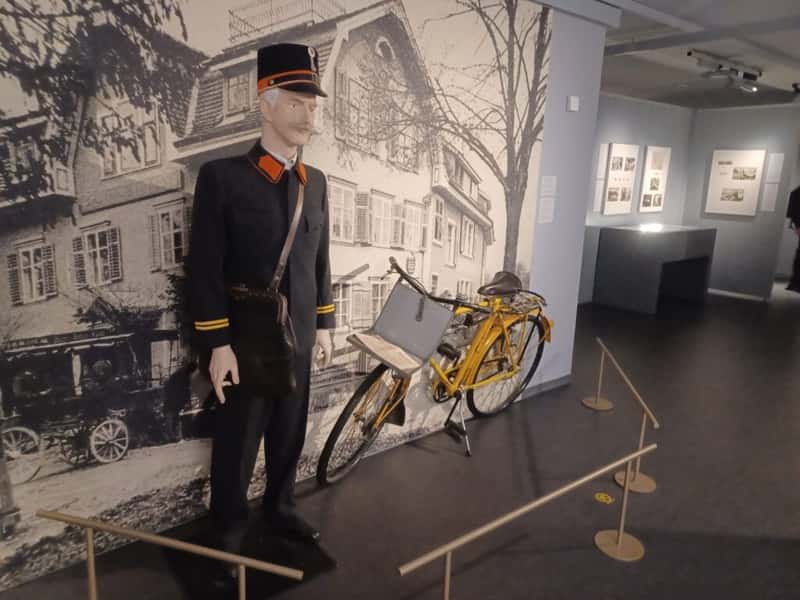
Feeling as if bankruptcy was imminent, I sauntered along the main street to the one place in Vaduz which costs absolutely nothing. Lichtenstein Postal Museum is a quirky little extension of the Landes Museum which details the history of the principality’s postal service since its formation in 1912. It was surprisingly interesting.
The upper floor was given over to a temporary modern art exhibition. Try as I might, I can’t appreciate modern art, but the other visitors seemed most enthralled by it.
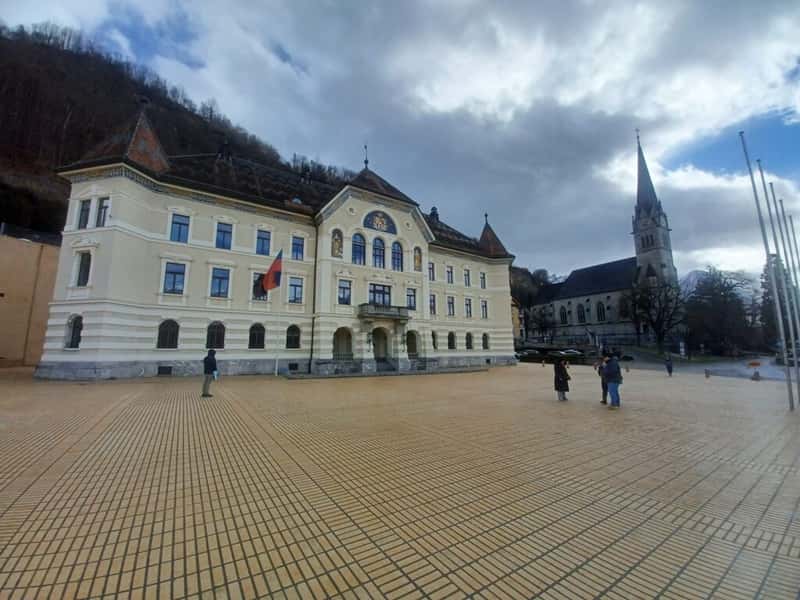
With pretty much everything closed by 5 pm on a Sunday, I retired to the Vaduzerhof to catch up on some work before heading out for dinner. Choosing a spot for said dinner required little thought; all but one restaurant was closed. Not being one for big decisions, this was rather a relief so I wandered back down the road to Restaurant Engels.
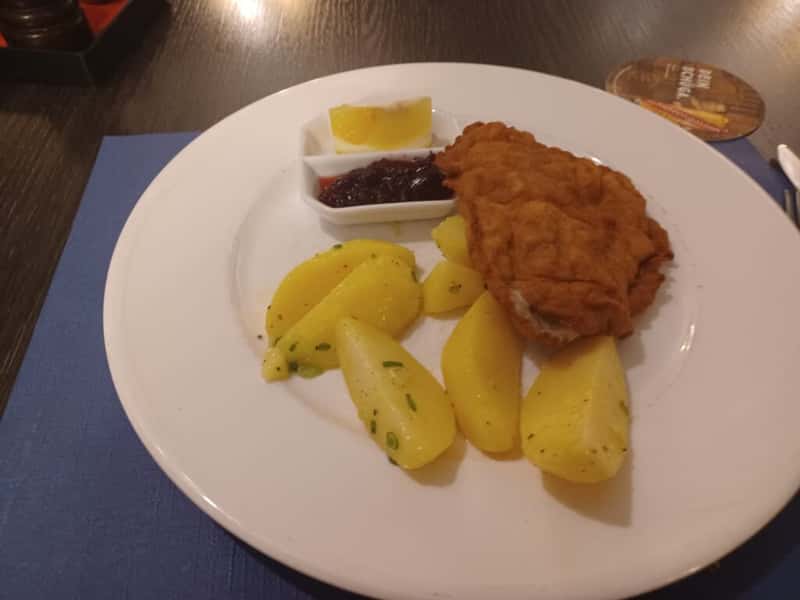
Lichtenstein’s cuisine is, unsurprisingly, heavily influenced by its neighbours. That said, I was surprised to find a rather peculiar menu with a mixture of Thai dishes and classic Central European fare. Opting for the latter, I tucked into an eye-wateringly expensive goulash soup and Wiener Schnitzel.
Nightlife in Vaduz was about as happening as its dining scene on a Sunday evening, but neighbouring Schaan and Triesen seemed to have a lot more going on. A short bus ride later, I found myself in the latter enjoying a ice cold glass of PrinzenBrau, Lichtenstein’s national beer, surrounded by the chatter of locals.
The following morning, Vaduz was still quiet. Most visitors to the principality arrive later in the day on day trips from Switzerland; there’s something quite special about having a capital city almost to yourself. With that, I took the short walk to the Landes Museum (National Museum) to delve into a bit of Lichtenstein’s history.

My Verdict: Lichtenstein is Quiet, Not Boring
You may well deduce from my description of what very little was going on in Vaduz that Lichtenstein is indeed boring. In fact, it’s the opposite. To all intents and purposes, if you’re looking for daytime crowds and wild parties by night, Lichtenstein probably isn’t for you, but as a novelty escape, Lichtenstein is worth its weight in gold.
The sixth smallest country in the world, yet consistently ranked as one of the wealthiest, Lichtenstein can’t help but be fascinating. It’s one of the few remaining monarchies in which the royal family still hold legislative powers, it hasn’t had a military since 1868, and on its National Day every August, every single citizen is invited to a party at the royal castle. To dub such a country boring is surely sacrilege.