There’s something almost absurd about paying good money to sleep in what is essentially a glorified drawer. A human-sized pod, stacked into rows like wine bottles in a cellar, each one barely large enough to sit up in. Yet somehow, capsule hotels have become one of the most fascinating accommodation phenomena on the planet. The idea sounds either wildly futuristic or mildly horrifying depending on who you ask.
I spent a full week inside one of these compact little worlds, and honestly, it changed the way I think about travel, space, and what we actually need to rest well. If you think you already know what a capsule hotel experience is like from a quick YouTube video, I’d gently suggest you reconsider. Let’s dive in.
Where This Whole Thing Started: A Japanese Architect’s Grand Vision
The first capsule hotel in the world opened in 1979 and was the Capsule Inn Osaka, located in the Umeda district of Osaka, Japan, designed by Kisho Kurokawa. Kurokawa was not just an architect, he was a visionary. The concept of the capsule hotel emerged as an extension of his Metabolism architectural philosophy, which envisioned dynamic, modular structures that could adapt to urban growth like living organisms.
Inspired by the compact, self-contained design of space capsules, Kurokawa aimed to address Japan’s acute urban space constraints, particularly in densely populated areas like Tokyo, by creating efficient, prefabricated living units that maximized limited real estate. Think about that for a second. The guy was literally trying to solve city overcrowding by turning sleep itself into an engineering challenge.
The concept aimed to provide affordable and convenient accommodations for salarymen who missed the last train home. It wasn’t designed for tourists hunting an Instagrammable experience. It was pure, unapologetic pragmatism. The result of this design meant that a vast number of capsules could be squeezed into a small space and could accommodate many workers, with prices also being slashed compared to other forms of accommodation.
What a Capsule Actually Looks Like (And Feels Like)
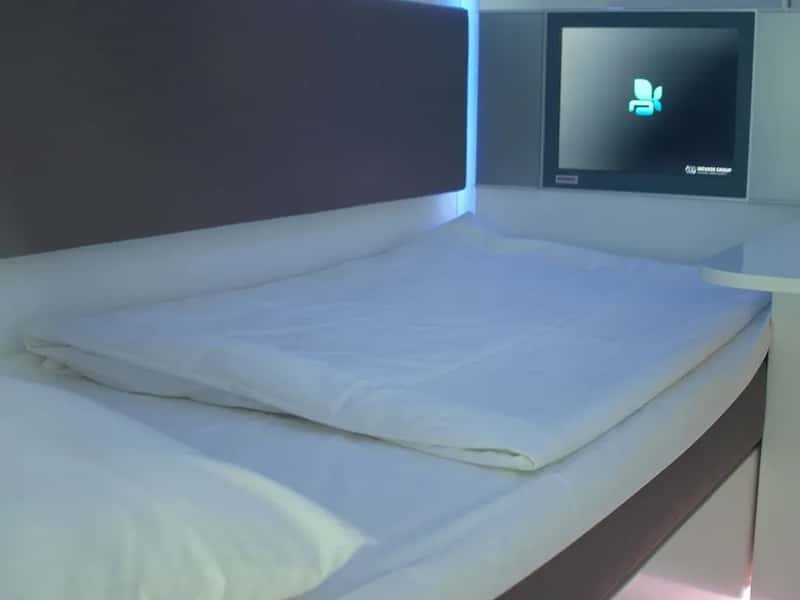
Traditional capsule hotel designs typically measure 2 meters long by 1 meter wide and 1.2 meters high, with a floor space of just 2.4 square meters, which can contribute to sensations of claustrophobia. Imagine a space roughly the size of a large wardrobe lying on its side. That’s your kingdom for the night. Yours and yours alone, with no one else inside it.
A standard pod will generally contain a mattress, pillow, shelf space, electrical outlets, Wi-Fi and perhaps a TV. Some are bare-bones, others genuinely impressive. You can sit upright inside most capsules, but you cannot stand. It feels more like sleeping in a private bunk than a full room. I found that framing oddly comforting once I adjusted to it.
The capsules are stacked side-by-side, two units high, with steps or ladders providing access to the second-level rooms, similar to bunk beds. There’s something weirdly cozy about the upper pods, actually. They feel slightly more removed from the activity on the floor, which is worth the minor gymnastics of climbing up.
The Claustrophobia Question: Let’s Be Honest Here
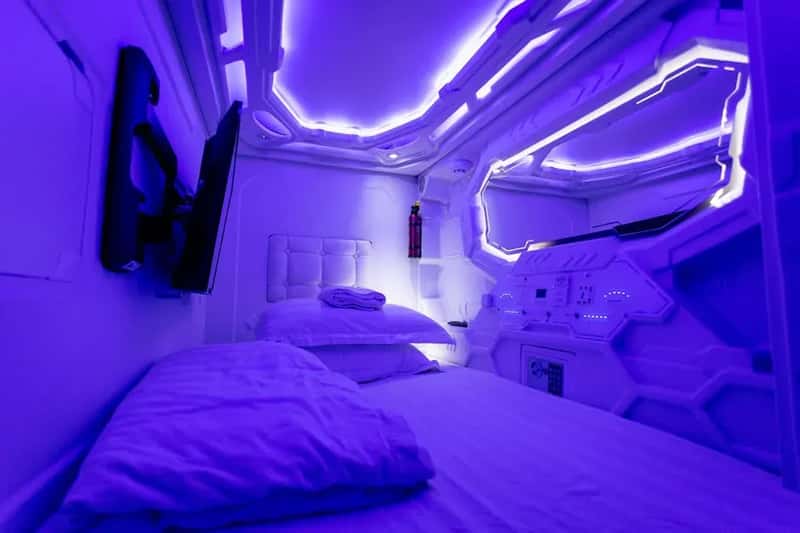
Okay, this is the part everyone wants to know. Is it claustrophobic? Honestly, it depends enormously on both the property you choose and your own psychology. These capsules are enclosed spaces, and so if you have severe claustrophobia, you do probably want to steer clear of capsule hotels. That’s the straightforward truth of it.
These pods are designed to maximize space efficiency, often resulting in small, closed-off areas that can induce feelings of being trapped for those predisposed to claustrophobia. Some travelers report no issue at all. Others, like one honest blogger who stayed in a poorly ventilated pod in Nagoya, described the experience as unbearable. The capsule was poorly ventilated and hot, leaving one traveler feeling like a caged animal sleeping in that space.
The ability to modify one’s environment, such as adjusting light or air settings, can provide a sense of control that might alleviate claustrophobic anxieties. This is exactly why choosing a modern, well-ventilated capsule hotel matters so much. The difference between a quality pod and a bad one is genuinely night and day.
The Cost Factor: Why Budget Travelers Are Obsessed
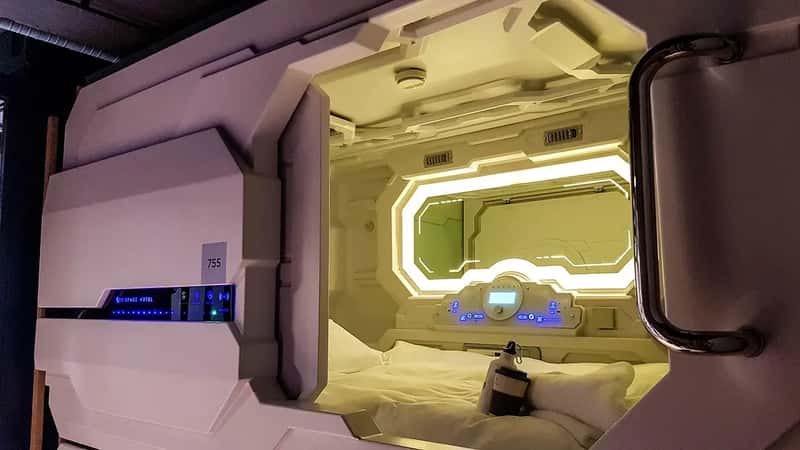
Here’s the thing that makes capsule hotels genuinely revolutionary for modern travel. Despite their modern design and advanced technology, capsule hotels remain one of the most affordable types of accommodation, with rates typically 50 to 70 percent cheaper than standard hotel rooms, making them ideal for budget-conscious travelers who want comfort without compromise.
Prices generally range from 2,000 to 5,000 Japanese yen per night, making them an economical option for short stays, often near transportation hubs. To put that in real-world terms, that’s roughly 13 to 33 US dollars for a night in one of the most expensive cities on the planet. When the Panda Pod Hotel opened in Vancouver in October 2024, it offered budget-friendly pod-style rooms for digital nomads and solo travelers, with rooms priced under USD 100 per night including taxes, providing an affordable alternative in one of Canada’s priciest cities.
With savings of up to 80 to 90 percent compared to traditional hotels, online platforms offer easy access to cost-effective options, making them ideal for travelers seeking budget-friendly stays in unpredictable situations. That kind of saving is not small. That’s the difference between extending your trip by a week or not.
Who Is Actually Staying in These Things?
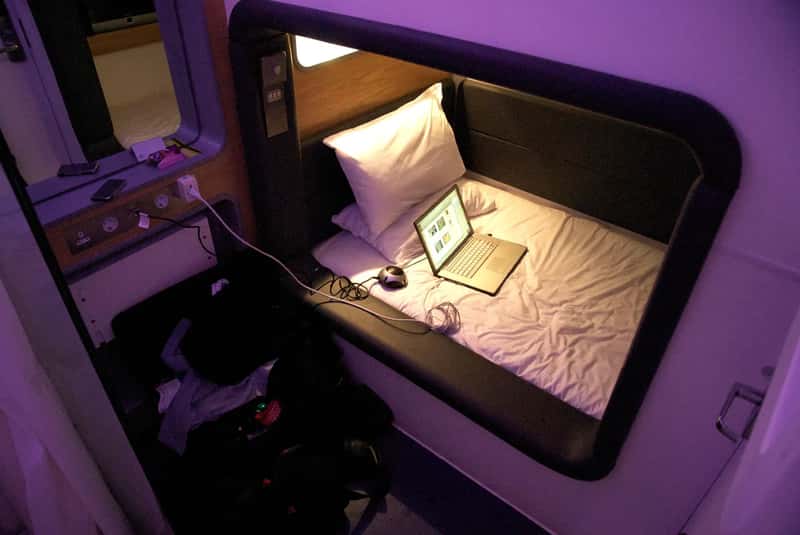
You might picture capsule hotels as purely a backpacker hangout. The reality is far more layered. The use of capsule hotels among travelers aged 18 to 24 accounted for a share of about 41 percent in 2024, with consumers of this age group drawn to capsule hotels for their affordability and practicality, especially as financial constraints often accompany tuition and living expenses.
While the primary customer base consists of tourists seeking budget accommodation, there is a notable and sustained demand from office workers. In Japan especially, the original purpose never really went away. Salarymen who miss the last train, business travelers squeezing in a layover, remote workers on weekday trips. The increasing trend of solo travel has become a significant driver behind the growth of the capsule hotel market, as more people, particularly millennials and Gen Z, opt to travel alone for leisure or business, creating a growing demand for accommodations that cater specifically to single travelers.
Generation Z constitutes the largest segment in the capsule hotel market. Gen Z travelers are known for their tech-savvy nature and desire for unique experiences, and are drawn to capsule hotels due to the innovative and efficient nature of these accommodations, as well as their affordability.
The Etiquette Rules Nobody Warns You About
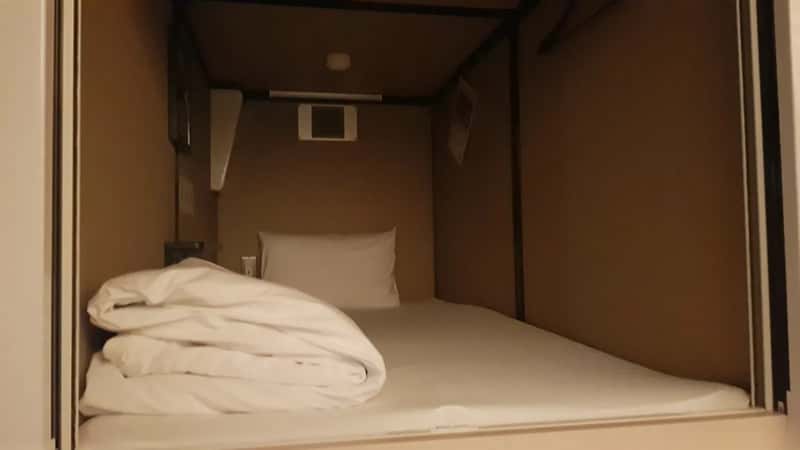
Staying in a capsule hotel for a week taught me fast that there is a whole social code operating quietly around you. On checking in, guests are informed of the capsule hotel’s rules, the most important of these being to keep the noise down. Violations of this feel oddly transgressive in a way that ignoring rules in a regular hotel does not. Everyone is packed together, and shared silence becomes a form of communal courtesy.
The capsules aren’t fully soundproof, even with the curtains closed, so bringing earplugs is strongly advised. Honestly, treat earplugs like a passport. Do not leave without them. It is also considered inconsiderate to eat food with a strong aroma inside the pods, and in fact, many hotels prohibit food of any kind inside their capsules.
The bathroom situation is communal, full stop. There’s no room for a toilet or bathroom inside a capsule, and in a typical capsule hotel setup, toilets are found at the end of the hall, with a shared Japanese-style bathing area available in the building. It sounds inconvenient until you realize the shared baths at better properties are genuinely luxurious.
The Tech Revolution Inside the Pods

Modern capsule hotels are not the drab plastic coffins of 1979 anymore. Not even close. Modern capsule hotels have embraced technology to enhance convenience, with many now offering smart check-in kiosks, keyless entry, and app-controlled amenities, allowing guests to adjust lighting, temperature, and even entertainment from their smartphones.
Several capsule hotels are incorporating advanced technologies to enhance the guest experience, such as automated check-in, facial recognition, and IoT-enabled amenities. When Nine Hours hotel in Tokyo wakes you up with a light system that gradually mimics a sunrise, it stops feeling like budget travel and starts feeling like quiet luxury. Some high-end capsule hotels integrate AI-based concierge systems that assist with travel tips, local recommendations, and language translation, while others provide automated luggage storage, self-cleaning pods, or digital lockers for a seamless, futuristic experience.
Market trends indicate a strong shift towards integrating advanced technology within capsule hotels, such as IoT-enabled amenities and automated check-in systems, enhancing guest convenience and operational efficiency. The best properties today feel like something out of a design magazine, not a budget travel forum.
The Global Spread: From Osaka to Vancouver to Amsterdam
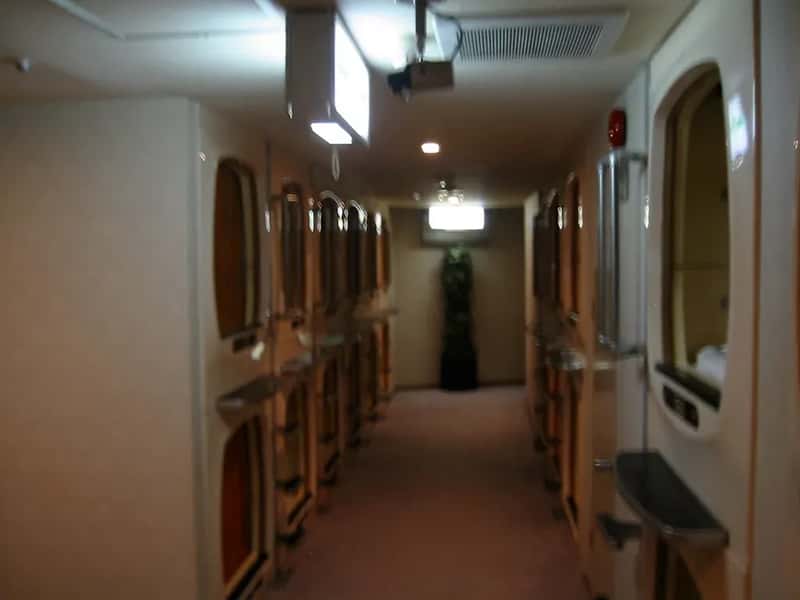
The capsule hotel concept has traveled far beyond Japan. The concept has spread to various other territories, including Belgium, Canada, China, Hong Kong, Iceland, India, Indonesia, Israel, Poland, Saudi Arabia, and South Korea. Each market adapts the formula slightly to local tastes. Amsterdam’s CityHub sits in the heart of the city, with a futuristic vibe of slotting bunk beds and a digital concierge.
In January 2025, Indonesian capsule hotel and cabin operator Bobobox announced the launch of five new properties, expanding its portfolio to 37 locations nationwide, with plans to open 12 more locations in 2025, focusing on popular tourist destinations like Surabaya, Medan, Bali, and Bromo. This is not a niche trend quietly fading away. This is mainstream hospitality expanding aggressively into new ground.
The market remains dominated by its country of origin, with Japan accounting for over 70 percent of the global market share, but Southeast Asia and China each hold significant shares exceeding 10 percent, indicating the model’s successful regional expansion beyond its initial market. Europe is catching up rapidly, with cities like London, Amsterdam, and Copenhagen hosting increasingly popular pod properties.
The Market Numbers Tell a Remarkable Story

Let’s be real, nothing validates a travel trend quite like the cold hard numbers behind it. The capsule hotel market size was valued at USD 266.94 million in 2024 and is expected to grow from USD 290.75 million in 2025 to reach USD 575.95 million by 2033, growing at a CAGR of 8.92 percent during the forecast period. Roughly doubling in value over a decade is not the trajectory of a gimmick.
Asia Pacific is expected to lead the global capsule hotels market in 2025 with a nearly 59 percent share, driven by rapid urbanization, booming tourism, and the strong adoption of compact, affordable lodging options in countries such as Japan, China, and South Korea. Still, the Western world is waking up. North America, with roughly a quarter share, will be the fastest-growing region in 2025, fueled by the rising demand from budget-conscious millennials and business travelers, as well as the growing popularity of capsule hotels in major urban hubs like New York, Los Angeles, and Toronto.
The growing travel and tourism industry, along with the rising popularity of capsule hotels based on their budget-friendly and enhanced privacy, safety, and comfort properties, is primarily driving the global capsule hotel market. It’s hard to say for sure exactly where the ceiling is, but from where things stand in 2026, it looks a long way up.
What a Week Actually Does to You: The Honest Verdict
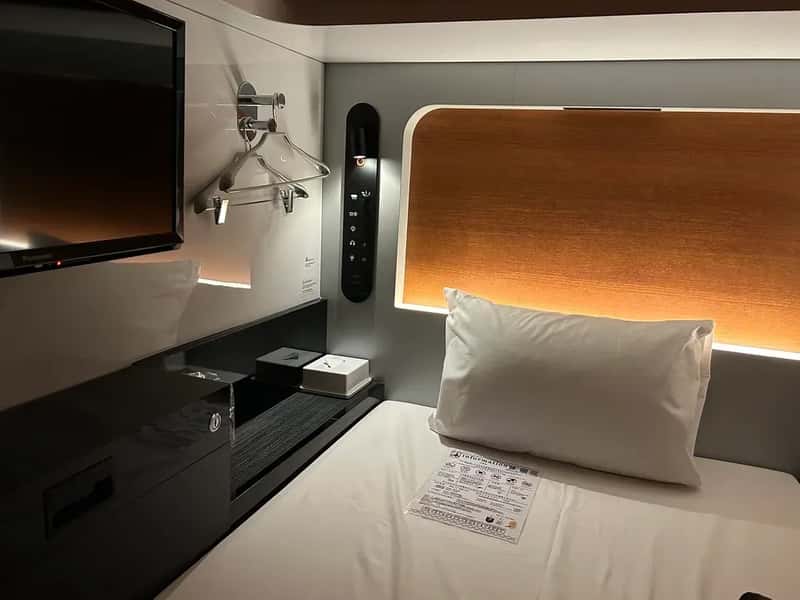
By day three, something unexpected happened. I stopped noticing the smallness. The pod stopped feeling like a constraint and started feeling like a cocoon. In many capsule hotels, you can even receive a yukata robe, a towel and some toiletries, and only when it is time to sleep do you go to your capsule, which is essentially like a bunk bed with privacy, sometimes with a TV, alarm clock, and charging plug. The whole rhythm of the place becomes oddly calming.
Hotels in good capsule properties can be found in a price range of around 20 to 40 US dollars a night, which for a large metropolitan city is remarkably cheap. Over a week, the savings alone fund a serious meal or a day trip. Themed capsules, such as business pods, wellness pods, and gaming pods, are emerging as differentiators in competitive urban markets, meaning the range of experiences is expanding all the time.
The cleanliness, the surprisingly good community atmosphere, the central locations, the tech, the price. All of it adds up to something genuinely worthwhile. If you’re after a travel experience that’s distinctly Japanese and won’t break the bank, a capsule hotel is hard to beat. And increasingly, you don’t even have to travel to Japan to find that experience.
Conclusion: Small Space, Surprisingly Large Impact
A capsule hotel is not for everyone, and it doesn’t pretend to be. If you need to stretch out, move freely, or bring significant luggage, you’ll struggle. If sharing communal bathrooms at 6 am with strangers sounds like your personal nightmare, fair enough. But if you approach it with the right mindset, the week I spent in a pod was among the most memorable accommodation experiences I’ve had anywhere.
The global market data tells you this is growing fast. The innovation curve tells you it’s getting better every year. The capsule hotel landscape is undergoing a period of rapid transformation driven by technological innovation, lifestyle shifts, and evolving consumer expectations, with integration of smart room controls, biometric access systems, and personalized digital concierge services elevating the guest experience beyond mere novelty.
There’s something quietly radical about choosing less space deliberately, about realizing that a bed, good Wi-Fi, a secure locker, and clean shared facilities might actually be all you need. The capsule hotel forces that question in the best possible way. Would you be willing to find out what you actually need to sleep well? Drop your thoughts below.