The gate agent calls your row.
You already know where you’re sitting.
You’ve known since the moment the booking confirmation hit your inbox.
Aisle. Always the aisle.
And you told yourself it’s about the legroom. The bathroom access. The practicality of a body that can’t stay still for four hours. But here’s the thing about cover stories – cover stories carry a cost. Every time you reach for the practical explanation, you’re doing something quieter and more consequential: you’re burying the real reason under something socially acceptable. The real reason isn’t about your legs. It’s about your life.
Escapism in the form of self-suppression stems from motives to run away from unpleasant thoughts, self-perceptions, and emotions – whereas self-expansion stems from motives to gain positive experiences and discover new aspects of self. Most of us are doing both, simultaneously, with a carry-on bag and a boarding pass.
1. The Autonomous Exit
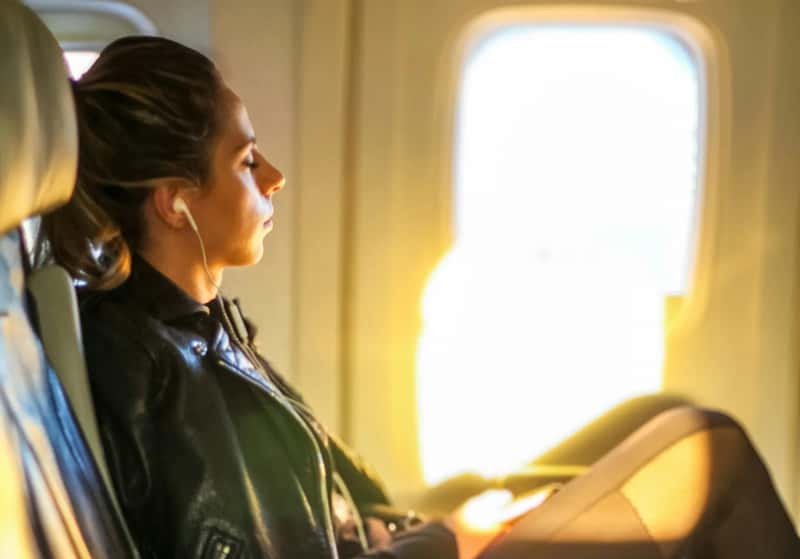
Psychology has a useful name for it: autonomous exit – the psychological certainty that you can move whenever your body needs to, without asking permission, without negotiation, without stepping over someone’s sleeping legs.
It sounds clinical. It isn’t.
It’s the thing that happens in your chest when someone blocks the doorway at a party. The thing that makes you clock the emergency exits before the movie starts. The concept is called autonomous exit – it refers to the need to maintain the ability to leave a situation freely, without asking permission or navigating obstacles.
This is not a quirk. This is a nervous system preference that has been quietly running your decision-making for years.
The aisle seat is just where it becomes visible.
When people feel free to make choices and move independently, their stress levels tend to decrease. An aisle seat can serve as a physical representation of this need. It is a small, repeatable act of psychological self-preservation. One you perform so automatically you’ve stopped noticing you’re doing it.
2. The Control Architecture
You don’t think of yourself as a control freak.
That’s the first sign that you might be.
Performance psychology specialist Sam Wones says this quirk runs deeper than seat preference – “It reflects a need for control in environments where individuals feel they lack it.”
The airplane is the ultimate environment of surrendered control. Someone else is flying. Someone else decided the route. Someone decided when the lights dim and when the snacks appear. And somewhere in your carefully composed nervous system, that’s not sitting right.
When you choose the aisle, you’re in control of your own movement, eliminating a whole category of uncertainty from your travel experience. This trait often manifests as over-planning in other areas – you might have backup plans for your backup plans, feel anxious when meetings don’t have clear agendas, or struggle when friends suggest “playing it by ear.”
The seat is the micro. Your life is the macro. Same blueprint, different scale.
3. The Exit Strategy Personality
It doesn’t stay on the plane. That’s the uncomfortable part.
This need for autonomy often extends way beyond airplane seats – manifesting in preferences for jobs where one can set their own schedule, frustration when group projects slow things down, and irritability when plans change without input.
Think about the last time you chose a restaurant table. Were you near the door?
Think about the last time you drove somewhere with other people. Were you the one who insisted on driving?
The same pattern shows up in how people choose restaurants – near the door, please – where they park – easy exit preferred – and even in relationships, where they might keep one foot out the door “just in case.”
The exit strategy personality is not dramatic. It’s not loud. It operates in the background of every room you enter, quietly calculating the distance between where you are and where you could be. It’s a superpower when you need to navigate. It’s a prison when you need to stay.
4. The Self-Determination Engine
There’s a legitimate scientific framework underneath all of this – and it matters that you know it, because it means you are not broken.
The idea of autonomous exit connects to a broader psychological framework known as self-determination theory. This theory proposes that autonomy is one of the basic psychological needs required for well-being, alongside competence and relatedness. Autonomy refers to the feeling that one has control over one’s actions and environment.
When that feeling is thwarted, things go sideways in measurable ways. A meta-analysis of 51 studies involving more than 11,000 participants found a large and consistent negative correlation between perceived control and both trait anxiety and specific anxiety disorders. The less control people feel they have over their environment, the more anxious they tend to be.
Your aisle seat preference isn’t irrational. It’s a rational response to a world that constantly asks you to hand over the controls. The aisle is where you take them back.
The question is only whether the retrieval has become compulsive.
5. The Cover Story
I want to be honest here, because this is the one that landed hardest for me personally.
I once spent forty minutes on the phone with an airline trying to switch a middle seat to an aisle on a ninety-minute flight. Ninety minutes. I told myself it was the legroom. It was not the legroom. I am five-foot-seven. I fit everywhere.
What I couldn’t fit into was the feeling of being locked in. The feeling of needing permission to stand. The feeling of someone else’s schedule governing mine, even in the smallest possible way, even for the duration of a flight shorter than most commutes.
We rarely tell people the real reason we need the aisle seat. “I have a small bladder” is socially acceptable. “My nervous system requires the knowledge that I can exit this metal tube at a moment’s notice” tends to derail the conversation.
The cover story is a social lubricant. But it’s also a lie we tell ourselves so fluently that we eventually forget we’re lying. Real feelings get translated into something more manageable. Rage becomes “having a bad day.” Fear becomes “being tired.” The need for psychological safety becomes a preference for convenience.
6. The Restless Identity
Somewhere beneath the preference is a person who has not fully settled into their current reality.
Not a failure. Not a flaw. A condition.
The impulse to travel can be cryptic; sometimes it seems to be a kind of knee-jerk escapist tendency, while other times it is based more on a wish for expansion – for broader and more novel experiences.
The restless identity is the one that cannot look at its own living room without seeing a waiting room. Cannot look at its own routine without seeing a sentence to be served. In our modern world, many people feel overwhelmed by the stress and pressures of daily life. Work, relationships, and other responsibilities can create a sense of monotony and confinement.
Transit is relief. Not because the destination solves anything, but because motion itself creates the sensation of agency. You are going somewhere. Even if you don’t know where. Even if “somewhere” is just a hotel room in a city you’ll leave in three days. The aisle seat is the emblem of this. It says: I can still move. I have not been fully claimed.
7. The Anxiety Architecture
Claustrophobia is the obvious explanation. But the real architecture goes deeper.
Sitting on the aisle is about as much open space as you get on board – aisle-seat preference tends to be linked to a certain degree of claustrophobia. But claustrophobia, at its psychological core, is not really about small spaces. It is about losing the ability to exit them.
The window-seat person has accepted their containment. They’ve made peace with the wall. They press their forehead to the glass and watch the earth shrink and find that beautiful.
Aisle-seat travelers can stand up, stretch, retrieve items, or leave their row without disturbing others. Window seats, by contrast, provide containment and a stable environment but limit immediate mobility. These differences may appeal to different psychological needs.
The window-seat person is at peace with limitation. The aisle-seat person is still negotiating with it. Both are valid. Only one is honest about the negotiation happening.
8. The Identity on Pause
Travel does something specific to identity that staying home cannot.
It suspends the version of you that everyone knows.
According to psychotherapist Lindsey Pratt, travelers “may notice a general sense of loneliness – a shift in the way they fit into the world around them. Their identity as an adventurer is on pause,” and it’s felt as a deep loss.
Which tells you something crucial: for certain people, the traveling self is the real self. The one at home is the performance.
Profoundly, what we yearn for is identity enhancement. We travel not to find new places but to find older, truer versions of ourselves – the ones that existed before the job title, the mortgage, the slow accumulation of other people’s expectations. The aisle seat is the seat that keeps that version of you accessible. The seat that says: I can still leave. I haven’t fully become the person my zipcode thinks I am.
9. The Relationship Coefficient
Here is where it gets uncomfortable in a new direction.
The psychology of the exit preference does not stay in airports or cinemas or corner restaurant tables. It moves into relationships with the same quiet efficiency it moves everywhere else.
These behaviors can reflect a preference for maintaining control over departure rather than relying on others. While autonomy is an important psychological need, researchers also note that extreme independence can sometimes create distance in relationships. When individuals prioritize self-sufficiency above connection, they may unintentionally limit closeness with others.
The person who always needs the aisle seat is also, often, the person who keeps one emotional door slightly ajar. Who is brilliant at the early, exhilarating, unencumbered phase of love – and then subtly, almost imperceptibly, begins to calculate the exit.
There’s a thin line between protecting your autonomy and building a life where no one can reach you. The aisle seat is a metaphor that bleeds.
10. The Permanent Arrival Problem
This is the heaviest one. And it deserves the weight.
The line is when exit-readiness stops being a useful preference and starts becoming a way of never fully arriving. That is the razor’s edge. The perpetually-ready traveler who never quite lands anywhere.
There is a specific kind of exhaustion that belongs to people who have been in motion for so long they’ve forgotten what stillness is supposed to feel like. If our minds aren’t at ease when we leave to travel, we’ll likely find them waiting for us in the same state when we return home. Eventually the novelty wears off, we slip back into our day-to-day routines, and the discontent returns like weeds creeping through the cracks of a sidewalk.
The aisle seat is a philosophy. It is a quietly desperate answer to the question: what happens if I need to leave and I can’t? And when that philosophy becomes the organizing principle of an entire life – the central load-bearing wall of your identity – you are no longer choosing freedom. You are choosing the perpetual rehearsal of it.
The line is when exit-readiness stops being a useful preference and starts becoming a way of never fully arriving. And arriving – truly arriving, somewhere and with someone, without one hand on the door – is the thing that the aisle-seat personality has been circling for years without being able to name.
The strange mercy in all of this is that awareness is not the same as cure, and cure is not always the goal. Maintaining personal freedom does not necessarily prevent meaningful relationships, but awareness of these patterns can help individuals understand their motivations more clearly. Recognizing why certain habits exist can create opportunities to adjust them when they no longer serve a protective purpose. The operative phrase is “when they no longer serve.” Because for a long time, they did serve. The exit preference, the aisle seat, the corner table, the car parked facing out – these were solutions before they were patterns. Someone learned them in a room that wasn’t safe, and the learning was correct, and the lesson carried forward long past its expiration date.
Travelling to escape can be unhelpful when it is our only coping strategy and when used persistently and in excess. In contrast, if we have a range of coping strategies and occasionally use travel to temporarily escape the stresses of life, this is likely to be helpful. Travelling in this way can help us gain the distance and perspective we need to manage and cope with life’s day-to-day challenges. The difference between running and exploring has always been interior. The same flight can be both, on the same ticket, in the same seat. The destination is never the variable. You are.
So the next time you open the seat map and your cursor moves, without hesitation, to the aisle – pause for just a second. Not to change the selection. But to notice the hand that made it, and to ask, with something like gentleness, what it is still preparing to leave.