The key card hits the nightstand for the last time.
The room is already forgetting you.
You zip the suitcase. You do a final sweep – under the bed, in the bathroom – for things left behind.
But what you’re actually searching for isn’t in the bathroom. It doesn’t fit in the suitcase.
There is a gap between the person who checked in and the person checking out. The one who arrived had no inbox. No dishes. No version of themselves that owed anyone anything. That person ordered room service without guilt, stood at the window at midnight watching a city that didn’t know their name, and – for perhaps the first time in months – simply existed without a to-do list running behind their eyes.
The one leaving is already mid-transition. Already carrying the weight of everything waiting on the other side of the lobby.
The Temporary Identity
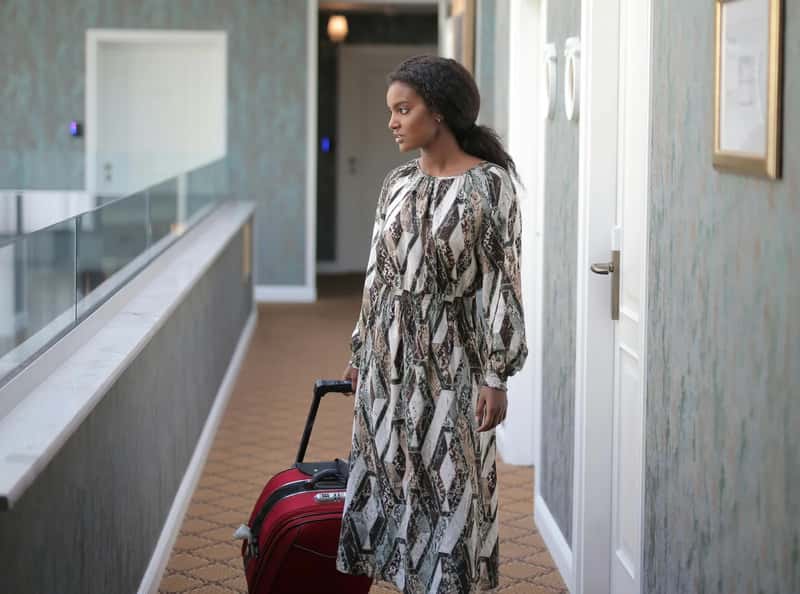
The moment you cross a hotel threshold, something shifts.
When we step out of our everyday environments and routines, we undergo a temporary rearrangement of our identities – one that lets us imagine other possibilities for ourselves.
Not a reinvention. Just a loosening.
The usual architecture of the self – the roles, the obligations, the rooms where people already know exactly who you are – quietly falls away. What remains is something older. Something less curated.
In modern psychology, some experts believe that hotels represent environments where we can experiment with new identities. The operative word is “experiment.” Low stakes. No permanent record.
You become a traveler. Not a spouse, not an employee, not the person who still hasn’t fixed the leaky faucet.
Just a traveler.
And the terrible thing about a temporary identity is how quickly it begins to feel more true than the permanent one.
The Blank Room Doctrine
There is something deliberate in the design of a hotel room that the architects may not have intended.
The white walls. The anonymous art. The absence of anything that was ever yours before this moment.
The key element that hotel stays provide is their enforced minimalism. A radical simplification of life. Stripped of accumulated possessions. Stripped of the visual noise of a life mid-construction.
Your home is a museum of everything you haven’t finished. The half-read book on the nightstand. The exercise equipment serving as an expensive coat rack. The leaning tower of good intentions.
A hotel room has none of that history. It has no memory of your failures.
Psychologists have long recognized that our surroundings act as an extension of identity – the objects, colors, and routines that make up “home” help to stabilize our sense of self. Strip those anchors away and the self gets nervous.
But sometimes nervous is exactly what we need.
Sometimes the self needs to be unmoored to remember what it actually feels like to float.
The Permission You Can’t Grant Yourself at Home
Here is the brutal, specific truth about a hotel room.
It gives you permission your own house withholds.
At home, the dishes are watching you. The laundry is watching you. The mortgage, the calendar, the half-finished project on the kitchen table – all of it watching, all of it silently noting your presence and cataloguing your debts.
A hotel room has no such ledger.
The hotel room whispers a permission your own home withholds: you don’t have to be working on yourself right now. You can simply be in a room.
Be in a room. As a concept, it sounds embarrassingly simple.
But for the modern person – oversubscribed, over-surveilled, perpetually mid-task – it is nothing short of radical.
The hotel doesn’t need anything from you. It asks only that you sleep in the bed and set the towels on the floor.
That’s it. That’s the whole contract.
The Grief Has a Name
We don’t often give this feeling its proper weight. We call it “post-vacation blues.” We laugh it off in airport lounges, promising ourselves we’ll “book something soon.”
But the grief is real. It has a clinical shape.
When you feel that specific sadness at checkout, you are not being dramatic. You are experiencing something that researchers have named and documented. The psychiatrist Mindy Fullilove has described the emotional consequences of displacement as comparable to grief, noting that losing a meaningful place can trigger feelings of anxiety, depression, and identity fragmentation. Even temporary displacement, it turns out, costs something real.
And so does the inverse.
The inverse is equally true. Leaving a place where you were briefly, genuinely free – that costs something real too.
We mourn exits more than we mourn arrivals. We don’t grieve when we check in – we exhale. We don’t grieve until we check out, because that’s when we understand what we were given.
Grief, as always, is just love with nowhere to go. In this case, it’s freedom with nowhere to stay.
The Version You Left in the Room
I want to tell you something personal here.
There was a trip I took alone to a city I didn’t know. No itinerary. No one expecting anything from me at any particular hour. I ate dinner at 10pm because I wanted to. I sat in a café for three hours and wrote exactly nothing and felt no guilt about it. I stood at the window of a mid-range hotel room on the seventh floor and watched the traffic below and felt – for no rational reason – entirely at peace.
And then I checked out.
The drive home was fine. Life resumed. But for days afterward, I kept circling back to that room. Not to the city. Not to the food. To the feeling of being, briefly, a person with no outstanding obligations to themselves or anyone else.
There is a theory, unprovable and impossible to cite, that the self knows its own shape best when it is temporarily unhoused. When the usual architecture of identity – the roles, the relationships, the rooms where people already know who you are – falls away, something remains.
I left that something in room 714. I haven’t fully recovered it.
The Liminal Contract
The hotel exists in a category psychologists call liminal space. The threshold. The in-between.
In psychology, liminal space is a threshold state: a pause, a transition, a space that can feel uncertain, uncomfortable, and even disorienting.
But disorientation, it turns out, is not always the enemy.
Victor Turner saw liminality as a condition with its own character: a space where social structure loosened, where normal rules were temporarily suspended, and where something new could emerge. He described liminality as a state of ambiguity and openness, a place where transformation becomes possible precisely because the usual structures are absent.
The hotel room is one of the last legally sanctioned liminal spaces in modern life. Everything else – your office, your car, your phone – has a function assigned to it.
The hotel room is assigned to nothing except your presence.
That is rarer than we understand. That is why we mourn it.
The Chore Is the Identity
Let us be honest about something uncomfortable.
We have built entire identities around our obligations. The chores are not separate from who we are. They are, in many ways, the architecture of who we are.
The person who maintains the household. Who answers the emails. Who shows up, organized and functional, for every small demand of modern life.
That person is real and necessary and, frankly, exhausting.
What makes liminal experiences particularly challenging is the way they can shake our core sense of self. When someone asks “What do you do?” and your usual answer no longer fits – identity confusion naturally follows.
In a hotel room, no one asks what you do. No task asks to be completed. The chore – that faithful, grinding definer of domestic selfhood – is entirely absent.
And in that absence, you discover something unsettling: you don’t actually know who you are without it.
Which means checkout isn’t just leaving a room. It’s leaving an answer to the question of who you might have been.
The Exit Strategy
Here is what nobody tells you about checking out.
The grief is not a malfunction. It is information.
The mourning you feel is your psyche registering the departure of something precious. Name it. It deserves to be named.
What you are grieving is not the thread count of the sheets or the complimentary toiletries. You are grieving a version of yourself that got to exist, briefly and completely, without performance.
Something happens when the usual patterns are suspended – the brain becomes more plastic, more open to new connections, insights, and meanings. The loss of “normal” makes space for something more honest.
The checkout doesn’t have to be a door slamming shut.
It can be a note to self. A reminder that this quieter, lighter version of you is not a vacation persona. It’s not a performance or a temporary indulgence.
It’s just you. On a longer leash than usual.
The Neuroplasticity of Nowhere
There is a strange neurological gift buried in the feeling of being between places.
Psychology research tells us that liminal spaces open us up to concepts researchers call “identity play” and “mind-wandering with purpose.”
Mind-wandering with purpose. Sit with that phrase for a moment.
Not distraction. Not procrastination. A specific kind of cognitive freedom that only becomes available when the structured demands of daily life are temporarily offline.
Dr. William Bridges, who pioneered the concept of transitions in his work on change and identity, describes the in-between phase as the neutral zone. In it, your brain is often flooded with uncertainty and ambiguity – and your nervous system doesn’t love that because it likes to know what’s going on.
But the neutral zone is also where breakthroughs live.
The hotel room, in its blankness, creates the neutral zone by design. You didn’t plan for insight. You just booked two nights and a parking space. And yet something in the quiet of a room that isn’t yours, in a city that doesn’t need anything from you, begins to rearrange.
The brain is most honest when it has nothing to protect.
The Residue You Carry Home
This is the heaviest point. The one worth sitting with.
We talk about travel as something that changes us. We talk about “coming back different.” But the real transformation is not in the destination. It isn’t in the flight or the foreign language or the food.
It is in the checkout.
It is in the moment when you understand – viscerally, in the body, not just in the mind – that there is a version of you that doesn’t require maintenance. Doesn’t require performance. Doesn’t require the scaffolding of obligation to hold its shape.
It may be that, similar to tourism perspectives, when we leave home we think of ourselves no longer as a resident but rather a traveler. Everything we do is of a temporary nature. And in that temporariness, we become momentarily unscripted.
Unscripted. The word lands differently when you consider how much of your daily life is read from a script you didn’t consciously write. The role of functional adult. Of reliable colleague. Of person who keeps the house from descending into chaos.
The checkout is honest because it forces the question: which version of yourself do you actually want to keep?
That is not a rhetorical question. It is the most practical question available to you.
Because the version of you that existed in that room – unhurried, unencumbered, sleeping without a to-do list running behind your eyes – that version did not disappear at checkout. It just got very quiet under the noise of re-entry.
You brought it home with you. In the suitcase lining. In the smell of the hotel shampoo that fades after one shower. In the way you stood at your own kitchen window the morning after returning and felt, for just a moment, like a stranger in a place you have lived for years.
The mourning is not a symptom of loving travel too much. It is a symptom of knowing yourself too well. Of having touched, briefly, the version of yourself that exists before the world assigns you a function.
The question is never how to stay in the hotel.
The question is how to carry the room with you when you leave.