The coffee shop is quiet at 7 AM.
You are not.
Your phone found a network. No password. Just a name floating in the air like an open invitation from a stranger you’ve never trusted.
Your thumb hovers.
Something cold moves through your chest – and it has nothing to do with the espresso.
Here’s what nobody says out loud: that surge of dread isn’t just about hackers. It isn’t just about data packets or man-in-the-middle attacks. It’s something older, something that predates the internet entirely. It’s the primal fear of being seen – fully, accidentally, without consent. Identity divergence often breeds a specific type of anxiety: the fear of exposure. You might worry constantly that others will discover the gap between your curated online presence and your real self. Open Wi-Fi is just the modern trigger for a wound that’s been there all along.
1. The Unencrypted Self
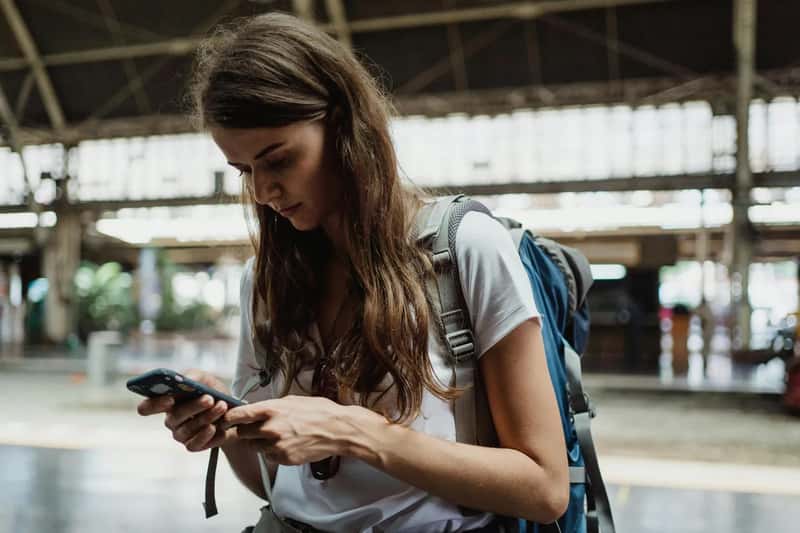
Open Wi-Fi is a mirror held up without warning.
You didn’t ask for it. You didn’t consent to the reflection.
Encryption is the process of encoding data following a specific methodology or algorithm. The result of successful encryption is jumbled, distorted data that cannot be understood by an unauthorized person. But mostly, public Wi-Fi does not encrypt – which makes data passing back and forth vulnerable.
That’s the technical story. But here’s the psychological one.
You spend enormous energy constructing a version of yourself that is curated, controlled, and coherent. Your social media bio. Your email sign-off. Your carefully chosen profile photo. You’re essentially performing a role every time you go online, which depletes mental and emotional energy over time.
Open Wi-Fi feels like someone ripping the curtain down mid-performance.
It’s not just your passwords at risk. It’s the whole architecture of your public-facing self – suddenly unencrypted, suddenly readable by anyone in the room with the right software and the right amount of curiosity.
The anxiety is proportional to the gap between what you show and what you hide.
2. The Watched Room
Someone in that café might be watching.
You don’t know who. You can’t see them. They look like everyone else – laptop open, coffee cooling, headphones in.
Packet sniffing – also known as Wi-Fi snooping – is exactly what it sounds like. Cybercriminals can buy special software kits and devices to help them eavesdrop on Wi-Fi signals. This technique allows the attackers to see your online activity – from viewing whole web pages you’ve visited to capturing sensitive documents and photos you send and receive.
But beyond the technical theft, there is a deeper psychological rupture happening.
Digital surveillance anxiety is the psychological distress we experience knowing we’re constantly monitored, tracked, and analyzed by unseen digital systems.
The watched room changes your behavior. You type differently. You hesitate before clicking. You close tabs you’d normally leave open. You are no longer yourself – you are a self-conscious performance of yourself, staged for an invisible audience you didn’t invite.
That is the cost of the open network. Not just your data. Your natural, unguarded state of being.
3. The Fake Double
It looks exactly like the one you trust.
Same name. Same signal strength. Parked just close enough to the real thing to be plausible.
Companies that fail to secure their Wi-Fi networks are also vulnerable to spoofing – so-called “Evil Twin” attacks. In Evil Twin attacks, criminals create a fake public Wi-Fi hotspot that resembles the real thing. For instance, they might create an access point called “Airport_StarbucksWiFi.” The fake hotspot looks normal but allows threat actors to distribute malware and hijack connections.
The existential horror of the Evil Twin attack isn’t technical. It’s philosophical.
You thought you knew what you were connecting to. You were wrong. The entire premise of your trust was a fabrication – built specifically to exploit the part of you that wants to believe in familiar things.
Sound familiar? It should. The phenomenon of “identity discrepancy” – the gap between one’s offline self-concept and online presentation – creates particular psychological tension. When this gap becomes too wide, individuals report increased symptoms of depression, anxiety, and decreased authenticity in all contexts.
The fake network is just the external version of an internal war most travelers are already fighting.
4. The Data Self You Didn’t Design
There is a version of you that you never built.
It was assembled quietly, in the background, from the things you searched and clicked and paused on and abandoned halfway through. Perhaps the most profound shift in digital identity is the emergence of what can be termed the “data self” – an identity constructed not only through conscious self-presentation but through the aggregation of behavioral data. This data self often exists beyond our direct control or even awareness, assembled through surveillance of our online activities and used to predict and influence future behavior.
When you connect to an open network, you aren’t just risking your passwords.
You are risking exposure of that shadow-self. The one built from late-night searches and impulsive clicks. The one that knows what you actually want, not what you tell people you want.
When we sign up for social networks and digital services, when we use our devices or simply move around and log GPS location data, we put our business on the streets. We reveal and expose ourselves, perhaps in ways we might never realize.
The open Wi-Fi doesn’t just threaten your bank account. It threatens the narrative you’ve carefully constructed about who you are.
5. The Performance Fatigue
I remember sitting in an airport in Lisbon, delayed by six hours, running on three hours of sleep.
The terminal Wi-Fi was open. I remember staring at it. Not because I was afraid of hackers – though I was. But because connecting felt like agreeing to be seen, fully, by a room full of strangers when I had absolutely nothing left to perform.
That exhaustion is the real story.
You’re essentially performing a role every time you go online, which depletes mental and emotional energy over time. This exhaustion can contribute to symptoms of depression, including fatigue, withdrawal, and persistent low mood.
Open Wi-Fi strips the buffer. There’s no password standing between you and total exposure. And when you’re already running on empty, the idea of performing – of being “on” – on an unsecured network in a foreign terminal at 2 AM feels genuinely unbearable.
You’re not being dramatic. You’re being depleted. And the open network knows it.
The mere prospect of experiencing a single serious online incident – like an email or social media hack, or discovering that you’re being monitored online – is enough to trigger digital anxiety. Now imagine that prospect on no sleep, in an airport, surrounded by people you’ll never see again.
6. The Hijacked Session
You logged in. You did what you needed to do. You logged out.
Except you didn’t fully log out. Not really.
The dangers of using public Wi-Fi include hackers spying on your activity, stealing your personal details, and taking control of your accounts or device. Because these networks are unsecured, cybercriminals can easily launch attacks like fake hotspots, session hijacking, and malware infections that you won’t even notice.
Session hijacking is a precise kind of violation. Someone steps into the middle of your activity and continues it – as you. They are you, for a window of time, doing things in your name that you never authorized.
The psychological residue of that idea – even when it hasn’t happened to you – is profound. The fear of losing access to a piece of one’s digital identity can evoke anxiety much like losing contact with a valued relationship.
You have built a life inside those sessions. Your email threads. Your banking. Your private messages. The idea that someone could walk in mid-sentence, wearing your face, is not just a security failure. It is an identity violation. A ghost story told in real time.
7. The Invisible Audience
You don’t know who is watching.
That’s the point. The uncertainty is the architecture of control.
Being constantly watched makes it normal to worry about if your humor is too dark, your political stances too radical, your private web searches too controversial, and your personality too out there. The old bounds of behavior shrink, and that leaves many more people with anxiety who are less sure if their worries are real or all in their heads.
Open Wi-Fi recreates this condition in concentrated form. You know you’re visible. You don’t know to whom.
Recent surveys suggest that over 70% of Americans feel they have little to no control over how companies collect and use their personal data.
When you can’t see your audience, you become your own harshest censor. You start to edit your behavior based on a surveillance that may or may not be real. You are simultaneously performer and self-appointed critic – exhausted by the impossible task of managing an audience you cannot identify.
The open network is just a spotlight with no stage.
8. The Erosion of Trust
It used to be that you trusted things with names.
A bank. A hospital. A Wi-Fi network with a recognizable name in a place you recognized. You handed over your data the way you handed over a coat at a restaurant – assuming it would be there when you needed it back.
In recent years, data breaches and allegations of unauthorized data processing have seriously shaken trust in the digital world. This process has led to the emergence of a new form of anxiety among individuals and institutions that can be described as “digital paranoia” – an intense state of concern arising from the belief that people and organizations are constantly being monitored through digital systems.
The most significant impact on mental health of this loss of privacy is the eroded trust in others. It can be distrust of friends, family, the government, and possibly even yourself – and avoiding it isn’t so easy when everyone else is under surveillance as well.
Open Wi-Fi accelerates this erosion. Every time you hesitate over a connection, trust dies by a few degrees. The cumulative effect, across months and years of travel, is a traveler who trusts almost nothing at face value. Including themselves.
9. The Impermanent Archive
You thought what you sent was gone.
You thought the search history cleared. You thought the session ended when you closed the tab. You thought the moment passed.
With so much time, emotion, and thought invested in building online identities tied to a specific platform, it can be unsettling to realize that they can disappear overnight.
But data doesn’t always obey your expectations of impermanence. Most likely, you won’t even notice the malicious software. In the meantime, the hacker could collect sensitive data, access your files, or render your device unusable.
The traveler’s anxiety about open Wi-Fi is partly an anxiety about permanence – about the things you said and searched and felt in transit becoming a permanent record held by someone you’ve never met, in a jurisdiction you’ll never return to.
You wanted the moment to be temporary.
The open network made it permanent.
And permanence – when it belongs to the wrong person – is its own kind of terror.
10. The Self You Can’t Reclaim
This is the heaviest one.
Every other fear on this list has a workaround. A VPN. A stronger password. A more careful habit. But this one – this last one – lives below the technical layer entirely.
When surveillance can lead to deportation, job loss, family rejection, or police intervention, the anxiety isn’t just psychological – it’s existential. Individuals from these communities often describe a sense of having no safe spaces, not even in the supposed privacy of their own devices.
Privacy has become a luxury good – available primarily to those who can afford it. This creates what scholars have termed “privacy inequality,” where the wealthy can protect themselves while working-class and poor communities remain exposed to exploitative data practices.
The traveler who flinches at an open network is not simply afraid of data theft. They are afraid of losing the one thing modern life makes increasingly difficult to hold: the right to be known only on your own terms. To exist in the world without being catalogued. To pass through a city, an airport, a coffee shop – and leave no trace behind that belongs to anyone but you.
Although digital paranoia is often treated as an individual psychological issue, at the point we have reached today it has become a direct cybersecurity problem. This is because modern cyber threats no longer target only systems, but also human perceptions, behaviors, and the sense of trust.
The open network is the place where the private self and the surveilled self collide. And for many travelers, that collision has been happening so long, so consistently, across so many terminals and hotel lobbies and borrowed café tables, that they’ve stopped noticing the wreckage.
There is a version of you that exists only in transit. Slightly looser. Slightly more honest. The you that exists between the person you were in the last city and the person you’ll perform in the next one. That version – the in-between you – is the one most vulnerable to an open network. Because it’s the one with the fewest defenses up.
The anxiety you feel when you see those words – unsecured network – is not irrational. It is, in fact, one of the most rational responses possible to a world that has decided your data is a public resource and your privacy is a premium feature. It is a reasonable response to the long, slow erosion of the right to be unknown. When digital identity plays a significant role in shaping your life, anxiety about your digital identity can draw attention to the fact that something is wrong. It’s a chance to rethink how to use the technology. We can’t ignore the technology, but we can be deliberate about how we use online platforms and what parts of our identity and social relationships we choose to digitize.
So the next time the cold feeling comes – that flinch in the chest when your phone finds an open signal – don’t dismiss it as paranoia. Sit with it for a moment. Ask it what it’s trying to protect. Because under the cybersecurity concern, under the rational worry about passwords and packet sniffers and session tokens, there is something much quieter asking a much older question: Is there anywhere left where I can simply be – without being recorded?