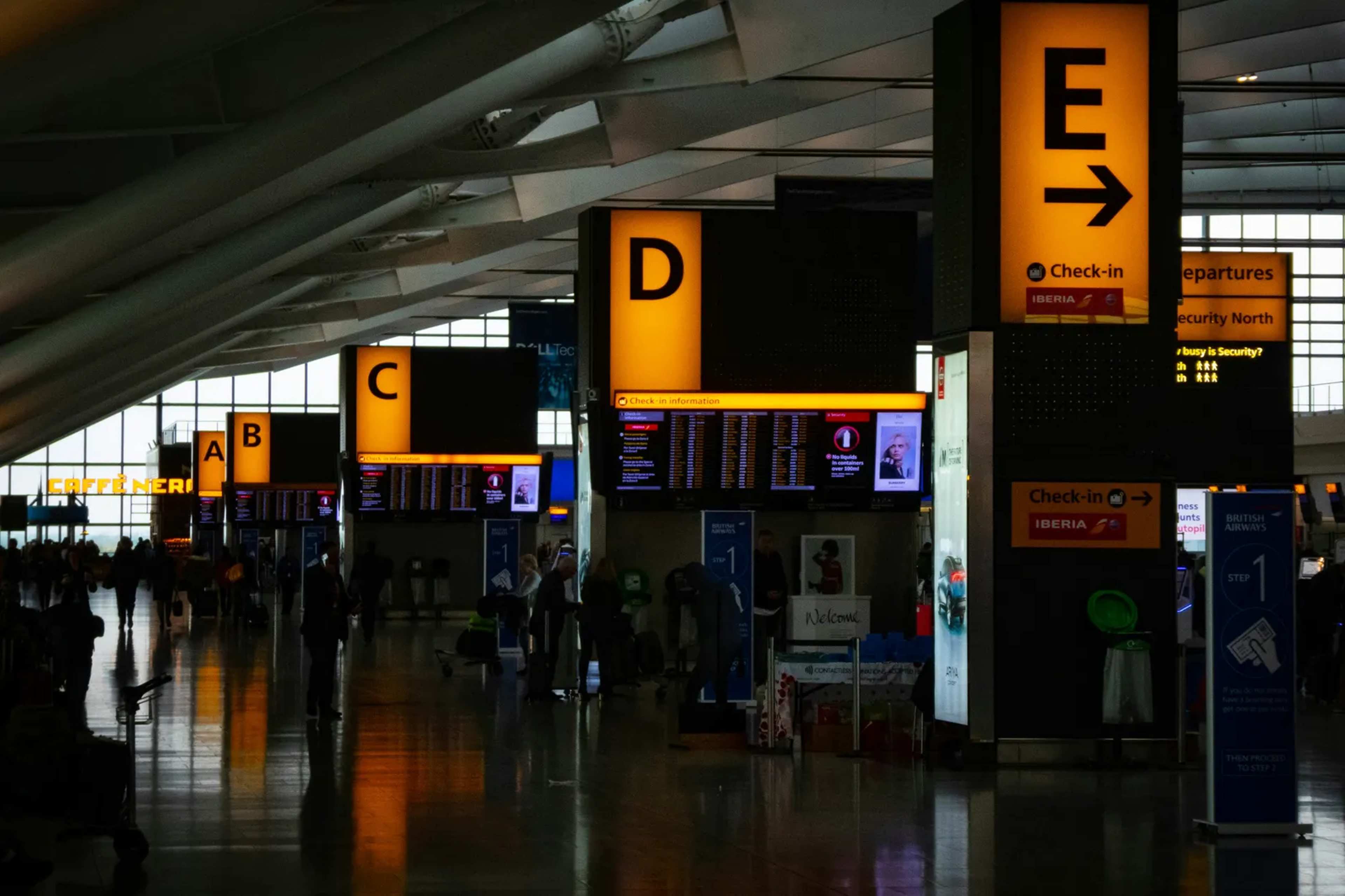
The taxi smells like diesel and something sweet you can’t name.
You don’t speak the language.
Your card declined at the border kiosk.
And yet – you are calm.
Impossibly, quietly, usefully calm.
Now picture your kitchen. Tuesday evening. The person you love most in the world says something that lands wrong. And everything collapses. Your voice rises or goes dead silent. Your chest tightens in a way no missed flight ever managed. You freeze – not with adventure, but with the specific dread of being truly, dangerously seen. There is a name for this gap. Not a diagnosis. Not a flaw. It is the space between the identity you perform under pressure and the one you actually inhabit. The traveler-self. The crisis-solver. The calm stranger in a strange land – versus the person who cannot finish a sentence when someone at home questions their choices.
1. The Novelty Flood

Your brain is not brave. It is, under the right conditions, simply distracted from being afraid.
When you land somewhere unfamiliar, every sensory channel opens at once. New smells. New sounds. New visual data that your neural architecture has no prior file for.
When exposed to a novel stimulus, the brain triggers a mass release of dopamine in its reward systems, including the mesolimbic pathway. That flood doesn’t just feel good – it actively reshapes what you pay attention to.
Your amygdala, that ancient alarm system, is still firing. But it is competing now. When augmented by the novelty of a new experience, stress leads to an increase in dopamine – and that stress, augmented by novelty, strengthens reward-related connections in the brain.
The crisis in the foreign country feels manageable because your brain is metabolizing it as adventure data, not existential threat data.
The argument in your living room offers no such buffer. There is no novelty. There is only the brutal, familiar weight of everything that came before.
2. The Habituation Trap
Your home has become invisible to you. Not metaphorically. Neurologically.
If there is repetitive exposure to a stimulus, the body adapts by reducing the response – a process known as habituation. Habituation allows the brain to ignore unimportant information and focus on new and relevant stimuli. Specifically, the brain inhibits a response to a stimulus that is familiar and frequently encountered, allowing selective attention to novel stimuli.
This is why you don’t hear the refrigerator hum anymore. Why the peeling paint in the hallway stopped registering months ago.
But habituation has a darker edge. The people you love most are also subject to this filtering. Their concerns. Their grievances. Their quiet bids for your attention.
You have heard the frequency so many times your nervous system filed it under irrelevant.
The stranger in the souk in Marrakech, however – every word they say is signal. Pure, undiluted, unmissable signal. Your brain is wide open for them in a way it has quietly closed for the people you chose.
3. The Temporary Identity
There is a version of you that only exists in airports and guesthouses.
They are decisive. They tip generously in currencies they don’t fully understand. They ask the locals where the locals actually eat. They are never petty.
This person is real. But they are also, in a clinical sense, a performance made possible by impermanence.
In psychology, novelty seeking is a personality trait associated with exploratory activity in response to novel stimulation, impulsive decision making, and extravagance in approach to reward cues. Novelty seeking refers to the tendency to pursue new experiences with intense emotional sensations.
When the experience is temporary, you cannot fail at it permanently. The bad hotel night ends. The travel conflict resolves or dissolves when you leave the city.
The living room conflict does not have a checkout time.
This is the deal you’ve been making with yourself. And it has been costing you more than you’ve admitted.
4. The Exit Strategy Brain
You are good at leaving. You have practiced it until it reads as sophistication.
The next flight. The next country. The next context where you arrive as a stranger and no one can hold your history against you.
To encourage novelty seeking – which is evolutionarily advantageous – the body produces less dopamine for repeated exposure to a stimulus. In other words: your brain is literally wiring itself to want to leave familiar places.
This isn’t a character defect. It is biology running a very old program that was designed for migration, for scouting, for survival across new terrain.
But you are not a nomadic hunter navigating the savannah. You are a person with a lease and a relationship and an unread text from someone who loves you and doesn’t know how to say they’re hurting.
The exit strategy that kept your ancestors alive is keeping you emotionally unavailable.
The unknown destination is easier than the known conversation.
5. The Mirror You Can’t Outrun
I know this one personally. I know it the way you know a scar – by where it sits and what caused it.
I once navigated a medical emergency in a country where I did not speak the language, had no data plan, and had to mime a description of symptoms to a pharmacist while running on four hours of sleep. I was composed. Borderline cheerful. Problem-solving in real time with a clarity I found almost alarming.
Three weeks later, back home, someone I loved asked why I always seemed so far away. I had no answer. I stared at the middle distance like it contained the exit row. The pharmacist crisis was solvable. This wasn’t. Because this required me to be present, not capable.
Novelty is a cognitive appraisal dimension with the capacity to enhance attention and emotions and hence create lasting vivid memories. Novelty influences the intensity of emotions, stronger memory, and therefore affects the ease of experience reconstruction and reminiscence.
Every foreign crisis is memorable precisely because your whole brain was lit up for it. Every domestic one blurs – because you were already halfway gone.
6. The Dopamine Debt
Here is the part no one tells you about the travel-as-coping mechanism: it borrows against a neurological balance you do not have infinite reserves of.
Novelty seeking and addiction show an overlap in the mesocorticolimbic reward pathway of the brain. Exposure to novel stimuli activates the neural substrates that also mediate the rewarding and reinforcing effects of drugs of abuse.
The word addiction is heavy. But consider it honestly. The craving for a new city when the current emotional terrain gets uncomfortable. The low-grade restlessness when you’ve been in one place too long. The way the planning of the next trip functions as relief.
For some people, the adrenaline-dopamine rush converts fear into excitement that propels them toward experiences others avoid. But what happens when that propulsion is pointed away from the people you need to move toward?
The debt accumulates quietly. In silences that stretched too long. In people who eventually stopped asking you to stay.
7. The Amygdala Workaround
Your fear response is not broken. It is simply being routed around a chemical construction zone called novelty.
Dopamine plays an important role in fear and anxiety, modulating a cortical brake that the medial prefrontal cortex exerts on the anxiogenic output of the amygdala. In a novel environment, that modulation is working overtime. The dopamine flood is literally suppressing the alarm.
Essential for detection of relevant external stimuli and for fear processing, the amygdala is under modulatory influence of dopamine.
At home, surrounded by the familiar, that chemical buffer isn’t triggered. The amygdala runs loud. Every familiar frustration, every repeated conflict pattern, every charged silence – processed at full, unmedicated volume.
You are not braver abroad. You are chemically cushioned abroad. The distinction matters because one of those things you can work with, and one is just a story you tell yourself at baggage claim.
8. The Cognitive Flexibility Illusion
Travelers often believe their capacity for adaptation is a personality trait. A virtue, even. A sign of psychological resilience that other, less-traveled people simply lack.
This is partially true. New and challenging experiences fire up the brain and make new neural connections, enhancing cognitive flexibility and problem-solving skills. The novel environment really does train you to think differently.
But here is the uncomfortable corollary: that same cognitive flexibility, when it is exclusively practiced in foreign contexts, can become a form of emotional avoidance dressed in the aesthetics of growth.
Flexibility without rootedness is just permanent drift.
The most sophisticated form of intelligence is not the ability to adapt to a new city every month. It is the ability to remain present and adaptable inside a relationship that knows all your old behavior patterns and loves you anyway – or is trying to.
That requires a different kind of courage. One no passport stamps.
9. The Familiarity Penalty
The people closest to you are penalized for knowing you.
Not deliberately. Not cruelly. But structurally, neurologically, inevitably.
Humans compare incoming information with already existing knowledge and schemas to make predictions. New stimuli are more likely to differ from previous mental concepts, negating expectations and becoming more memorable – the unpredictability and unexpectedness of novelty improves memory.
Every interaction with a stranger is high-resolution. Full-bandwidth attention. You remember the conversation with the bartender in Lisbon in granular, sensory detail.
The conversation you had with your partner last Thursday? Gone. Because your brain marked it as repeat data and routed it to background processing.
This is the familiarity penalty – and you are charging it to the account of the people who stayed. The stranger gets your best neurological attention simply by virtue of being unknown. The beloved gets your distracted remainder.
The most dangerous form of taking someone for granted is purely chemical in origin. Which does not make it forgivable. Only explicable.
10. The Still Place
At some point, the destinations run out. Not literally – the world is wide and the flight routes multiply. But psychologically, the return is always the same. You land. You are home. The walls are the same color they were when you left. The unresolved things are still unresolved, patient as furniture.
Dangers come, but dangers also go, and when they do, the brain has an “all-clear” signal that teaches it to extinguish its fear. A new study shows this signal is the release of dopamine along a specific interregional brain circuit – a mechanism that restores calm when it works, but prolongs anxiety when it doesn’t.
The “all-clear” your brain needs – the one that says: this space is safe, this person is safe, this stillness is not a threat – that signal requires you to stay long enough for it to fire. To stop interpreting the familiar as insufficient. To let the noise of the known world stop reading as danger and start reading as home.
The crisis abroad was never the real test. It was a distraction from it. A dress rehearsal performed in a safer theater, where the stakes look high but the exit is always visible and you never truly lose anything you can’t replace with a new itinerary.
The real test is the room you return to. The face that doesn’t require translation. The silence you haven’t yet learned to sit inside without flinching.
The foreign country was generous. It gave you its chaos and asked nothing permanent of you. It let you be capable and competent and wholly unaccountable for anything that came before.
But somewhere, there is a conversation that has been waiting in the same chair for years. It is not exotic. It does not smell like jasmine or diesel or arrival. It smells like the life you have been moving around rather than moving through.
You already know how to board a plane in the dark without looking back.
The question, finally, is whether you know how to stay.