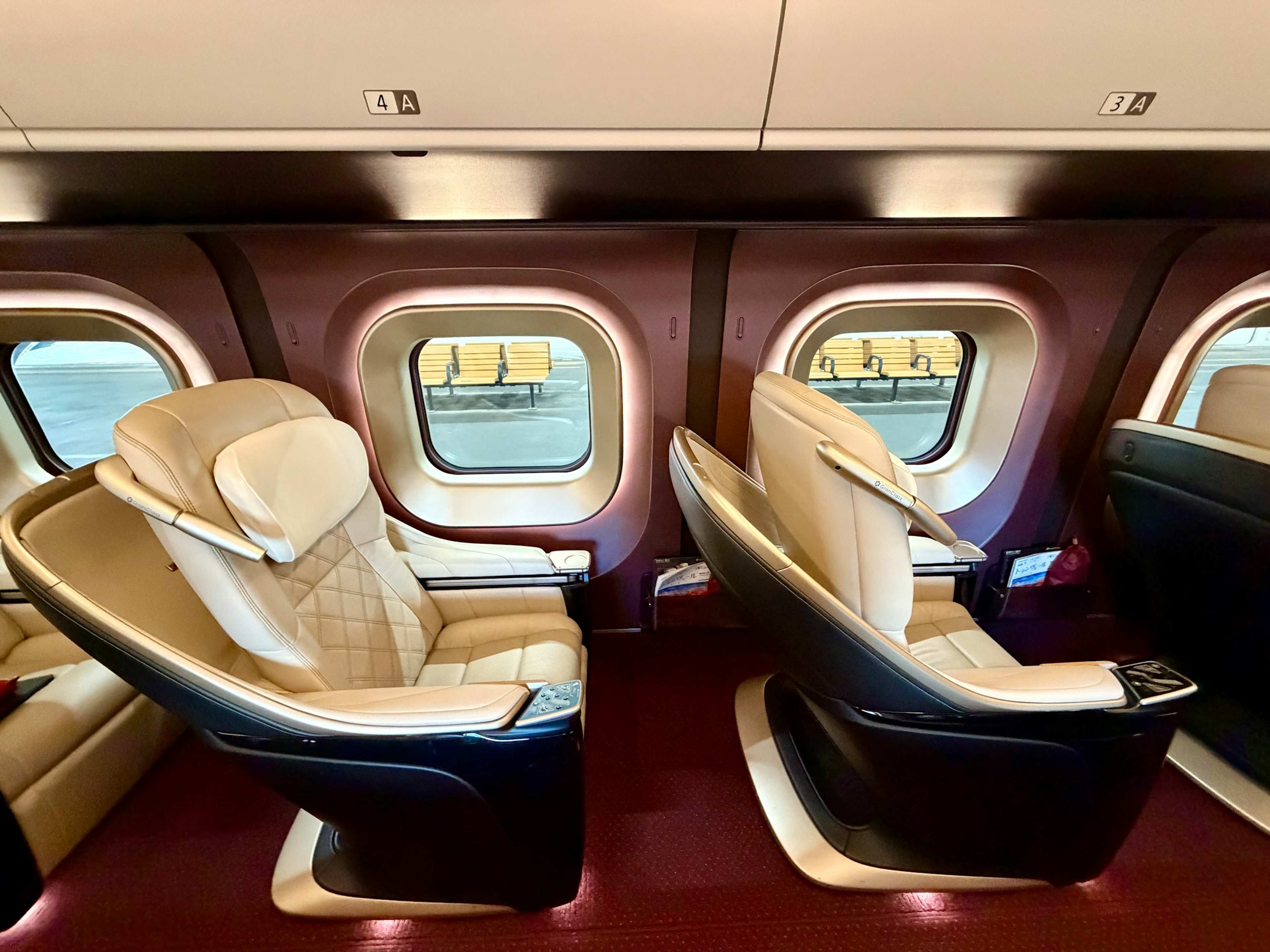
You arrive at the hotel at 11 PM.
You set your bag down.
And then – before you even take your coat off – you start moving along the walls.
Checking the smoke detector. The clock radio. The air vent above the bed. The tiny dark eye of the television.
You tell yourself it’s practical. You tell yourself it’s smart. But somewhere underneath the ritual, there is a child who learned – very early, very thoroughly – that being watched was not a question of paranoia. It was a question of when.
It isn’t weakness. It isn’t neurosis. It is architecture. Someone built this in you, room by room, year by year, long before you ever held a hotel keycard.
1. The Unlockable Door
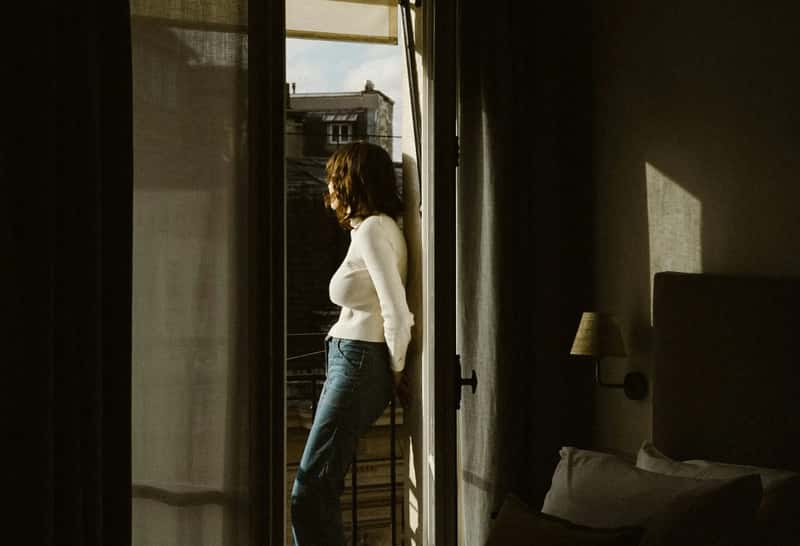
You grew up in a home where doors didn’t mean what doors are supposed to mean.
They opened without knocking. They were taken off hinges as punishment. They swung in at midnight to deliver a verdict you hadn’t earned.
Perhaps most insidiously, those early invasions triggered a profound loss of self-esteem and identity crisis – when private thoughts, actions, or information are exposed without consent, it can feel like a fundamental part of oneself has been stolen or tainted.
So now, in a hotel room in a city that doesn’t know your name, you check the lock three times. You slide the bolt. You push the chain.
Not because you expect someone to come in.
Because your nervous system never got the memo that the threat passed.
The door is fine. The door has always been fine. But the child who learned that doors are suggestions – that child still lives in your hands as they grip the handle and pull, hard, just to feel the resistance.
That resistance is proof. And you still need proof.
2. The Scanning Ritual
You don’t enter a room. You assess one.
Your eyes sweep left-to-right before your body fully crosses the threshold. You note the exits. You clock the corners. You register what’s different from the last time a space looked like this.
Hypervigilant symptoms operate as a perpetual scanning of the environment – searching for sights, sounds, people, behaviors, smells – anything reminiscent of threat or trauma.
This isn’t skill. This is survival made elegant.
A child growing up in an abusive home is immersed in an unpredictable environment. Maybe their parent is sometimes in a good mood and then – out of the blue – becomes enraged or violent. That child learns how to pick up on very subtle clues because knowing what state their parent is in helps keep them safe.
You became an expert reader of rooms because you had to read one room in particular, over and over, before you were old enough to understand what you were doing.
Now every new room is that room. Until proven otherwise.
3. The Exit Cartographer
You always know where the exit is.
Not because you think there’ll be a fire. Because your nervous system refuses to be in a space without a known escape route.
You have been finding exits your entire life. In rooms. In relationships. In conversations that felt like they were about to close in. You developed a talent for it – a near-architectural sensitivity to the structure of any space you enter.
Restaurant booths near the back. Seats on the aisle. Hotel rooms that aren’t on the ground floor, but aren’t too high to matter.
You factor escape into every single environment you enter, automatically, without deciding to.
But here is what the exits have never led to: rest. Every exit leads to another room. Another space to scan. Another perimeter to establish.
The tragedy of the exit cartographer is that the map never ends. There is always another building. Another lobby. Another hallway that needs to be understood before your shoulders drop even half an inch.
4. The Body That Won’t Believe the Danger Is Gone
You are in a beautiful place.
The sheets are clean. The city hums softly below the window. There is no threat here – nothing in this room wants anything from you.
And yet.
When someone experiences trauma, the body’s protective alarm system is engaged in full force. Normally, once a threat passes, that system quiets and returns to baseline. But something changes – the “off switch” doesn’t fully reset. Instead, the brain and body remain sensitized, ready to detect danger at all times.
Your jaw doesn’t unclench at dinner. Your shoulders don’t drop on the plane. You sleep lightly – always lightly – because sleeping deeply feels like a risk you haven’t cleared yet.
When this overactive threat response continues into adulthood, it can interfere with daily life. Situations that pose no actual danger can still trigger the body to remain on high alert, creating feelings of unease and making relaxation nearly impossible.
Your body is not broken. It is loyal. Loyal to a threat that no longer exists, in a house you no longer live in, under a version of yourself you no longer are.
The work – the long, quiet work – is teaching it the difference.
5. The Performance of Calm
I know this one from the inside.
There is a version of me that travels well. He knows what to order. He finds the good table. He doesn’t flinch when the concierge mispronounces his name.
But in the room, alone – door locked, curtains drawn, the city going on outside without him – there is another version. Older. Quieter. Running his fingers along the baseboard molding, checking behind the television, pressing the face of the smoke detector gently, listening for something that shouldn’t be there.
That version learned, early, that privacy was a negotiated state. That you could be observed at any moment. That the appearance of being alone and the reality of being alone were not the same thing.
Trust issues and social withdrawal often emerge as individuals grapple with the betrayal inherent in many privacy violations. The psychology of being private becomes a defense mechanism, with individuals becoming increasingly guarded in their interactions. This can lead to a self-imposed isolation, further exacerbating feelings of loneliness and alienation.
The performance of calm is exhausting. But it’s the only costume that fits in a lobby.
6. The Intimacy Problem
Intimacy requires a witness you trust.
But if your early environment taught you that being witnessed meant being exposed – that someone knowing something about you was inherently a leverage point – then closeness feels like a contract with dangerous fine print.
When a person’s privacy is compromised, it can lead to feelings of anxiety, stress, and a loss of control. And when that happens repeatedly, in childhood, that loss of control becomes the baseline expectation for all closeness.
You travel well with others but never fully arrive with them. You share a room but not the ritual. You don’t explain the camera check. You do it while they’re in the shower, quickly, efficiently, and you never mention it.
Because how do you explain a childhood in three sentences?
How do you say: I was watched without my knowledge, more than once, and it rewired me, and now every enclosed space is a question I have to answer before I can breathe?
You don’t say it. You just check. And you tell yourself you’re being careful.
7. The Sleep That Never Fully Comes
Hotel beds are notoriously soft. Hotel rooms are notoriously dark. The conditions, technically, are ideal.
And still, you lie there – wide, flat, listening.
Hypervigilance often affects sleep: someone may be too afraid to fall asleep, and when they do, the smallest noise can fully wake them up, and the surge of adrenaline can make it very difficult to get back to sleep.
You hear the HVAC system cycling. The elevator arriving on your floor. The footsteps in the hallway that pause – just briefly – near your door.
Sleep disruption – falling asleep or staying asleep becomes difficult, with frequent awakenings, light sleep, or nightmares.
You are not afraid of the hallway. You are afraid of the version of the hallway your nervous system remembers from a house that no longer exists.
Travel amplifies this. New acoustics. New shadows. New geometry of threat.
You get up. Check the door again. Return to the bed. Listen again from the beginning. This is not insomnia. This is the night shift your nervous system never clocked out of.
8. The Overpacker’s Secret
You overpack. Not clothes – those you manage fine.
You overpack contingencies.
Backup phone chargers. Extra medication. A list on your phone of addresses – embassy, hospital, nearest person who knows you’re here.
There is a kind of brain wired to always look ahead, to always look around corners, to think about and brace for the worst. This can keep someone from living in and appreciating the present moment because their head is always 20 steps ahead.
You are not a pessimist. You are someone for whom the worst-case scenario once arrived without warning, and you made a quiet, unspoken decision: never again.
Never again without a plan. Never again without an out.
Hypervigilance is the result of coping in situations where you couldn’t solve the problem, but could only cope.
The overpacking is not anxiety. It’s memory with luggage tags on it.
9. The Distrust of Delight
Something good happens. A view. A meal. An afternoon with nothing on it.
And instead of inhabiting it, you wait for the catch.
This is one of the quietest symptoms. The most invisible. The one you feel most ashamed of, because it looks – from the outside – like ingratitude.
But it isn’t ingratitude. It’s pattern recognition trained on a childhood where good moments often preceded difficult ones. Where calm was frequently the weather before a storm moved through.
Research suggests that anxiety spurs selective attention in your brain – and then it creates a feedback loop: you look for a specific threat and get more anxious, which causes you to look for more threats. You arrive in a new city hoping for wonder. Instead, your brain serves up the exit sign above the restaurant door.
You have trained yourself to love things with one hand while holding the door open with the other. Just in case. Just in case delight turns on you the way it always seemed to.
It won’t. But your nervous system doesn’t know that yet.
10. The Identity That Only Exists in Transit
Here is the dark paradox of the privacy-wounded traveler:
You feel safest when you are between places.
Not arrived. Not departed. In the airport. In the taxi. In the long, suspended grammar of being somewhere that isn’t anywhere yet.
The identity that travels carries all of its history. Even the parts you packed last.
In transit, no one expects you to be fully present. No one can reach all the way into a departure lounge and demand an accounting of who you are. You are anonymous in the best possible sense – unnamed, unlabeled, unwatched.
There is a profound difference between curiosity and surveillance. One opens you to the world. The other locks you inside a glass box, face pressed against the pane, watching everything with the focused dread of someone who already knows how this ends.
You have learned to live inside the glass box and call it freedom. Because it’s the closest to freedom you’ve ever felt.
The question the airport never asks – and the one the therapy room eventually does – is: what would it feel like to arrive and stay?
11. The Weight You Carry Through Every Door
Here is what no one tells you about growing up in a home where privacy was never guaranteed:
The surveillance doesn’t have to be real anymore for you to feel it.
Hypervigilance persists regardless of actual threat level – you can feel the same alarm sitting in your own living room as you would in a dark alley. It distorts perception, causing ambiguous situations to be misread as threatening, and minor stimuli to be exaggerated into major concerns.
You internalized the watcher. You became the watcher. And now you carry that surveillance equipment into every hotel room, every relationship, every moment of stillness that should be peace but registers as risk.
This ingrained state of vigilance may stem from a current crisis, or it may be rooted in childhood experiences characterized by an overly anxious, worrying parent, a tumultuous domestic environment, past traumas, or emotionally unavailable parents.
The camera check is not irrational. It is the body doing the only thing it knows how to do with a childhood it was never allowed to fully own: verifying, one more time, that this space – this small, temporary, rented square of the world – belongs to no one else tonight.
Recovery is not about erasing the past – it’s about finding a way to move forward while honoring the experiences that shaped you. That means letting the ritual exist without shame. It means understanding that the child who learned to check was not wrong – they were surviving. They were solving a real problem with the only tools available.
And it means, slowly, gently, teaching that child the difference between a room that was never safe and a room that simply hasn’t been trusted yet.
You will check the room again tonight. Maybe tomorrow night, too.
But one day, you will set your bag down first.