The alarm goes off at 5:47 AM.
You’re already awake.
The calendar is a wall of obligations dressed up as opportunity.
Your coffee is functional, not tasted. Your commute is a blur of curated playlists engineered to optimize your mood. Your body moves through the day like a highly-trained machine – and somewhere inside that machine, something very human has gone very quiet.
Then you land somewhere new. A city you don’t own. Streets with names you can’t pronounce. And your fingers – strange, alive things – graze a stone wall outside a café, and you stop. Actually stop. Not because you have to. Because something in you needed to know what that wall felt like.
That is the canyon between the version of yourself performing excellence and the version who still has a body, still has senses, still craves the crude, unoptimized poetry of physical existence. The high-performance life doesn’t ask you to feel. It asks you to deliver. And over years, quietly, you comply – until the unfamiliar friction of a foreign cobblestone reminds you that you were never just a productivity engine.
1. The Permission to Notice Slowly
Back home, attention is a resource – rationed, directed, and billed by the hour.
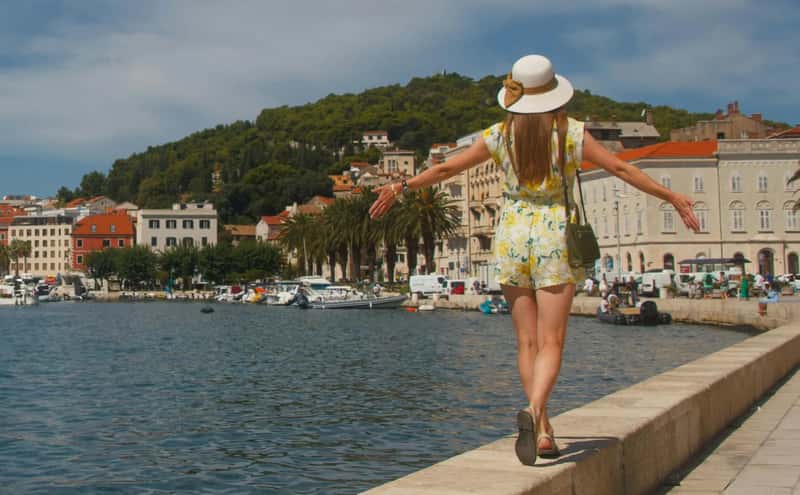
In a new city, attention becomes something else entirely. It becomes a gift you give to the world without expectation of return.
The modern high-performance life produces a qualitative impoverishment of sensory inputs – a chronic exposure to monotonous, artificial stimuli alongside a deep deficit of the varied, complex, and restorative sensory experiences that genuine presence provides.
The new city breaks that contract.
Suddenly, you notice the angle of afternoon light on a yellow building. You notice it not because it will help your Q3 numbers. You notice it because your nervous system, starved of slow observation, pulls at you like a dog at a leash.
This is the first reclamation. The permission – finally, guiltlessly granted – to look at something simply because it is there.
The high-performance self is always looking through things, toward the next goal. The traveling self, for once, looks at them.
Slow noticing is not laziness. It is the rarest luxury in a life designed for speed.
2. The Texture of the Ground Beneath You
You don’t feel your office floor. You don’t feel the parking garage. You feel them the way a ghost feels a wall – present, but unregistered.
But in a new city, the ground talks back.
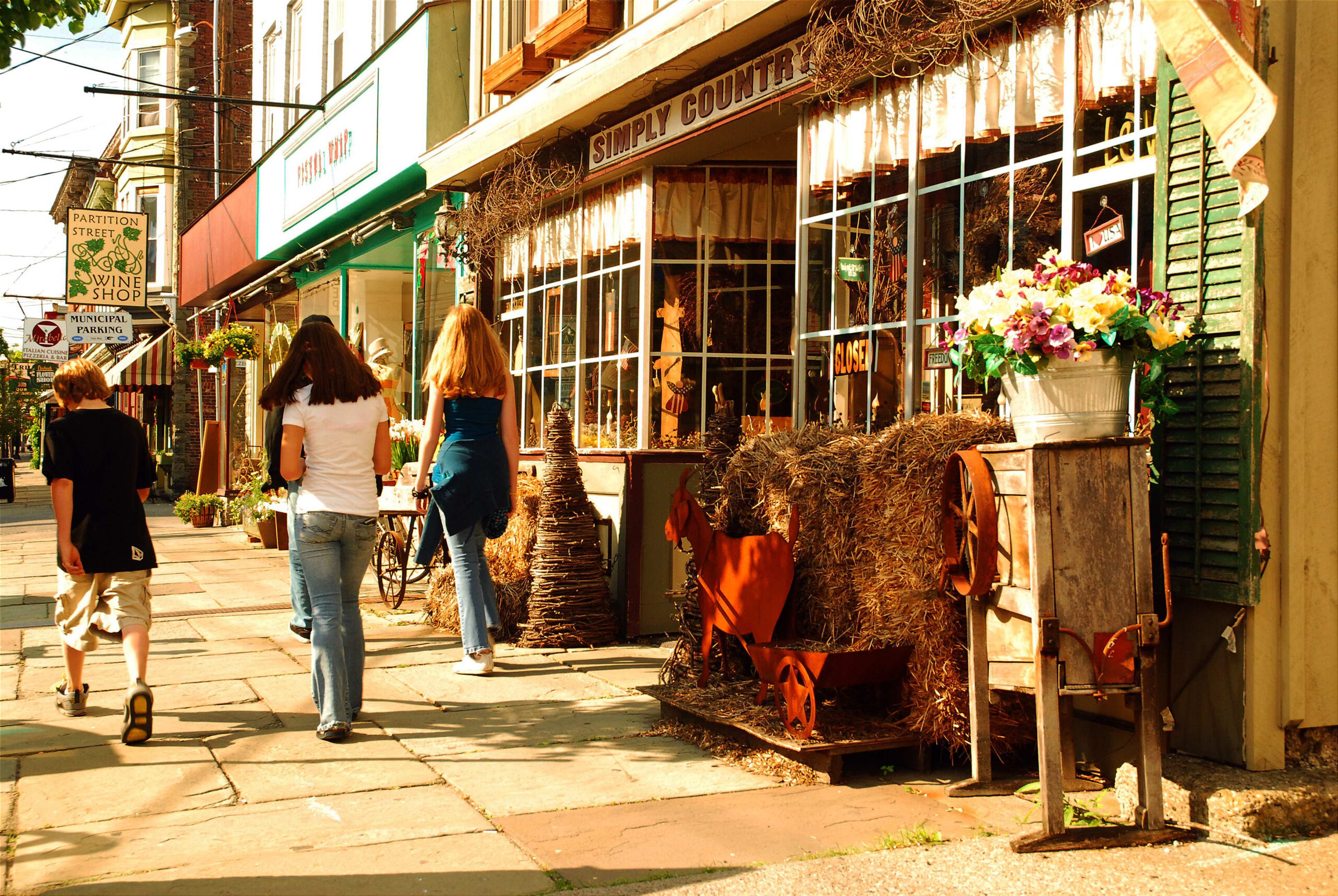
There are cobblestones that shift under your weight. There are wooden boardwalks that creak with a sound like an old agreement. There is wet market tile, slick and cold, and terracotta steps worn smooth by ten thousand anonymous shoes before yours.
How we travel significantly affects what we know about our surroundings. But more than knowledge – it affects what we feel about ourselves.
The ground beneath a new city is not background. It is biography. It is evidence that others have lived and moved and worn things down before you arrived.
When you feel that – really feel it through the soles of your shoes – you are not just navigating. You are inheriting. You are accepting, briefly, that you are one small moving body in an enormous, textured story.
That is a sensation your Monday morning calendar has never once offered you.
3. The Smell That Has No Name in Your Language
Olfaction is the most direct line to memory and emotion in the entire human sensory system – and it is the sense most aggressively suppressed by the sanitized, air-conditioned corridors of professional life.
Your office smells of recycled air and mild anxiety.
A new city smells of itself. Entirely, stubbornly, unapologetically itself.
There is the smell of a market in the early morning, when fruit and rot and rain compete for dominance. There is the smell of diesel on a harbor road that somehow translates to freedom. There is the smell of bread from a bakery at 6 AM in a city where you know no one, and it is the most grounding thing you have experienced in months.
Ecological psychology emphasizes the reciprocal relationship between organisms and their environments, suggesting that modern environments fail to provide the sensory affordances necessary for optimal engagement and human functioning.
Smell is the sense that proves this theory without argument.
When a foreign scent ambushes you on a side street, your brain does not calculate its ROI. It simply receives. And in that reception, something unnamed loosens in your chest.
4. The Sound Architecture of an Unfamiliar Place
High-performance daily life has a soundtrack, and you didn’t choose it.
Notification tones. The hum of fluorescent lights. Voices in open-plan offices designed, paradoxically, for collaboration and collective misery. You have learned to hear all of it and process none of it – a psychological sleight of hand your brain performs daily just to keep you functional.
Elements such as noise, crowding, mass media, and urbanization are factors that contribute to sensory overload. And chronic overload, researchers note, trains the brain to tune out – not just the noise, but everything adjacent to it.
A new city breaks that trained deafness.
You hear a language you don’t understand, and because you can’t decode the words, you hear the music of the speech instead. You hear church bells that don’t ask anything of you. You hear rain on a tin roof in a neighborhood where you are completely anonymous, and it sounds, improbably, like relief.
The sound architecture of an unfamiliar city is a reminder that your ears were built for more than conference calls.
5. The Body’s Delight in Being Disoriented
I remember standing at an intersection in Lisbon, completely lost, holding a paper map that disagreed with reality in at least four specific ways.
And I remember being – and this is the part that surprised me – completely fine.
More than fine. Lit up. Alive in a way that my optimized daily schedule had quietly been eroding for years.
Getting stuck might mean repeatedly navigating within the confines of our narrow cognitive maps. Learning and personal change require expanding the map by exploring uncharted territories within.
The body in disorientation is not a body in crisis. It is a body in conversation with uncertainty – and that conversation activates something ancient and necessary. Navigation. Instinct. Presence. The full, undivided involvement of the self in a single immediate problem: where am I, and what do I do next?
Back home, you know where everything is. You know what everything expects of you. The coordinates are fixed and the performance is rehearsed.
Disorientation is the cure for that particular kind of deadness.
6. The Visual Luxury of Imperfection
The high-performance environment is relentlessly curated.
Clean lines. Branded interiors. Glass and steel and the quiet violence of spaces designed to communicate competence above all else. You live and work inside an aesthetic that is optimized for impression management – and your eyes, after years of it, are malnourished.
Awe is a complex emotion that arises when we encounter something vast, beautiful, or mind-bending – whether it’s the grandeur of a mountain range, the complexity of a bustling city, or the endless expanse of the ocean.
But awe doesn’t require the grand. Sometimes it requires the flawed.
The peeling paint on a centuries-old doorframe. The mosaic that is missing three tiles in the bottom corner. The market stall organized entirely by the logic of its owner and no one else. These imperfections carry stories that no corporate design brief ever accommodated.
When you drink them in – really drink them in – you are reclaiming the visual life that minimalism and brand consistency quietly stole.
Your eyes were made for more than slide decks. A new city reminds them of that.
7. The Forgotten Pleasure of Eating Without an Agenda
At home, food is a variable to be managed.
It is fuel, or it is a business meal, or it is something you eat standing over the kitchen sink at 10:30 PM because you forgot that hunger was a signal your body had been sending for several hours.
In a new city, food becomes an event again.
Visiting a new city may activate the parts of our brain responsible for memory and spatial awareness, while trying new foods may trigger the pleasure centers in our brain.
When you sit at a table where the menu is in a language you only half-understand, something releases. The decision is no longer about macros or calendar constraints. It is about curiosity. About pointing at something and surrendering to the outcome. About tasting something that has a place and a history and a grandmother behind it.
Eating without an agenda is one of the most radical acts available to a high-performer. A new city makes that radicalism feel easy.
The food tastes different when you are actually there. Because you are, for once, actually there.
8. The Social Permission of Anonymity
At home, you are a role before you are a person.
You are the title, the reputation, the consistent brand identity that you have spent years constructing and maintaining. Every interaction carries the weight of that construction. Even relaxation is performed for an audience that knows your name.
In a new city, no one knows your name.
Solo travel pushes you out of your comfort zone in a healthy way. Facing uncertainty, making independent decisions, and solving problems on your own all contribute to a stronger sense of self.
But anonymity gives you something even more immediate than resilience. It gives you the terrifying, exhilarating freedom to be unrecognized. To sit at a bar and just be a body with a glass. To laugh too loudly at something without considering how it will land on your personal brand.
The identity you perform at home is a construct – useful, carefully assembled, probably necessary. But it is not the whole of you.
Anonymity in a foreign city is the gap between the mask and the face. And in that gap, people often discover that the face is more interesting than the mask ever was.
9. The Deep Intelligence of Aimless Walking
The high-performance self does not walk aimlessly. It optimizes routes. It counts steps. It pairs movement with podcasts that will deliver professionally useful insights in a 38-minute window.
There is no genre of self-improvement content dedicated to going nowhere in particular.
And yet.
The learning process of wayfinding requires one to actively navigate in order to accrue knowledge about the surrounding environment. But the knowledge accrued on an aimless walk is not cartographic. It is existential.
When you walk without destination in a new city, your body makes choices your mind hasn’t pre-approved. You turn left because of a smell. You slow down because of a sound. You stop because of a quality of light that lands on a wall in a way that makes time briefly irrelevant.
Attention Restoration Theory, developed by Rachel and Stephen Kaplan, suggests that the “soft fascination” found in natural environments allows directed attention to rest, restoring cognitive resources depleted by the hard fascination of urban and digital stimuli.
Aimless walking is soft fascination in motion. It is the brain’s vacation from its own productivity. And it may be the most restorative thing a high-performer can do – precisely because it accomplishes nothing at all.
10. The Recognition That You Were Always More Than Your Output
This is the heaviest one. The one that sits in your chest when the city is quiet and the jet lag has stripped away every defense.
The high-performance life is built on a seductive, corrosive premise: that you are what you produce. Your value is your output. Your identity is your achievement. And if you stop producing, if you step outside the metrics, something unnamed and vaguely terrifying waits in the silence.
Travel disrupts your routine and introduces novelty to your brain, which improves cognition and helps reactivate reward circuits. This isn’t just about feeling good – it’s about fundamental changes in how your brain functions.
Travel has been shown to stimulate neuroplasticity, enhance dopamine levels associated with motivation, and reduce cortisol levels, indicating a decrease in stress.
But the deeper truth that a new city reveals has nothing to do with brain chemistry and everything to do with identity. When you stand on an unfamiliar street at dusk and feel genuinely, wordlessly moved by the beauty of a place that has no idea you exist – what was it that was moved?
Not your title. Not your output. Not your five-year plan.
Something older than all of that. Something that existed before the first performance review and will exist long after the last one. The self that was always watching from behind the high-performer – patient, a little sad, waiting for a city it had never seen before to finally call it forward.
Multisensory impressions satisfy the need for sensory pleasure and prompt reflection on the relationship between ourselves and the destination – a process conducive to the formation of place identity. But the place identity that forms in a foreign city is really a self identity. A quiet confrontation with the person who has been living inside the performance all along.
That person was not optimized out of existence. They were just waiting in the gap between one flight and the next, between the last meeting and the first unfamiliar street corner, between who you are required to be and who you actually are when no one is keeping score.
The city doesn’t give you back to yourself. It just creates the conditions in which you remember where you left yourself to begin with.
And maybe that is all any of us are ever really looking for – not a destination, but a moment of sensory truth quiet enough to hear.