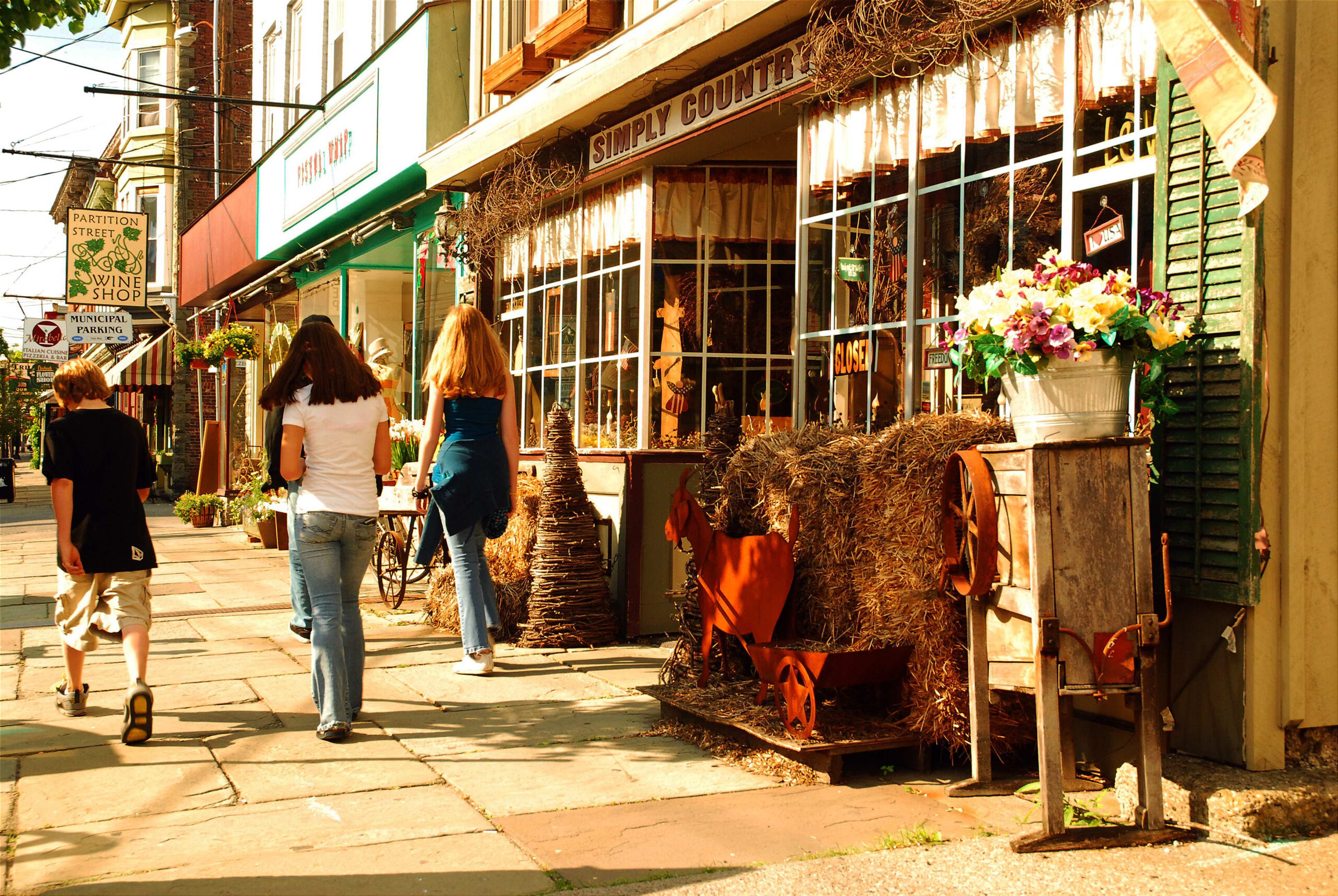
The restaurant hums around you.
You aren’t listening.
You’re already lifting the phone.
Already framing the menu. Already pressing the button. Already somewhere between the moment and the archive of the moment – which is not the same place at all.
There is a version of you that travels and a version of you that documents. Most people assume these are the same person. They are not. One walks into a Lisbon side street and tastes the salt in the air. The other stops, pulls out a phone, and photographs a ceramic tile sign with slightly blown-out highlights and a tourist’s thumb in the corner. The first version lives. The second one insures.
That gap – between the traveler who inhabits a moment and the archivist who audits it – is the identity crack we are here to talk about. It is quieter than anxiety. It is subtler than fear. But it is real, and it is running the show more often than you think.
1. The Memory Distrust
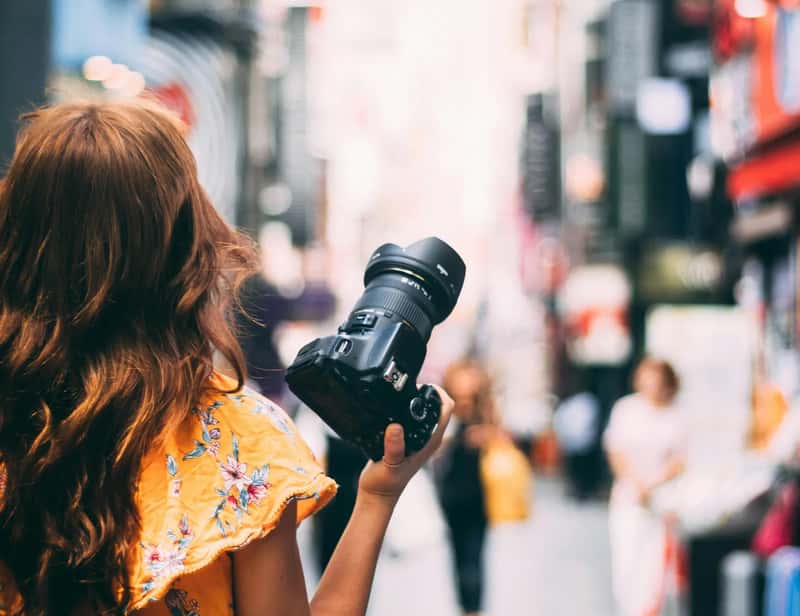
Let’s start at the nerve.
You photograph the menu not because you want to remember the font. You photograph it because some part of you does not trust that you – unassisted, unaided, fully human – will be able to hold this moment in any reliable way.
“Our memory is not faithful,” says Julia Soares, assistant professor of psychology at Mississippi State University. “It’s tied up with who you are and your story making throughout your life.” You already know this. You’ve known it since the first time you forgot the name of a place that once meant everything to you.
That quiet knowing is the engine behind the compulsion.
The compulsion to capture every moment is driven by the fear of forgetting and feeling like you have no control of time as it slips through your fingers. This is not weakness. This is one of the most human responses to impermanence that exists.
But naming it matters. Because a fear you cannot name runs you from underground, and you deserve better than that.
2. The Offloading Contract
There’s a clinical name for what you’re doing when you raise the phone.
Cognitive offloading is a well-established phenomenon in cognitive science. It refers to the delegation of cognitive tasks to external resources in order to reduce mental demand. People use notebooks, calculators, and smartphones to extend memory and problem-solving capacities.
The phone becomes a prosthetic hippocampus. A second brain. A more trustworthy one.
“When people rely on technology to remember something for them, they’re essentially outsourcing their memory,” says Linda Henkel, a psychology professor at Fairfield University. “They know their camera is capturing that moment for them, so they don’t pay full attention to it in a way that might help them remember.”
Read that again. The camera captures. So the brain retreats.
You sign the contract the moment you press the shutter. And the terms are not in your favor. You trade presence for an archive you will likely never open. You swap the raw, unrepeatable texture of a place for a JPEG that will live in a folder called “Italy 2024” forever unopened.
The phone remembers. You do not. That was the deal you made.
3. The Impairment Nobody Talks About
There is a phenomenon so counterintuitive it almost sounds like a cruel joke.
The photo-taking impairment effect is a big phrase for a simple idea. Taking photos of something negatively impacts your memory of it. The concept was first introduced by psychologist Linda Henkel.
The thing you photographed specifically to remember – you remember it less.
In controlled experiments, photographed art was remembered more poorly than art that was merely viewed. This memory impairment was found on tests given after 20 minutes and tests given after two days. The results also showed impaired memory for the visual details of the artwork as well as the overall theme, or gist, of the piece.
This is the wound at the center of the behavior.
You photograph the street food stall. The hand-painted sign. The bar menu with its beautiful chalk typography. And in the act of capturing, you exit the scene. The photograph exists. The memory, paradoxically, dissolves. You return home with a gallery full of evidence and an interior that remains oddly empty of the place.
4. The Decay That Drives You
There is a reason the fear is so persistent. Science gives it a name.
Decay theory tells us that memories eventually fade simply due to the passage of time. If we don’t occasionally activate or retrieve a memory, it gradually fades away and becomes harder to recall. Initially, this theory was proposed to explain forgetting from short-term memory, but it has also been extended to long-term memory.
You know this in your bones. You have felt it.
You’ve reached for a specific memory – a meal, a corner, a particular quality of afternoon light – and found only a smear where precision once lived. The decay is real. The anxiety it produces is rational. The photo-taking response to that anxiety is understandable.
We take photos to capture and preserve memories with the understanding that our memory of events, places, or people within the photos will fade with time. According to decay theory, our memories of these events will naturally decline unless we actively retrieve them. In that way, a photograph can serve as a tangible memory cue, stimulating retrieval and slowing the decay process.
A cue. Not a replacement. That distinction is everything.
5. The Gallery No One Revisits
I have 47,000 photographs on my phone. I know this because I checked, once, around 2 AM in a hotel in Porto, feeling deeply unsettled by the number. Forty-seven thousand. I have looked at maybe four hundred of them with any kind of attention. The rest are a held breath. An unfulfilled promise I made to a moment that passed anyway.
I have a photograph of a restaurant menu in Cascais. I can tell you it exists. I cannot tell you a single item on it. The photo sits in a folder. The meal, which was extraordinary, has become a warm blur with no edges.
Of course, the reality is that most of the photos we take will probably never get a second glance. The question becomes: how well do we remember the experiences we photograph if we never revisit the photos?
The answer, it turns out, is poorly.
Across three studies, participants without media consistently remembered their experience more precisely than participants who used media. There is no conclusive evidence that media use impacted subjective measures of experience. Together, these findings suggest that using media may prevent people from remembering the very events they are attempting to preserve.
Forty-seven thousand photographs of moments I was not fully in.
6. The Identity Archive
The compulsive photographing of travel – every sign, every menu, every atmospheric alleyway – is not merely a memory strategy. It is an identity project.
The archive says: I was here. I am a person who goes places. Look at the evidence. Here is proof of a rich and textured life.
Our photo habits are no longer just about preserving memories; they’re part of how we construct them in the first place. And by extension, how we construct ourselves. The traveler who photographs everything is building a case. Exhibit A: the spice market in Marrakech. Exhibit B: the ferry terminal in Dubrovnik. Exhibit C: the handwritten menu in a Kyoto alley.
Each photograph is a vote for a particular version of yourself.
The fear underneath it is this: without the photographs, did the self exist in that place at all? Did it count? Can you prove it? And if the memory fades – as it will, as it always does – does that mean you were not, in some essential way, fully there?
This is identity anxiety wearing a camera strap.
7. The Attention Robbery
Here is what the camera costs you, frame by frame.
Neuroscientific research shows that memory depends on interactions between the hippocampus, which helps consolidate new experiences, and the prefrontal cortex, which organizes them into coherent life narratives. These systems are especially sensitive to attention and emotional engagement – factors that may be disrupted when we’re more focused on photographing a moment than experiencing it.
Attention is not infinite. It is a resource, and the phone is a draw on it.
“If you go to a concert and you spend 90 minutes filming, focusing on getting a good angle, then it reduces your enjoyment of the situation, as well as the memory you have of it.”
Replace concert with dinner. With the walk through the old city. With the market at dawn. The math is the same.
Every photograph taken in distraction is a small theft. You steal from the present to give to a future self who may never open the folder. And if you’re distracted, you may have a photograph to prove you were there, but your brain may not remember. The evidence exists. The experience does not.
8. The Control Illusion
Let’s be honest about what the camera really is.
It is a control mechanism for a world that will not be controlled. Travel, by its very nature, is the temporary surrender of the familiar. New food, new language, new streets that lead nowhere you expected. The camera restores a sense of order to the chaos of the new.
Researchers at the University of California have found that cognitive offloading, or the tendency to rely on things like the Internet as an aide-mémoire, increases after each use. We might think that memory is something that happens in the head, but increasingly it is becoming something that happens with the help of agents outside the head.
Each photograph is a small act of dominion. You cannot control what you will forget. But you can photograph the menu and tell yourself you have handled it.
The illusion is airtight. Until the phone dies in the middle of a foreign city and the panic that follows – disproportionate, strange – reveals exactly how much of yourself you had outsourced to a device.
The control was never real. The moment always belonged to itself.
9. The Presence Paradox
Here is the knife’s edge of it.
Some photography deepens attention. Some photography shreds it.
In Henkel’s experiments, when participants zoomed in to photograph a specific part of an object, their subsequent recognition and detail memory were not impaired. “This suggests that the additional attention and cognitive processes engaged by this focused activity can eliminate the photo-taking-impairment effect.”
Focused attention saves you. Anxious, compulsive, coverage-style photography does not.
If you immerse yourself in the details of a scene as you prepare to take a photo, that process can help anchor memories. “As we search the visual field to decide what to capture in a photo, we are more likely to commit those details to memory,” says researcher Barasch. As such, “taking photos can actually enhance memory for certain details in an experience.”
The question to ask before raising the phone is not “Should I capture this?” The question is: “Am I in this?” Because if you are not in it yet, the photograph will not put you there. It will only confirm your absence in higher resolution.
10. The Moment That Needed Nothing
The heaviest truth about compulsive travel photography is this: the moments that changed you most likely required no documentation.
The conversation at the bar that went until four in the morning. The rain that started suddenly in a square and made everyone laugh. The exact quality of bread and olive oil at a table near a window in a city you can still feel but can no longer precisely name.
You didn’t photograph those. You couldn’t have. They arrived as presence, and they stay as presence.
There is a view that people who take pictures lose their capacity for close observation. “Without a camera, you study a thing more carefully and remember it better.”
The fallibility of human memory is well established, and offloading can be useful in maximizing the storage of information by allowing a greater amount of information to remain accessible. But there is storage, and then there is being. They are not interchangeable.
The menu is not the meal. The photograph is not the place. The archive is not the life. And the fear that your memory is not reliable enough to hold the moment – that fear is not a reason to photograph everything. It is an invitation to be so fully inside the experience that the memory forms itself, the way the best ones always do: slowly, deeply, without asking permission.
The camera was never the answer to the fear. Presence was. Presence is always the answer, even when it is the hardest thing to maintain in a world that has made distraction its primary product and documentation its primary language.
You do not need proof that you were somewhere. You need to have actually been there – with your attention undivided and your senses tuned all the way up, the phone face-down on the table, the moment held in nothing more and nothing less than the unreliable, irreplaceable, living archive of you.
Put the phone down. The menu will not remember you either. But this – right now – might.