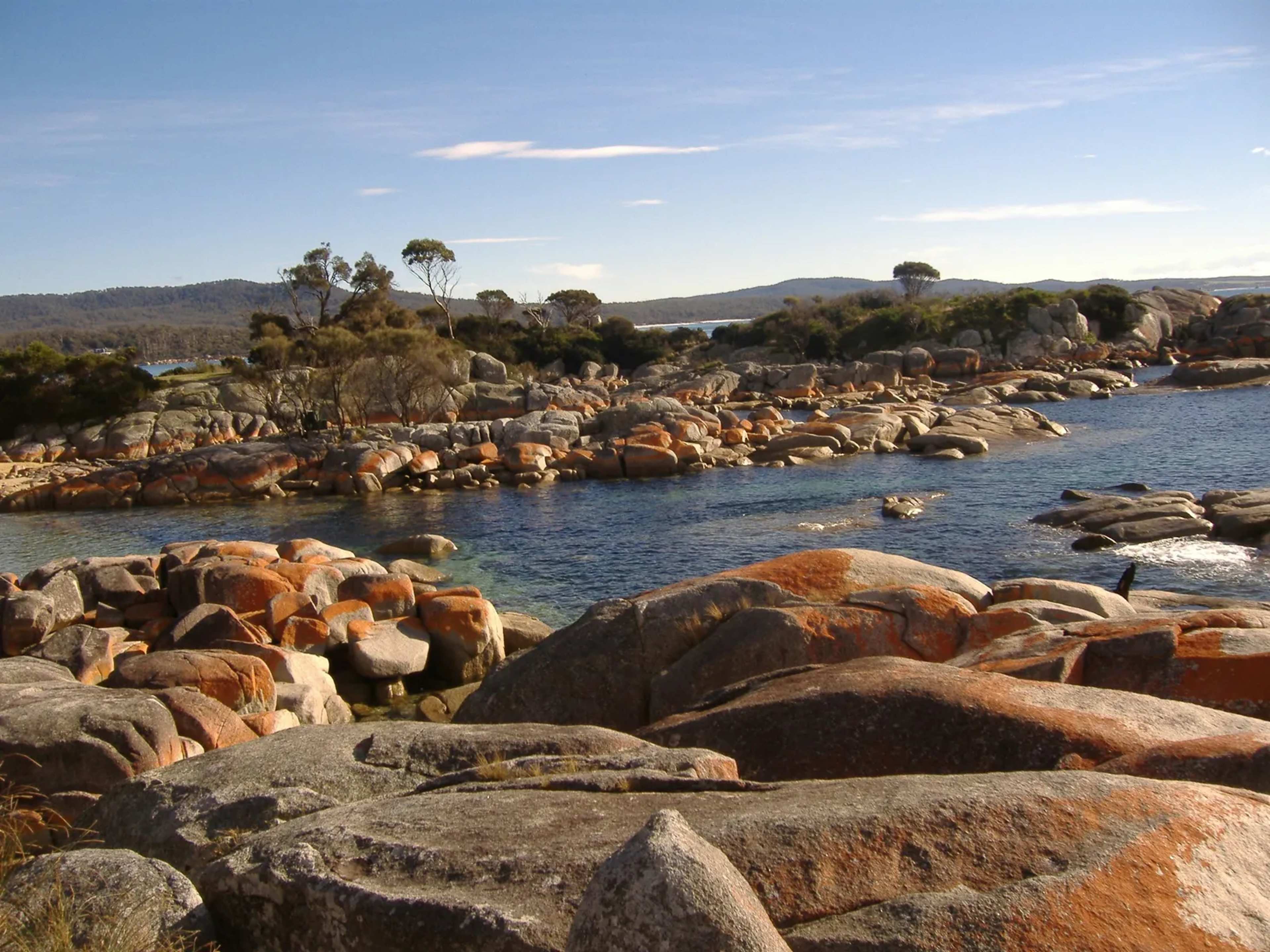
You are standing at a crossroads in a city that does not know your name.
The street signs are in a language you haven’t learned yet.
Your phone is in your pocket, GPS loaded, salvation one tap away.
You don’t tap it.
You walk.
There is a voice in the back of your skull – older than this city, older than this trip – that sounds exactly like someone who once told you that you’d never figure it out on your own. You have been walking away from that voice for years. You have been walking toward something harder to name: the version of yourself who doesn’t need to be rescued, who doesn’t need to be right, who only needs to keep moving. The journey of the solo traveler is as much an inner one as it is an outer one. And the map – that glowing, all-knowing rectangle in your pocket – is not just a tool. It is a referendum on who you believe yourself to be.
1. The Phantom Audience
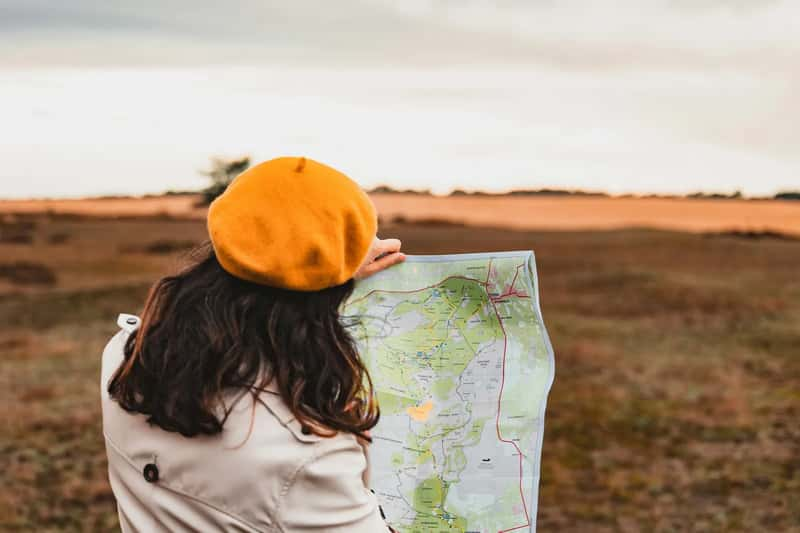
Here is the uncomfortable truth that nobody wants to say out loud.
You are not just traveling for yourself.
Somewhere in the architecture of your decision to go – to leave, to wander, to refuse the map – there is a face. A parent. A teacher. An ex. Someone who once looked at you and said, in some form or another, you won’t make it.
Solo travel strips away the daily roles you play at home – employee, partner, parent – allowing your core identity space to breathe and be re-examined. But it also strips away the roles that were assigned to you. The helpless one. The one who always needed directions. The one who called home too often.
The phantom audience is real. It lives in the nervous system. It activates when you are lost on a back street in Porto at dusk and your first instinct is to panic. The second instinct – the one you are learning to trust – is to keep walking. Because keeping walking is the answer you’ve been composing for years. Because every unbothered step is a sentence in the letter you will never send.
The phantom audience doesn’t need to be in the room. It was never really in the room. It was always inside you, wearing someone else’s face.
2. The Temporary Identity
Nobody knows you here.
That is not a tragedy. That is the entire point.
During solo travel, we are free from all kinds of expectations. The self is relational, so it is formed by our relations with others. Who we are is not only who we decide we are, but how others formulate that conception. At home, your identity is co-authored. Your name carries weight. Your history arrives before you do. People expect the version of you they have already memorized.
In a foreign city, you are a rough draft.
You can be decisive. You can be slow. You can turn left three times and call it a strategy. Nobody is tallying your mistakes against the running score of your life. The temporary identity – the you that exists only in transit – is often the truest version. It is the you before the narrative calcified. Before the family dinner table opinions. Before the ex’s damage. Before the teacher’s red pen.
The temporary identity doesn’t need a map because it hasn’t yet been told where it belongs.
3. The Refusal Is the Message
Refusing the map is not stubbornness.
Let’s be precise about that.
It is a declaration. It is a posture of radical self-trust practiced in real time, on real terrain, with real consequences. Are you left alone in uncertainty – like figuring out a route with no backup confidence – and remain engaged in the challenge? It produces confidence in one’s own intuition. The refusal to reach for the answer before you’ve sat with the question is an act of psychological muscle-building that most people never attempt.
Because most people – the moment uncertainty arrives – outsource the thinking.
They tap the screen. They call someone. They defer. And the voice in the back of their skull – the one that sounds like a doubter – gets a little stronger. Because the doubter was right: you couldn’t figure it out alone. You needed help. Again.
But you didn’t tap. You squinted at the sun. You smelled the sea and walked toward it. You made a decision with nothing but your own flawed, brave, undeniable judgment. And it mattered. Not because you were right. But because you trusted yourself enough to try.
The refusal is the message. And the message is: I am my own authority now.
4. The Architecture of Self-Efficacy
There is a clinical term for what happens when you navigate your way out of a wrong turn.
It is called self-efficacy. And it builds like sediment.
As you successfully navigate the challenges of travel, you build what psychologists call self-efficacy – a belief in your own ability to handle new situations. Each time you overcome a language barrier or find your way after getting lost, you are reinforcing the idea that you are capable and resilient. This is not motivational poster language. This is structural. This is neurological. Every small win on a foreign street rewires the story you tell yourself about who you are under pressure.
And pressure is the only honest test.
The confidence gained from solo exploration is cumulative and self-reinforcing. Each small decision – from choosing a restaurant to asking for directions – results in a measurable outcome for which you are solely responsible. This clear cause-and-effect loop is incredibly empowering. That empowerment doesn’t stay on the road. It follows you home. It shows up at the job interview. At the difficult conversation. At the moment someone tells you that you can’t.
Self-efficacy is not confidence borrowed from a good day. It is confidence earned in a bad one.
5. The Anecdote That Won’t Leave
I need to stop here and be honest with you.
I once stood at the wrong end of a train station in a city I had studied for months. I had guidebooks. I had read the forum threads. I had memorized the metro map. And still, I was wrong. Completely, embarrassingly, cosmically wrong about where I was standing.
My first impulse was to call someone and narrate my failure in real time – to hand the problem to another consciousness. My second impulse was to sit down on a bench and breathe. I chose the bench. I looked at the pigeons. I watched how the crowd moved, the way water finds its level, and I followed the logic of the place itself.
Forty minutes later, I was exactly where I needed to be.
Even challenges – such as getting lost or facing a language barrier – become opportunities to stay grounded, breathe, and respond with intention rather than panic. These mindful responses build emotional regulation and a deeper trust in oneself. That forty minutes was not wasted time. It was the most expensive therapy I never had to pay for. It was the moment the doubter’s voice in my head got a little quieter. Not silent. Just quieter.
Quieter is enough to keep walking.
6. The Exit Strategy
Some people don’t travel to see the world.
They travel to exit the version of themselves that the world built.
Solo travelling is not limited to going on holidays; it is a deeper self-inquiry. Stepping out of a specific role in a situation – new and profound comprehensions of self – are often catalysts to significant growth. The exit strategy is rarely about geography. It is about escaping the social architecture that has been deciding who you are since before you were old enough to push back.
The exit strategy begins with a ticket. But it deepens with every decision made without permission.
Without permission to be lost. Without permission to be slow. Without permission to take the long way. People who experience autonomy report higher levels of psychological health and social functioning. They have an increased sense of well-being and self-esteem. That wellbeing isn’t delivered. It is built, cobblestone by cobblestone, wrong turn by wrong turn, in the quiet hours between where you were and where you end up.
The exit strategy works. Not because you escape. But because you realize, somewhere on the third wrong street, that there was never a cage. Only a habit of standing still.
7. The Internal Compass
The internal compass is not a metaphor.
It is a practiced skill. A developed instrument.
One of the most immediate benefits of travelling alone is the development of independence and self-reliance. When you’re responsible for planning your itinerary, navigating new environments, and solving problems on your own, you quickly learn to trust yourself and your instincts. These experiences force you to become more adaptable and resourceful, strengthening your decision-making skills and boosting your confidence.
The internal compass is built from small, unremarkable moments. The direction the wind came from. The angle of the afternoon light. The sound of traffic one block over. The way the cobblestones changed texture as you walked toward the older part of town. These are data points that the GPS never teaches you to read – because the GPS never trusts you to read them.
The doubters in your past operated the same way. They pre-loaded the answer. They handed you the route. They implied, with their worry and their warnings, that your internal compass was broken.
It wasn’t broken. It was dormant. Every refused map wakes it up a little more.
8. The Residue of Being Doubted
Doubt leaves a residue.
It settles in the joints. It shows up as hesitation when there is no logical reason to hesitate. It shows up as apologizing for being in the way. As shrinking. As needing to check with someone before committing to a direction.
Research has found that the need for autonomy is critical for a person to develop a sense of self and for their overall psychological and physical health. Yet, not all people are reared in ways that encourage this path to healthy independence. When the people closest to you occupy the space where your confidence was supposed to grow, you don’t just lose confidence. You lose the template for what confidence feels like. You forget that it was ever yours to have.
The road does not doubt you. The street does not have an opinion about your track record.
This self-reliance fosters emotional independence as well. Instead of seeking validation from others, you begin to define your worth from within. That redefinition is not quick. It doesn’t happen on one trip. But it starts in the refusal. It starts in the moment you walk past the phone screen and navigate by something older and quieter and entirely your own.
9. The Reroute
The reroute is not failure.
This is the thing every GPS has gotten wrong from the beginning.
When you take a wrong turn, you don’t fail. You receive information. You learn the texture of this particular mistake. You update the map in your mind – the living, breathing, experience-soaked map that no algorithm can replicate. On a solo trip, you’ll get lost, miss a connection, or realize your guesthouse has one towel for three rooms. Each time you bounce back – communicating in gestures, troubleshooting with a local, laughing at the absurdity – you bank a reference point: I survived that; I’ll survive this, too. Those reference points change your nervous system. Your baseline goes from “threat” to “challenge.”
The people from your past who said you’d never make it alone were operating on old data.
They were reading a map of you that you have since walked off the edge of. One’s attitudes, character, and identity can shift while abroad, upon one’s return, and when re-adjusting to home life. The reroute is how you discover that the edge was never a cliff. It was just where the old map ran out. And beyond it: open terrain. Yours to name.
10. The Arrival You Don’t Instagram
There is an arrival that no one photographs.
It doesn’t happen at a landmark. It doesn’t happen at sunset with the right filter.
It happens when you are tired and a little dusty, sitting at a table in a place you found entirely by accident, eating something you ordered by pointing, and you realize – quietly, without fanfare – that you are fine.
Not surviving. Not proving. Not performing independence for a phantom audience.
Fine.
The philosophy of solo travel actually hinges on the simple, yet profound truth that all true growth happens from within. When one travels alone – into fear, isolation, and uncertainty – the traveler is able to trust himself or herself and the abilities that exist. They become more resilient, self-sufficient, and closer in harmony with personal identity. That harmony does not announce itself. It arrives the way dusk arrives: gradually, then completely, while you were looking at something else.
This is the heaviest arrival. The one that costs the most to reach. Because reaching it required you to stay lost long enough to stop being afraid of it. It required you to sit with the discomfort of not-knowing and discover that not-knowing is not the same as incapable. It required you to walk past every version of yourself that was built in someone else’s image and keep going until you found the one that was just – simply, stubbornly – you.
And this is where the doubters from your past lose their gravity. Not in a dramatic confrontation. Not in a phone call where you recite your victories. They lose their gravity in the accumulated weight of all the moments you navigated alone. When challenges arise – lost luggage, language barriers, bad weather – you have no choice but to cope. Overcoming these hurdles alone proves your resilience to yourself in a way that group support cannot. This proven resilience becomes a psychological asset you carry forward, making future life stressors feel more manageable. It becomes a body of evidence too large to argue with. And eventually, you stop arguing. You stop needing them to see it. You see it yourself. That is the quieter, more permanent win.
There is a version of you that is sitting somewhere right now – at a table in a city you found by walking in the wrong direction – and they are not checking the map.
They are already home.