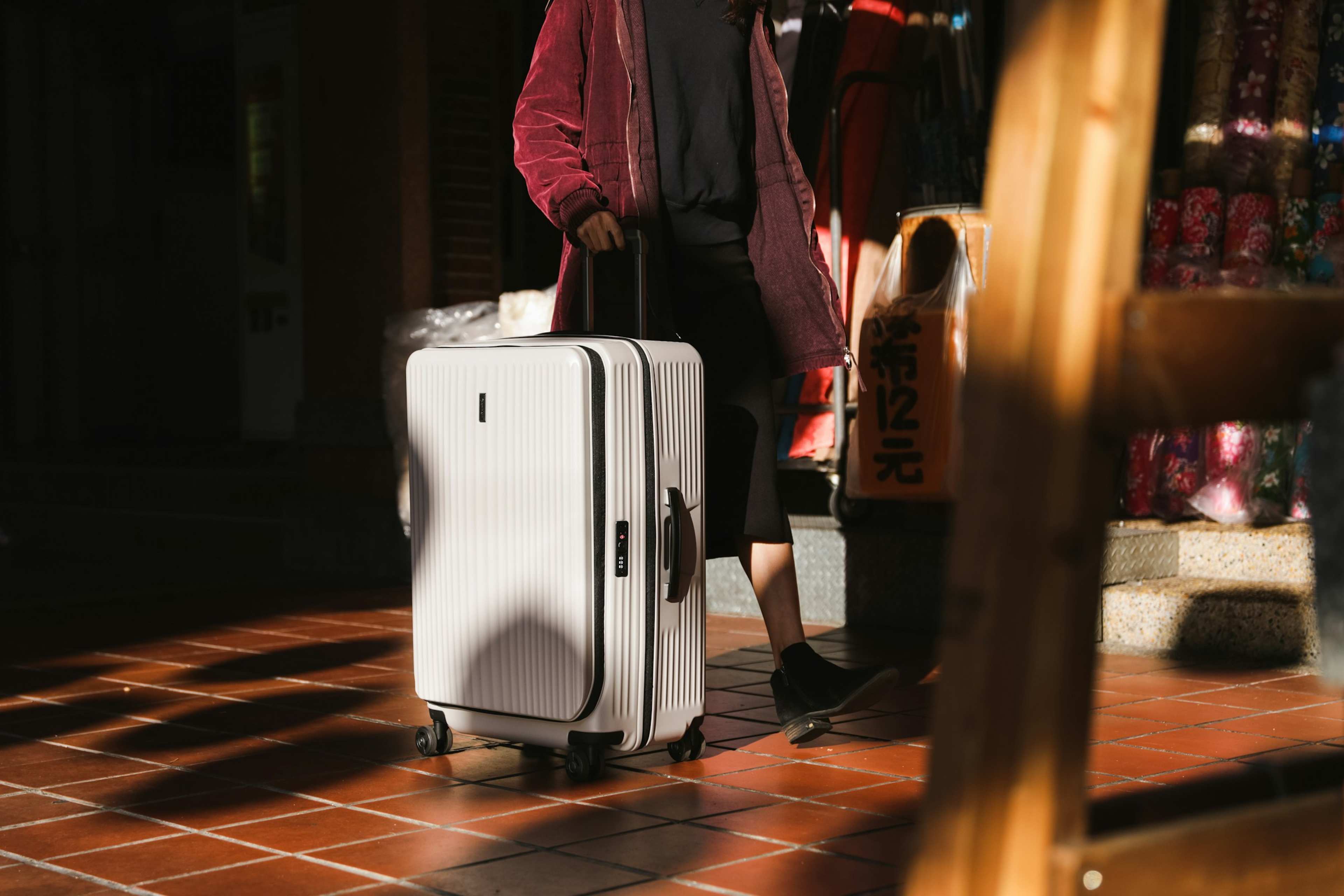
You open the booking app at midnight.
You choose a city where nobody knows your name.
You pay the non-refundable fee without flinching.
And then you wait. Not for the departure gate. For a text. A call. Proof.
There is a particular kind of loneliness that doesn’t announce itself at funerals or on bad nights. It moves quietly. It lives inside the impulse to disappear – not to be gone, but to measure, with cold precision, who notices the gap you leave behind. The suitcase isn’t really packed with clothes. It’s packed with a question you don’t know how to ask out loud: Do I matter to you?
This is the Identity Gap. The distance between the version of yourself that performs belonging – the one who shows up, who replies, who stays – and the raw self underneath, the one who is genuinely unsure whether their absence would register as loss or relief.
1. The Proof-Of-Life Departure
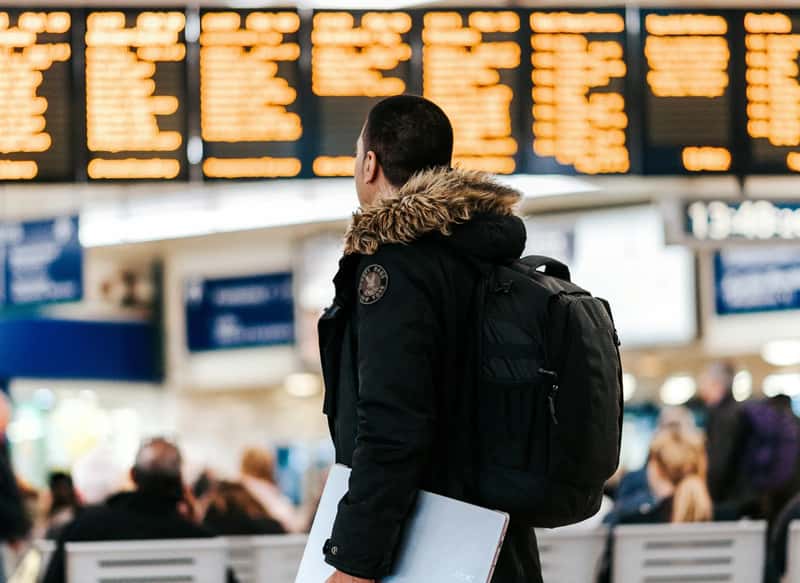
Here is what nobody says about booking that solo trip: it isn’t really about the destination.
The destination is a prop. The real theatre is the leaving.
Anxious attachment style is characterized by a relentless fear of abandonment and a chronic, high-level need for reassurance from the people closest to us. The trip becomes a proxy test. A controlled experiment. If they call before I board, they care. If they don’t notice I’m gone by Tuesday, I have my answer.
The problem with this experiment is that its methodology is broken. You’re testing love with the tools of distance. You’re asking a question using silence as the instrument. And silence, as any scientist will tell you, is the least reliable measure of anything human.
The departure isn’t freedom. It’s a disguised plea dressed in a carry-on and a boarding pass.
You are leaving so someone will ask you to stay.
2. The Anxious Architecture
Attachment anxiety is not a personality flaw. It is a blueprint drawn very early in life.
If a child interprets their caregivers’ responses as inconsistent, they may develop an anxious attachment style. The caregivers may act supportive on occasion, but at other times are misattuned – and the child ends up confused about what their relationship actually means.
That confusion doesn’t dissolve when you become an adult. It simply migrates. It moves from the childhood bedroom into the adult relationship. And from the adult relationship into the airport terminal.
As a result of this inconsistency, a child may exhibit separation anxiety and seek constant proximity with their caregiver – and as adults, they may find themselves in relationships that mirror those childhood dynamics, where love and affection are only given conditionally.
The trip to an unknown city is, at its neurological root, the same as a child standing at the door waiting to see if the parent comes back.
The geography changes. The nervous system doesn’t.
3. The Temporary Identity
There is something intoxicating about being a stranger somewhere.
In a foreign city, you are unattached to your history. Nobody knows what you did wrong last March. Nobody has a fixed version of you filed away in their memory. You are, for seventy-two glorious hours, whoever you decide to be at breakfast.
Escapism represents a complex psychological phenomenon wherein individuals employ diverse cognitive and behavioral strategies to facilitate a temporary disconnection from reality – an intentional detachment that functions as a motivated process designed to provide a psychological sanctuary.
The traveler with anxious attachment doesn’t just want a break from routine. They want a break from the identity that keeps failing to feel loved enough.
In transit, that identity softens. Nobody is not-texting-you-back in an airport lounge. Nobody is being emotionally unavailable at a tapas bar in a city where you speak none of the language.
The temporary self feels safer than the permanent one. That is worth sitting with.
4. The Exit Strategy
Anxiously attached people are rarely impulsive. They are, in fact, extraordinary planners – of the emotional kind.
The anxious type is deeply attuned to shifts in people’s moods and profoundly invested in relationships – worrying constantly about whether others feel the same way, overthinking every signal, and fearing rejection at every turn.
The trip is planned with that same hypervigilance. Every detail of the exit is considered. Who will notice. When they’ll notice. What they’ll say. What it will mean if they say nothing.
This is not wanderlust. This is emotional chess played on a global board.
The exit strategy is not about escaping the relationship. It is about testing it without ever having to be vulnerable enough to ask directly: Do you still want me here?
Because asking directly feels catastrophic. And booking a flight to Lisbon feels like control.
5. The Hollow Arrival
I have stood in a hotel room in a city I chose specifically because no one would think to look for me there. The window faced a canal. The light was amber and indifferent. My phone was on the nightstand, face-up, brightness set to maximum.
I told myself I was resting.
I was not resting. I was counting the hours between my last message and the absence of a reply. I was doing the math of love in a foreign timezone, and the numbers weren’t adding up.
The arrival – the moment the fantasy of the trip collides with the reality of still being yourself – is always the hardest part.
The relief provided by escapism is transient; once the activity ends, the individual is forced back into a reality that may now seem even more overwhelming. This “rebound effect” can deepen feelings of hopelessness as the individual perceives their inability to cope without the crutch of escape.
The canal was beautiful. I barely saw it. I was too busy watching my phone not light up.
6. The Performance of Independence
There is a particular Instagram caption that the anxious traveler knows well. Something about solitude. Something about finding yourself. A sunset. A glass of wine consumed alone as an act of radical self-sufficiency.
It is, in every case, a performance.
Those “I’m going to build a life that I don’t want to escape from” Instagram captions invite healthy skepticism – because for most people, even if home life were exactly as wanted, the desire to escape is still present.
The performance of independence is a coded message to the people you left behind: Look how fine I am without you. The hope – the desperate, unspoken hope – is that they will not believe it. That they will see through the curated frame and recognize the person underneath who wants, more than anything, to be missed.
People with the anxious attachment style often internalize what they perceive to be a lack of affection and intimacy as not being “worthy of love,” and they intensely fear rejection as a result.
The sunset photo isn’t evidence of healing. It’s a question mark in a Valencia filter.
7. The Checked Phone Problem
You are supposed to be present. You are in a city that took savings and courage to reach. There is good food. There are streets that smell like rain and history.
And you are checking your phone every four minutes.
Time apart doesn’t feel restful or recharging to an anxiously attached person – it feels threatening. When loved ones are traveling, simply in another room, or out with friends, a low-grade anxiety settles in that doesn’t fully resolve until reunion happens.
The phone becomes a defibrillator. Every notification is a small electric jolt of proof. Every silence between notifications is a minor cardiac event.
While checking in may provide momentary reassurance, dependence on others to calm the anxiety becomes the trap itself – because if the person isn’t able to respond for whatever reason, anxiety only ramps up, and over time the ability to tolerate that anxiety decreases.
You came to see the world. You are seeing your lock screen.
The trip was never really about the city. It was always about the signal.
8. The Return Calculation
The most telling moment in any test-trip isn’t the departure.
It’s the return.
The anxiously attached traveler runs the math before boarding the flight home. Who reached out. How many times. With what level of urgency. Whether the quality of the messages suggests genuine concern or performative politeness.
If the anxious attacher’s partner fails to respond to their needs in the way they require, the anxious attacher perceives this as confirmation that they are not worthy of love – and in many ways, relationships become both the poison and the cure.
The return is also when the hollowness compounds. Because if the test came back positive – if people did reach out, did worry, did miss you – the relief lasts only briefly before the next question surfaces: But would they have reached out if I hadn’t left?
The goalposts move. They always move. That is the cruel design of attachment anxiety.
The data is never enough. The case is never closed.
9. The Geography of Self-Worth
Anxious attachment doesn’t just affect how we relate to other people. It distorts how we understand our own value – and travel becomes an arena in which that distortion plays out in vivid, geographic terms.
An anxious attachment style develops when a person’s caregivers were inconsistent or unpredictable, creating a foundation of insecurity that translates directly into adult romantic partnerships.
When the foundation is insecurity, the anxiously attached person begins to outsource their self-worth to external confirmation. Likes. Replies. Urgency in someone else’s voice. The frequency of missed calls on an airplane mode screen.
This creates a powerful, fast-rewarding loop: stress leads to escape, which brings a moment of short-term relief, which leads to more stress. When you successfully avoid a hard feeling, your anxiety drops – for the moment. Your brain remembers that relief and nudges you to avoid again. Over time, avoidance shrinks your world.
Every city you run to becomes a slightly smaller room. Every test-trip narrows the available evidence for your own worth. Not because the evidence isn’t there – but because you’ve built a system that can never deliver a verdict you’ll actually accept.
10. The Softest Return
Here is the thing about people who book trips to find out if they’ll be missed.
They are not broken. They are not dramatic. They are not asking for too much.
They are doing the only thing that feels survivable when asking directly for reassurance has, at some point, been met with silence or disappointment or the particular cruelty of a person who made them feel that needing love was a character flaw.
If your experiences of relationships – including in infancy – have been of others as sometimes unreliable, an anxious-preoccupied attachment style is a logical, adaptive response to an unpredictable emotional environment.
The trip is not a manipulation. It is a translation. It’s what happens when a person doesn’t yet have the language to say: I need to know you’d notice if I were gone. I need to know I register. I need to know that my presence in your life has weight.
Your attachment orientation can and does change – through new relationships, therapy, and deliberate practice. Your attachment style is not a single fixed trait. The nervous system that learned to test love through absence can slowly, with the right conditions and the right company, learn to receive it directly instead.
The most radical trip you can take is not to a foreign city at midnight with a one-way ticket bought on a dare against your own heart.
It is the trip inward. The slow, unglamorous journey toward believing that you are worth missing without having to engineer the proof.
The airport will always be there. The midnight booking apps will always be open. The cities will always be foreign and amber-lit and waiting.
But somewhere between the departure lounge and the realization that the checked phone is a prayer, not a pastime, there is a different question worth asking. Not will they miss me – but why have I spent so long building elaborate distances just to measure love I could have asked for quietly, at home, over coffee, without the flight?
The answer lives in the gap. And the gap, it turns out, was never a place you had to travel to.
It was just the space between who you were taught to be and who you actually are – someone who deserves to be missed, not because they disappeared, but simply because they showed up.