

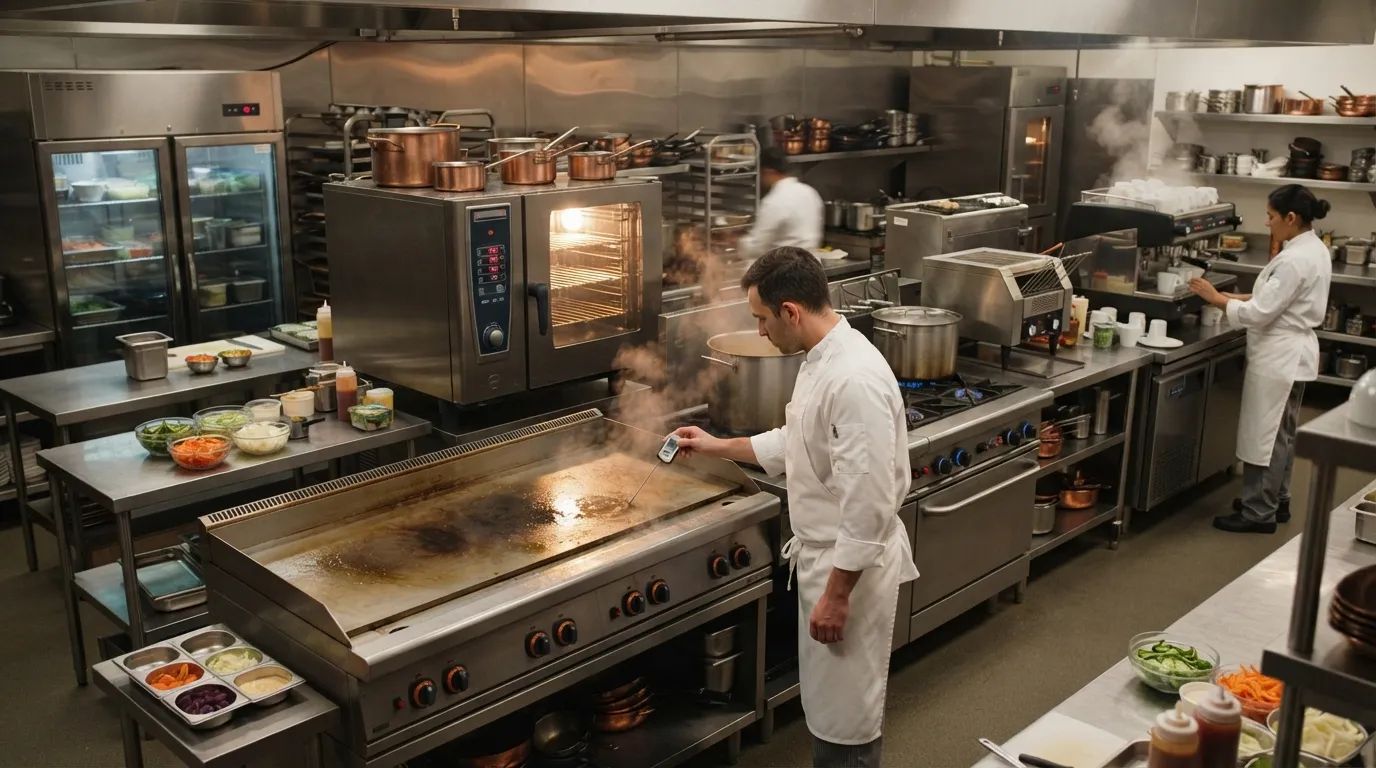
By the time you shuffle into the breakfast room with wet hair and low expectations, someone has already been awake for hours making sure nothing on that buffet fails you. The eggs, the coffee, the pastries, the allergen cards – none of it just appeared.
What actually happens in a hotel kitchen before dawn is faster, stricter, and stranger than most guests ever imagine. Stick around, because the walk-through that happens ten minutes before the doors open is the part almost nobody knows exists.
The Alarm Goes Off Before the City Wakes Up
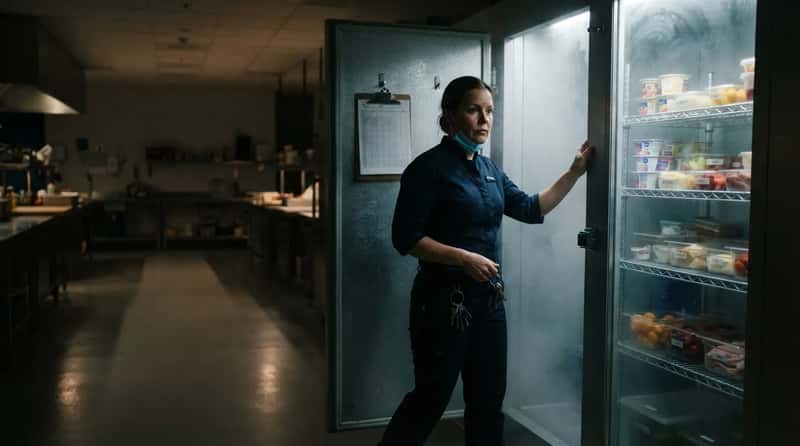
The breakfast team’s day doesn’t start at a reasonable hour. It starts in the dark, on empty streets, long before the first guest even considers hitting snooze.
At some airport hotels, the clock is even more brutal – Hilton Helsinki Airport opens its breakfast buffet at 3:30 a.m. for travelers catching early flights.
The first person through the kitchen door usually isn’t a chef. It’s whoever holds the keys to the walk-in cooler, because that check can’t wait.
That single temperature log determines how the rest of the morning unfolds. Get it wrong, and everything downstream shifts before the kitchen has even properly opened.
The Walk-In Cooler Is the First Battlefield
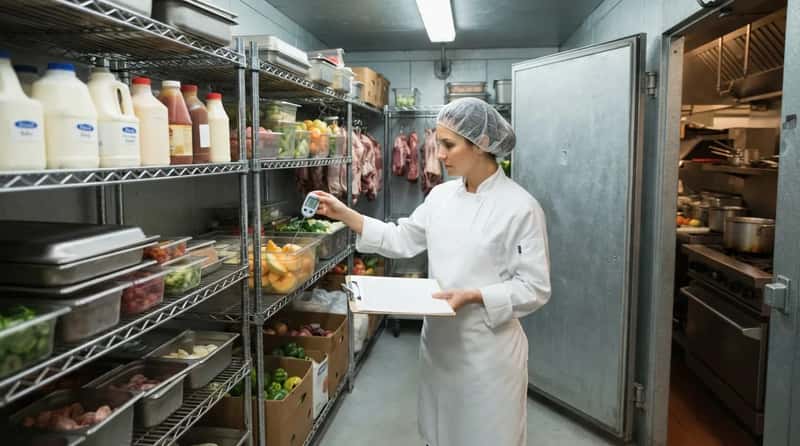
Before a single pan touches heat, someone is already inside the cooler with a clipboard and a probe thermometer. This isn’t a formality – it’s the legal backbone the entire morning rests on.
Food safety rules require the cooler to hold at or below 41°F, logged at both the start and end of every shift. Anything higher, and the day’s plan changes fast.
The real danger zone sits between 40°F and 140°F – the range where bacteria multiply fastest. Every station in that kitchen is built to keep food safely outside those numbers.
Fast Facts
- Cold storage must stay at or below 41°F, checked at both the start and end of a shift
- The danger zone spans 40°F to 140°F, the range where bacteria multiply fastest
- Bacteria can double in number in as little as 20 minutes inside that zone
- A single mislogged temperature can trigger a health violation on its own
A single mislogged temperature can trigger a health violation even when the food itself was perfectly fine. That’s how unforgiving the paperwork is.
Once the cooler passes inspection, the real prep work begins – and the clock starts moving faster than most people realize.
Mise en Place: The Ritual That Decides Everything
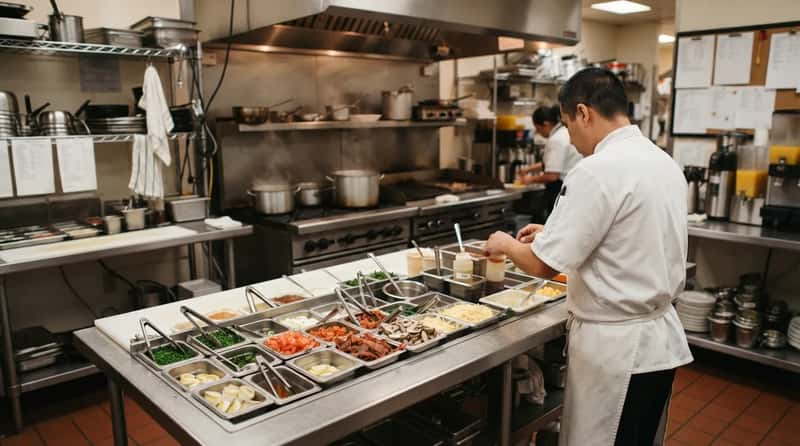
Mise en place is French for “everything in its place,” and in a hotel kitchen it’s less a philosophy than a survival tactic. Every ingredient gets portioned, every container labeled, every station stocked before the first egg cracks.
Station layout, hot holding equipment, cold display temperatures, allergen labels – all of it has to be locked in before service starts. Miss one piece, and the whole chain can break under pressure.
A cold scrambled egg or an empty juice dispenser can define a guest’s entire impression of the hotel. That’s the stakes riding on a checklist most guests never see.
With mise en place finished, the kitchen finally starts sounding like a kitchen – pans hitting heat, timers going off, the real rush beginning.
The Secret Nobody Mentions: Not Everything Was Cooked That Morning
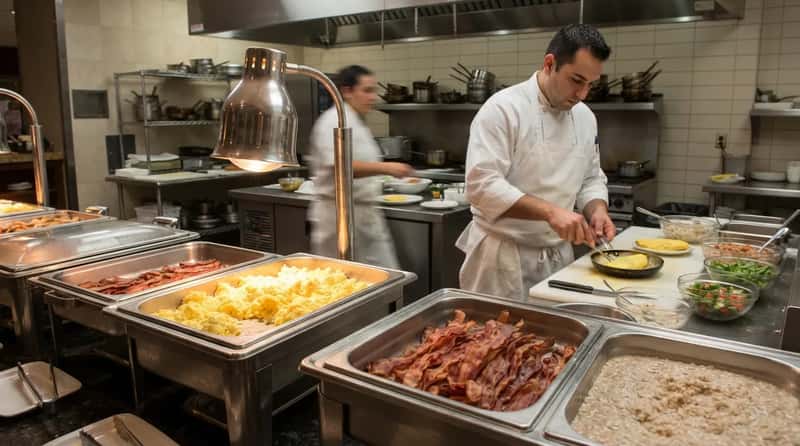
Here’s where it gets a little controversial. Not everything on that buffet was made fresh at 5 a.m., and most guests have no idea.
Hotels blend batch cooking – large trays made ahead and reheated – with à la minute cooking made to order. Those scrambled eggs under the heat lamp were likely batch-cooked; the omelet at the live station is the real deal.
Quick Compare
- Batch-cooked: scrambled eggs, bacon, oatmeal – made ahead and held under heat
- À la minute: omelets, waffles, eggs to order – cooked fresh at the live station
- Prepackaged: yogurts, pastries, cereal – arrive from outside suppliers
Many pastries, individual yogurts, and portioned cereals arrive prepackaged from outside suppliers, even at hotels that look like they bake everything in-house. The line between “fresh” and “held” is something only the kitchen actually knows.
And that gap matters more than most guests would like to admit.
Hot Holding: The Science Hiding Under Every Chafing Dish
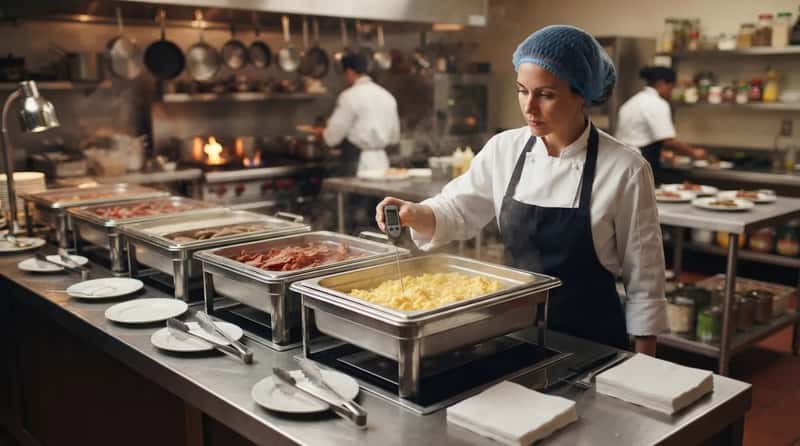
Once food is cooked, the pressure doesn’t ease – it just changes shape. Everything on that buffet has to stay at a precise temperature for a service window that can run three to four hours.
Cooked food must be held at 135°F or higher, the entire time. That means chafing dishes are preheated, water baths are checked, and every tray gets monitored before it ever reaches the line.
A buffet that looks warm and full can still be sitting dangerously close to the line between safe and unsafe. The person hovering nearby with a thermometer isn’t being paranoid – they’re following the law.
And behind that constant monitoring is a replenishment schedule that’s far more calculated than it looks.
The Invisible Inventory Game Running the Whole Show
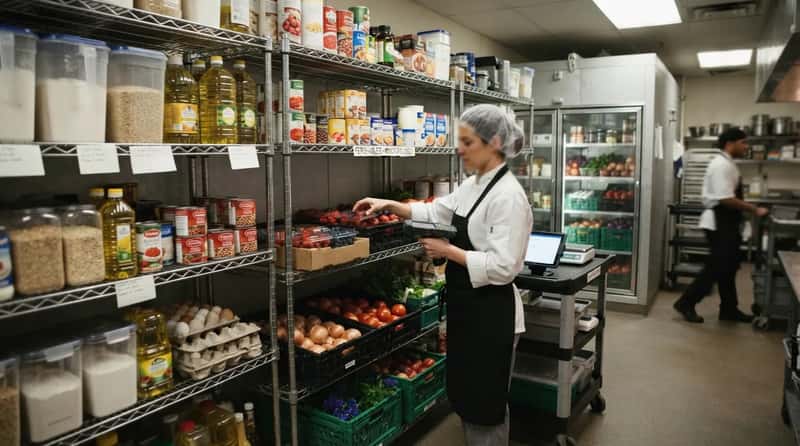
While the cooking happens up front, a quieter operation runs in the background. Hotel kitchens don’t just cook breakfast – they predict demand, manage supply, and fight waste before service even starts.
Modern systems track consumption patterns and adjust quantities in real time, cutting waste while keeping shelves stocked. Popular items get priority placement, and it’s not always about taste.
Worth Knowing
- Consumption data is tracked in real time to cut waste and avoid empty trays
- Prime placement often goes to items that spoil fastest, not just crowd favorites
- Restocking decisions are made minute-by-minute, not on a fixed schedule
The foods positioned most prominently are often the ones that spoil fastest if left over. It’s a financial calculation dressed up as hospitality.
What happens next, at the individual cook stations, is where skill and speed finally collide.
The Equipment Has to Wake Up Before the Chef Does
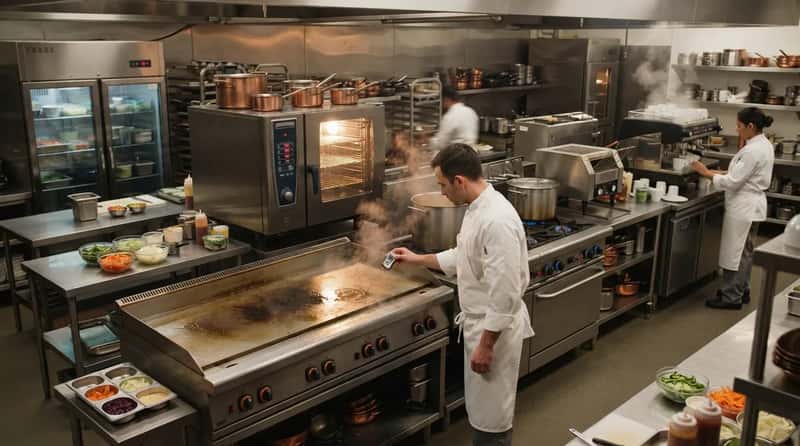
Professional kitchens don’t improvise equipment warm-up. Every oven, grill, and coffee machine has to hit operating temperature before a single item gets cooked.
Commercial coffee makers, toasters, griddles, refrigeration units, ovens – all of it needs checking in the first ten minutes of a shift, not the last. An oven that isn’t fully preheated produces uneven results that are nearly impossible to fix mid-service.
Hotels also juggle something standalone restaurants don’t: multiple food outlets running at once. A restaurant, room service, banquet kitchen, and breakfast service can mean four separate compliance systems operating under one roof, simultaneously.
The Cleaning That Happens Before Any Cooking Starts
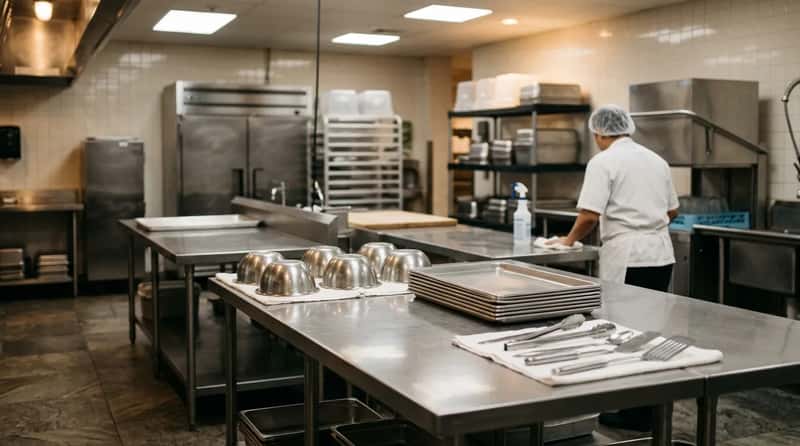
Here’s the part that surprises people most: a big chunk of that pre-breakfast hour isn’t spent cooking at all. It’s spent cleaning.
The night crew resets the kitchen before they leave, and the morning team verifies every inch of it before service. Surfaces get wiped again, utensils are laid out clean, and every station is rebuilt from scratch.
Cross-contamination during high-volume prep is one of the most common hazards flagged in hotel food safety reviews. Salmonella and Listeria thrive exactly where hospitality creates risk – raw proteins near ready-to-eat food, inconsistent buffet temperatures, rushed morning prep.
That clean kitchen is the quiet foundation everything else gets built on, and it happens while the rest of the hotel is still asleep.
The First Pot of Coffee Isn’t for You
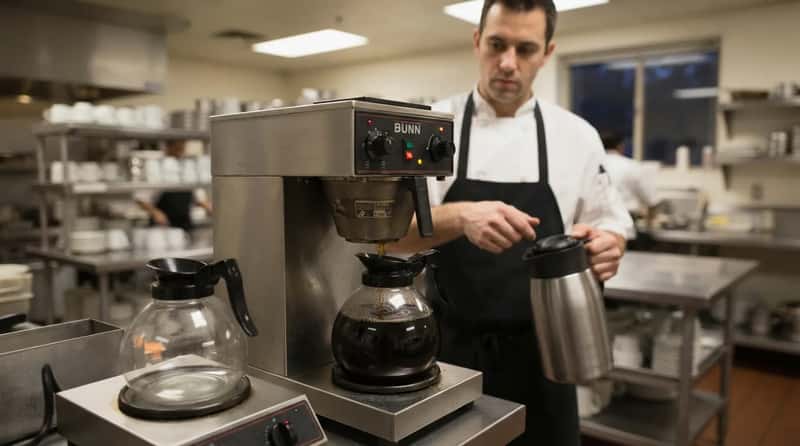
Hotel breakfast typically opens between 6 and 7 a.m. on weekdays, often shifting later on weekends. That means the commercial coffee machines have to be primed and running at full output before the doors even unlock.
But the first pot brewed almost never reaches a guest’s cup. It’s the batch used to purge overnight buildup and bring the machine up to temperature – a technical step, not a product.
At a Glance
- Most hotel breakfasts open between 6 and 7 a.m. on weekdays
- The very first pot brewed is used to purge the machine, not to serve guests
- Coffee stations require constant staffing and refilling through the entire window
- Freshness fades toward the tail end of service, even with steady monitoring
The coffee station has to stay staffed and replenished for the entire service window. Early guests get the freshest pour; the tail end of service is a different story entirely.
What happens in the final ten minutes before doors open, though, is the part almost nobody outside the kitchen ever sees.
The Walk-Through Nobody Sees – But Everyone Feels
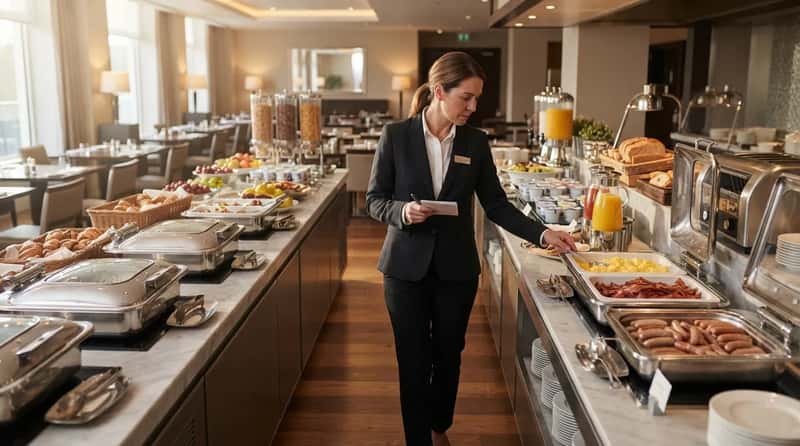
Ten minutes before the first guest walks in, a chef or floor manager does one final pass of the entire buffet. It isn’t ceremonial – it’s the last line of defense before a complaint ends up in an online review.
Every tray gets checked for temperature. Every label gets confirmed, and every station gets scanned for anything missing or out of place.
The best item is rarely the first one you see.
Jeffrey Morgan, Chef Concierge, Conrad Washington DC
That’s not just a clever line – it’s a deliberate strategy. The buffet is arranged to guide your eye and your plate, and the walk-through is the final dress rehearsal before the curtain goes up.
By the time you pour your first orange juice, that kitchen has already been running for two to three hours. Every item has been counted, cooked, held, checked, and placed on purpose.
The Bottom Line
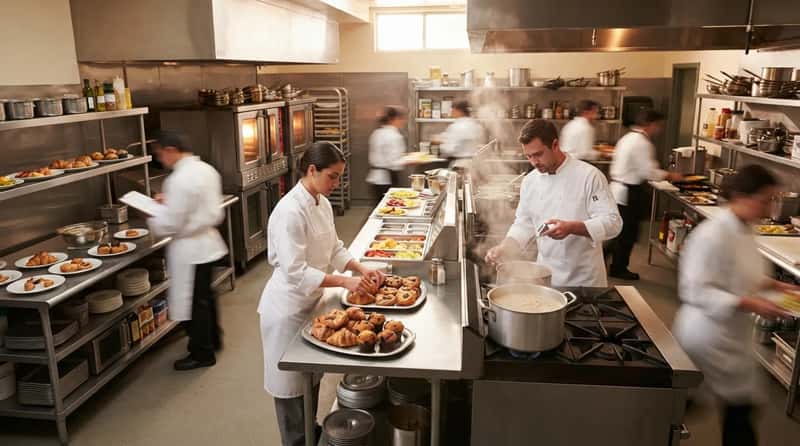
The hour before hotel breakfast isn’t a gentle warm-up – it’s an orchestrated sprint. Temperatures get logged, equipment gets preheated, stations get cleaned and restocked, and a final walk-through makes sure nothing looks out of place.
Most guests see the result and assume it was effortless. Now you know it’s the opposite – someone was standing in that kitchen two hours before you, making sure of it.


