


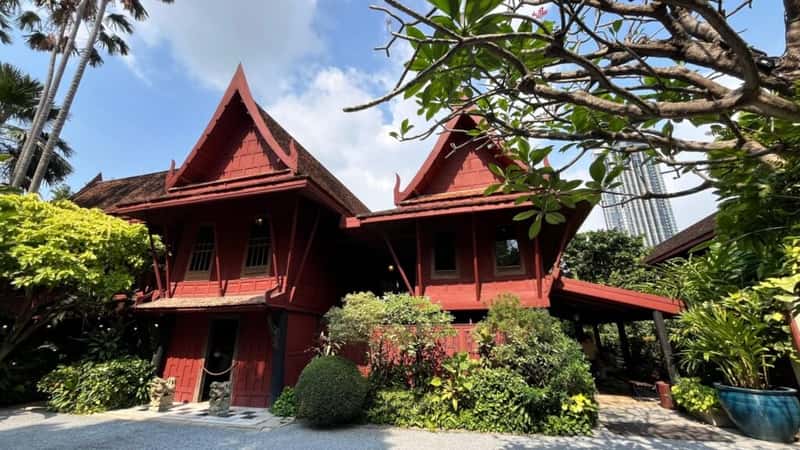
In Bangkok, Thailand’s vibrant capital, there’s certainly no shortage of attractions — from food-driven experiences to cultural landmarks — yet there is one destination that more than others helps you grasp the city’s complex soul. It’s a place shaped by cultural cross-pollination, and one that feels especially resonant for American travelers, who may find elements they instinctively recognize. The Jim Thompson House is a beloved and fascinating site that tells an extraordinary story of exchange between cultures. Often described as “the most beautiful house in Thailand,” this residence is a gem of traditional Thai architecture, featuring teakwood floors and structures, open courtyards, stilted pavilions, and a lush garden — all styled through a Western lens. The result is a true oasis of calm in the heart of the chaotic capital. I loved it from the very first moment, because its purpose is immediately clear: to communicate the deep love and respect its founder felt for Thai culture, nature, and art.
The Story Behind the House
The Jim Thompson House has a history that is both captivating and, at times, mysterious. Jim Thompson, an American textile entrepreneur who arrived in Thailand after World War II, deeply studied, admired, and ultimately transformed the local silk industry, while also falling inescapably in love with Thai culture. In the 1950s, he began collecting traditional teak houses from different regions of the country, reconstructing them piece by piece along the Saen Saeb Canal. The result was a one-of-a-kind residence that combined authentic architectural elements with Thompson’s personal taste, eventually becoming a house museum that still reflects his passion for art, craftsmanship, and Thai culture. The house remained his home until 1967, when Thompson mysteriously disappeared during a trip to Malaysia, adding a lasting aura of legend to the place.
A House and a Museum to Explore
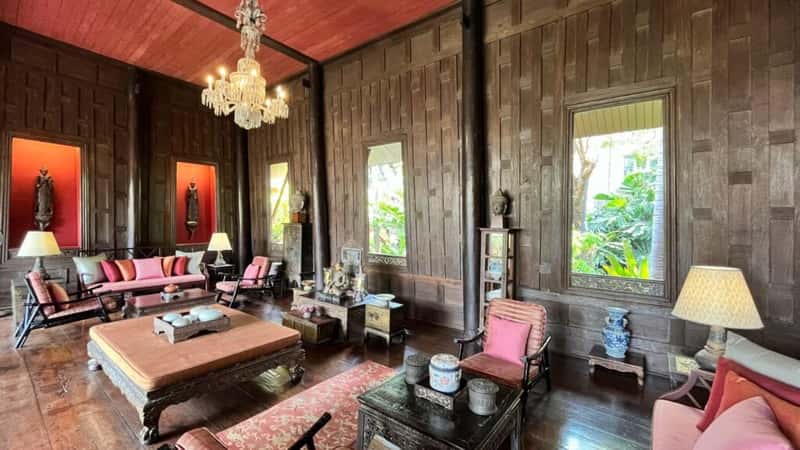
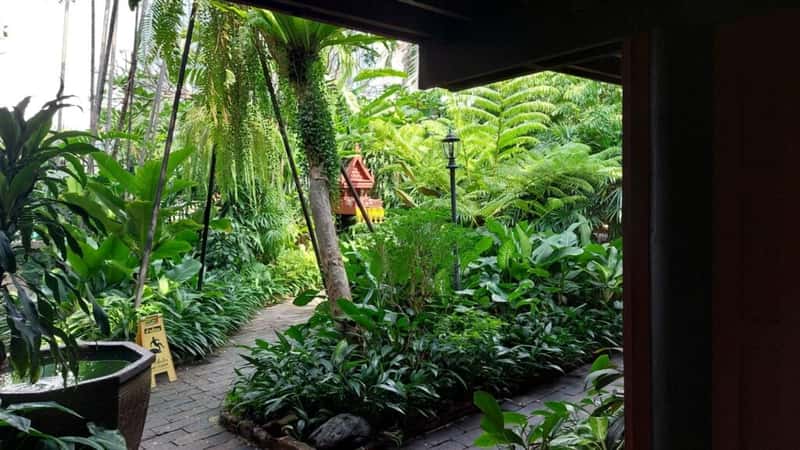
Visiting the Jim Thompson House is a journey into Thai culture and architecture. The buildings are elegantly arranged along the canal and surrounded by dense tropical vegetation, lending them a magical yet dignified presence. Inside the meticulously curated interiors — bright spaces suspended between courtyards and gardens — visitors move through handcrafted furniture, art collections, textiles, ceramics, and antiques. The atmosphere is intimate and welcoming, and the blend of Western and Thai cultures is unmistakable: a genuine dialogue between design, art, and tradition, coexisting in remarkable balance.
The Shop You Shouldn’t Miss
The Jim Thompson House shop deserves a chapter of its own and is widely considered one of the most beautiful museum shops in Bangkok. Here you’ll find silk fabrics, scarves, clothing, and exclusive accessories, along with finely crafted local objects and elegant souvenirs — all defined by extraordinary aesthetic care. It’s not just a shop, but a curated experience in itself, where browsing textiles and displays becomes part of the visit. The perfect place to take home an authentic piece of Thailand.
Practical Information for Visiting
The Jim Thompson House (official website: jimthompsonhouse.org) is open daily from 10:00 a.m. to 5:00 p.m., with visits offered exclusively as guided tours lasting about one hour, and the final tour starting at 5:00 p.m. It’s important to note that tickets are not sold online: admission can be purchased only at the on-site ticket office, so be cautious of potential scams. No reservation is required. Admission costs 250 baht (about $8 USD) for adults, 150 baht (about $5 USD) for visitors aged 10 to 21 with valid ID, and children under 10 enter for free.
Getting there is easy — and part of the experience. The house is located in the Siam area of Bangkok, near the Saen Saeb Canal, and can be reached in several ways:
- Taxi or Grab: the simplest and most convenient option from anywhere in the city.
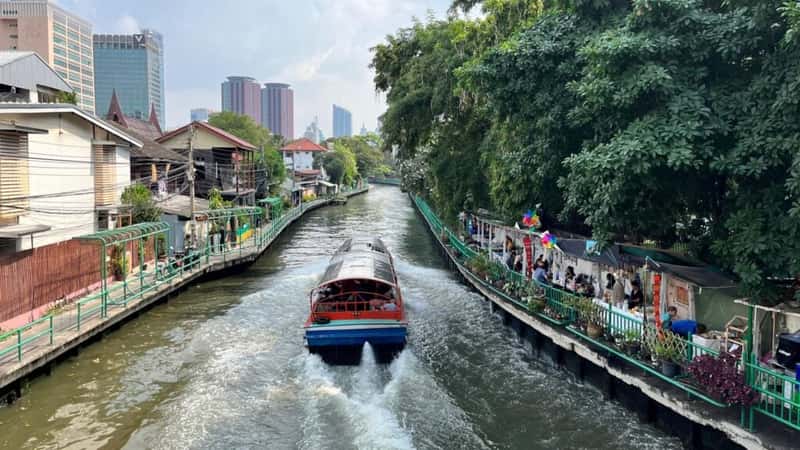
- Boat along the Saen Saeb Canal: an authentic experience that lets you observe daily life along the waterways, passing stilt houses, small markets, and characteristic Bangkok scenes. Get off at Ban Khrua Pier, just a short walk from the house.
- BTS Skytrain: get off at National Stadium Station, then continue on foot or with a short taxi ride.
Where to Eat
Before or after exploring the house and its shop, it’s worth stopping for a meal along the canal — which is exactly what I did. Small local eateries here serve excellent street food: noodle dishes, aromatic soups, fried rice, local snacks, and fresh fruit, all delivered with the city’s lively rhythm. Sitting at a simple wooden table while boats glide past on the canal is the perfect way to round out the visit, unhurried and fully immersed.
Why It’s Worth It
The Jim Thompson House is a place of immediate charm that brings together history, architecture, and nature within a uniquely urban setting. Close to central Bangkok, it offers a contained yet deeply memorable experience — ideal for travelers like me who are drawn to design, culture, and the meeting point between Western and Eastern traditions. Personally, it remains one of my most vivid memories of Thailand: it felt like stepping back in time, experiencing the perspective of a Western visitor fully immersed in a culture radically different from his own, and appreciating the refined, distinctive atmosphere that this cultural encounter created.



