You think you’re just standing around at the gate, killing time before the real trip starts. You’re not – you’re standing inside the busiest twenty minutes of the entire flight, and almost none of it happens where you can see it.
Behind that podium, inside the cockpit, underneath the plane – people are racing a clock you don’t even know exists. Here’s what’s actually happening in those final twenty minutes, one system at a time.
The Gate Agent Is Quietly Running Air Traffic Control for Your Flight
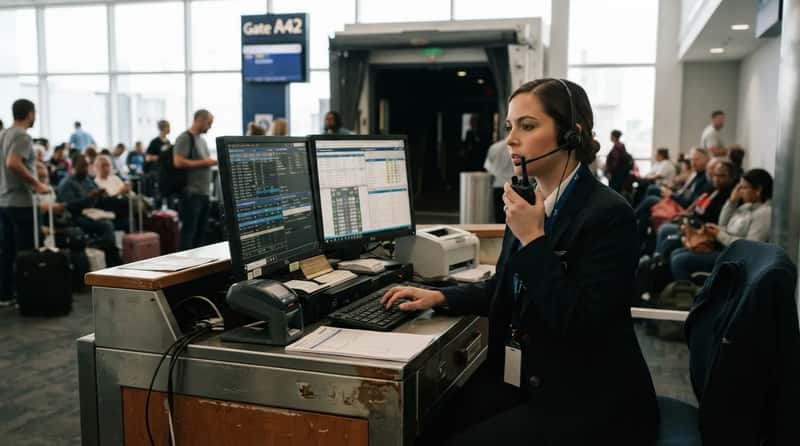
That agent behind the podium looks bored. They are not.
They’re juggling upgrade requests, no-show reassignments, and standby placements – all in real time, against a hard countdown.
Every detail on your ticket is visible to them: blocked seats, standby queue position, loyalty notes, all of it. Most passengers have no idea how much information that screen actually holds.
But the real drama isn’t happening at the podium. It’s happening on the plane itself, before you’ve even scanned your boarding pass.
A Cleaning Crew Just Raced Through the Entire Cabin
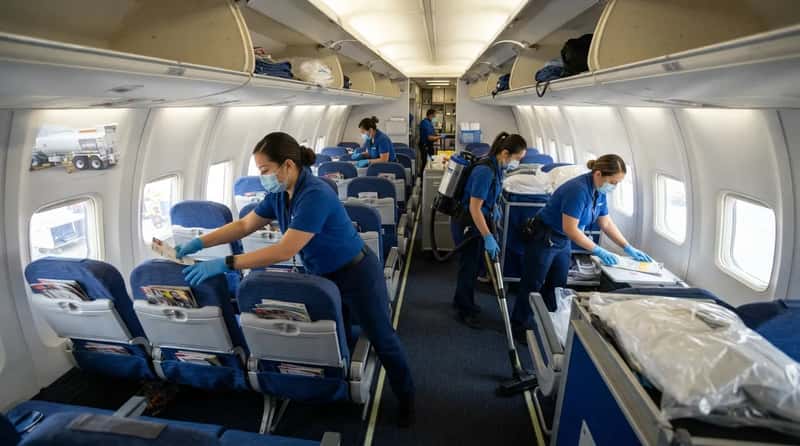
The plane you’re about to board was likely just flipped from another flight, in a matter of minutes.
A crew restocks seatback pockets, safety cards, and lavatory supplies – soap, paper towels, toilet paper – while another team fuels the aircraft outside.
Baggage handlers, caterers, and safety inspectors work the same aircraft at the same time, often without ever crossing paths.
The entire cabin gets reset in under 30 minutes. Most passengers never think about it twice.
But the cleaning crew isn’t the last team to finish. The pilots have been running their own checklist – and it’s more intense than you’d guess.
The Pilots Are Deep Into a Checklist That Never Gets Skipped
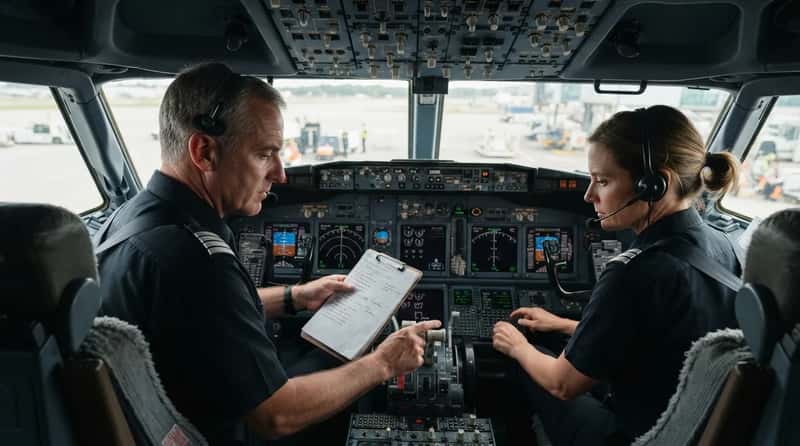
The cockpit is anything but idle twenty minutes out.
The captain verifies the route, weather, and fuel load while the first officer feeds it all into the flight management system.
Then both pilots run through the checklist together, out loud, item by item.
Every single departure starts with a paper checklist – no exceptions, no matter how experienced the crew is. That’s not bureaucracy. That’s the wall between routine and disaster.
And while the pilots finish in the cockpit, the flight attendants are running an equally serious check at the back of the plane.
Flight Attendants Are Running a Safety Sweep You’ll Never See
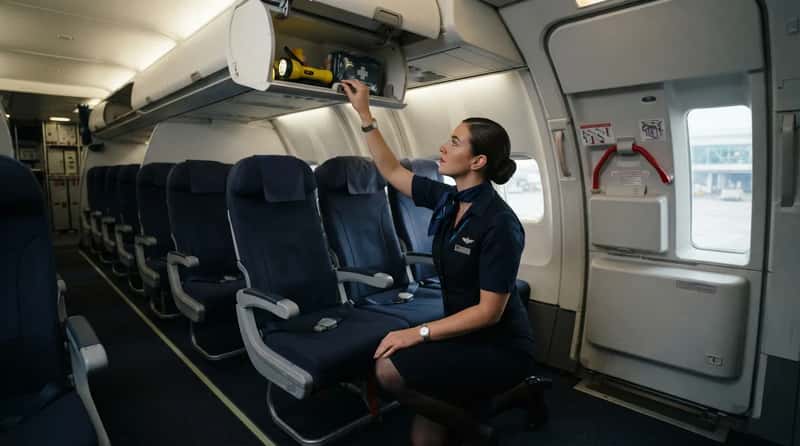
Before a single passenger sets foot in the aisle, the cabin crew has already done a full inspection.
They check flashlights, oxygen bottles, and first aid kits – confirming every piece of emergency equipment actually works.
By FAA rule, they also need a verbal “yes” from every exit row passenger, confirming they can help in an emergency.
Most people treat that question as small talk. It isn’t – decline to answer properly, and you can be moved out of that seat on the spot, no matter what you paid for it.
Fast Facts: Who Can Sit in an Exit Row
- Must be at least 15 years old
- Must understand and speak English
- Must be physically able to open the exit and assist others in an emergency
- Cannot be seated there with a service animal, infant, or supplemental oxygen
And speaking of seats – yours may not be as locked in as you think right now.
Your Seat Can Still Be Taken Away While You’re Grabbing Coffee
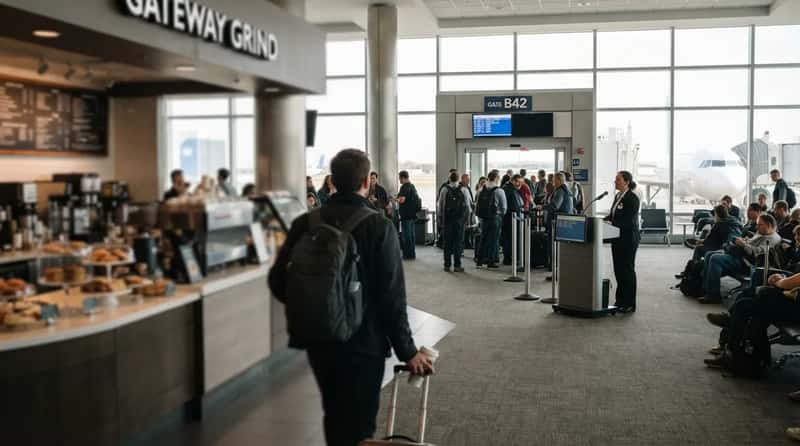
This is the part airlines don’t advertise.
American Airlines closes boarding 15 minutes before departure – if you’re not on board, your seat can go to someone else. Delta and Alaska run the same policy.
That 15-minute cutoff is standard across most domestic carriers, regardless of where you’re flying.
Quick Compare: When Boarding Really Ends
- American: boarding cuts off 15 minutes before departure, regardless of destination
- United: all passengers must be onboard 15 minutes before departure for domestic flights
- Delta: follows a similar 15-minute rule, with gate agents holding final discretion
- Alaska: recommends being at the gate no later than 30 minutes before departure
Here’s the flip side almost nobody mentions: those same no-show seats can become yours. Gate agents can reassign empty exit rows and bulkhead seats for free, even ones that carried a fee – it’s worth politely asking about 30 minutes out.
The window is narrow. Miss it, and someone else already asked first.
Standby Passengers Are Watching a Scoreboard You Can’t See
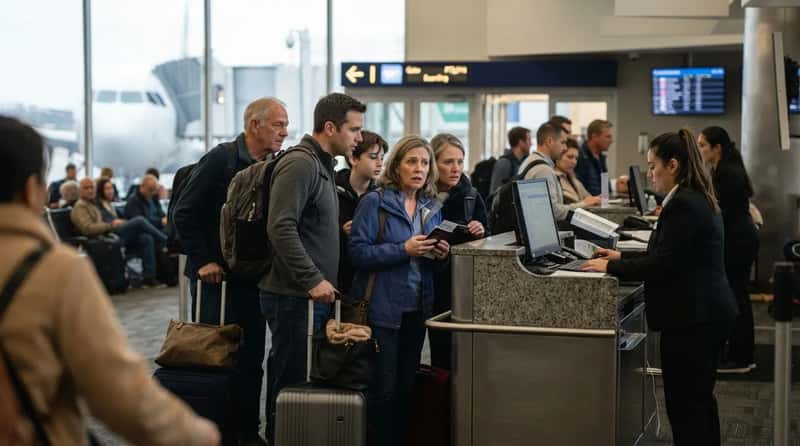
For standby travelers, these twenty minutes are pure suspense.
The airline’s system keeps recalculating as passengers check in, right up until boarding.
Upgrades and last-minute assignments aren’t random – they run through revenue algorithms and loyalty tiers, sometimes powered by AI.
That cluster of people hovering near the podium isn’t just impatience. Many are standby passengers doing mental math – counting empty seats, watching who checks in, calculating their odds in real time.
Meanwhile, something happening under the plane is quietly deciding how your flight actually flies.
Your Bag Isn’t Just Tossed In – It’s Part of a Balancing Act
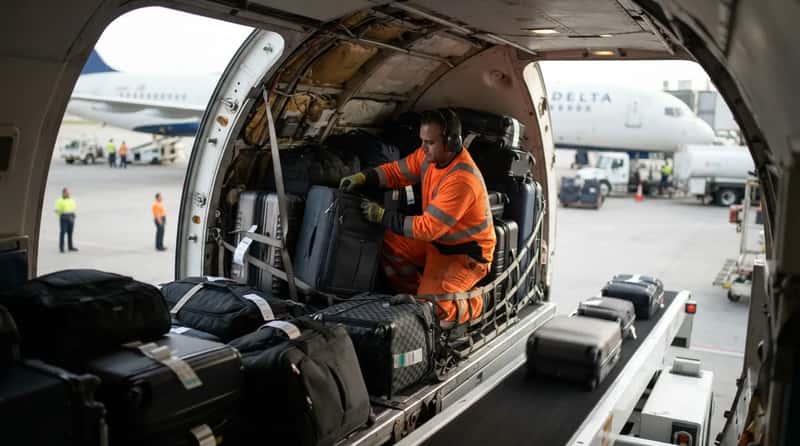
Most people assume checked bags get thrown in wherever there’s room. That’s not how it works.
On a half-empty flight, handlers load bags to counterbalance where passengers are actually sitting.
That’s why you might get told to stay in your assigned seat, even when a better row sits empty nearby – the whole aircraft has to balance down to the last seat.
Weight and balance numbers aren’t a guideline – they’re a legal requirement. Get them wrong, and the plane isn’t safe to fly, no matter how small the error looks on paper.
Once that cargo door shuts, the countdown to one final, irreversible moment begins.
“Last Call” Is a Deadline, Not a Suggestion
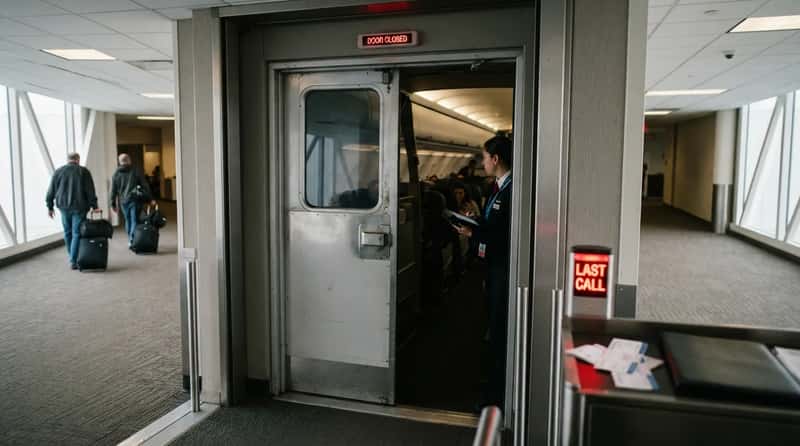
Most passengers hear “last call” and assume there’s still time. There usually isn’t.
About 13 to 15 minutes before departure, agents make the final boarding announcement – everyone needs to be seated by then for an on-time departure.
The gate agent often closes the aircraft door 10 minutes before departure. Depending which side of that door you’re on, that’s either relief or a ruined trip.
Here’s the maddening part: it’s not applied the same way everywhere. Some agents hold the door a little; others don’t budge at all.
Worth Knowing
- Most airlines close boarding doors 10 to 15 minutes before scheduled departure
- Once closed, doors generally aren’t reopened, even for passengers already in sight of the gate
- If a flight’s departure time shifts, the door-close deadline shifts with it
- The last flight of the day sometimes gets a little extra flexibility to catch connecting passengers
One more fact closes the loop on everything happening in this window – and it’s the one almost nobody hears about.
The Flight Can Legally Leave Before Its Scheduled Time
Almost no passenger realizes this is allowed.
If everyone’s seated and the safety checklist is done, flights can depart up to 30 minutes early. Airlines have zero obligation to wait for the posted time once the plane is ready.
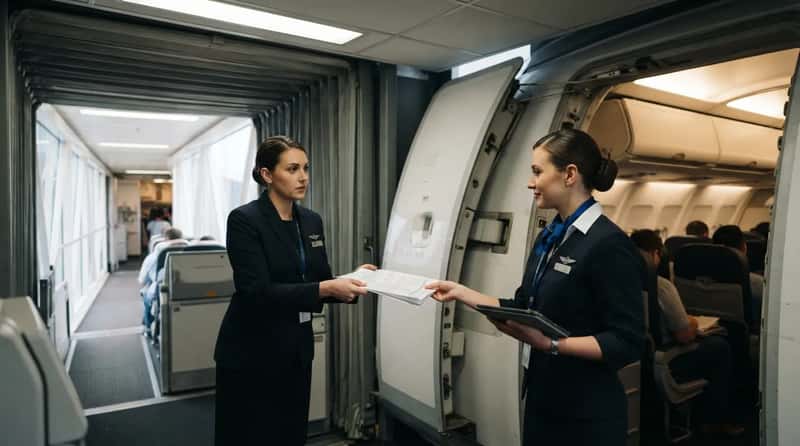
To close the flight, agents print a final passenger manifest and hand it to a flight attendant. That handoff is the last thing that happens before the jetway door seals shut.
The moment the aircraft door locks, the pilot takes over – because legally, the plane is now “in flight.” Everything before that second belongs to the gate agent. Everything after it belongs to the crew.
The Twenty Minutes You Never Noticed
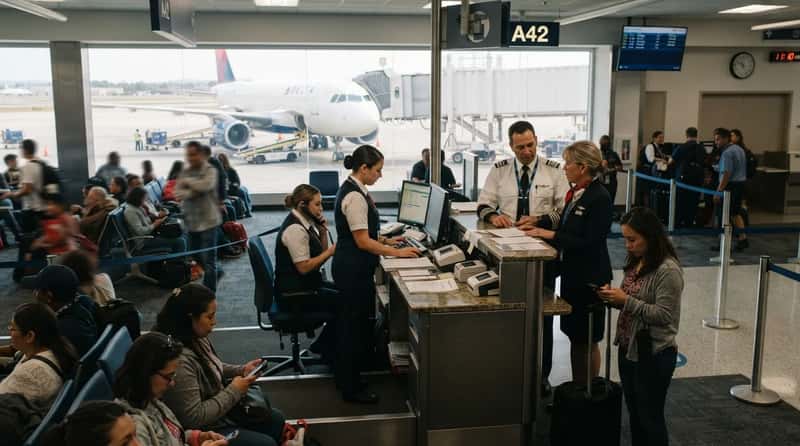
Those twenty minutes are the most choreographed stretch of your entire travel day, even though almost nothing about them looks urgent from a gate seat.
Pilots finish checklists. Flight attendants check emergency gear.
Gate agents reassign seats and print manifests, while ground crews calculate weight and balance under your feet.
Most travelers spend this window staring at their phones. The ones paying attention use it – asking politely about that empty row, confirming their boarding group, and making sure they’re through the door before last call, not after.
Next time you’re standing at the gate, watch that podium a little closer. You’re not waiting – you’re standing in the middle of a countdown nobody ever announced.
Bonus: The Timing Trick That Beats the 15-Minute Cutoff Every Time
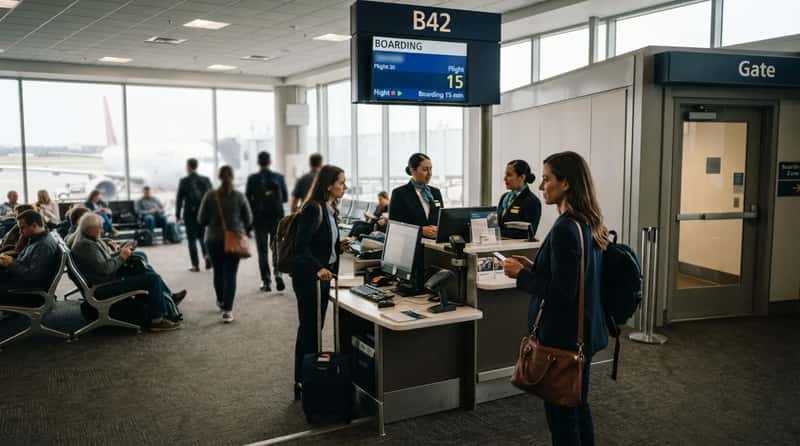
The single biggest mistake travelers make isn’t arriving late – it’s arriving too early and then wandering off, which is exactly when gate agents start reassigning seats.
Frequent flyers use a tighter, more deliberate window instead of just “getting there early.”
- Finish online check-in and lock your seat assignment the moment it opens (usually 24 hours out), so your name never lands on the reassignment list agents work from.
- Physically stand within sight of the podium starting at the announced boarding time, not 45 minutes early – agents fill open exit-row and bulkhead seats on a first-ask basis right when boarding starts.
- If you’re on standby, walk up and ask the agent directly by the name on their badge instead of waiting for your name to be called – agents visibly prioritize specific, polite requests over passengers hovering silently.
- Set a phone alarm for 20 minutes before departure as your hard “be in the boarding line” deadline, since doors can close 10 to 15 minutes early and won’t reopen once shut.
This isn’t about rushing – it’s about being visible and confirmed at the exact minute the system starts making decisions, instead of somewhere in line at the coffee stand when it does.