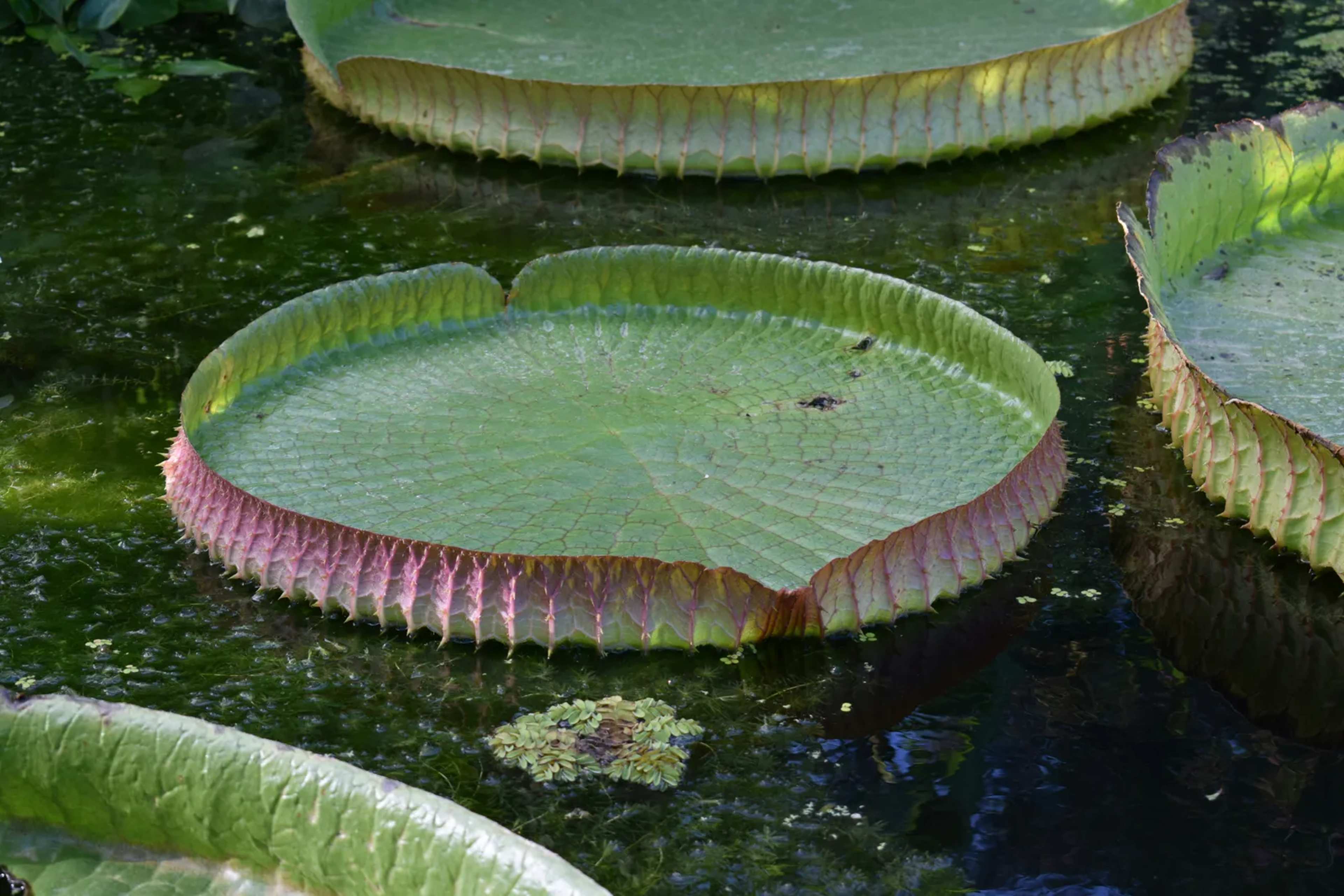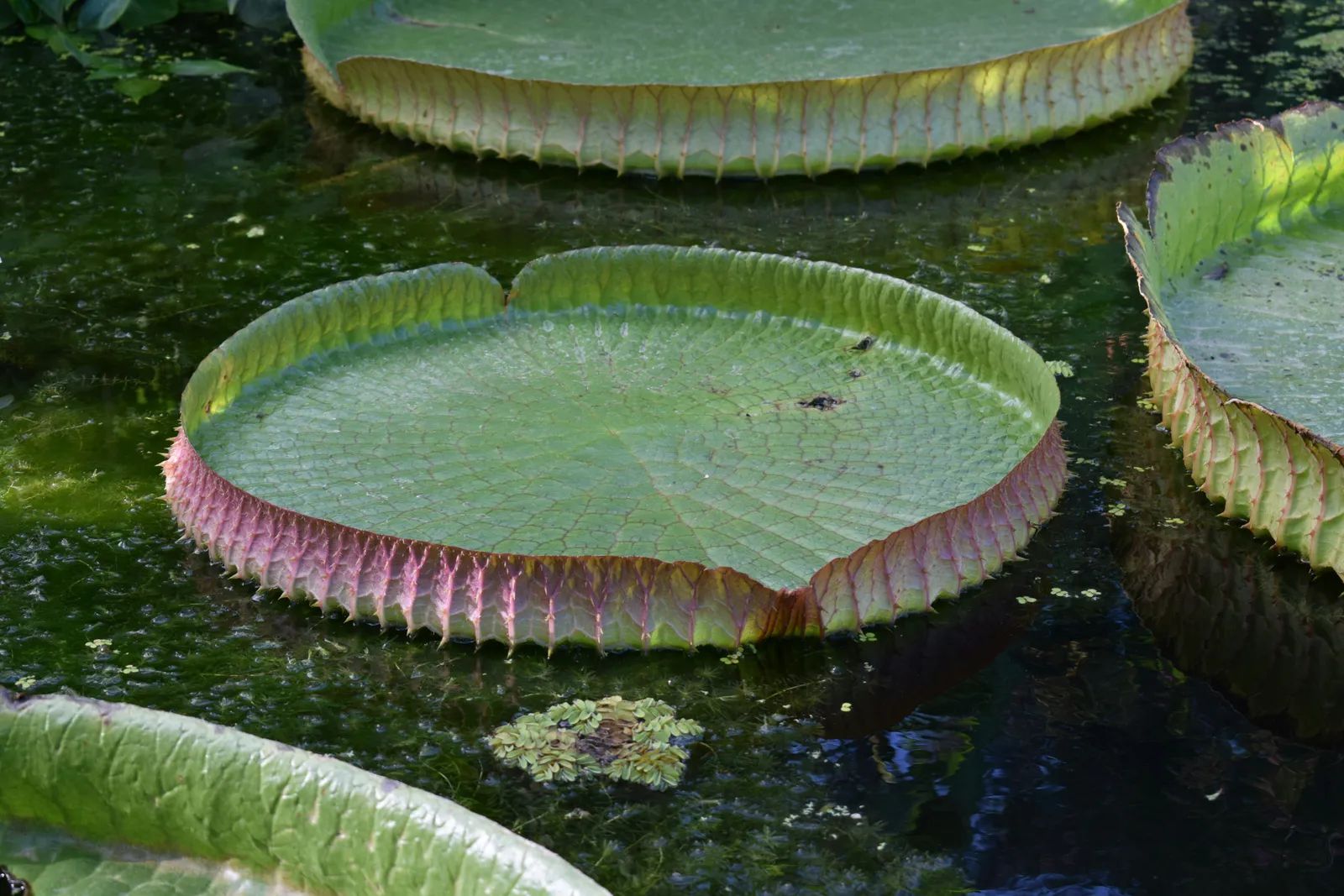
Colombia – A chance encounter with social media photos set off a chain of events that ended with the confirmation of a previously unknown giant water lily species. The plant grows leaves large enough to stand out in satellite images, yet it already faces severe threats that place it in the critically endangered category. Researchers traced the find to the Inírida River system, where no member of the Victoria genus had been recorded before. ([1])
The Social Media Spark
Botanist Carlos Magdalena spotted the images while scrolling through Instagram in 2021. The posts showed a man swimming beside massive circular leaves in a Colombian river, initially labeled as a known species. Magdalena recognized that the location fell outside the documented range for any South American giant water lily.
The geolocation attached to the photos pointed to the Inírida River, a tributary of the Orinoco Basin. That detail alone marked the sighting as unusual. Magdalena contacted the poster, Jeremiah Harris, and began planning further checks.
Confirming Presence From Orbit
Giant water lily leaves can exceed three meters across, creating distinct circular patterns on the water surface. Magdalena examined satellite imagery of the same river stretch and nearby lakes. Several matching shapes appeared, indicating a larger population than the single Instagram post suggested.
This remote confirmation narrowed the search area and justified an on-the-ground expedition. The team included local experts familiar with the remote waterways. Their goal was to collect samples and verify whether the plants represented something new to science.
Fieldwork in Remote Rainforest
The group spent five days navigating the region, including one unplanned nighttime detour through dense forest. They located flowering specimens and took measurements that distinguished the plants from known Victoria species. The effort required coordination with community members who know the shifting river channels.
Back in the lab, detailed comparisons of leaf structure, flowers, and genetic markers confirmed the plants as a distinct species. The discovery process highlighted how social media can connect distant observers with specialists who might otherwise miss such finds.
Urgent Conservation Needs
The new species has already been assessed as critically endangered due to limited distribution and ongoing habitat pressures. Its range appears restricted to a handful of sites along the Inírida and adjacent waters. Any further disturbance could push the population past recovery.
Local partners now hold key roles in monitoring the remaining stands. Continued surveys may reveal additional sites, yet the current evidence points to a narrow and vulnerable range. The find underscores how rapid documentation can support protection efforts before more habitat is lost.