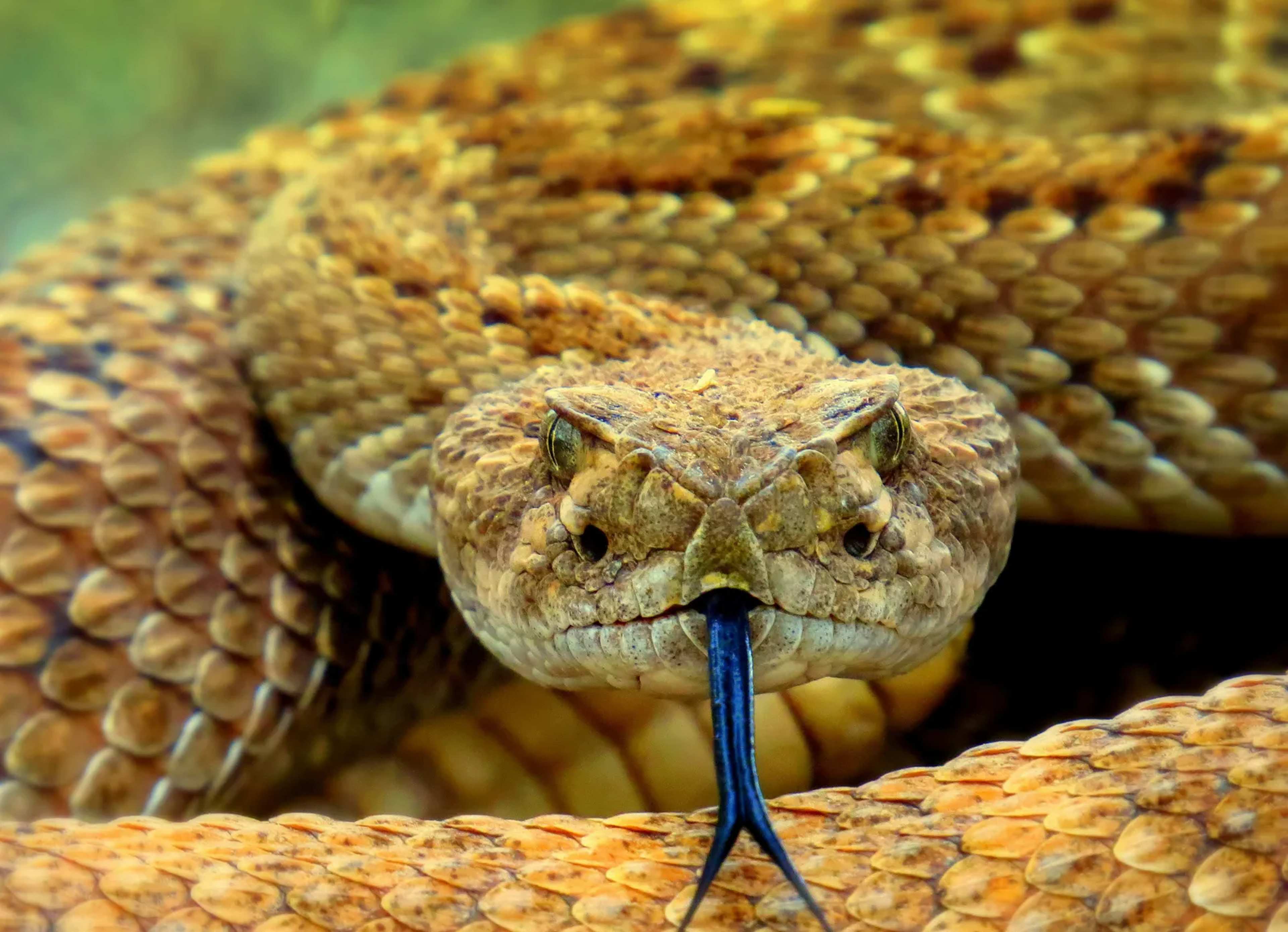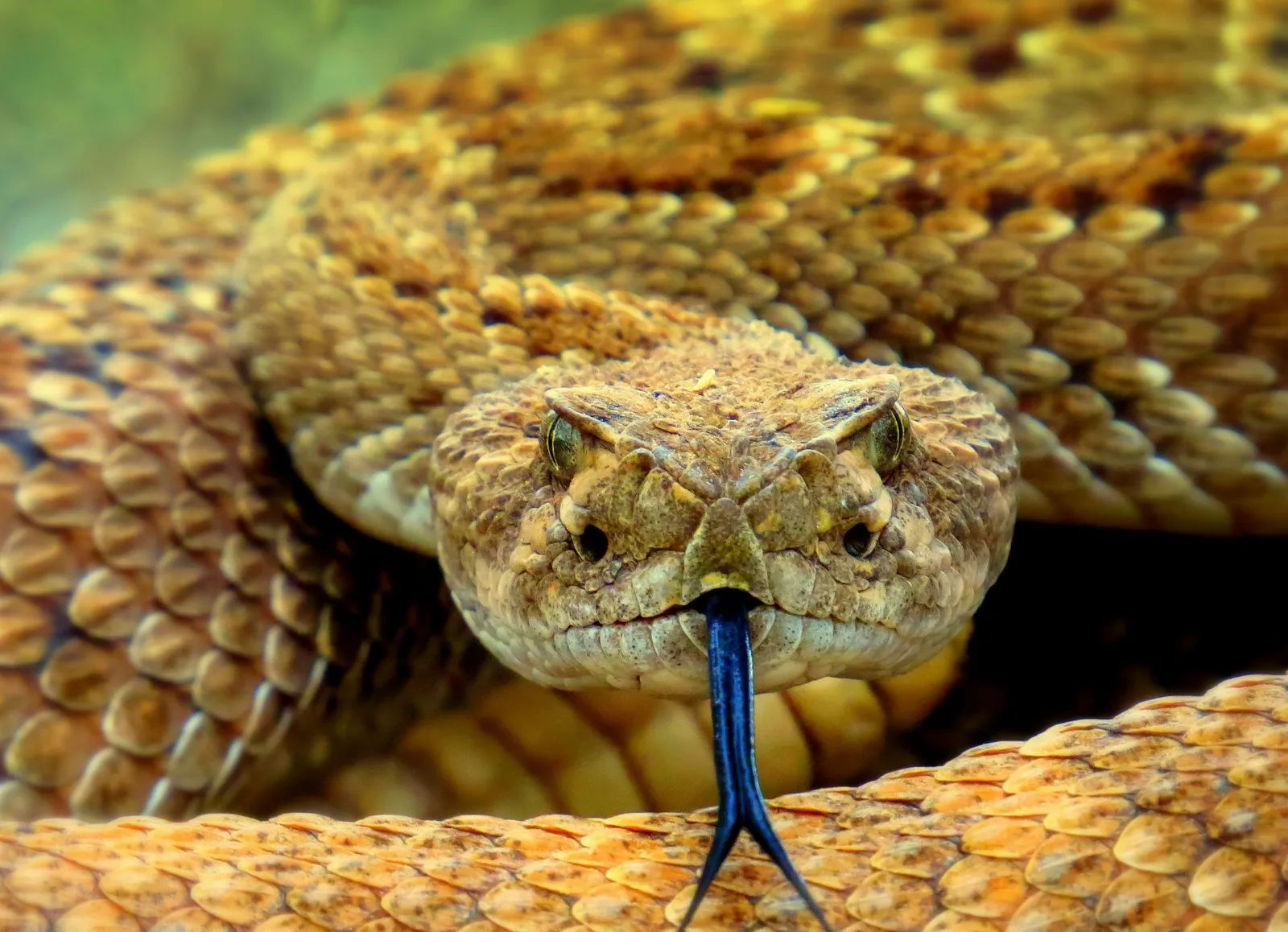
In the rocky expanses of western Iran, a rare viper has evolved one of the animal kingdom’s more unusual hunting strategies. The Iranian spider-tailed horned viper remains motionless for long stretches, its body blending into the terrain, while its tail performs a precise series of twitches. This combination allows the snake to draw curious animals close enough for a strike. Recent analysis of a preserved specimen has clarified the internal structure behind that tail display.
Life in the Zagros Mountains
The species lives only in the semi-arid zones of the Zagros Mountains. Its camouflage matches the surrounding stones so closely that the snake can stay undetected for extended periods. Because the viper occurs nowhere else, any change to its limited range carries direct consequences for the population’s survival. Local conditions of temperature and prey availability shape every aspect of its behavior. Researchers note that the snake’s restricted distribution makes it especially sensitive to habitat disturbance. Even modest shifts in land use or climate patterns could affect the availability of suitable rocky cover. Field observations remain limited, partly because the animal stays hidden during daylight hours. This scarcity of sightings adds to the challenge of monitoring its status over time.
The Tail as a Built-In Lure
The viper’s tail ends in a bulbous tip surrounded by elongated, leg-like scales. When the snake twitches this appendage, the movement creates the appearance of a large spider moving across the ground. Birds and small mammals that approach to investigate become the next meal. The body stays perfectly still throughout the process, relying entirely on the tail’s motion to draw attention. This method requires patience and precise control. The snake must judge when to remain frozen and when to initiate the tail movements that complete the illusion. Over generations, the trait has become finely tuned to the visual responses of local prey species. The result is an efficient way to hunt without expending energy on active pursuit.
New Details From a Decades-Old Specimen
A specimen collected in 1968 and held at the Field Museum of Natural History provided the material for a recent high-resolution scan. The imaging revealed that the tail tip consists of enlarged, elongated, and modified scales unlike those found in any other living reptile. Lead author Georgios Georgalis described the structure as unique among reptiles and noted that such detailed morphological knowledge of vipers has long remained incomplete. The 2026 study marked the first time scientists published three-dimensional views of the internal tail mechanism. Earlier descriptions of the species date only to 2006, so the new scans fill an important gap in understanding how the lure functions at the anatomical level. The work also highlights how museum collections continue to yield fresh insights long after the original collection date.
Convergent Evolution at Work
The tail filaments bear a loose resemblance to structures seen in certain ancient archosaurs from the Triassic and Jurassic periods. Scientists emphasize that no direct evolutionary link exists. Instead, similar environmental pressures appear to have produced comparable features through convergent evolution. The same demands for effective luring in rocky habitats likely drove the development of the spider-like appearance. Such cases illustrate how unrelated lineages can arrive at similar solutions when faced with comparable challenges. For the Iranian viper, the adaptation supports survival in a narrow ecological niche. Continued study of the species may reveal additional details about how these traits interact with daily behavior and long-term population trends.