There was a time when Las Vegas practically paid you to show up. Dollar buffets, free parking, complimentary drinks at the tables – the city was practically built on the idea that getting you through the door cost nothing. That era is gone. What’s replaced it is a layered, sometimes baffling system of charges that follows visitors from the parking garage to the minibar, from the restaurant check to the hotel checkout.
Honestly, it has become something of a running joke – except nobody is laughing anymore. The fees keep climbing, the complaints keep growing, and the visitor numbers are telling a story that Las Vegas’s casino executives probably don’t want to read. So let’s dig into exactly what’s happening, where all these charges come from, and what it means for the city’s future. Let’s dive in.
The Rise of the Resort Fee: A Brief, Aggravating History
Resort fees didn’t appear overnight. They were initially introduced by Station Casinos in 2004 as a way to bypass online travel agency commissions, creating a separate charge that would not be subject to those fees. It was a clever accounting move, and once it worked, everyone wanted in.
Over the years, many resorts followed suit, and by 2013, Caesars Entertainment joined the ranks, despite previously promoting their resorts as “no resort fee zones.” From there, the practice spread like a bad rash across the Strip. What started as a modest nightly surcharge morphed into something far more aggressive.
According to a report by ResortFeeChecker.com, the average resort fee in Las Vegas has risen to $35.48 per night – a notable increase from $22.95 just five years ago. Think of it like a gym membership you never signed up for, billed daily whether you use the treadmill or not.
How High Have the Numbers Actually Gone?

Casino resort fees for 2024 and 2025 have increased at several Las Vegas properties, with nightly charges ranging between $30 and $55, depending on the location and luxury level of the hotel. That range might sound modest written out plainly. On a five-night trip for two people, it adds up fast.
Mandatory resort fees now range between $40 and $65 per night before tax at most Strip properties, with luxury resorts like Bellagio, Aria, and Wynn charging approximately $55 daily. A 2025 tracking survey found the average resort fee reached $40.04. That is not a rounding error – that is real money disappearing from travelers’ wallets.
Out of 90 hotels tracked in Las Vegas, 45 increased their resort fees in recent months. If you booked one night in each of those 90 hotels in 2026, it would cost you $3,812.48 in resort fees alone – an average of $42.36 per hotel. The average resort fee amount early last year was $39.90, representing a 6% increase.
The Drip Pricing Trap That Fooled Everyone

Here’s the thing about resort fees that makes people genuinely angry. It was never really about covering amenities. Hotels use resort fees to advertise lower room rates while still collecting additional revenue. This practice, known as “drip pricing,” allows them to appear more competitive in search results while ultimately charging the same or more than competitors.
Hotels in Las Vegas like to advertise rock-bottom prices and special deals to lure travelers to their resorts. If you’re thinking about a spur-of-the-moment trip to Vegas and you snag a room at Caesars Palace for $80 a night, that’s only going to encourage your travel plans. The resort fee allows hotels to recover the cost of offering such budget-friendly deals.
The real purpose of resort fees was to fool online travel agencies into listing a resort’s properties first when customers searched for “lowest price” or “best value.” It’s a price illusion, plain and simple. Frankly, it worked for years – until travelers started comparing notes online.
MGM Raised Fees Twice in 2024. Twice.
MGM Resorts raised resort fees by $3 to $8 per night on December 4, 2024. Before that, they had already raised resort fees in January 2024. That is two rounds of increases within a single calendar year, on top of parking rate hikes in the same period.
Every single MGM Resorts hotel in Las Vegas now costs at least $45 to $50 above whatever nightly price the hotel claims you’ll pay when trying to get you to book. Incredibly, this was the second time in 2024 that MGM inflated these backdoor resort fees. The same MGM Resorts hotels also cranked up parking rates for the second time in 12 months. Day visitors who park their own cars now pay $20 Monday through Thursday, or $25 from Friday to Sunday.
For all other guests at MGM properties, valet is $40 per day, while self-parking is $20 per day Monday through Thursday and $25 on weekends. Compare that to the fact that parking on the Las Vegas Strip was completely free just a decade ago and you start to understand why people feel cheated.
The Shocking Hidden Charges Piling Up Beyond the Resort Fee

Resort fees are just the beginning. At Paris Las Vegas, one guest was hit with a $50 “cord-unplugging fee” after unplugging a minibar tray to charge a laptop. A small sign warned of the fee, but it was not placed near the outlet. The front desk said it could not be removed because it was a third-party charge.
At Aria, guests are being charged around $26 for a single bottle of water from the minibar, marked up sharply from retail, and some have reportedly refused to pay when questioned. Many restaurants on the Strip now tack on a 4.85% “concession” or “service” fee to customer bills. These surcharges appear in tiny print and don’t correspond to any added value. Occasionally, servers may remove them upon polite request, but the fees are often left unnoticed.
At Flamingo Las Vegas, guests trying to check in early were confronted with a staggering $60 early-check-in fee, displayed via digital kiosk. I know it sounds extreme, but these are real charges that real travelers encountered in 2025. The nickel-and-diming has evolved into something far more elaborate.
Visitor Numbers Are Paying the Price
It would be easy to dismiss visitor frustration as online noise. The actual numbers, though, are impossible to spin away. Following a slight uptick in 2024 that brought in 41.67 million visitors, Las Vegas is now experiencing a significant setback. In the first six months of 2025, arrivals dropped to 19.1 million – marking a 7.3% decrease compared to the same timeframe last year.
The Las Vegas Convention and Visitors Authority reports that there were approximately 155,700 fewer people in town in October 2025 than there were in October 2024. A little more than 3.4 million people ventured to Sin City – a 4.4% year-over-year drop. December’s final count brought the annual total to approximately 38.5 million, representing a 7.5% year-over-year decline.
The 2025 visitor volume closely mirrors the numbers Las Vegas recorded in 2000, 2002, and 2003, effectively erasing two decades of growth. Let that sink in for a moment. Twenty years of momentum, undone in a single year of aggressive fee stacking.
The Survey Says: “Too Expensive”

A recent survey of 15,500 respondents showed that 88% think Las Vegas has become too expensive, indicating a major shift away from the city’s long-standing reputation as an affordable escape. That is an overwhelming signal from travelers, and it is hard to argue with a number that large.
Industry critics note that costs for basic items like coffee or bottled water are alienating visitors. Social media has amplified these complaints, with one viral post pointing out a $26 minibar water bottle at the Aria. Stories like that spread quickly, and they shape how millions of potential visitors think about booking a trip.
Travelers say rising costs are a major reason they are skipping Vegas. Many visitors complain about resort fees, expensive parking, and hidden daily charges that quickly add up. Some tourists also say they are experiencing what they call “Vegas fatigue,” feeling the city no longer offers the same excitement or value as before.
The FTC Finally Stepped In – But the Fees Are Still There

Washington eventually noticed. As of May 12, 2025, casino resort hotels and other providers of short-term lodging must include all mandatory fees aside from occupancy taxes in their upfront advertised rate. In plain terms: if a room costs $243 a night with the resort fee included, that is the number that must appear first in any booking display.
However, let’s be real about what this rule actually changes. The new FTC rule does not eliminate so-called junk fees. It only requires companies to clearly show them in all advertising and on websites. Hotels that violate the FTC regulation face fines upwards of $50,000. The rule is a step forward, but it is not the ban that many frustrated travelers were hoping for.
The FTC estimates the rule will save Americans up to 53 million hours per year spent searching for the true total price of lodging, equivalent to more than $11 billion in savings over the next decade. Transparency matters. Still, the fees themselves remain – billed with full visibility now, but billed all the same.
One Casino Blinked – And Removed the Fees
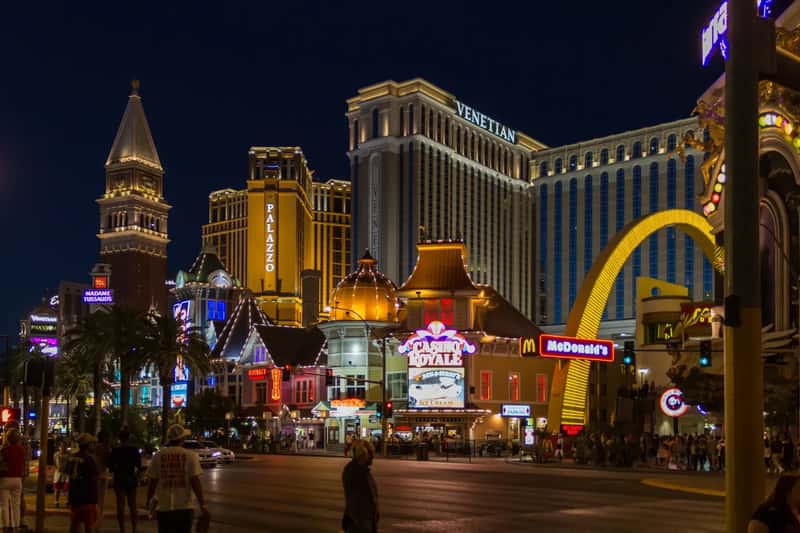
In a market where every major operator insists fees are non-negotiable, one property made a different call. In a bold move to attract more visitors in summer 2025, Resorts World Las Vegas announced it would waive all resort fees for hotel guests until September 11, 2025. This decision came on the heels of the recent elimination of self-parking charges. With this change, Resorts World became the only major casino hotel on the Las Vegas Strip not charging a resort fee.
Typically, resorts on the Las Vegas Strip impose mandatory resort fees ranging from $44 to $57 per night, meant to cover access to amenities such as pools, fitness centers, and Wi-Fi. At Resorts World, these charges usually amount to around $50 per night in addition to the room rate. Waiving that is not a small concession – it is a genuine acknowledgment that the fees were hurting business.
More than two months after a travel consultant recommended a broad moratorium on resort fees to the Las Vegas Convention and Visitors Authority, only Resorts World Las Vegas had removed fees and temporarily ended charges for parking. It is hard to say for sure whether that lone gesture moved the needle, but it was meaningful symbolically. Sometimes one player breaking ranks says everything.
The Bigger Picture: What Las Vegas Could Lose
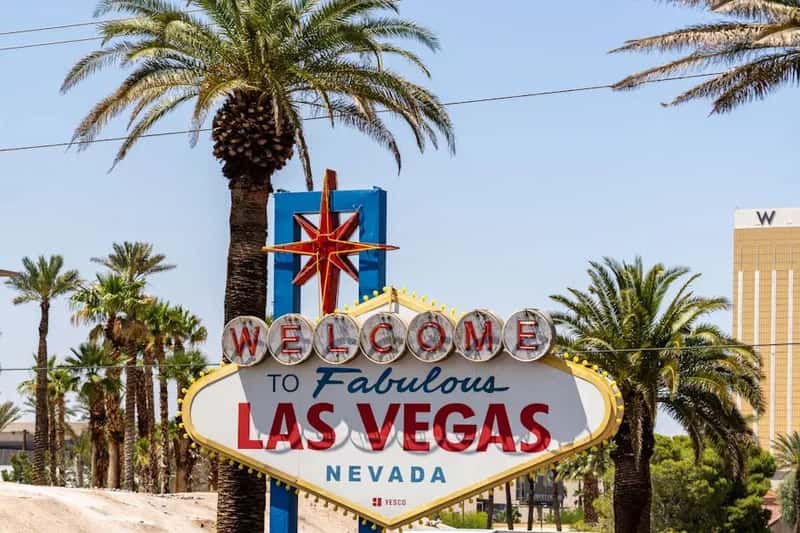
This is not merely a story about hotel receipts. It is about the identity of an entire city. Industry advocates argue that without significant action, Las Vegas risks losing its competitive edge to alternative U.S. destinations. They see resort fees as symbolic of a wider disconnect between corporate priorities and consumer expectations.
The Las Vegas area fell by 4,700 jobs between September and November 2025, according to Nevada’s Department of Employment, Training, and Rehabilitation. Leisure and hospitality shed 2,200 positions, while construction cut 1,700 jobs as major projects were completed and new development stalled. Real people lose real livelihoods when the tourists stop coming. That is the human cost hiding behind the fee spreadsheets.
The Las Vegas Review-Journal reports that Airbnb has seen a surge in Las Vegas due to a “backlash to hotel resort fees.” In second-quarter casino company earnings calls in 2025, the general consensus among executives was that the summer months would remain sluggish, but that visitation would pick up in the fall and advanced bookings indicate a rebound in 2026. Whether that rebound materializes may depend entirely on whether the Strip is willing to reckon honestly with what drove visitors away in the first place.
Conclusion

Las Vegas built its legend on a simple promise: come here, have a great time, and we’ll make it worth your while. The resort fee era has quietly dismantled that promise, layer by layer, charge by charge. What was once a $30 nightly add-on has ballooned into a $55-plus mandatory charge at the city’s most prestigious addresses, stacked on top of parking fees, food surcharges, early check-in fees, and minibar traps that would make any traveler’s jaw drop.
The numbers don’t lie. Nearly nine out of ten surveyed visitors now call Las Vegas too expensive. Visitor totals in 2025 fell to levels not seen since the early 2000s. An entire city’s reputation – built over decades – has been eroded in just a few years of relentless fee creep. The FTC’s new transparency rule is a start, but transparency about a bad deal is still a bad deal.
The casinos that built Las Vegas into what it is today are smart enough to course-correct. The real question is whether they will do it before more travelers simply stop showing up. What do you think – is there a point where the fees would stop you from booking that Vegas trip? Drop your thoughts in the comments.