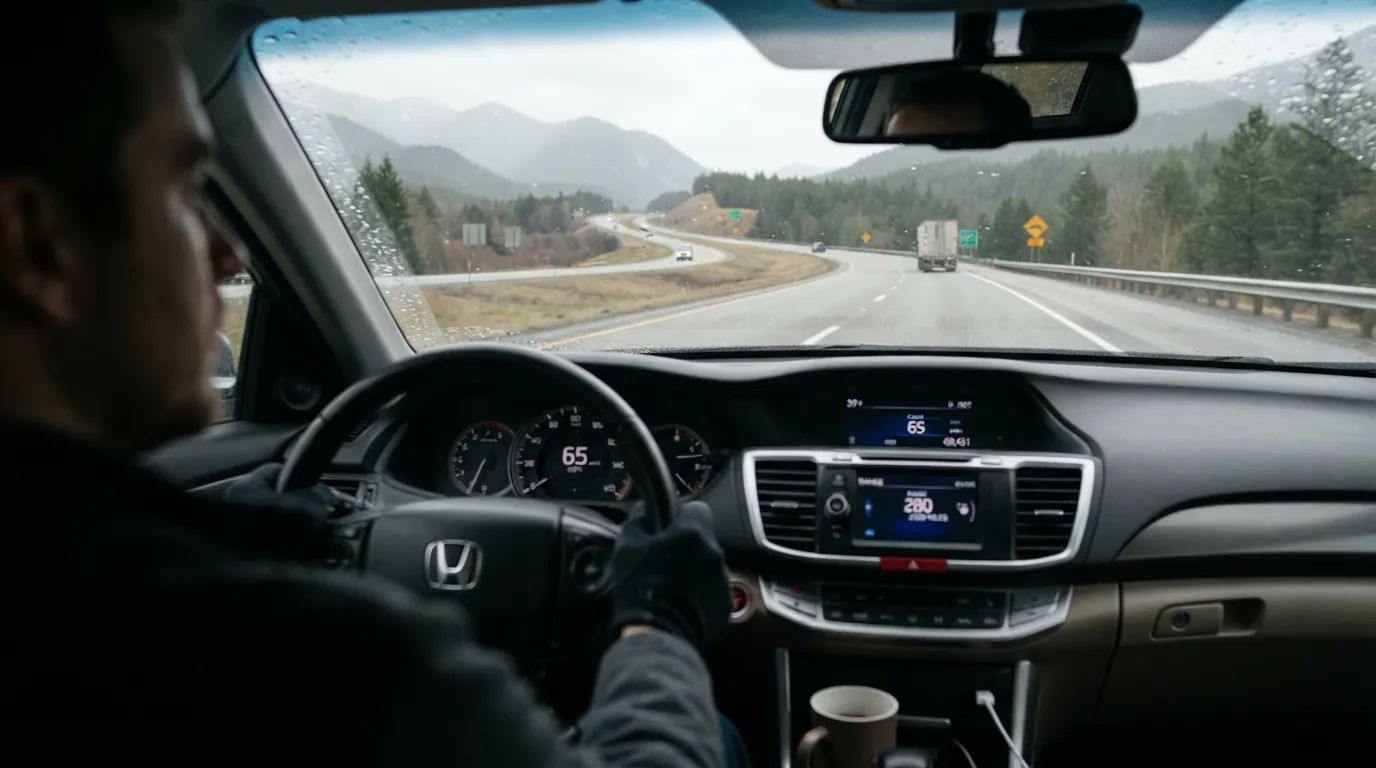
Most people think a fuel stop is just gas and go. Pull in, swipe the card, drive away, forget about it until the needle drops again.
Veteran long-haul drivers – the ones who log 50,000-plus miles a year – see it completely differently. To them, every fuel stop is a small financial decision, and most casual drivers are quietly losing that game every single time they pull off the highway.
The gap between a weekend road tripper and a seasoned cross-country driver isn’t the car, the route, or even the budget. It’s a set of small, repeatable habits – some of them almost counterintuitive – that can save hundreds of dollars on a single multi-day drive.
Here’s what the data, and the drivers who live by it, actually say.
#16 – Never Let the Low-Fuel Warning Be Your Trigger
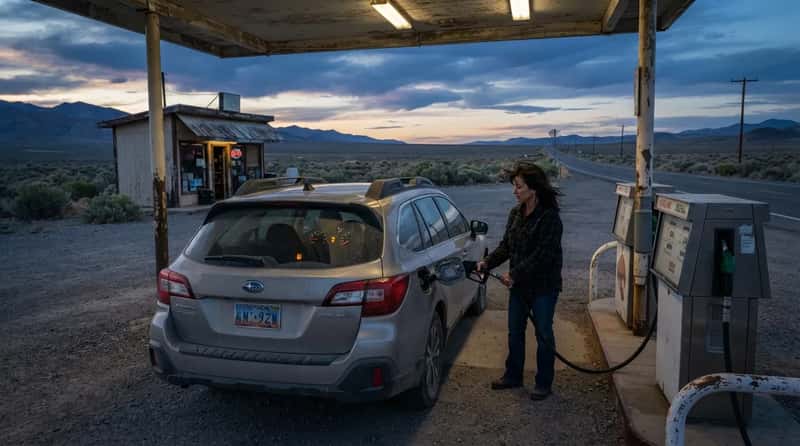
Most casual drivers treat the low-fuel light like a starting gun. Long-distance veterans see it as a confession that they already waited too long.
On a city commute, ignoring the tank until the light blinks on is harmless. On a remote interstate stretch with 80 miles between exits, it’s a completely different bet.
When that light flips on in rural Wyoming or the middle of the Nevada desert, you don’t get to shop around. You take whatever station is there, and you pay whatever it charges.
Veteran drivers never let the tank drop below a quarter. That buffer isn’t paranoia – it’s leverage. It buys you the ability to compare prices, skip a sketchy station, and avoid the panic fill-up at the only pump for 60 miles.
There’s a mechanical reason too. The fuel pump sits inside the tank and uses the surrounding fuel as a coolant, so running consistently low accelerates wear and can lead to an expensive repair down the road.
Treat the light as your emergency backstop, not your cue to act. The real trigger comes next – and it starts before you even leave the driveway.
#15 – Map Fuel Gaps Before You Leave the Driveway
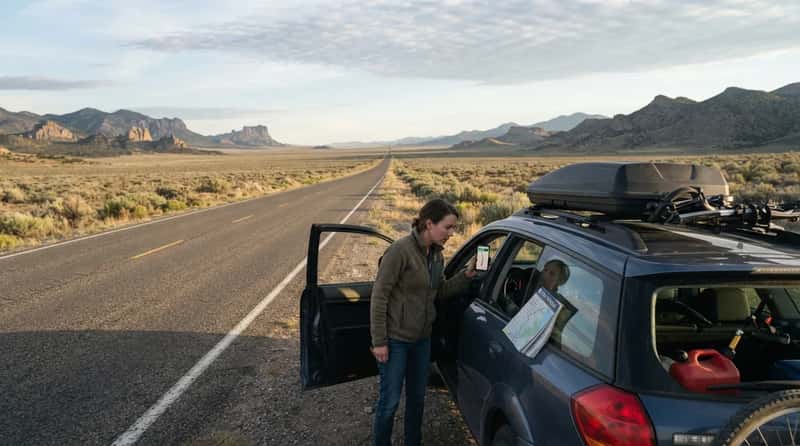
Never assume there’s a gas station just ahead. That assumption is how road trips quietly go sideways in the middle of nowhere.
Before you leave, pull up a GPS navigation app and trace your entire route. Mark any stretch over 50 miles without a confirmed station, and know your vehicle’s realistic range going in.
It takes about ten minutes, and it eliminates one of the most common ways a road trip turns stressful. Rural corridors in Montana, Nevada, and Wyoming regularly run 80 to 100 miles without a reliable pump.
Weather matters here too, and most drivers never factor it in. Cold temperatures shrink your range, and a steady headwind at highway speed burns through fuel faster than you’d expect.
Check both fuel availability and the forecast for every state you’ll cross. This is the piece of pre-trip planning most drivers skip entirely – and the one that costs them the most when they do.
Fast Facts
- Rural stretches in Nevada, Wyoming, and Montana can run 80 to 100 miles between fuel stations.
- A quarter-tank buffer typically covers 60 to 75 miles in most sedans and SUVs.
- Cold weather can shrink usable range by 10 to 20%, eating into that buffer fast.
- A ten-minute route check before departure is usually enough to flag every risky gap.
Once your gaps are mapped, the next mistake is where most drivers still fall for the trap sitting right at the exit ramp.
#14 – Avoid Highway-Exit Stations Whenever Possible
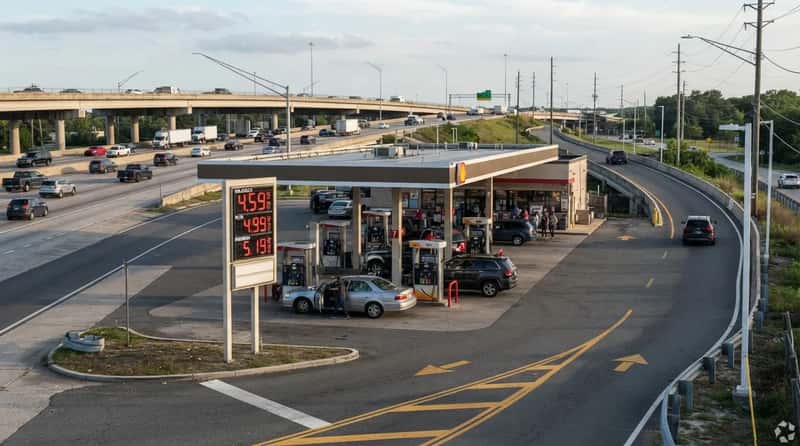
Here’s one almost everyone falls for: the station glowing at the very first highway exit is usually the most expensive option within five miles.
Stations built for on-ramp convenience charge for exactly that – convenience. A short detour of one or two miles into the nearest town can land you noticeably lower prices on the same tank of gas.
AAA Travel Reports have found that gas stations near highways tend to raise prices before the weekend. Stack a Friday departure onto a highway-exit fill-up, and you’re paying two premiums at once – the location tax and the day-of-week tax.
Experienced drivers call this the “one-exit rule”: before you commit to the ramp in front of you, check the exit one before or one after it on your app.
The detour costs you a couple of minutes. On a 15-gallon fill-up, the savings can easily cover a coffee – and it’s the same app that’s about to become your best friend at every single stop.
#13 – Use a Fuel-Price App Every Single Stop
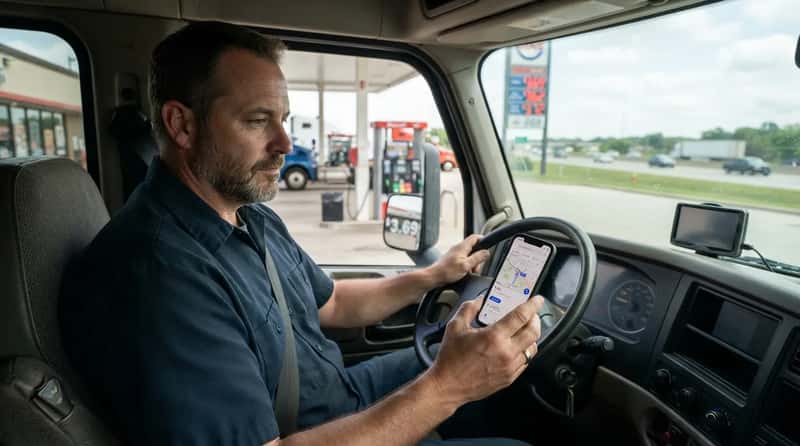
Apps like GasBuddy exist to find the cheapest fuel along your route. That part isn’t a secret – most drivers already know it.
What’s surprising is how few actually use it on the road. Most people open these apps once at home while planning the trip, then forget they exist the moment they’re driving.
GasBuddy, Gas Guru, and the AAA mobile app can all point you toward the lowest nearby price and give you turn-by-turn directions to it. On a long-haul drive, you might cross three or four different pricing zones in a single afternoon, thanks to regional supply differences, state tax lines, and local competition.
A 30-second check before each stop is probably the highest return on investment in any road tripper’s entire toolkit. Do it while you’re still 20 miles out, so you have time to reroute without any last-minute stress.
Prices don’t just vary by location, though. They also follow a weekly rhythm most drivers have never noticed.
#12 – Know Which Day of the Week Costs You the Most
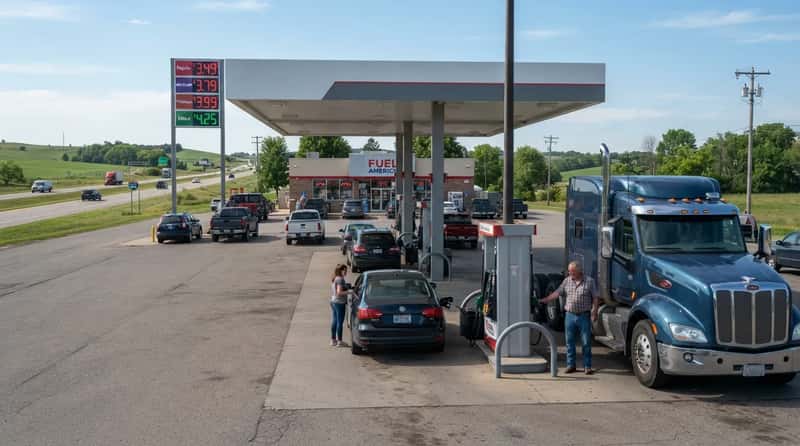
Fuel prices move in a predictable weekly pattern, and almost nobody plans around it.
GasBuddy’s analysis found Sunday to be the cheapest day to fill up in 41 states, while Monday takes the top spot in Alaska, Delaware, Indiana, and Ohio. Prices tend to climb steadily through the week – especially Wednesday through Friday – before easing back down.
“Gas prices don’t just move based on global oil markets – they also follow a weekly rhythm.”
Patrick De Haan, GasBuddy Head of Petroleum Analysis
This isn’t random. It’s a predictable window that gives motorists a way to save simply by shifting the timing of a fill-up, not the amount.
Filling up on the cheapest weekday instead of the priciest one can save 4 to 9 cents per gallon. That sounds small until you multiply it across a 500-mile trip with three fill-ups at 15 gallons each.
Build this into your departure planning instead of stumbling onto it by accident. And if your trip happens to fall on a holiday weekend, the stakes get even higher.
#11 – Avoid Holiday Weekends Without a Pre-Fill Strategy
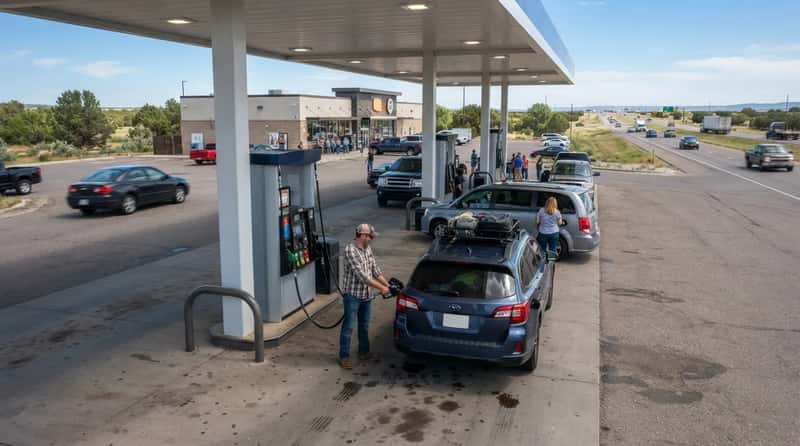
Long-distance drivers who leave on Memorial Day Friday, July 4th weekend, or Labor Day without topping off first are essentially handing money to station owners who saw them coming.
As a holiday approaches, demand spikes and prices climb with it. The fix is simple: fill up two or more days in advance, before the surge sets in.
Fridays already carry a demand premium from regular weekend travel, and highway-adjacent stations raise prices ahead of the weekend on top of that. Stack a holiday onto a Friday departure and you’ve layered two price spikes into one tank.
The veteran move is filling completely on the Thursday morning before a holiday departure – or Wednesday evening, if your state’s prices tend to peak on Thursday.
Do that, and you could be 150 miles into your trip before you need fuel again, sailing past the cluster of overpriced stations everyone else is stuck paying at.
Once you’re actually at the pump, though, how you pay matters almost as much as when.
#10 – Pay Cash or Use the Right Card at Every Stop
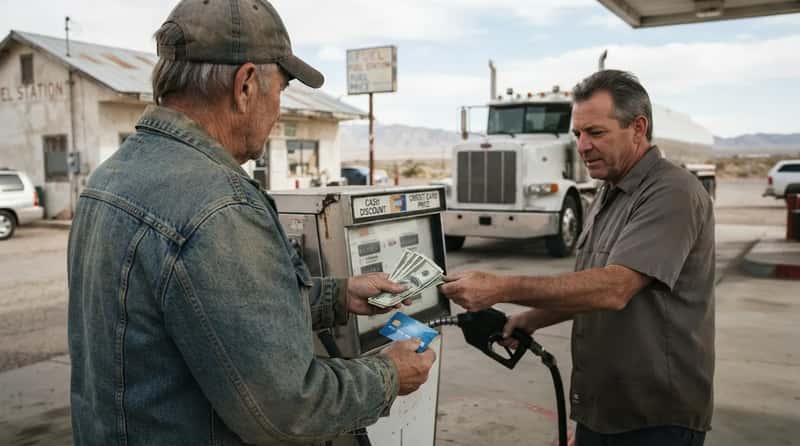
Most drivers reflexively tap their everyday debit card without ever thinking about what that habit costs over a 1,200-mile drive.
Many independent stations offer a lower cash price because paying cash lets them skip the credit card processing fee. That discount can run 5 to 15 cents per gallon – real money on a large tank.
If cash isn’t practical, a dedicated gas rewards card is the next best move. Many return 3% to 5% cash back on fuel, which on a $200 gas budget for a trip works out to $6 to $10 back for choosing the right card.
The habit veteran drivers use: carry some cash for independent stations with a posted cash price, and default to a fuel-rewards card everywhere else. It costs zero extra time and quietly shaves money off every single stop.
Where you’re standing when you pay matters too – sometimes literally which side of a state line.
#9 – Cross State Lines Strategically for Cheaper Fuel
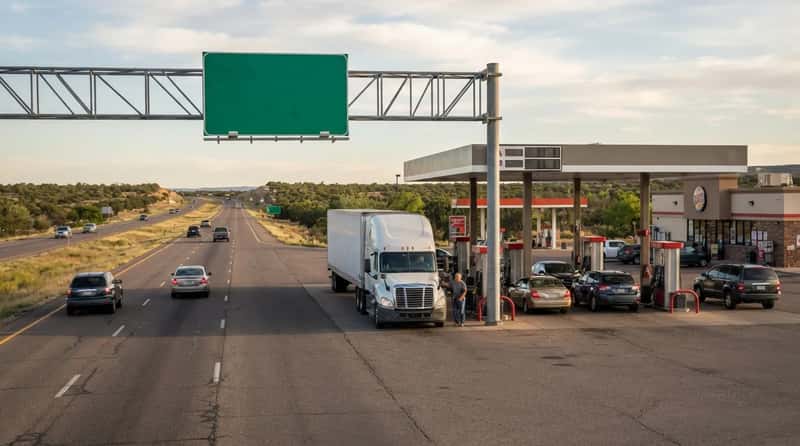
This is the rule that catches most first-time long-distance drivers off guard: where you fill up geographically can matter as much as when.
State fuel taxes vary widely. California, Illinois, Washington, and Pennsylvania sit among the most expensive, while Alaska, New Mexico, and Arizona tend to run cheaper.
Border-town stations know exactly why drivers cross state lines, and the competition keeps their prices tighter than interior stations in the same state.
If your route runs through a high-tax state, top off just before the border, coast through on that tank, and fill again once you’re across into the cheaper state.
On a route through California or Illinois, that single habit can save 20 to 40 cents per gallon. Do it twice on a cross-country trip and the total savings become genuinely significant – especially once you factor in how much speed itself is quietly costing you.
#8 – Slow Down When the Tank Is Running Low
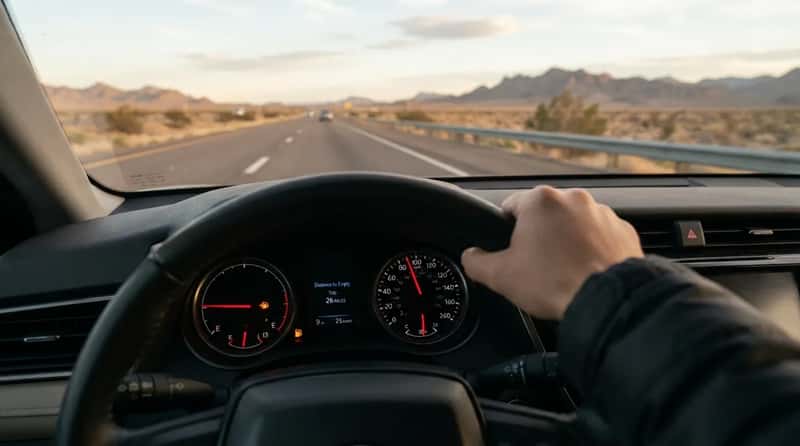
This one sounds backwards. You’re low on fuel and worried about finding a station, so the instinct is to speed up. That’s exactly the wrong move, and it burns the very fuel you’re trying to stretch.
Every 5 mph over 50 cuts fuel economy by roughly 7%. Driving 65 instead of 75 mph can improve fuel economy by 15 to 20%.
The math gets very real when your range is tight. If you have an estimated 30 miles left and the next station is 28 miles away, dropping from 75 to 65 can be the difference between arriving comfortably and arriving on fumes.
When Consumer Reports measured fuel economy at different highway speeds, the gap between 55 and 75 mph was roughly the same as trading a compact car for a large SUV. Slowing down just 10 mph at highway speed can reduce fuel burn by as much as 8 mpg.
Quick Compare
- 55 mph: near the top of most vehicles’ efficiency curve, minimal fuel penalty.
- 65 mph: noticeably thirstier, but still reasonable for covering ground.
- 75 mph: fuel economy can fall 15 to 20% compared to 65 mph.
- Every 5 mph over 50 adds roughly $0.20 or more per gallon in effective fuel cost.
Slow is cheap. Fast is expensive. And speed isn’t the only quiet fuel thief hiding in plain sight – your tires are working against you too.
#7 – Check Tire Pressure at Every Other Fuel Stop
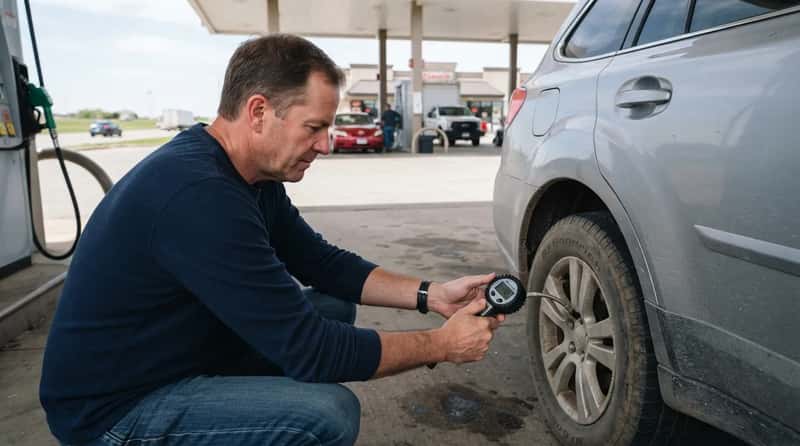
Most drivers check tire pressure once before a trip, then forget it exists for the next 800 miles. That’s a slow, invisible fuel leak that never shows up on the gas gauge.
Under-inflated tires increase rolling resistance and can cut gas mileage by up to 3%. On a 600-mile drive, that’s a meaningful amount of fuel burned for nothing.
Tires also lose pressure naturally on long drives, thanks to heat buildup and temperature swings between regions. The penalty compounds every tank, every mile.
It hits hardest during low-speed driving – exactly the kind of stop-and-go maneuvering you do pulling in and out of gas stations and small towns along your route.
The fix costs nothing. Every second fill-up, walk the car and check the pressure with a basic gauge – most station air pumps are free or a quarter, and the 90 seconds pays for itself within a single tank.
Tires aren’t the only thing quietly working against you at the pump – so is the drive-through you might be tempted to grab lunch at.
#6 – Never Use a Drive-Through at a Fuel Stop
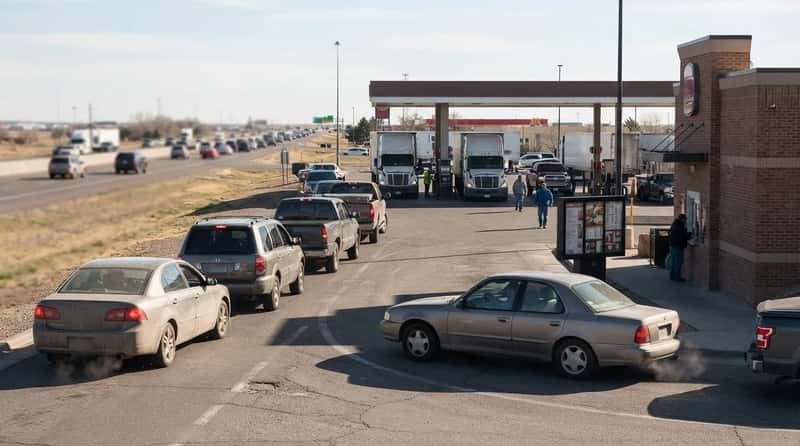
Long-distance drivers are almost fanatical about eliminating idle time, and the drive-through line is one of the biggest hidden fuel drains of any road trip stop.
Idling burns 0.3 to 0.5 gallons per hour while covering exactly zero miles. A 10-minute wait in a busy lunchtime drive-through line can quietly burn 0.05 to 0.08 gallons for nothing.
Do that twice a day across a three-day trip and you’ve idled away the equivalent of a partial tank of gas.
Most experts agree that if you’ll be stationary for 10 seconds or more, shutting the engine off and restarting it uses less fuel than idling through the wait.
Park, walk in, order, eat, and go. You’ll eat faster, idle less, stretch your legs, and fight off fatigue at the same time – which matters more than you’d think when your trunk is loaded down.
#5 – Travel Light: Audit Your Cargo Before Every Long Haul
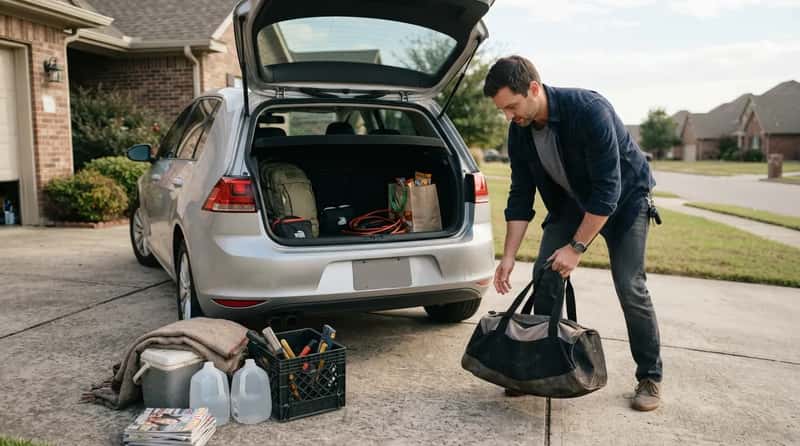
Experienced road-trippers have an almost obsessive pre-departure ritual: they pull everything out of the trunk that doesn’t strictly need to be on this specific trip.
An extra 45 kilograms – about 100 pounds – can lower fuel mileage by roughly 1%. Every unneeded pound makes the engine work a little harder on every single mile.
Before any long-distance departure, do a ruthless sweep of the cargo area. The old gym bag, the spare toolbox, the half-empty water jugs – if it’s not needed for this trip, it stays home.
The weight penalty compounds in ways most people never think about. Heavier vehicles also take longer to brake and roll more through corners, putting extra stress on your tires.
A 200-pound overload on a 2,000-mile trip can cost you several gallons of fuel – real money that rode along in a duffel bag full of gym clothes you haven’t touched since March.
Once the car is lightened, the next fuel leak happens the moment you actually pull in and out of the pump.
#4 – Drive Smoothly In and Out of Every Fuel Stop
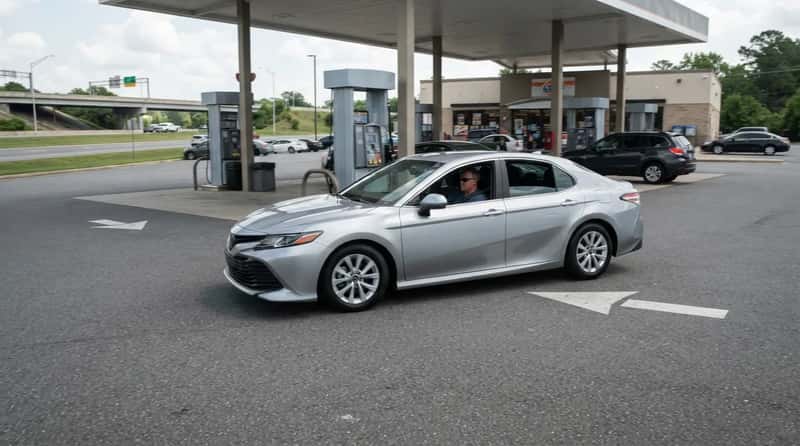
The fuel stop itself – the approach, the pull-in, the departure – is where aggressive drivers burn far more fuel than they realize. Hard acceleration back onto the highway is one of the most expensive 30 seconds of the entire trip.
Aggressive driving can lower gas mileage by as much as 33% on the highway and 5% on city streets. The approach to a fuel stop often mimics city driving – traffic lights, turn lanes, slow forecourt maneuvering – which is exactly where aggressive acceleration costs the most.
Drive as smoothly as possible: gentle steering, gentle acceleration, gentle braking. When you slow down while staying in gear, the fuel cut-off switch in most fuel-injected engines activates, meaning virtually no fuel gets used at all while braking.
Think of leaving a fuel stop as its own little fuel economy test. Smooth ramp-up, coast when you can, steady cruise once you hit highway speed.
Get that rhythm right, and it feeds directly into the next habit – knowing when to stop in the first place.
#3 – Take Breaks on Your Schedule, Not the Car’s
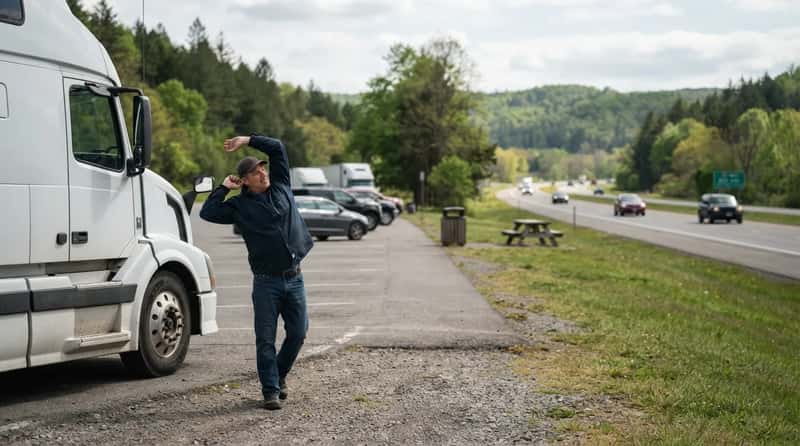
Here’s the habit that separates genuinely experienced long-distance drivers from everyone else: they stop on a fixed human schedule, not when the fuel gauge forces them to. It quietly reorganizes the entire logic of the trip.
Experts recommend a break every two hours on a long drive. Stretching your legs, using the restroom, and resetting your focus all reduce fatigue before it becomes dangerous.
Many drivers can comfortably manage 500 to 600 miles a day, but the real rule is listening to your body over the schedule. Breaks every two to three hours help keep you alert far longer than pushing through.
When your stops are built around your body’s schedule instead of the tank’s, fuel stops become strategic detours folded into a break you were already taking. You get to choose the station with the best price near your planned stop, instead of scrambling for whatever appears when the gauge drops.
Fatigue-driven, last-minute fuel panic is one of the most expensive ways to fill a tank on a long haul. Plan the human stop first, and the fuel strategy follows naturally from it.
Once that rhythm is set, one more decision determines whether you’re actually saving money or just feeling like you are.
#2 – Fill Up in Town, Not at the Station That Found You
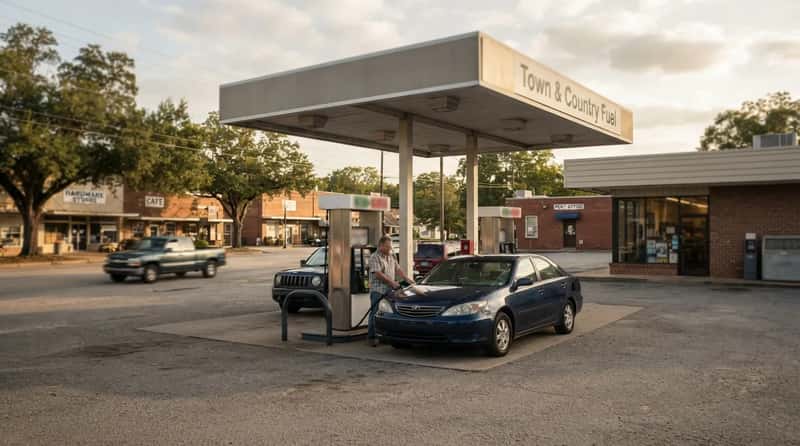
The single most consistent price mistake on any long road trip is filling up at whichever station appears first – usually the one built to intercept tired highway travelers before they ever reach the cheaper options in town.
Comparison shopping still beats timing alone. Prices can swing significantly between stations only a few miles apart.
The pattern holds across the entire country: highway-adjacent stations charge a premium for convenience, while stations competing with each other in town keep prices tighter.
Drive two miles off the interstate into any town along your route, and prices typically drop noticeably. It’s a small detour with a real payoff.
Applied consistently across a three-stop road trip, this rule alone can easily save $15 to $25 – enough to cover a meal along the way.
But every rule on this list only works as well as the one number most drivers get completely wrong.
#1 – Know Your Vehicle’s Real-World Range, Not the Sticker Range
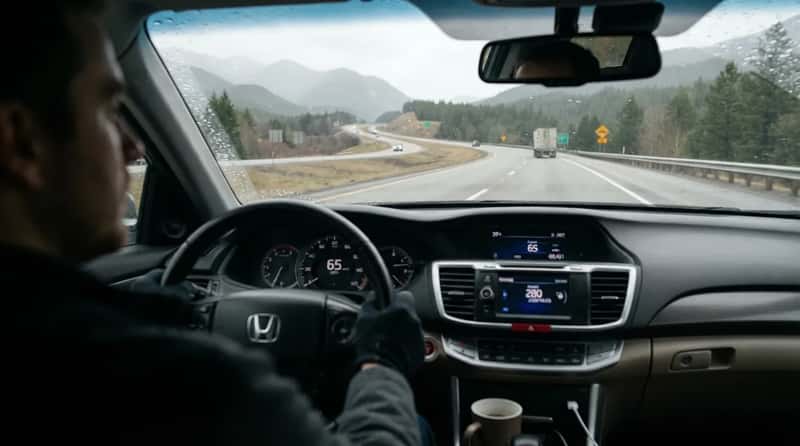
Every other rule on this list becomes dramatically more powerful once you know your car’s actual range in real-world conditions – not the EPA estimate on the window sticker, and not the optimistic number the dashboard shows after a gentle commute.
Fuel efficiency isn’t a fixed number. Manufacturers advertise MPG based on controlled lab conditions, but your real range depends on a dynamic mix of highway speed, load weight, headwinds, temperature, terrain, and air conditioning.
Cold weather alone can reduce MPG by 10 to 20% as engines take longer to warm up. Hills and mountains eat into efficiency further, and AC use can cut city MPG by 10 to 25%.
Worth Knowing
- Cold weather: can cut MPG by 10 to 20% until the engine fully warms up.
- Mountain terrain: adds sustained engine load that quietly drains efficiency.
- Air conditioning: can lower city MPG by 10 to 25% on hot-weather stretches.
- Stacked together, these factors can shrink a “400-mile tank” to under 300 miles without warning.
A driver who believes their SUV has a 400-mile range, then crosses a mountain range in cold weather with a full load, may actually be working with something closer to 300 miles – and not know it until it’s too late.
The fix is simple: track two or three fill-ups under similar driving conditions and calculate your real-world miles per gallon. Divide that by your tank size, subtract 15% as a buffer, and that number – not the sticker – becomes your planning range.
Every rule about pre-planning, crossing state lines, avoiding highway stations, and timing fill-ups by day of week only works if this underlying number is accurate. Get this one right, and everything above it clicks into place.
The Bottom Line
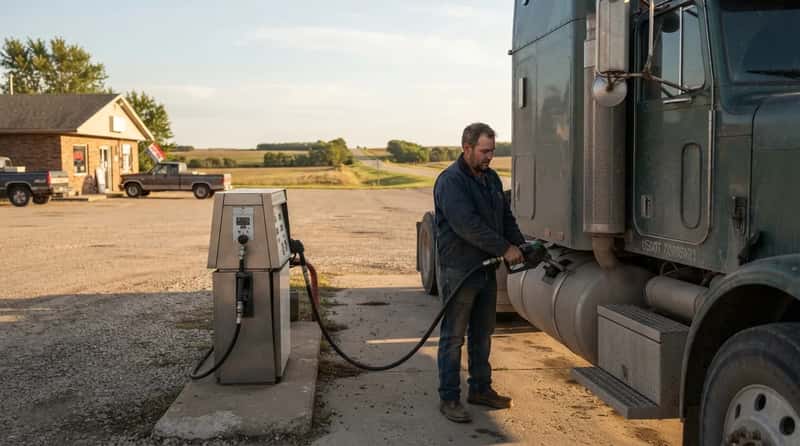
Drivers who consistently spend less at the pump aren’t lucky. They’re methodical, running on a completely different playbook built around timing, tank levels, and a handful of habits most people never think twice about.
None of it is theory. It’s grounded in pricing data from GasBuddy, fuel economy research from Consumer Reports and the DOE, and the practical logic of drivers who treat every mile as a budget decision.
The biggest wins come from the same handful of places: knowing your real range, shopping away from highway exits, timing fill-ups to Sunday or Monday, and keeping the trunk light.
None of it requires a different car, a bigger budget, or more time behind the wheel – just a smarter system running quietly in the background every time you pull off the road.
Bonus: The Stacking Trick That Beats Every Rule Above
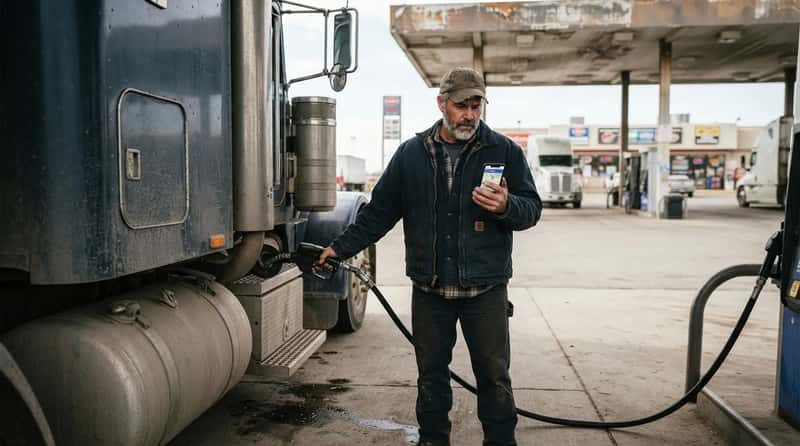
Most drivers pick one savings method per fill-up – an app, a card, a cheap day. Veteran long-haul drivers stack three or four discounts on the exact same tank of gas, and that stacking is what actually moves the needle.
Here’s the layering order that works at almost any station:
- Open a cash-back gas app (like GetUpside) and activate any available offer at that specific station before you start pumping – this step alone is often skipped because it has to happen before the transaction, not after.
- If you have a grocery store loyalty account (Kroger, Safeway, Publix, and similar chains all run this), check whether your accumulated fuel points can be redeemed at a partner station on your route – these points typically knock a fixed amount off every gallon, up to a capped number of gallons per fill-up.
- Pay with your dedicated fuel-rewards credit card on top of the app and the loyalty discount, not instead of them – the discounts apply at different stages of the transaction, so they don’t cancel each other out.
- Confirm the app offer actually activated (a notification or in-app confirmation) before you walk away from the pump – an unconfirmed offer means you just paid full price for nothing.
Individually, each layer only saves a few cents a gallon. Stacked together on the same fill-up, long-haul drivers routinely turn a single stop into the cheapest tank of the entire trip – without changing a single thing about their route, timing, or driving style.
It takes about the same 30 seconds as checking one app – you’re just checking two or three instead of settling for one.