For most of the last two decades, the story of modern romance ran in one direction. Swipe apps replaced setups, algorithms replaced aunties, and family involvement in matchmaking looked like something headed for the history books. Yet in several countries, that trajectory has started to bend back on itself, and not because anyone announced a grand return to tradition.
Instead, the shift has arrived quietly, through subscriber numbers that keep sliding, government offices that have started acting as cupids, and young adults who tried the apps, got tired, and went looking for something with more structure. The countries below tell that story from different angles, but the pattern across them is surprisingly consistent.
India: Gen Z trades swiping for the family network

India has always had the world’s largest concentration of arranged marriages, but what’s shifting is who young Indians are turning to when apps stop working. Commentary from late 2025 points to a generation that tried dating apps, tried matrimonial websites, and then circled back toward community networks and paid matchmakers who function much like the aunties and uncles of old. These are not people rejecting choice, they are people who found the endless swiping exhausting and wanted a filter with some accountability behind it.
Tinder’s revenue fell 4 per cent year-on-year in its 2025 financial year, the first annual drop in the app’s history, and its paying subscribers dropped to about 8.8 million by the end of 2025, down 8 per cent on the year. Psychologists working with young clients say the appeal of an arranged setup often has less to do with tradition and more to do with wanting a safety net in a search that otherwise feels entirely unstructured. Regional matchmaking networks in states like Gujarat and Maharashtra, which never actually disappeared, are now absorbing a fresh wave of Gen Z clients who once assumed they would skip that route entirely.
China: matchmaking becomes a matter of national concern

There were 6.1 million marriage registrations nationwide in 2024, down from 7.7 million the previous year. That is not a small dip, and it has consequences beyond wedding statistics. Experts point to a shifting outlook toward marriage, an unbalanced sex ratio and the trend of delaying first marriages as key factors driving the decline in registrations, warning that fewer marriages will affect the country’s future birthrate.
In response, both officials and families are stepping back into the role of matchmaker. Universities have even created programs to teach students how to navigate relationships, with one Beijing university enrolling students in China’s first marriage-related degree program in March 2025, a course that reportedly includes matchmaking alongside counseling. One professor at Xi’an Jiaotong University has pushed the idea further still, arguing that authorities should actively promote family values and expand matchmaking services rather than leave the matter to chance.
Japan: omiai finds new relevance in a low marriage era
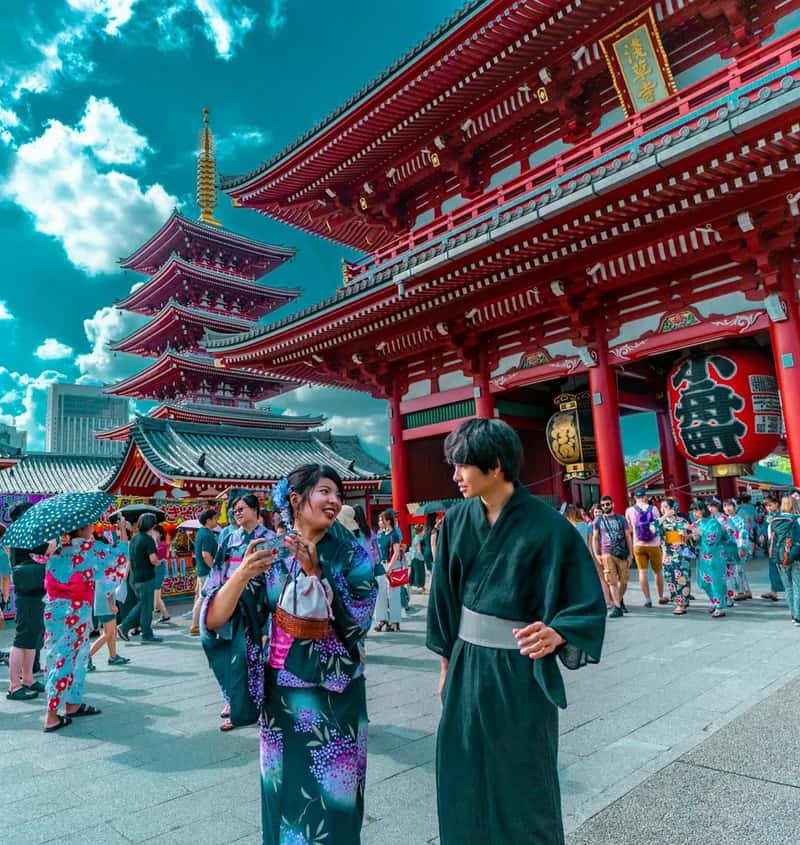
Omiai, Japan’s centuries old system of formal introductions arranged through a go-between, once shaped the vast majority of marriages in the country. In the 1930s and 40s, omiai practices accounted for 69% of marriages in Japan; by 2010 the figure had dropped to 5.2%. That decline looked, for a long time, like the natural end of the custom.
Instead, Japan’s traditional matchmaking practice never disappeared, but it has been rebooted for an era of demographic alarm. Match Group executives now suggest that roughly a quarter of Japanese marriages trace back to dating platforms in some form, and one popular app alone is credited with facilitating around one in ten. The government has also started funding omiai and konkatsu, or spouse hunting, initiatives directly, treating what used to be a private family matter as part of its response to a shrinking population.
South Korea: local governments step into the role of cupid

South Korea reported 222,400 marriages in 2024, down from 322,807 in 2013, while fertility rates fell over the same period, dropping to 0.75 children born per woman in 2024, down from 1.19 children in 2013. Faced with those numbers, city and county governments have moved well beyond encouragement. Across the country, local governments are organizing dating events, offering marriage incentives, and designing matchmaking programs that resemble reality television shows, with couples in Hampyeong County who meet through a government-sponsored event and eventually marry able to receive up to 10 million won, while a Seoul city-backed dating event on the Han River reportedly drew more than 3,000 applicants for just 100 spots.
Not every program has worked. Some districts have logged large budgets and almost no resulting weddings, which suggests younger South Koreans remain skeptical of state-run romance even as they welcome the structure it offers. Still, there are small signs of movement, since in 2023, South Korea’s birthrate was 0.72 per woman, and as of January 2026, it’s 0.99.
Pakistan: the rishta system adapts rather than disappears

Arranged marriage in Pakistan was never really at risk of vanishing, but the ways families conduct the search have started to change shape. A 2024 survey by Gallup and Gilani Pakistan showed over 80 percent of Pakistanis get married through the arranged marriage process. Marriages there are traditionally arranged by families or through professional matchmakers known as Rishta Aunties, who connect prospective families but rarely allow singles to meet independently before a match is proposed.
What has shifted is the willingness to blend that system with something a bit more open. Organized by Muzz, the world’s largest Muslim marriage app with over 15 million members, a series of matchmaking gatherings launched across Pakistan under the banner Baat Pakki, an Urdu phrase used when families agree to a marriage match. Muzz told Arab News it has over 2 million users in Pakistan. These events keep parents in the room while giving young adults a rare chance to actually speak with a prospective partner before any formal agreement, a small but telling adjustment to an old script.
United Arab Emirates: diaspora demand meets state oversight

The UAE’s mix of nationalities has created an unusual matchmaking economy, largely fueled by South Asian families spread across continents. In the South Asian expat community, where arranged marriages remain common, professional match brokers thrive, with veteran Indian matchmaker Sumeet Merchant traveling to Dubai to collect profiles for diasporic families from as far as Canada and the US. His client list stretches from Mumbai to Toronto, proof that the search for a suitable match rarely respects borders anymore.
The government has also inserted itself into the process, though in a different way than the matchmakers. The government recently made premarital genetic screening mandatory for Emirati couples as part of its National Genome Strategy, and since January 2025, thousands of young Emiratis have undergone tests for hereditary diseases before getting a marriage license. It’s yet another way the state is involved in marriages, not as matchmaker, but as a guardian of public health for future generations.
Saudi Arabia: family led matchmaking meets modern compatibility checks

In Saudi Arabia, the family led search for a spouse has always operated with its own internal logic, one that looks less rigid up close than outsiders often assume. Marriage there is not merely a personal decision, it is a family project, and the process typically begins with the man announcing his intent to marry, prompting his family, particularly close female relatives, to search for a suitable bride. The comparisons people now draw between this system and modern dating platforms are not accidental.
The enduring tradition shares surprising parallels with the modern phenomenon of dating apps like Tinder, since both approaches lean heavily on compatibility and preference based matching. Compatibility itself is treated as paramount, spanning social, cultural, and personal factors that families weigh carefully before introductions ever happen. What has changed in recent years is simply the vocabulary people use to describe a process that, in practice, has stayed remarkably steady.
A pattern worth watching, not a full reversal

None of this amounts to young people abandoning independence or handing decisions entirely back to their parents. What is happening looks more like a hybrid, where families and communities provide structure and screening while the final decision, in most of these cases, still rests with the couple. The common thread is fatigue, whether with apps that promised efficiency and delivered burnout, or with demographic pressures serious enough that governments felt compelled to get involved.
Whether this quiet shift holds or fades again will likely depend on whether the new versions of matchmaking, apps included, can actually deliver better outcomes than the systems people walked away from in the first place. For now, the trend lines in these seven countries point in the same direction, even if the reasons behind them differ from Seoul to Riyadh.