
Plenty of people assume their Medicare card works the way a credit card does, accepted nearly everywhere. Inside the country, that’s close to true. Once you cross a border, the picture changes quickly.
The rules aren’t hard to learn, but they’re full of narrow exceptions and plan specific details. Knowing where Medicare stops, and what might pick up from there, can save a traveler from a very large bill.
What Counts as the United States

Medicare draws the line by geography. The 50 states, the District of Columbia, Puerto Rico, the U.S. Virgin Islands, Guam, the Northern Mariana Islands, and American Samoa are considered part of the U.S.[1] Anywhere else is considered outside the U.S.[1]
That means a trip to Guam or San Juan is handled like a trip to Ohio. A weekend in Cancun or Vancouver is not, even though both are close to home for many Americans.
Original Medicare Rarely Pays Abroad

The general rule is blunt. Medicare usually doesn’t cover health care while you’re traveling outside the U.S., though there are some exceptions.[1] If you have Original Medicare and nothing else, you should expect to pay all of your costs abroad.[2]
Some services are also excluded outright. Medicare does not pay for kidney dialysis treatments or prescription medications outside the country[3], so people who depend on either need to plan ahead.
The Narrow Exceptions for Foreign Care

Medicare can pay for foreign care in a few rare cases. If you have an emergency while in the U.S., but the nearest hospital that can treat you is in a foreign country, Medicare may cover the care.[4] This usually only happens if you live or travel very close to the borders of Canada or Mexico.[4]
Another example involves travel through Canada. Part A and Part B may cover certain emergency services when traveling between Alaska and another state via Canada.[5] Even then, Medicare only pays for the services it covers back home, and you’re still responsible for the usual deductibles and coinsurance.[6]
Ambulances and Overseas Hospitals

Ambulance transport is one of the quieter exceptions. A health economist quoted by U.S. News said that both Original Medicare and Medicare Advantage may cover medically necessary ambulance transport to an overseas hospital, with you paying one fifth of the Medicare approved amount.[7]
Medicare’s own travel page says something similar. Medicare may also pay for inpatient hospital, doctor, and ambulance services you get in a foreign country in rare cases, if you’re eligible.[1] These cases depend on specific circumstances, so nobody should treat them as a plan for a vacation.
Cruise Ships and Territorial Waters
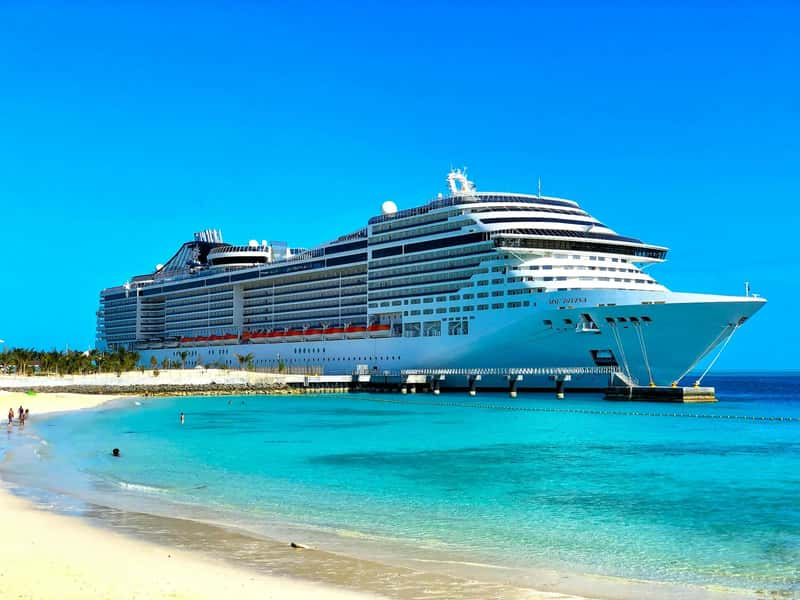
Cruises can be confusing, because a ship feels like a floating piece of home. Coverage depends on where the ship is. One insurance broker’s guide says you’re only covered if the ship is in a U.S. port or within six hours of one.[6]
Beyond that window, you are in international territory, and Original Medicare will not pay for your care.[6] Ship doctors also tend to charge their own rates. Anyone sailing on a long itinerary should look at private coverage.
Medigap and Foreign Travel Emergency Care

Medigap is where many travelers find real help. Standard Medigap plans C, D, F, G, M, and N provide foreign travel emergency health care coverage.[8] Plans E, H, I, and J are no longer for sale, but if you bought one before June 1, 2010, you may keep it.[8]
The benefit has a set structure. These plans pay four fifths of billed charges for certain medically necessary emergency care outside the U.S. after you meet a $250 deductible for the year.[8] One thing to know is that Plan F is no longer available to people who became eligible for Medicare on or after January 1, 2020.[9]
The Limits Built Into Medigap

The benefit has two ceilings. First, it covers emergency care only if the care begins during the first 60 days of your trip[8], and only if Medicare doesn’t otherwise cover it. Second, there is a lifetime limit of $50,000.[8]
That cap can run out fast. One Medicare guide notes that a serious illness or injury abroad can easily exceed $50,000.[9] Also, Plans A, B, K, and L do not include the foreign travel emergency benefit.[9]
Medicare Advantage and Overseas Emergencies

Advantage plans are less uniform. They must cover, at a minimum, everything Original Medicare covers[10], and some also offer additional benefits for emergency care and urgent care services during foreign travel.[10] Those extras are meant for surprises, not routine visits.
Because the benefits aren’t standardized, the details matter. One guide notes that some plans might cover a true emergency room visit but exclude urgent care centers.[6] Length of stay matters too, since you may be disenrolled from your Medicare Advantage plan if you travel outside the U.S. for more than six months.[10] The safest step is to call the plan, which can tell you whether it offers emergency travel benefits and how claims or reimbursement are handled.[10]
Prescriptions, Vaccines, and Refills

Drug coverage stops at the border. Whether you have a standalone drug plan or coverage through Medicare Advantage, Part D won’t cover prescriptions you get outside the United States.[10] A traveler who runs short has to pay the full local price.
Vaccines are a different story. Part D covers vaccines recommended by the Advisory Committee on Immunization Practices, including travel vaccines such as yellow fever, chikungunya, and Japanese encephalitis, when obtained in the U.S. before your trip.[9] Getting shots and a full supply of medication before departure is the practical move.
Travel Insurance as a Backstop

Medicare itself suggests a private option. Because Medicare has limited travel medical coverage outside the U.S., you may choose to buy a travel insurance policy to get more coverage.[1] That can matter most for costs Medicare and Medigap rarely touch.
One insurer’s guide says a good travel policy can cover medical evacuation, trip cancellation, and major medical emergencies that Medicare misses.[4] Policies differ, so read the exclusions for pre-existing conditions before you buy.
Checking Your Coverage Before You Leave

Start with the plan you actually hold. The government’s Medigap guidance advises that before you travel outside the U.S., you should talk with your Medigap company or insurance agent for more information about coverage while traveling.[8] Medicare Advantage members should make the same call to their insurer.
Ask about emergency versus urgent care, how claims are filed from abroad, and any trip length limits. Then compare the answers against your destination and itinerary. With those details in hand, you’ll know what is covered, what isn’t, and whether more insurance is needed.