Choosing between Mexico and Costa Rica is one of the most common dilemmas facing Americans and Canadians planning a retirement abroad. Both countries offer warm climates, welcoming expat communities, and a noticeably lower cost of living than most of North America, but the details matter once you start comparing actual monthly numbers rather than marketing slogans.
This comparison pulls together current 2026 budget data, housing figures, healthcare costs, and residency requirements so you can see where your money actually goes in each country. Neither destination is universally cheaper, and the right answer often comes down to your lifestyle preferences as much as your bank balance.
Monthly Budget Snapshot: Mexico vs Costa Rica

For a single retiree, Mexico tends to come out slightly ahead on raw affordability. Reports suggest a single retiree can live comfortably on $1,000 to $1,800 a month inland or $1,800 to $3,000 or more a month on the coast in Mexico. Couples generally land in the two thousand to three thousand dollar range depending on how close to the beach or how far into a colonial inland city they choose to settle.
Costa Rica runs a bit higher across the board. Current estimates put a comfortable single lifestyle at $1,800 to $3,000 a month, while more modest budgets of $1,400 to $2,000 are achievable for those willing to live more locally. For couples, many retired couples live well on $2,000 to $3,000 a month, including housing, groceries, utilities, healthcare, and entertainment in Costa Rica, which sits roughly on par with a comfortable Mexico coastal budget but slightly above what a couple would spend in inland Mexico.
Housing and Rent Costs

Housing is the single biggest line item for almost every retiree, and it’s also where the two countries diverge the most by region. In Mexico, a comfortable one-bedroom apartment in a desirable neighborhood typically runs MXN 14,000 to 18,000, or about $800 to $1,020 USD, in areas like Narvarte, Del Valle, or Escandón in Mexico City, or Itzimná in Mérida. Smaller cities go even lower; in Mérida you can still find great rentals for as low as $500 a month.
Costa Rica’s Central Valley offers a similar range but with a narrower spread. In San José, rents run $600 to $1,200 for two-bedroom apartments, while the upscale Escazú area runs $1,200 to $2,000. More budget-friendly towns like Atenas keep costs down, with a solid one-bedroom running $500 to $800 a month. Beach towns in both countries push prices up substantially, and in Guanacaste specifically, the honest trade-off is cost and heat compared to the cooler, cheaper Central Valley.
Healthcare Costs and Quality

Healthcare is where Costa Rica often earns its reputation as the gold standard for retirees, and the numbers back that up. The country’s public system, known as Caja, covers legal residents, including Pensionado visa holders, for a monthly contribution of approximately $100 to $200 depending on income level. Costa Rica’s overall health system quality score also edges out Mexico’s, with a World Health Organization access and quality score of eighty out of one hundred compared to Mexico’s seventy-five.
Mexico’s public healthcare option, IMSS, is comparably priced at around $90 to $95 monthly for seniors aged 60 to 79, roughly $1,100 a year, though it comes with longer wait times and Spanish-only staff. Mexico is also rolling out changes to its system, with a new unified health record and credentialing system called IMSS-Bienestar starting in March 2026, aiming for more integrated public care. Private insurance in Mexico for retirees without pre-existing conditions typically runs $1,200 to $3,600 annually, a similar range to what many Costa Rica retirees pay for supplemental private coverage layered on top of Caja.
Residency and Visa Requirements

Costa Rica’s Pensionado program remains one of the most accessible retirement visas in the region. It requires at least $1,000 per month in guaranteed foreign income, such as Social Security, which is a threshold most American retirees clear without difficulty. There’s no large lump-sum savings requirement as an alternative path, which simplifies planning considerably.
Mexico’s temporary resident visa has become noticeably harder to qualify for in recent years. As of 2026, retiring in Mexico now requires proof of about $4,400 a month in income for the Temporary Resident visa, a threshold that rose sharply in late 2025. Applicants can alternatively show savings of roughly seventy-four thousand dollars. Those seeking permanent residency directly face an even higher bar, since some consulates now require upwards of $7,400 USD monthly for that path. Mexico has also raised its administrative fees, and doubled residency fees in 2026, with the full four-year journey from temporary to permanent residency totaling roughly $2,700 per person.
Groceries, Dining, and Everyday Expenses

Day-to-day spending outside of rent tends to be comparable in both countries, though Costa Rica runs slightly higher due to import taxes on many packaged goods and appliances. Numbeo data cited in recent retirement guides put the average cost of living in Costa Rica, excluding rent, at around $892.90 per month for an individual retiree. That figure covers groceries, transportation, utilities, and casual dining.
Mexico generally offers a bit more room to stretch a grocery and dining budget, particularly in smaller inland cities where local markets and family-run restaurants keep prices low. Broader cost-of-living indexing places Mexico’s overall price level, rent included, at roughly a cost-of-living index of 59.0 on a scale where New York City equals 100, with one-bedroom rent averaging near $356 a month nationally. Costa Rica’s comparable index sits a bit higher at 63.7 on the same scale, with one-bedroom rent averaging near $336 a month nationally, showing the two countries are closer than their reputations sometimes suggest.
Taxes and Financial Considerations

Costa Rica’s territorial tax system offers a genuine advantage for many foreign retirees. Under this system, foreign pensions stay entirely tax-free in Costa Rica for non-US citizens, since the country generally only taxes income earned within its borders. American retirees still owe US federal tax on worldwide income regardless of where they live, but the local tax exemption on foreign pension income remains a meaningful perk for other nationalities.
Mexico taxes residents differently depending on residency status and income source, and the rules can get complicated quickly for anyone with US-based retirement accounts or rental income back home. This is one area where professional cross-border tax guidance pays for itself, since life abroad comes with its own set of financial and tax considerations, and specialized firms exist specifically to help expats stay compliant while cutting through the complexity. Neither country’s tax code should be treated as an afterthought when running your retirement numbers.
Climate, Lifestyle, and Regional Trade-offs

Mexico’s sheer geographic range gives retirees far more climate choices within one country. You can pick a warm climate with a constant sea breeze, a hot and dry semi-arid or desert climate, or somewhere cool enough that you’ll need a jacket in the evenings year-round. That flexibility lets retirees dial in exactly the weather they want without leaving the country, from the colonial highlands of San Miguel de Allende to the Caribbean coast near Playa del Carmen.
Costa Rica’s Central Valley offers its own version of climate control through elevation rather than geographic spread. Towns like Atenas and Escazú benefit from elevation that keeps temperatures moderate year-round, in the 65 to 75 degree Fahrenheit range, while coastal Guanacaste delivers the classic beach retirement at the cost of higher humidity and heat. The trade-off in Costa Rica is more binary: cooler and cheaper inland, or warmer and pricier on the coast, without the dozen or more distinct microclimates Mexico can offer.
Safety, Stability, and Expat Communities
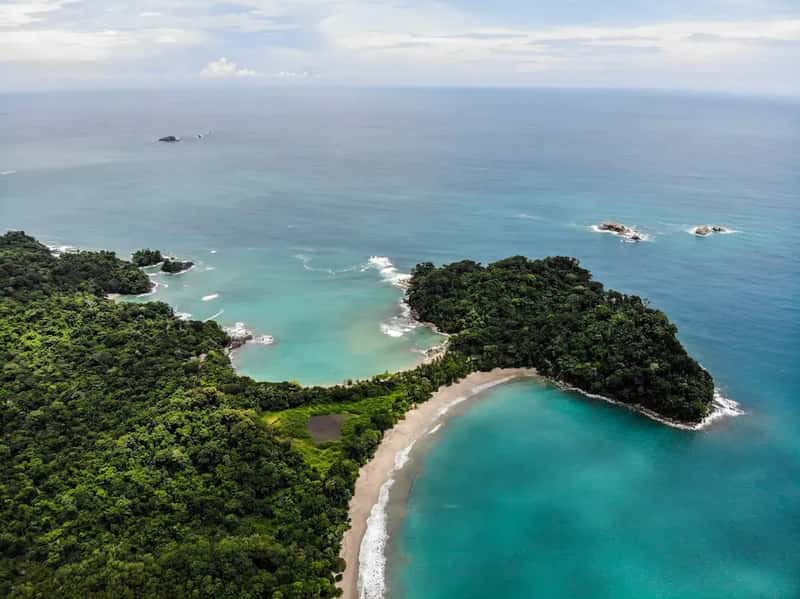
Costa Rica consistently ranks as one of the more stable and peaceful countries in Latin America, and that reputation shows up in comparative peace indices. The country’s Global Peace Index score of 1.843, where lower scores indicate a more peaceful environment, compares favorably against Mexico’s score of 2.636 on the same index, where lower scores indicate a more peaceful environment.
That said, safety in Mexico is highly localized, and most retirees never encounter the issues that dominate headlines. The cities most commonly recommended for retirement, including Mérida, Lake Chapala, San Miguel de Allende, Puerto Vallarta, and Mexico City, all sit in US State Department Level 1 or Level 2 advisory zones, meaning normal precautions apply rather than serious travel warnings. Established expat communities in both countries, from Guanacaste’s tens of thousands of American residents to Lake Chapala’s long-running retiree colony, provide informal support networks that make the safety question less daunting in practice than it looks on paper.
Assisted Living and Long-Term Care

For retirees thinking decades ahead rather than just next year, long-term care costs deserve a look, and Mexico currently has a clearer cost advantage here. As of 2026, assisted living in Mexico costs approximately $1,000 to $2,500 per month, with memory care averaging around $2,500 monthly. Compare that to the United States, where the national median cost of assisted living runs around $5,419 per month, with nursing home care running even higher at $9,277 to $10,646 per month.
Costa Rica’s assisted living sector is smaller and less standardized than Mexico’s, partly because fewer large retirement communities have built dedicated long-term care facilities compared to established Mexican hubs like Lake Chapala or the Riviera Maya. Retirees planning for eventual assisted care in Costa Rica often rely more heavily on private in-home caregivers or a return to their home country, which is worth factoring in if long-term care is a priority rather than an afterthought.
Which Country Wins on Cost?

Neither country claims a decisive victory once you look past the headline numbers. Mexico generally wins on raw monthly affordability, inland housing costs, and long-term care pricing, and it offers more climate variety within a single country’s borders. Costa Rica pulls ahead on healthcare system quality scores, tax treatment of foreign pensions for non-Americans, and a notably simpler, lower-threshold residency program through its Pensionado visa.
The honest answer is that your final budget depends far more on which specific town you choose than which country you pick. A retiree in inland Mérida and a retiree in Costa Rica’s Central Valley will likely see remarkably similar monthly totals, while a retiree in Los Cabos and one in Tamarindo will both pay a premium for beachfront living regardless of which country’s flag flies overhead.
Making the Right Choice for Your Retirement

If your top priorities are stretching a modest fixed income and having the widest possible range of climates and city sizes to choose from, Mexico’s lower entry costs and inland bargains give it a practical edge, though the sharply higher 2026 visa income requirements mean you’ll need a solid paper trail of qualifying income before you commit. If dependable healthcare quality, straightforward residency rules, and tax-free treatment of foreign pension income matter more to you than shaving the last few hundred dollars off a monthly budget, Costa Rica’s Pensionado program and Caja system offer real peace of mind.
Both countries have proven, decades-long track records of successfully hosting large retiree populations, and both offer a genuine upgrade in lifestyle for a fraction of what many North American cities demand. The smartest move for anyone seriously considering either destination is to spend an extended trial period, ideally three months or more, actually living in your target town before signing a lease or filing residency paperwork. Numbers on a spreadsheet only tell part of the story; the rest you can only learn by living it.