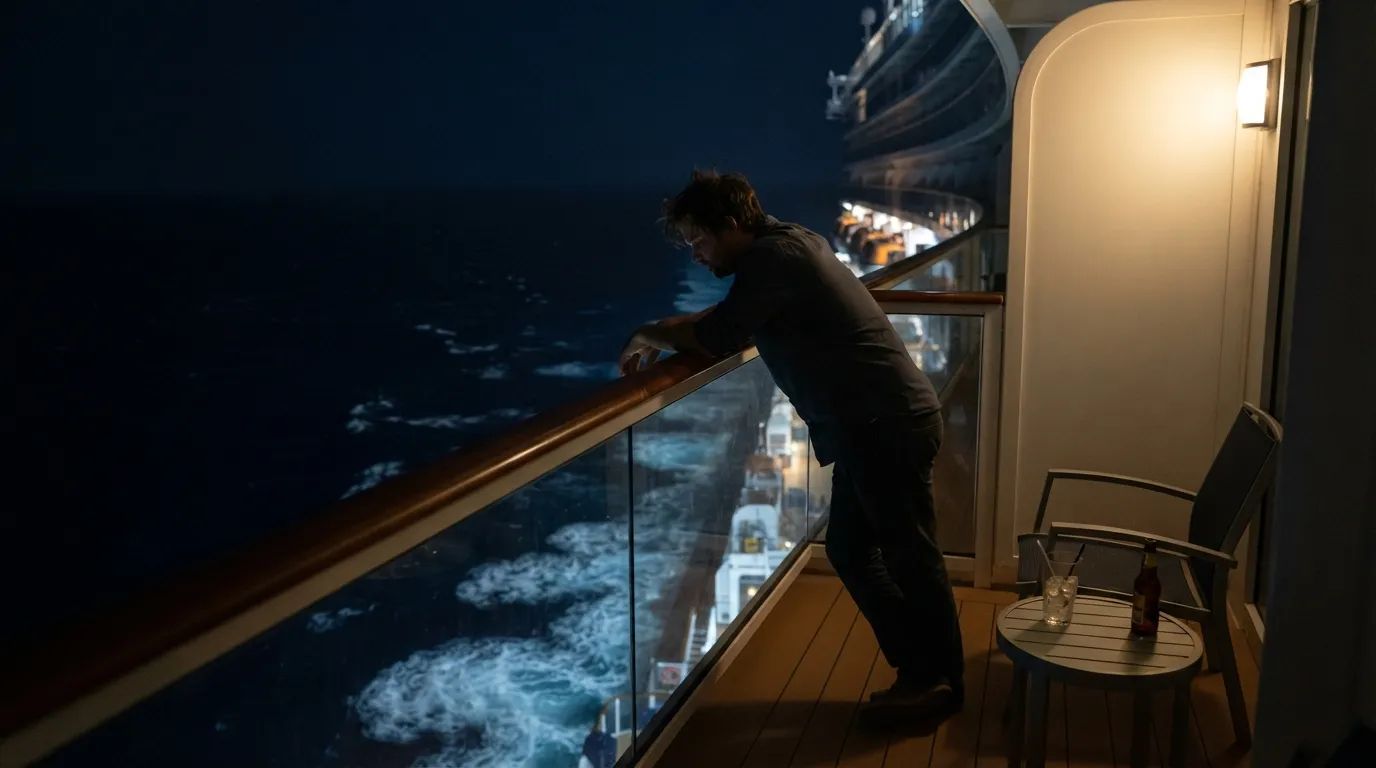
Most people assume a cruise balcony is their own private patch of ocean air – a place where the usual rules don’t quite apply. They’re wrong, and crew members know it better than anyone. From safety violations that can end in a lifetime ban to etiquette failures that quietly ruin a neighbor’s vacation, balconies generate more crew headaches than almost any other space on the ship. Here’s what insiders and cruise line policies actually say about the 22 things guests keep doing out there.
—
#22 – Smoking When the Rules Clearly Say No
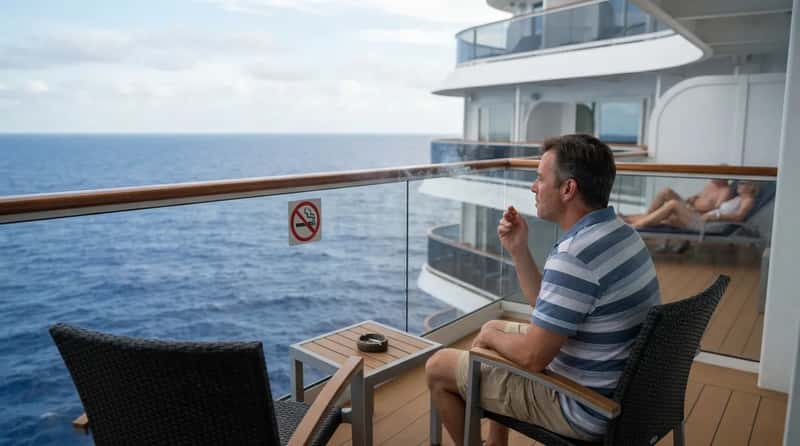
Smoking on cruise balconies is one of the most-reported crew complaints, and it hasn’t slowed down despite years of explicit bans.
Cruise lines have banned smoking in cabins, and most have also banned smoking on private balconies – with Costa Cruises being a notable exception.
On occasion, smokers continue to go against the policy, filling nearby cabins with fumes and putting themselves and their neighbors at risk. One warning by the ship typically does the trick, since some novice cruisers might not even realize there’s a ban in place.
Almost all cruise lines extend a hefty recovery fee – upwards of $200 – if you’re caught lighting up in a non-smoking zone. Crew have to investigate every complaint, which means documenting butts, checking cameras, and confronting guests – none of which is in anyone’s job description.
But smoking is just the warm-up. Wait until you see what’s coming next.
—
#21 – Vaping and Thinking It’s a Loophole
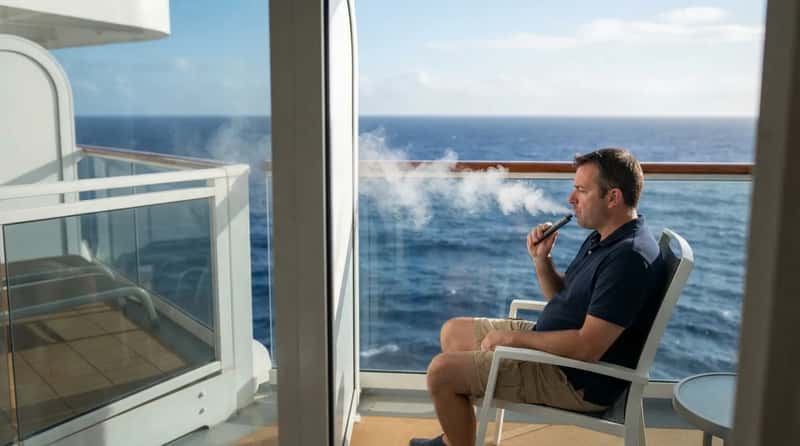
Many guests assume that because e-cigarettes aren’t technically cigarettes, balcony vaping is fine. Crew have heard this argument countless times.
It’s standard cruise balcony etiquette that you cannot smoke or vape on your balcony. All major cruise lines strictly prohibit smoking or vaping onboard, apart from in designated areas.
The vapor can drift directly into neighboring balconies just as easily as cigarette smoke, and complaints land on guest services just the same. Crew then have the awkward job of politely explaining to a guest that their “harmless” vape pen has generated a formal complaint from next door.
The rule is the rule, and “but it’s not a real cigarette” is not a defense crew are empowered to honor.
—
#20 – Hanging Laundry Over the Railing
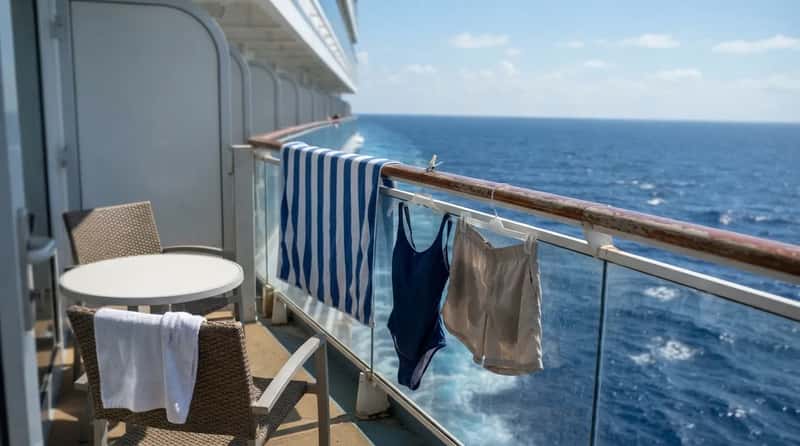
It looks harmless – a wet swimsuit draped over a balcony chair, or a towel hooked over the railing to dry in the sea breeze. Crew see it constantly and cringe every time.
Most cruise lines ban using balconies as a makeshift laundry. The sea breeze can send swimsuits and towels flying into the ocean.
The humid sea air is ineffective for drying anyway, and strong winds can easily blow items overboard. Hanging laundry on balconies can also detract from the ship’s appearance.
Cruise lines don’t like anything flammable left on balconies. It’s best to dry items on the retractable clothes line that’s usually in your shower. That’s what it’s there for – use it.
—
#19 – Leaving the Balcony Door Wide Open
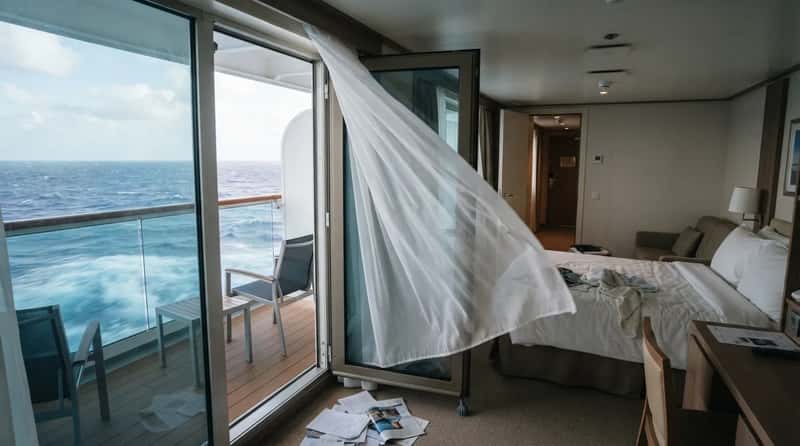
Guests love that ocean breeze – but propping the balcony door open is a surprisingly disruptive habit that crew have to address far more often than guests realize.
Cruise lines have strict rules prohibiting passengers from leaving their balcony doors open, as this practice poses significant safety and compliance risks. Strong winds can quickly turn a pleasant balcony experience into a dangerous situation.
An open door can interfere with the ship’s air conditioning system, wasting energy and potentially making the cabin uncomfortable.
Leaving a balcony door open can also create a wind tunnel when someone opens the cabin door, potentially causing a noise disturbance – and occasionally sending cabin paperwork flying across the room. Housekeeping staff frequently have to clean up the aftermath.
Fast Facts
- Leaving the door open typically shuts off your own cabin’s AC, not your neighbor’s – but your room turns humid fast.
- A sudden gust can slam an unlatched door hard enough to catch fingers, and real injuries have been reported this way.
- The wind-tunnel effect is strong enough to send loose papers flying the moment the hallway door opens.
- Cabin stewards recommend closing the balcony door first, every single time, before opening the main cabin door.
—
#18 – Blasting Music Late at Night
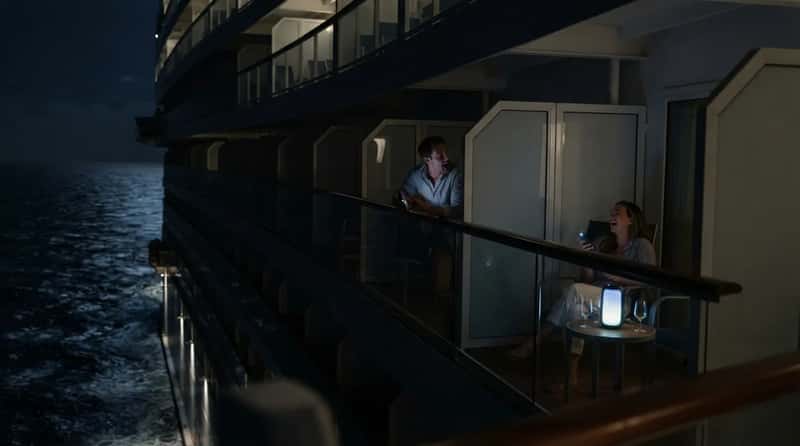
Your balcony feels like open water, but sound doesn’t disappear – it bounces directly into the balconies on either side of you, and the ones above and below.
Neighbors might be less than pleased when you’re having loud, late-night conversations or blasting music. Your balcony might feel private, but passengers next to, above, and below you might not share your taste in tunes or have the same sleep schedule. Keep the volume low, especially during morning and evening hours.
One cruiser shared that they book a balcony cabin for relaxation, not to experience lido-deck-level chaos next door. Another ranted, “Not everyone shares your taste in music, so please keep the racket down.”
Repeat noise violators can face warnings or removal from the ship at the next port, and crew must serve as the go-between for every uncomfortable complaint.
—
#17 – Shouting Between Balconies
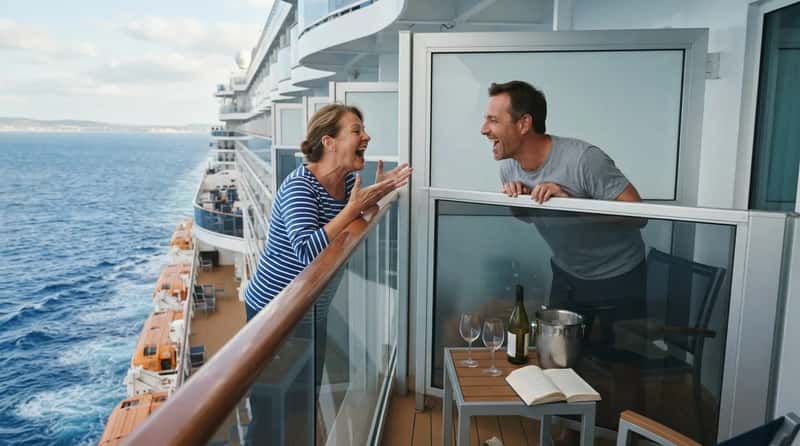
Traveling with friends in neighboring cabins sounds fun until one group decides the balconies are their personal intercom system.
If you’re cruising with a group of people in different cabins, don’t yell from one balcony to another. This unwritten rule might seem like common sense, but sometimes people just aren’t aware of their environment.
Even if later in the day, having loud conversations between cabins disturbs others who may be sitting outdoors reading, having a glass of wine, or simply enjoying a sailaway.
Crew responding to this one are in a delicate position – there’s no hard rule to cite, just an awkward conversation asking adults to act like adults. It happens more than you’d think.
—
#16 – Throwing Things Overboard

From cigarette butts to food scraps to the occasional plastic cup, guests toss things off balconies with a casual regularity that horrifies crew.
Throwing items overboard from a cruise balcony is strictly prohibited. This rule applies to everything from biodegradable food scraps to cigarette butts – and beyond. Such actions can harm the marine environment and potentially endanger other guests if debris lands on lower balconies.
Carnival Cruise Line’s overboard policy states that guests are liable for any illegal dumping of any item into the ocean. Willful throwing of unauthorized items overboard can result in a $500 fine. Guests violating the policy may be required to disembark and be banned from sailing with Carnival.
Cameras cover most of the ship’s exterior. Guests who assume no one is watching are almost always wrong.
—
#15 – Nude Sunbathing in Full View
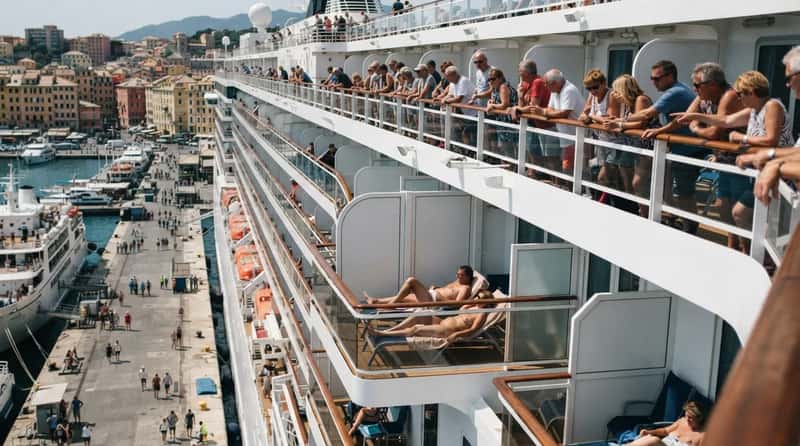
A cruise balcony feels private. In reality, it is far from it – and crew know exactly what kind of complaints this generates when guests forget that.
Nude sunbathing on a balcony may be open to public view. Passengers in nearby cabins, especially those above, may have an unexpected view.
Security cameras in public spaces may also inadvertently capture what’s happening. Cruise balconies are not private retreats – they are usually visible from nearby cabins, public areas, or even during port calls.
When a ship is docked, people on the dock or on shore can often see directly onto balconies at eye level. Crew responding to those complaints – often from port authorities – find it a particularly unpleasant situation to manage.
—
#14 – Intimate Activity on the Balcony
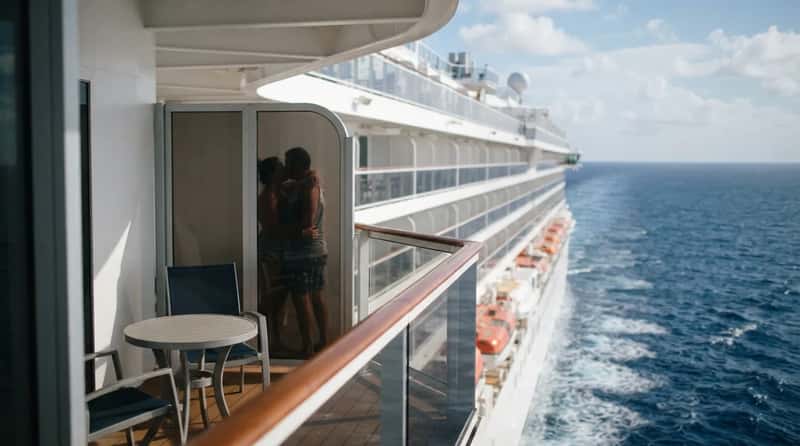
This one generates the most awkward crew conversations of all – and it happens more than any reasonable person would expect.
Intimate activities, including sex, on a cruise ship balcony aren’t as private as guests think. Nearby balconies, people in port, and even security cameras may have a clear view. It’s also dangerous, potentially leading to accidents or falls overboard.
Cruise lines have strict policies regarding onboard behavior, including prohibitions against engaging in sexual activities on balconies. Violating these rules can result in disciplinary actions, potentially affecting the overall cruise experience.
When a cruise ship is in the territorial waters of a country, the laws of that country apply. If the ship is docked at or near a port, local authorities may get involved. Public indecency or lewd behavior is illegal in many jurisdictions, and penalties can range from fines to arrest.
—
#13 – Flying a Drone Off the Balcony
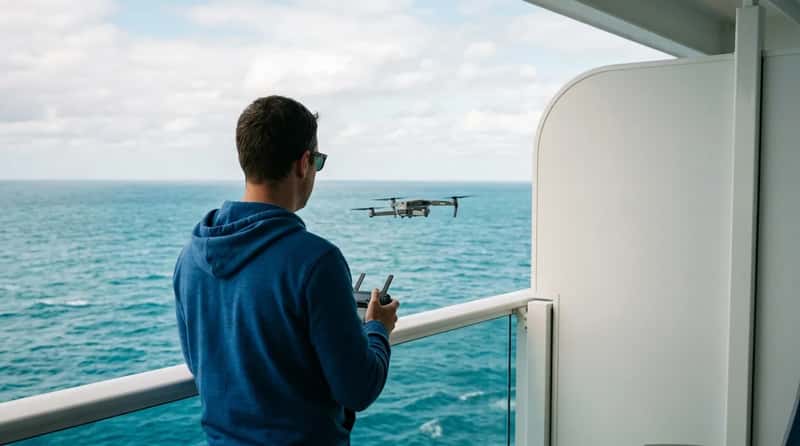
The aerial footage would be incredible, guests reason. Crew reason something completely different when they see a drone lift off a balcony at sea.
Most cruise ships have rules banning drones from coming aboard. If they’re allowed, they can only be used off the ship in port, in compliance with local regulations. Try to sneak a flight from your balcony, and your drone will be confiscated.
Operating a drone from a balcony has a plethora of risks – malfunctioning, crashing into the ship, or privacy invasion.
Ports also have their own rules, which can make the use of drones even more complicated for cruise visitors. Some cruise lines, such as Norwegian Cruise Line and MSC Cruises, do not allow drones to even be brought aboard.
—
#12 – Drinking to the Point of Dangerous Impairment
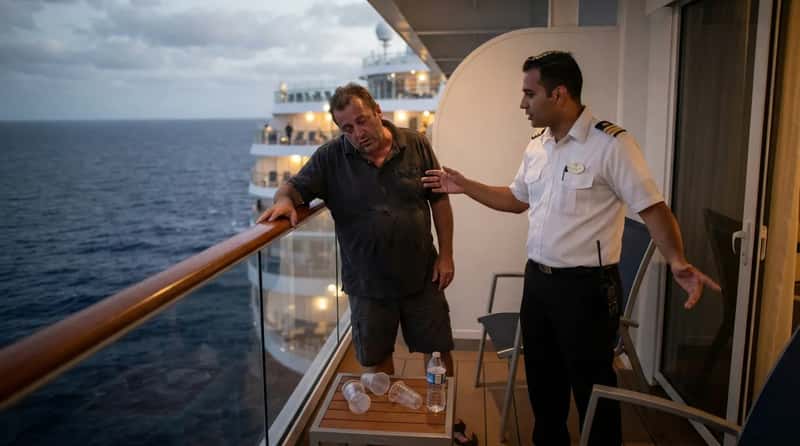
Alcohol and balconies are a combination that keeps cruise safety officers awake at night – and generates more crew interventions than almost any other issue.
Cruise ship balconies present an obvious additional risk when someone is severely impaired, particularly because of their proximity to the sea and the possibility of a fall.
Carnival passengers have reported that crew restrict balcony access when they are concerned about a guest’s condition, suggesting it can be used as an additional safety measure when a guest becomes heavily intoxicated.
This should not be interpreted as meaning passengers automatically lose balcony access after a particular number of drinks. The action typically follows significant intoxication, while Carnival’s published alcohol rules give crew members discretion when deciding whether it is safe to continue serving a guest.
—
#11 – Propping Furniture Against the Railing to Climb Higher
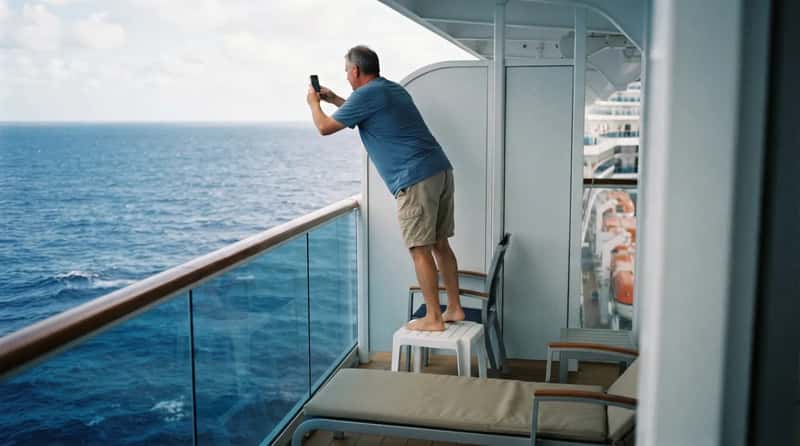
Guests stack chairs, step on loungers, or use tables to get a better view or a better photo. Crew call this one of the most dangerous balcony behaviors they routinely observe.
Breaking cruise safety rules can lead to serious consequences, including intervention by the ship’s security team. Passengers caught climbing on railings or furniture may face removal from the ship at the next port.
Balcony furniture is not designed or tested as a step stool. It can shift, tip, or collapse – and the railing is the only thing between a guest and the open ocean.
Crew who spot this via CCTV must respond immediately, which pulls security staff away from other duties. The risk is real, and the paperwork afterward is extensive.
—
#10 – Leaving Children Unsupervised on the Balcony
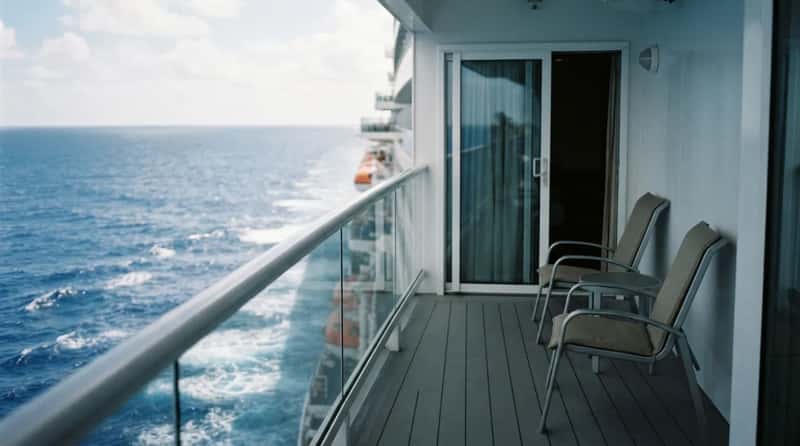
Parents sometimes step inside “just for a moment” and leave young children on the balcony alone. It is one of the scenarios cruise safety officers most dread.
This rule is especially crucial when traveling with children. Always supervise kids on the balcony, and make sure to close and lock the door when it’s not in use.
A 12-year-old boy fell to his death in 2024 while playing with friends. It was reported he was trying to climb into his room from the balcony because he had forgotten his room key.
No supervision gap is small enough to be considered safe. Crew cannot be stationed outside every cabin door, which means a momentary lapse in parental attention can have catastrophic consequences.
—
#9 – Ignoring the “No Open Flames” Rule
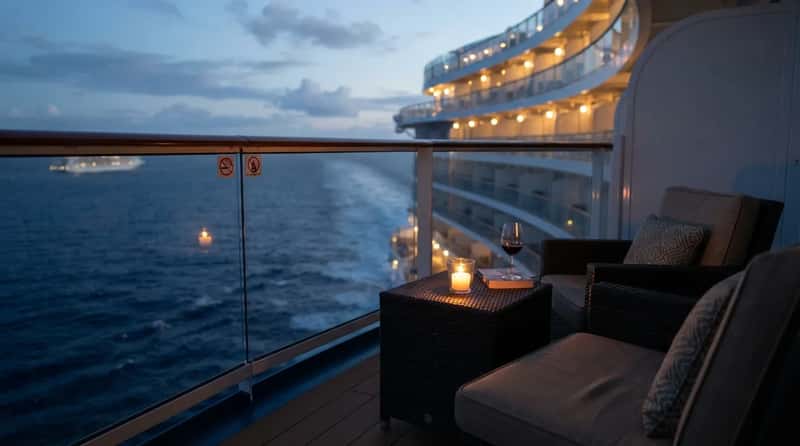
Guests occasionally try to light candles on balconies for a romantic atmosphere. Some have even attempted small portable grills. Crew cannot stress enough how serious this is.
The no-smoking prohibition on cruise ships applies to other fire hazards as well. You cannot light candles on a cruise ship – even for religious holidays – or bring electronics with heating elements.
A balcony is lined with wind, salt air, and highly flammable synthetic furniture cushions. An open flame in that environment is genuinely dangerous – not just a rules violation.
A discarded lit cigarette caused significant damage to Princess Cruises’ Star Princess in 2006. Cruise lines responded by banning smoking on cruise ship balconies across the board. Adding fresh candles or grills to the equation multiplies that risk exponentially.
Worth Knowing
- Battery-powered flameless candles are typically the only “candle” option cruise lines allow onboard.
- Balcony cushions and furniture are made of synthetic materials that ignite fast and burn hot.
- Portable grills, hot plates, and travel irons fall under the same open-flame and heating-element ban.
- Crew treat any balcony fire risk with the same urgency as a cabin fire alarm.
—
#8 – Using the Balcony as Trash Storage
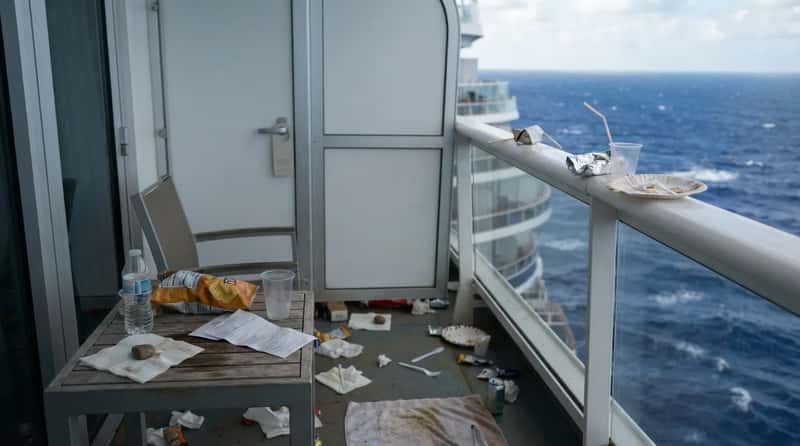
It starts innocently – an empty glass left outside, a food wrapper set on the railing “temporarily.” Then the balcony becomes a dumping ground that housekeeping staff dread finding.
Guests should be mindful of lightweight objects that might unintentionally blow away, like napkins, straws, and empty water bottles.
Everything left on a balcony is a potential overboard item. Wind speed at sea can be surprising, and a napkin that blows off a balcony on deck 8 can land on a guest on deck 6 or disappear into the ocean.
Cabin stewards who discover a balcony piled with cruise debris have to deal with both the cleanup and the reporting – another invisible burden created by guest carelessness.
—
#7 – Fishing Off the Balcony
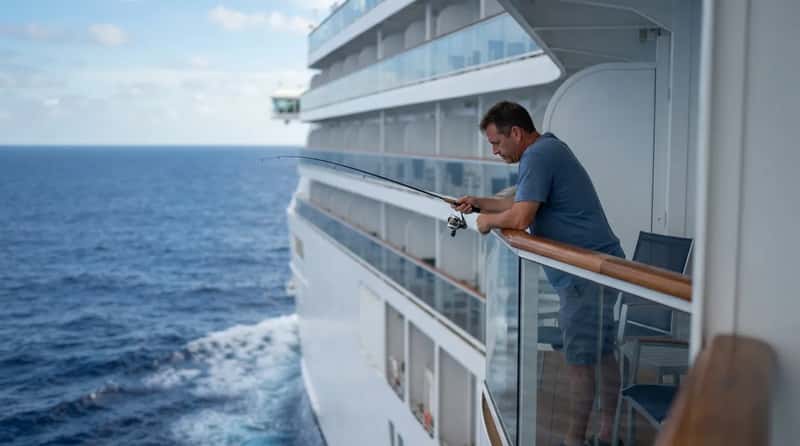
Yes, this actually happens. Guests bring compact fishing gear and try their luck from the balcony, reasoning that they’re surrounded by ocean and no one will notice.
Fishing anywhere on the ship, especially from private balconies, is strictly prohibited. While it might seem like a harmless vacation activity, cruise lines treat it as a serious violation.
A fishing line trailing from a balcony can foul the ship’s hull, get caught in rescue equipment, or become a safety hazard for other guests on lower balconies or open decks below.
Crew monitoring the exterior cameras do occasionally catch this, and the resulting conversation is awkward for everyone involved. The rod gets confiscated, the fish – if any – does not make it to dinner.
—
#6 – Attempting to Climb Between Balconies
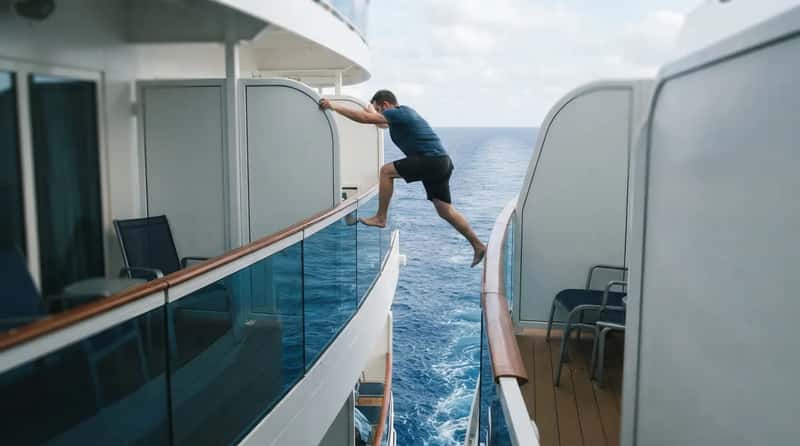
Some guests try to visit friends in adjacent cabins by climbing from one balcony to the next rather than walking through the corridor. Crew consider this one of the most reckless things they witness.
Never climb from one balcony to another or stand on railings or furniture, as this can lead to dangerous falls overboard.
The balcony dividers between cabins are not structural climbing surfaces. They flex, they have gaps, and they offer nothing to arrest a fall. The gap between balconies may look like a short step, but it’s open ocean below.
According to data compiled by the Cruise Lines International Association (CLIA), out of 212 overboard incidents between 2009 and 2019, just 48 – or 28.2% – were successfully rescued. Balcony-to-balcony climbing puts guests squarely in that risk category.
—
#5 – Standing or Sitting on the Railing
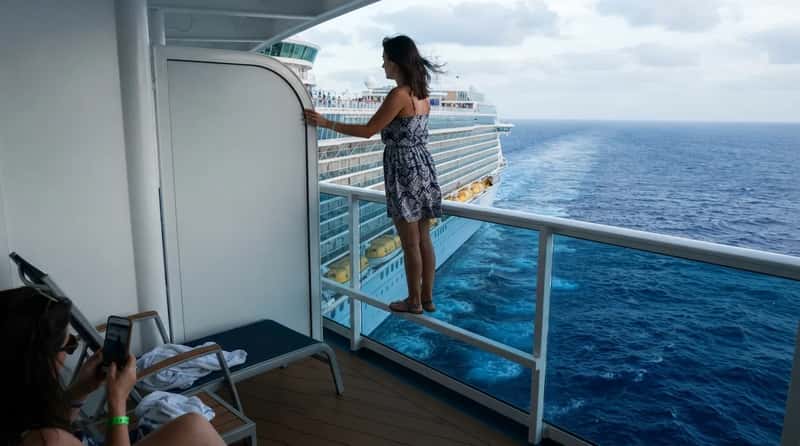
Guests perch on balcony railings for photos, for a better view, or simply for the thrill. Crew and cruise lines treat this as one of the gravest safety violations possible.
Royal Caribbean’s Guest Conduct Policy clearly states: “Unsafe Behavior – sitting, standing, laying or climbing on, over or across any exterior or interior railings or other protective barriers, or tampering with ship’s equipment designed for guest safety is not permitted.”
A Royal Caribbean spokesperson confirmed that a guest was “observed recklessly and dangerously posing for a photo by standing on her stateroom balcony railing with the help of her companion.” The woman and her travel companion were banned from Royal Caribbean cruises for life.
Separately, a video of teenagers climbing on their balcony railing at sea went viral. They filmed themselves inching along the narrow railing in the open ocean – one was even wearing flip-flops and protruding their stomach over the railing while holding onto the ceiling above.
—
#4 – Letting the Balcony Light Attract Insects at Night
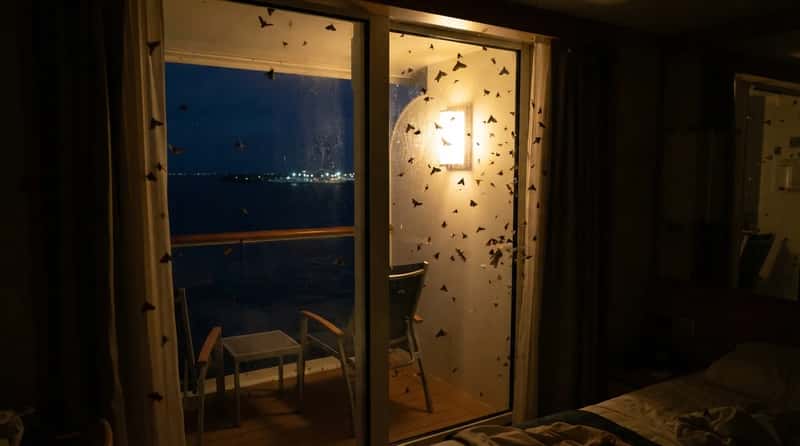
This one surprises many guests – but cabin stewards dealing with a cabin full of moths or tropical insects the next morning are less than amused.
Lights on a balcony at night attract insects, especially in tropical ports. Bugs are drawn to the glow and can invade your cabin if the door is open.
Leaving the balcony light blazing while sitting inside with the door ajar is an open invitation. Ships sailing through the Caribbean, Southeast Asia, or Central America are docked near dense ecosystems full of insects that are not welcome inside a stateroom.
Housekeeping staff dealing with an insect-invaded cabin lose significant time, and if the problem is severe enough, the cabin may need treatment – disrupting the guest’s trip and the ship’s schedule.
At a Glance
- Caribbean, Central American, and Southeast Asian ports carry the highest after-dark insect risk.
- A lit balcony light with the door cracked open is the single biggest bug magnet on the ship.
- Closing the curtain, not just the door, adds a second layer of protection overnight.
- Severe infestations can require a full cabin treatment, disrupting your schedule and housekeeping’s alike.
—
#3 – Shouting Down to People in Port
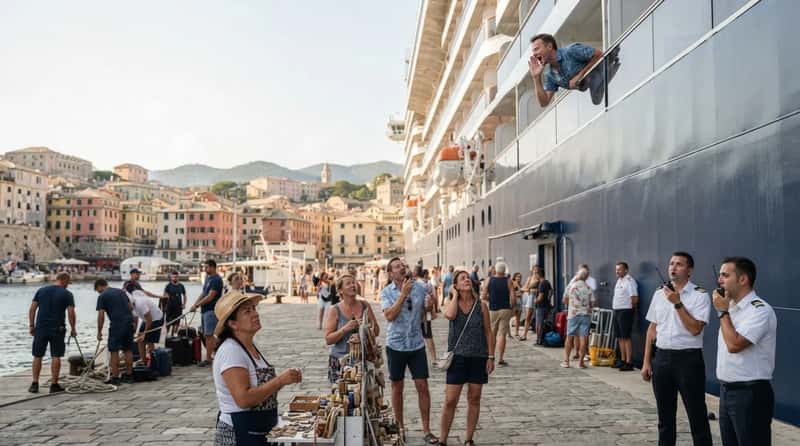
When a ship docks, some guests use their elevated balcony position to shout at vendors, locals, or other tourists below. It’s embarrassing for crew, disrespectful to port communities, and increasingly a diplomatic headache.
Port communities and local tourism boards notice this behavior, and cruise lines that develop a reputation for poor guest conduct in port risk access issues with local authorities. Crew are acutely aware of this dynamic.
The ship is a guest in every port it visits. What a passenger sees as a casual shout from their private balcony looks very different to the person on the dock – and to the port officials watching.
If noise or anything else impacts the experience of others, calling guest services – who can let security know – is the right channel. Crew would far rather handle this internally than have a complaint arrive from a port authority.
—
#2 – Taking Railing Selfies With Feet Dangling Over the Edge
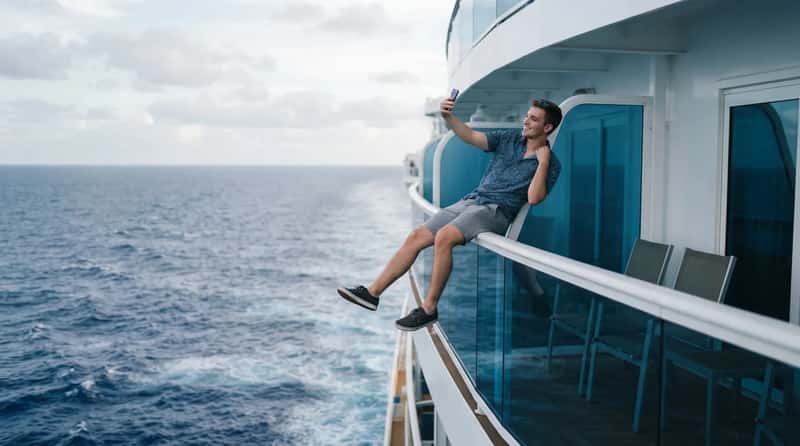
The influencer-era cruise selfie has generated a wave of railing-hanging photos that make every safety officer on the ship nervous. This is the one behavior that has provoked some of the harshest documented crew responses in recent memory.
A recent Facebook post showed one cruise passenger lounging on their balcony’s railing, with the poster captioning it “I saw this from my stateroom balcony yesterday. Don’t be this guy!” The photo reminds everyone that seemingly harmless stunts can put guests at risk and violate cruise line rules.
If higher-ups at Royal Caribbean catch wind of a photo like this, the passenger could face consequences under the cruise line’s guest-conduct rules and be prevented from taking future vacations with Royal Caribbean and its sister lines, Celebrity Cruises and Silversea.
The post-trip consequences matter too – photos uploaded to social media after the cruise can still trigger investigations and lifetime bans. Crew report that guests are always surprised when this happens. They shouldn’t be.
—
#1 – Getting Drunk and Going Out on the Balcony Alone at Night
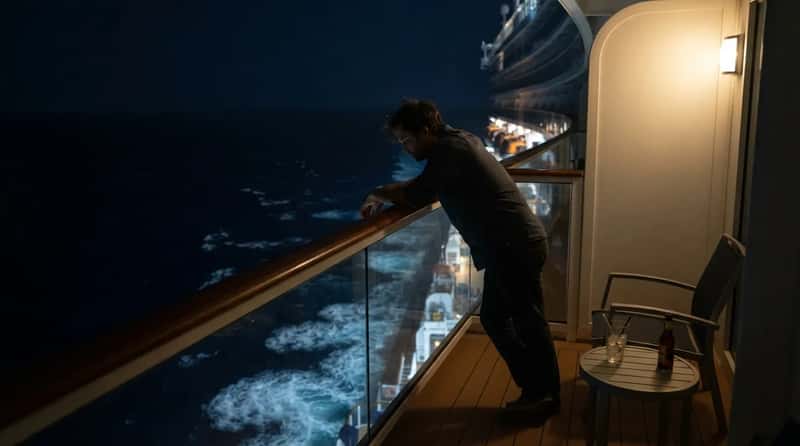
Every item on this list is serious. But crew will tell you that this combination – significant alcohol consumption, a solo guest, a dark balcony, late at night – is the one that generates the most fear among crew members who understand the statistics.
Cruise ship passengers who consume excessive alcohol are more likely to engage in other risky activities, such as climbing on railings or leaning over the edge, increasing the likelihood of serious accidents.
Cruise ship balconies present an obvious additional risk when someone is severely impaired, particularly because of their proximity to the sea and the possibility of a fall. Crew cannot patrol every balcony at every hour. The ship is enormous and the staff is finite.
This is why some cruise lines now give crew the authority to physically restrict balcony access when a guest’s safety appears to be at risk – restricting balcony access can be used as an additional safety measure when crew members are concerned about a guest’s condition. It is a last resort that nobody on the crew wants to reach.
—
The Bottom Line
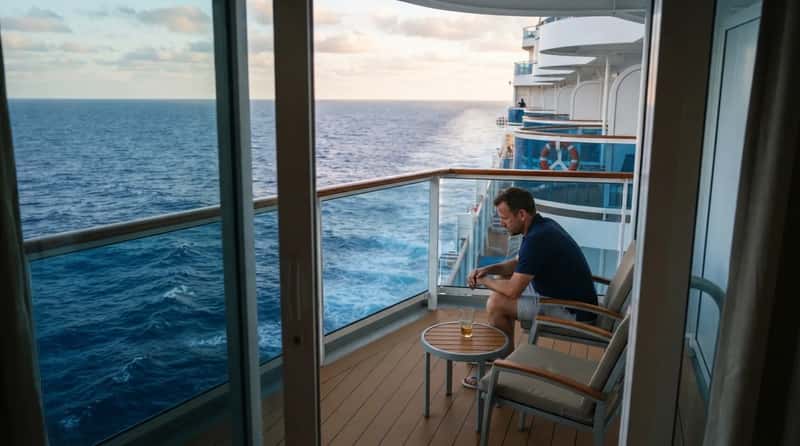
Cruise balconies are genuinely one of the best upgrades you can book – private, peaceful, and with views that no interior cabin can match. But they come with a set of rules that exist for very real reasons, and crew see the consequences when guests ignore them.
The most dangerous behaviors on this list – railing-sitting, drunk solo balcony time, climbing between cabins – aren’t theoretical risks. They have ended in lifetime bans, disembarkations, and in the worst cases, fatalities. **The balcony is the thinnest margin between vacation and catastrophe on a cruise ship.**
Quick Compare
- Etiquette slip-ups: smoking, noise, laundry, shouting – annoying, fixable, usually just a warning.
- Safety violations: railing-sitting, balcony climbing, solo drunk balcony time – can end in bans, injuries, or worse.
- Crew response time: etiquette complaints get a polite knock; safety violations bring security in minutes.
- Long-term cost: one ruins an evening; the other can end a cruising career – or a life.
The etiquette issues matter too. Smoking, noise, and shouting might not make headlines, but they make other people’s vacations miserable and force crew into roles they never signed up for.
Which of these surprised you most? Have you ever witnessed one of these on a cruise? Drop it in the comments – we read every one.
—
Bonus: The Booking Secret That Solves Half This List Before You Even Sail
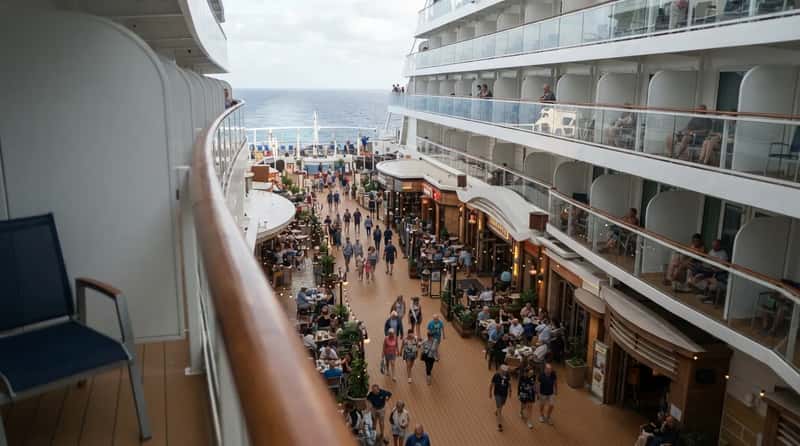
Every problem above assumes your balcony faces nothing but open ocean. That’s not always true, and it’s the single biggest factor in whether your balcony feels genuinely private or turns into a source of complaints.
Before you book, pull up the deck plan for your exact cabin number instead of relying on the category photo.
- Skip cabins directly above or below a public promenade, boardwalk, or sports deck – those balconies are often visible from a public walkway, which is exactly the “someone is always watching” problem behind half the complaints on this list.
- Ask specifically for an aft-facing balcony or one marked “obstructed” by a lifeboat; the obstruction blocks sightlines from neighboring balconies and passersby, and these cabins are often larger and quieter since they aren’t sandwiched tightly between two other verandas.
- Call the cruise line’s dedicated cabin specialist desk instead of general reservations, and ask directly: “Is this balcony visible from any public deck, walkway, or lifeboat platform?” Specialists can check deck-specific sightline charts that general booking agents don’t always pull up.
- If you’re already booked, ask your cabin steward on day one whether your balcony is a “high-visibility” one. Most will tell you honestly, and you can adjust your own habits – and your expectations of privacy – accordingly.
This one check does more to prevent noise complaints, privacy mishaps, and awkward crew visits than any rule reminder ever could, because it removes the false sense of privacy that causes most of the problems on this list in the first place.