The earthquake struck on a Friday morning, and its scale was immediately obvious to seismologists monitoring the region. A powerful earthquake in southern Mexico shook nearby countries Guatemala and El Salvador, with the US Geological Survey measuring its preliminary magnitude at 7.3, with an epicenter located 48 kilometers southwest of Aquiles Serdán, a town in the Mexican coastal state of Chiapas. Some agencies recorded the event slightly higher, with certain readings placing the shock closer to magnitude 7.4.
The quake was notably shallow, which tends to amplify shaking at the surface. The epicenter sat at a depth of 15 kilometers, roughly nine miles beneath the seafloor, close enough to the surface that the jolt was felt intensely along the coast. In the border city of Tapachula, residents described a tremor that began mildly but gradually intensified, a pattern typical of large subduction zone earthquakes that build in strength as the rupture spreads.
Tsunami Warnings Issued, Then Lifted
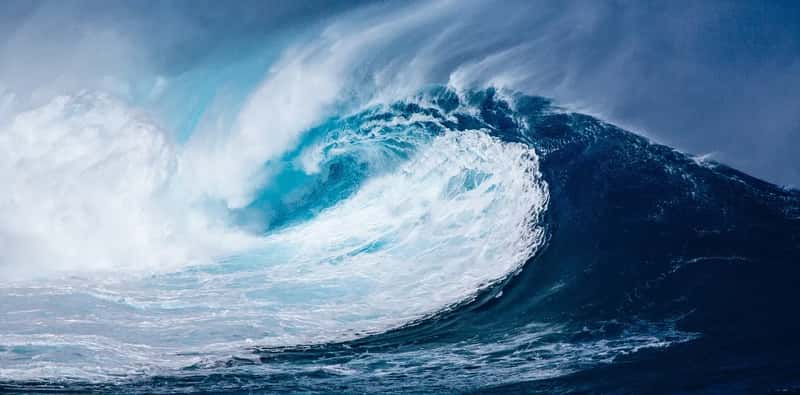
Given the quake’s offshore location and considerable size, tsunami alarms sounded almost immediately across the region. The Pacific Tsunami Warning Center had cautioned that hazardous tsunami waves were possible within 300 kilometers of the epicenter, a radius that stretched across coastal Chiapas and into neighboring Central American nations. Mexican officials moved quickly to reinforce the warning at the local level as well.
Fortunately, the worst-case scenario never materialized. Guatemala observed a few tsunamis less than one meter above the tide level but said the threat was low, and the Pacific Tsunami Warning Center later said the threat had passed. Even so, the Meteorological Service of Chiapas alerted that there could be tsunami waves up to one meter off the coast of Mexico and Guatemala, and authorities kept beaches closed for a precautionary window while conditions stabilized.
Coastal Communities Told to Stay Clear of the Water
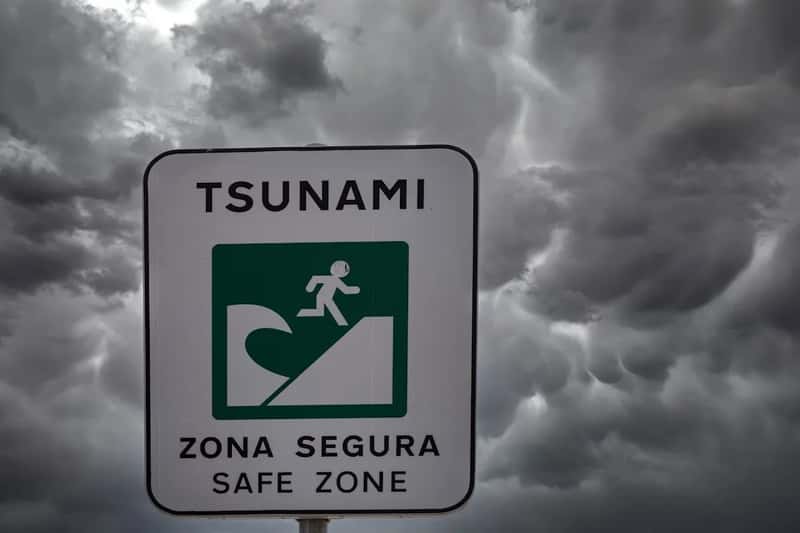
Even after the tsunami threat eased, Mexican officials urged caution along the shoreline. Water levels at some beaches were expected to rise by up to half a meter due to the earthquake, and the public was advised to stay away from beaches for the time being, according to the Secretary of the Navy. That guidance came directly from the government’s daily briefing, underscoring how seriously officials treated even a modest surge risk.
The navy’s involvement reflects how Mexico handles coastal emergencies of this scale, folding maritime safety directly into the broader disaster response. The navy recommended staying away from beaches for six hours because of the tsunami risk, giving swells and irregular currents time to settle before fishing boats, tourists, and beachgoers returned to the water.
Government and International Response
Mexican leadership moved to reassure the public within hours of the shaking. Mexico’s Secretary of the Navy, Raymundo Pedro Morales Ángeles, stated that there were no issues in the country following the quake, adding that there was no serious damage. That statement came directly from President Claudia Sheinbaum’s morning press briefing, a venue the government regularly uses to communicate during emergencies.
Neighboring states and countries offered their own assessments as the picture became clearer. Salomón Jara Cruz, the governor of the Mexican state of Oaxaca, said that the quake was felt with moderate intensity in the state’s capital city and that no significant damage has been reported. Across the border, Guatemalan President Bernardo Arévalo said no fatalities had been reported yet and that emergency response plans were being deployed, a sign of how closely the two nations coordinate when a shared fault line is involved.