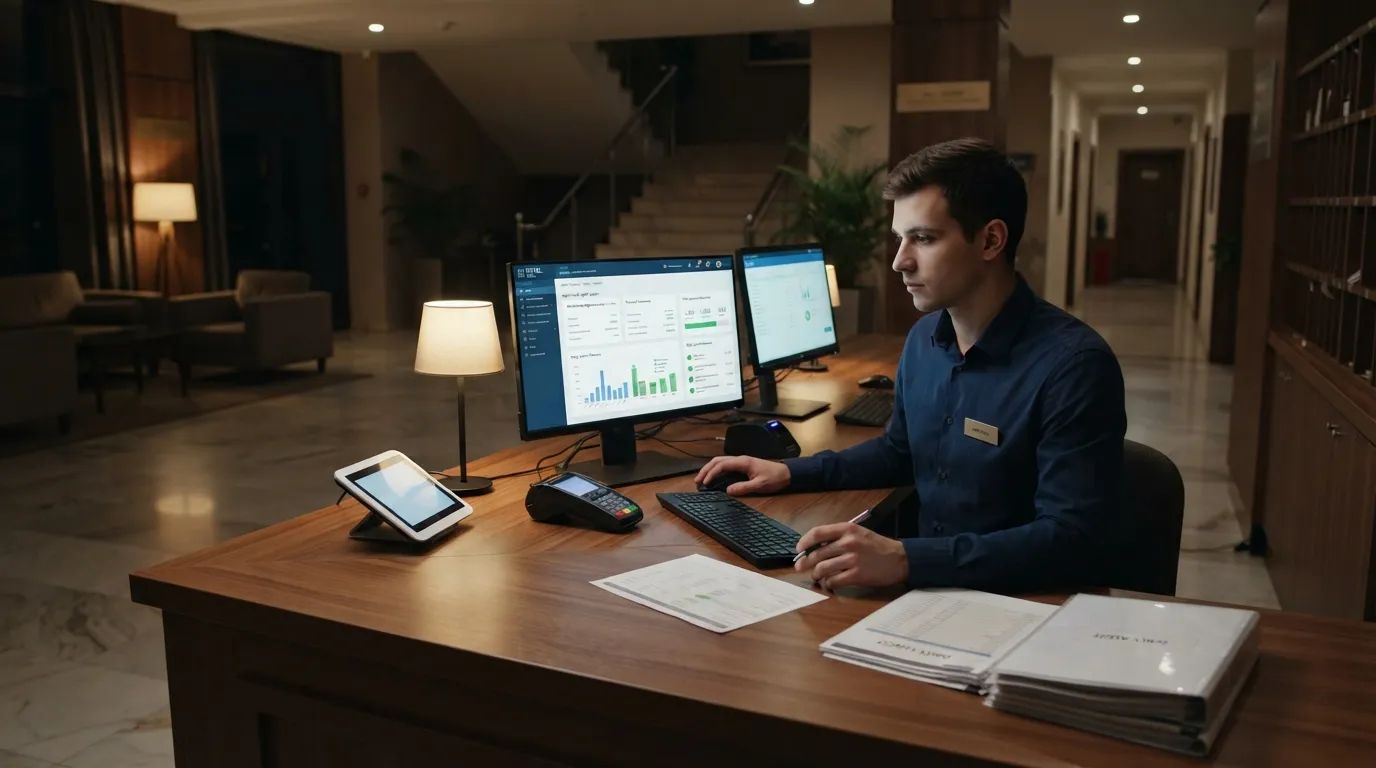
You check in, drop your bag, and fall asleep assuming the hotel does the same. It doesn’t. While the lobby lights go soft and the last elevator dings, the night auditor is just getting to the busiest part of the shift, often with nobody else at the desk.
The surprising part isn’t scandal or ghost stories. It’s how ordinary jobs, like closing the day or checking a door, turn into something high-stakes when one person is holding the whole building together. Some of what follows lands right on your bill. A few things might change how you ask for help. And one involves a button most guests never knew staff could carry.
#1 – The Day Officially Ends While You Sleep, and There’s No Undo Button
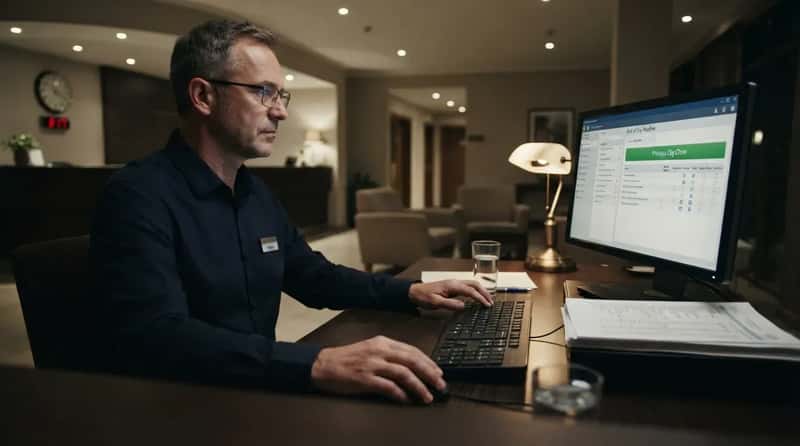
Many hotel reports can’t be produced until the day closes out and the system switches to the next calendar date. The exact timing and sequence depend on the property and its software. But every hotel has a nightly moment when yesterday officially ends.
The auditor oversees that moment. The system closes today, opens tomorrow, and posts room and tax charges to in-house guests. One industry source describes it as the irreversible step that formally closes the day. Once it’s done, there’s no going back, so the person pressing the button had better be sure everything lines up first.
And the next thing that happens overnight lands right on your bill.
#2 – Your Room Charge Gets Posted While You’re Unconscious
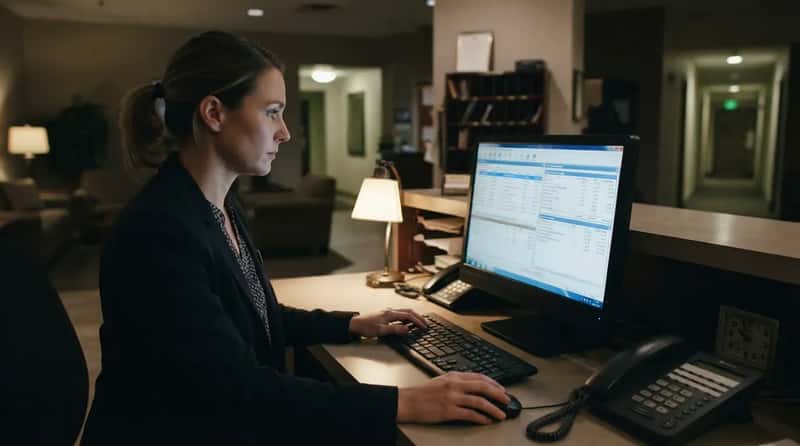
That nightly rate on your folio didn’t appear by magic. Every in-house folio gets the night’s charge, and the same overnight process also handles taxes and any scheduled package components. You were asleep. The bill kept writing itself.
Resort and amenity fees often go through the same routine. The auditor posts recurring charges, including room rate, occupancy and sales tax, resort or amenity fees, and package components, to every in-house guest folio. So the line items you squint at over checkout coffee were put there while you slept.
At a Glance
- The night’s room rate lands on every in-house folio
- Occupancy and sales taxes post alongside it
- Resort or amenity fees often follow the same routine
- Scheduled package components get added too
But some rooms get billed even when nobody ever walks in.
#3 – Empty Rooms Can Still Send a Bill
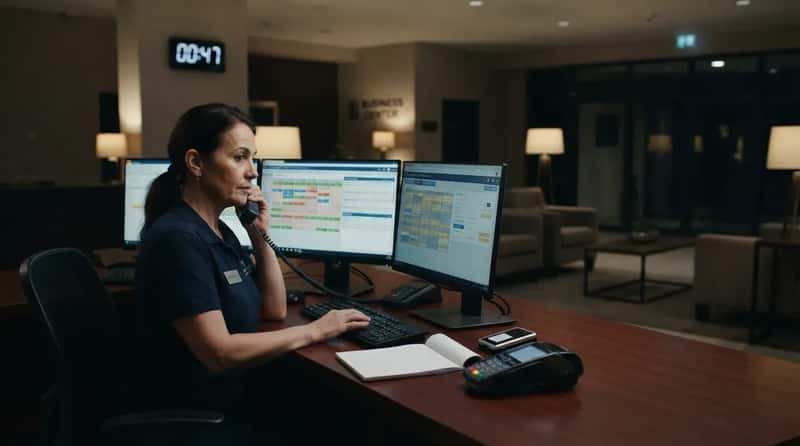
Booked a room and never showed? Midnight is when that gets sorted out. No-shows are either charged or released, depending on the rate’s policy. If the booking came from an online travel agency, the auditor also updates that agency.
There’s a second consequence. Verifying no-shows makes sure the bills are charged and the rooms are marked as available for future dates. Your missing reservation quietly becomes inventory for someone else, and the decision is made long after the lobby has emptied.
Now picture who is actually making these calls at that hour.
#4 – The Person Running the Whole Building Is Often Alone
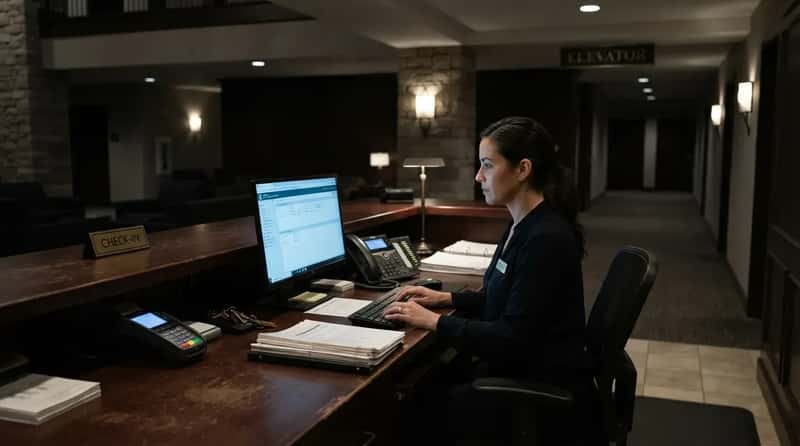
Night auditing isn’t just a desk job after dark. At many hotels the auditor is the senior person on property and takes every overnight call from housekeeping or security. That also means the auditor is the only person at the desk if anything goes sideways.
Here’s the part that sparks arguments. One hospitality-tech firm claims that at most properties the most important financial control still runs overnight, by the least-supervised person in the building. That’s a vendor’s opinion, so take it with some salt. But plenty of people in the industry would nod along.
And that’s before the phone starts ringing.
#5 – The 1 a.m. Phone Never Really Stops
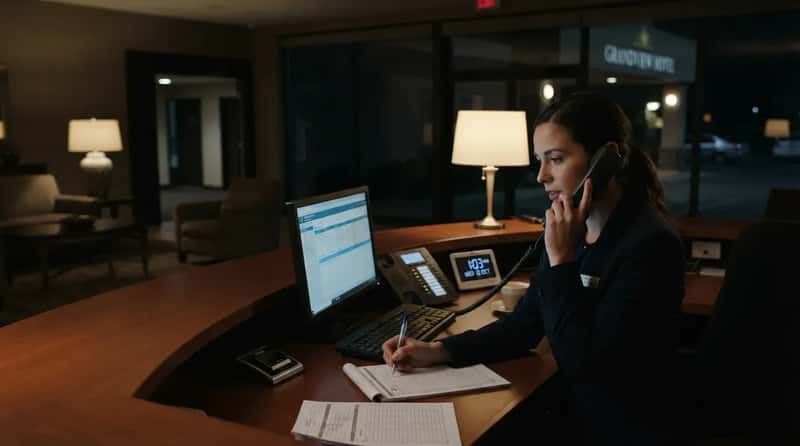
Quiet hours still come with requests. Night auditors check in late arrivals and handle things like wake-up calls and airport transportation. The phone is always within reach, because for plenty of guests, 1 a.m. is simply when their day finally lands.
They also keep an eye on who hasn’t arrived yet. The auditor checks which reservations are still due in and whether the front desk and housekeeping records agree. One delayed flight can change the whole night, turning a calm shift into a scramble over rooms and timing.
Then the auditor stands up and starts walking the building.
#6 – Someone Is Walking the Halls and Testing Every Exit Door
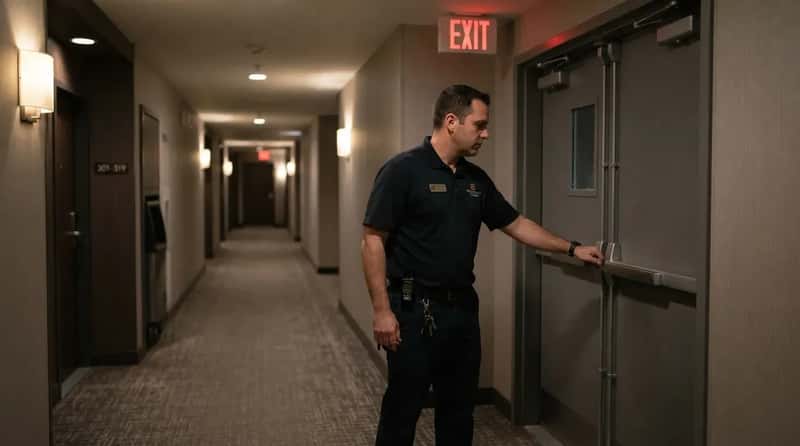
The overnight walk-through is part of the job at many hotels. Duties can include security checks of all floors, exit doors, and public spaces. It’s not glamorous work. It’s the kind you only notice when it gets skipped.
It’s also a stated priority in modern job descriptions. Auditors perform security checks of the premises to make sure guests and employees are safe and secure. In other words, the person who balances the books is also the building’s night watch, and the desk sits empty while they make the rounds.
What they log on the way back to the desk matters more than you’d think.
#7 – Your 9 p.m. Complaint Is Still Waiting in the Log

Think the evening shift’s notes vanish at midnight? They don’t. At the start of the shift, the auditor reviews the log from the evening team, including unresolved complaints, maintenance issues, special arrivals, payment concerns, room moves, and security incidents.
The trail runs the other direction too. Auditors prepare handover reports for the morning shift. So the problem you flagged at the desk can follow the hotel from one team to the next, long after you’ve stopped thinking about it.
Worth Knowing
- The overnight shift opens by reading the evening team’s log
- Open complaints and maintenance issues carry over
- Room moves, payment concerns, and security incidents get flagged too
- A handover report goes to the morning team at the end
But the most surprising complaints come in the middle of the night.
#8 – A 2 a.m. Noise Complaint and a Broken AC Land on the Same Desk
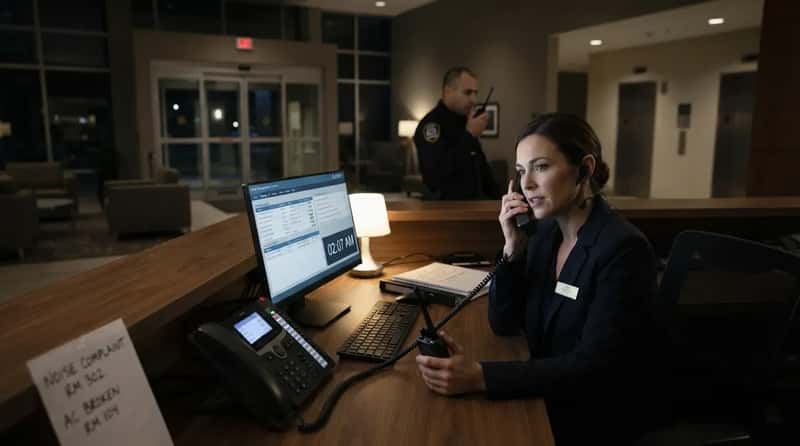
When something breaks at 2 a.m., one person coordinates the fix. The auditor works with the overnight housekeeper on room turnovers, the on-call engineer on HVAC or plumbing tickets, and security on noise complaints or a guest who shouldn’t be there.
That list is more varied than most guests realize. Housekeeping, maintenance, and security all route through one hub. Plenty of nights are quiet, but the rare ones can throw every kind of problem at the desk at once.
Stranger still, the same person may be getting breakfast ready.
#9 – The “Accountant” Also Preps Breakfast

One industry write-up on the evolving role lists a surprising task. Night auditors prep breakfast items so they’re ready when the first shift arrives. The same list includes merging superfluous guest profiles across the hotel’s operating systems.
It’s a strange mix: spreadsheets and security checks one hour, morning setup the next. That’s why the job description at some properties reads like three roles in one. The hotel you wake up in has been quietly tidied in the dark.
Some old overnight habits, though, have disappeared completely.
#10 – The Folded Bill Under Your Door Is Gone for Good
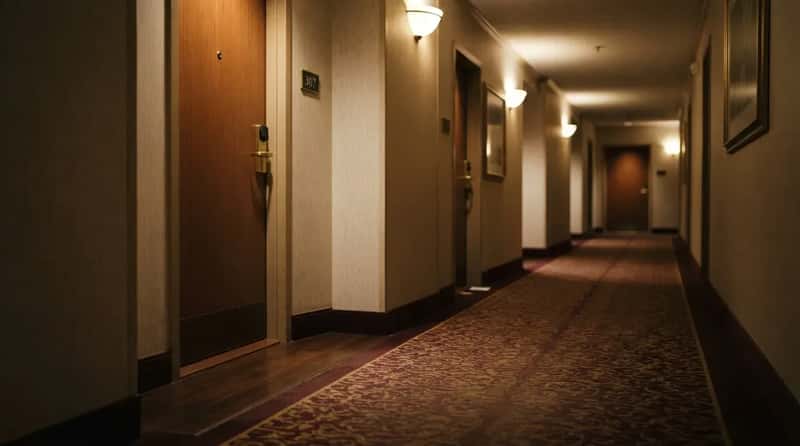
Older travelers may remember waking up to a folded bill slipped under the door. That used to be an overnight chore. Security compliance has made it obsolete, and folios should now be emailed to guests.
It’s a small change with a clear reason. Paper bills sliding into hallways exposed guest details and room numbers. Today the same job happens through your inbox, and nobody walks the corridors with a stack of envelopes.
Next, the word “audit” is misleading in a way even job seekers fall for.
#11 – “Audit” Doesn’t Mean What You Think
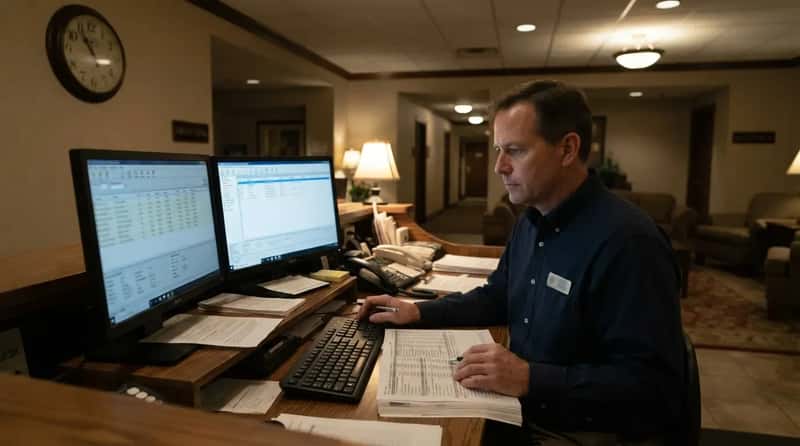
It sounds like a stern accountant with a red pen. The truth is more modest. A night auditor is not normally performing an independent financial audit like a CPA would.
Instead, the employee checks that the hotel’s daily charges, payments, room records, and reports agree before the property advances to the next business date. Another source puts it plainly: the night auditor is a front desk agent plus an accounting clerk.
That checkup is where the real detective work happens.
#12 – The Quiet Hours Are Spent Hunting Billing Mistakes
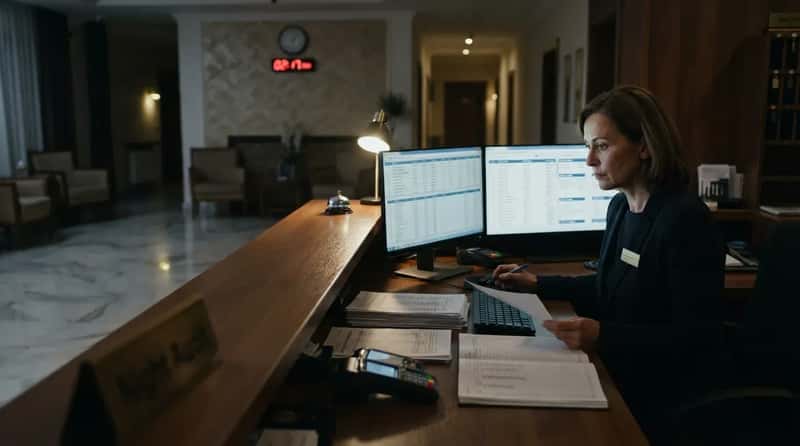
When the lobby empties, the hunt begins. Common issues include missing guest payments, double charges, and discrepancies between room status and check-in logs. Catching them overnight means fewer surprises at checkout.
The auditor also checks the price tags. One source says auditors verify rate integrity, making sure no room is renting below its floor or off-contract. They also confirm that each virtual card charged from an online travel agency matches the reservation amount.
Fast Facts
- Missing guest payments are one of the usual suspects
- Double charges get caught before checkout
- Room status has to match the check-in log
- No room should rent below its floor or off-contract
- Online travel agency virtual card charges must match the reservation amount
Technology has taken over a lot of that work, but not all of it.
#13 – Software Took Over Most of the Math, and the Job Quietly Changed
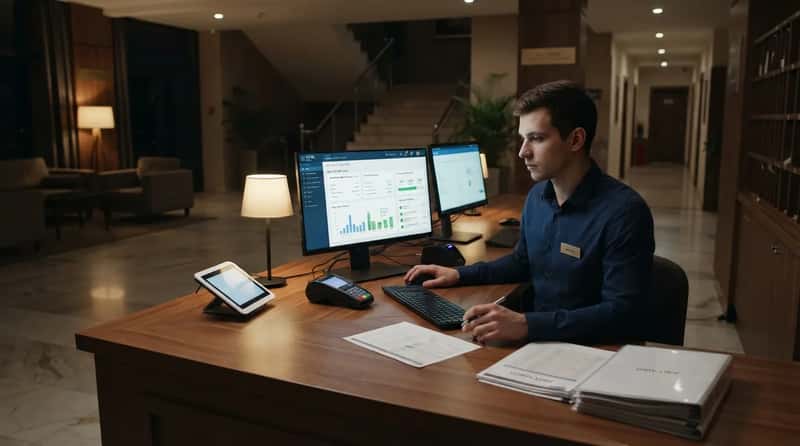
A decade ago, the shift was mostly number-crunching. One industry piece says auditors no longer spend their entire shift reconciling payments and balancing financials, since technology has automated the majority of those tasks. That freed them up for guest-facing work.
Not everyone agrees on what that means. A hospitality-tech vendor argues that at the overwhelming majority of properties, the audit is still performed manually. The truth likely varies a lot from hotel to hotel, which may be why two auditors can describe the same job so differently.
That leads to the most serious thing that happens after midnight.
#14 – Panic Buttons and New Laws Exist Because the Night Is Risky
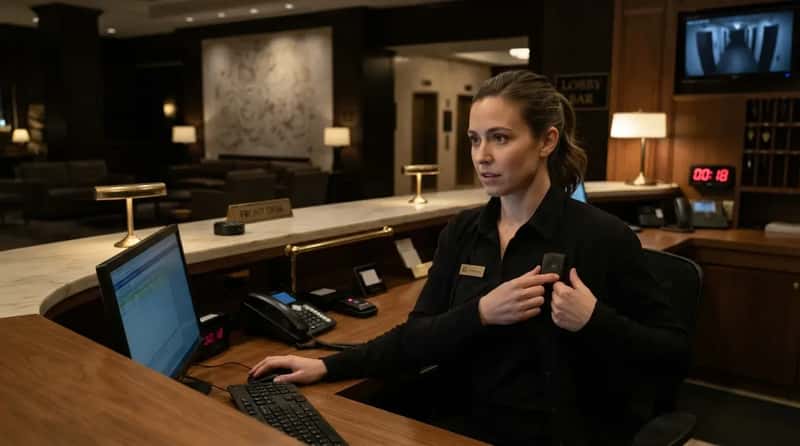
Working alone late carries real safety concerns. In 2018, the American Hotel & Lodging Association launched its 5-Star Promise, in which big chains voluntarily agreed to provide employee safety devices. A UNITE HERE survey of housekeepers found that 58% had faced sexual harassment from guests on the job.
Lawmakers have stepped in. New York City’s Safe Hotels Act, passed in November 2024, requires large hotels to keep at least one security guard, provide continuous front-desk coverage, and equip staff working alone with panic buttons. Rules differ widely by city and state, so a worker’s protection can depend on the zip code of the hotel.
But the last thing on this list isn’t about danger at all.
#15 – By 7 a.m., the Hotel Looks Like Nothing Ever Happened
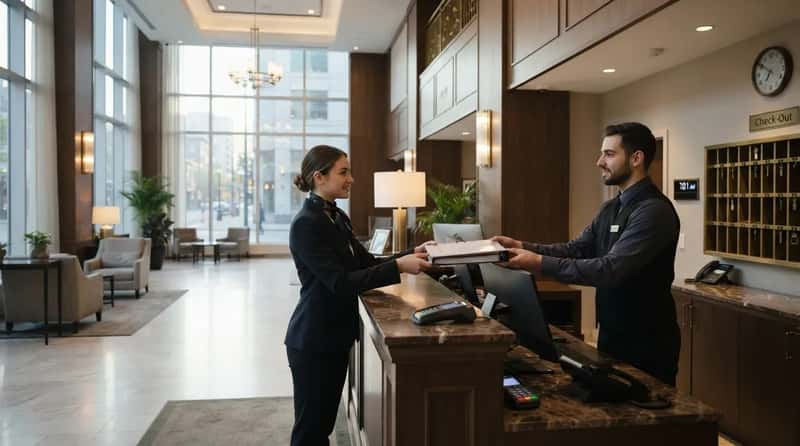
That’s the point. The night shift hands off to the morning front desk team around 7 a.m. By then the reports are done, and the general manager and ownership group read them over coffee.
Even the numbers get a second look. An income audit the next morning reviews the output: the night audit produces the numbers, and the income audit verifies them. The guests wake up to a clean lobby, a correct bill, and no idea who made that happen.
The overnight desk is no dead zone. The date flips, charges post, doors get checked, and breakfast gets ready, all while one person keeps an ear on the phone. Even the word “audit” turned out to be a little misleading.
So the next time you stumble into a quiet lobby after midnight, look at who’s behind the counter. They’ve probably been holding the whole building together since the sun went down, and the best sign they did it right is that you’ll never notice.