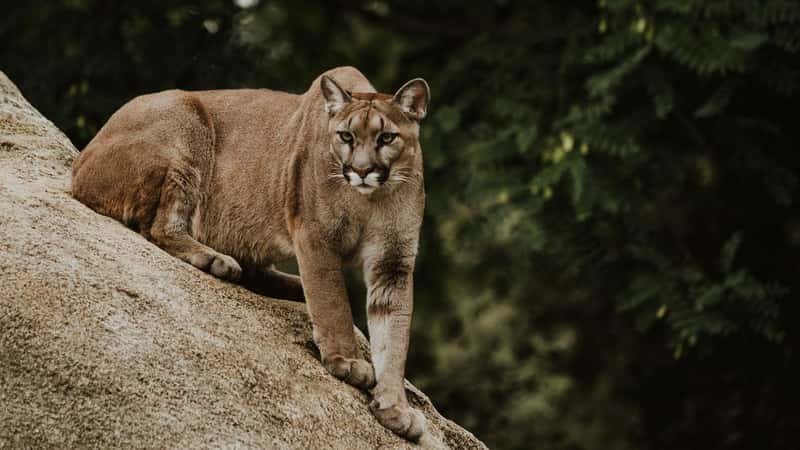
One mountain lion changed the food web in a California suburb, study finds – Image for illustrative purposes only (Image credits: Unsplash)
Near Stanford University, a single mountain lion’s arrival in a small preserve revealed how one apex predator can trigger widespread changes across an ecosystem hemmed in by roads and neighborhoods. Scientists tracking the site for nearly a decade recorded shifts in animal behavior and plant growth that extended far beyond the big cat itself. The results underscore the continuing influence of large carnivores even in developed landscapes where their presence was once considered unlikely.
A Small Preserve Under Close Watch
Jasper Ridge Biological Preserve covers just 4.9 square kilometers of oak woodland and grassland in the San Francisco Bay Area. Surrounded by residential areas and busy roads, the site has long served as a living laboratory for Stanford researchers. Camera traps installed across the preserve captured consistent data on wildlife activity for nine years, providing a detailed record of who was present and when.
Around 2012, mountain lion activity increased noticeably. The animal, known scientifically as Puma concolor, began using the area more regularly. What followed was a series of measurable adjustments among other species that shared the same limited space.
Clear Shifts in Daily Patterns
Coyotes and deer reduced their nighttime movements once the mountain lion became more active. Gray foxes moved into spaces and times previously dominated by coyotes. Brush rabbits shifted their peak activity to morning hours, apparently avoiding periods when predators were most likely to hunt.
These behavioral adjustments coincided with a striking increase in woody plant density. Over 17 years, the amount of woody vegetation rose 64-fold. The change suggests that reduced browsing pressure from deer allowed young plants to survive and grow in greater numbers.
- Coyotes and deer avoided nighttime hours
- Gray foxes expanded their activity range
- Brush rabbits became more active in mornings
- Woody plant cover increased sharply
Evidence of a Trophic Cascade
The sequence of changes matches the pattern known as a trophic cascade, in which the presence of a top predator alters the behavior or abundance of prey species and, in turn, affects plants and other animals further down the chain. Similar effects were documented in Yellowstone National Park after wolves returned in 1996.
Lead researcher Chinmay Sonawane noted that the mountain lion’s increased activity coincided with changes that cascaded through the food web, from deer and coyotes down to foxes, rabbits, and woody plants. The study, published in the journal Ecology and Evolution, supplies direct camera-trap evidence of these layered responses in a suburban setting.
Lessons for Developed Landscapes
The findings show that even a modest patch of habitat can support meaningful ecological processes when an apex predator returns. For communities near Stanford and other urban edges, the results suggest that preserving connectivity for large carnivores may yield benefits that extend to vegetation structure and smaller wildlife populations.
Questions remain about how long such effects persist and whether they appear in other suburban preserves. Continued monitoring will help determine whether the patterns observed at Jasper Ridge represent a broader phenomenon or a site-specific response. The study nevertheless demonstrates that the structural role of mountain lions can remain significant even where human development dominates the surrounding terrain.