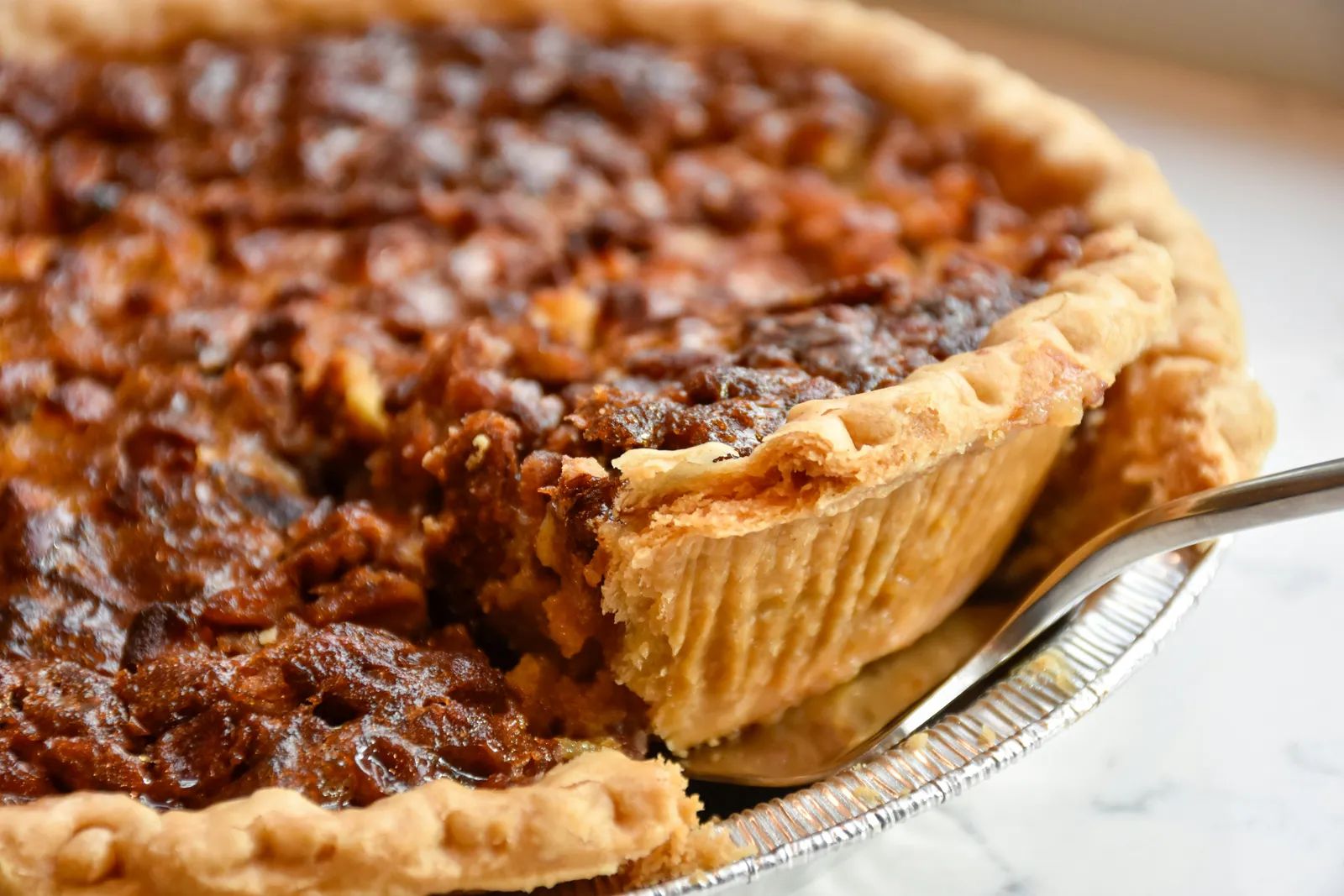
Many Americans bake or buy pecan pie for Thanksgiving and other gatherings, then leave it out for hours while the meal unfolds. Food safety guidance from federal and university sources indicates that homemade and fresh bakery versions, which usually contain eggs, should move to the refrigerator much sooner than that. The original source material draws on extension services and USDA charts to outline clear time limits and storage steps.
The Core Advice on Refrigeration
Homemade pecan pie and most fresh bakery versions fall into the category of egg-rich desserts that require refrigeration after baking and cooling. Iowa State University Extension groups these pies with custard and pumpkin varieties because the filling supports rapid bacterial growth in the temperature danger zone between 40 and 140 degrees Fahrenheit. University of Illinois Extension echoes the point for any pie containing eggs or dairy. Commercially produced pies sold on grocery shelves sometimes use different formulations that allow shelf stability, so the package label remains the deciding factor in those cases. When in doubt, the safer default is refrigeration for leftovers. This distinction matters most during busy holiday periods when pies sit out during long meals or buffets.
How Long Can It Safely Sit Out?
Most extension guidance sets a two-hour maximum at room temperature for perishable pies. The USDA shortens that window to one hour when the ambient temperature exceeds 90 degrees Fahrenheit. A pie pulled from the oven at 2 p.m. should therefore reach the refrigerator by 4 p.m. under normal conditions. For buffet service that stretches longer, keeping the pie at or below 40 degrees on ice or by rotating slices from the refrigerator helps maintain safety. One Wisconsin Extension note allows up to four hours for cooling a freshly baked pie, yet that instruction addresses the initial cooling phase rather than extended serving time. Following the shorter two-hour limit aligns with the stricter recommendations from Iowa State and LSU AgCenter.
Refrigerator and Freezer Timelines
USDA’s FoodSafety.gov chart lists pumpkin or pecan pie for three to four days in the refrigerator after baking when stored at 40 degrees or below. Iowa State Extension supports up to four days for egg-containing pies. Beyond that window, quality and safety decline even if the pie looks and smells normal. Freezing extends usability for one to two months at best quality, according to the same USDA chart. Iowa State notes that the filling may separate and the crust can soften after thawing, which is a texture change rather than a safety issue. Thaw slices in the refrigerator rather than at room temperature to avoid condensation that softens the crust further.
Store-Bought Pies and Special Situations
Some commercially made pecan pies are processed to remain stable at room temperature until opened. Once opened or if the label says “keep refrigerated,” those pies follow the same perishable rules as homemade versions. A pie left out overnight should be discarded regardless of appearance, because refrigeration the next morning does not reverse the time spent in the danger zone. Visible mold, an unusual odor, or storage beyond four days in the refrigerator also signals that the pie should be thrown away. Normal appearance or smell does not guarantee safety, since harmful bacteria do not always alter visible or olfactory cues.
Practical Storage Steps for Best Results
Cool the pie fully after baking, then place it uncovered in the refrigerator until cold before wrapping to prevent trapped moisture from softening the crust. A chilled pie also slices more cleanly with a sharp serrated knife using a gentle sawing motion. For parties, set out only what will be eaten within the two-hour window and return the rest to the refrigerator promptly. These steps help preserve both safety and texture through the holiday season.
| Situation | Recommended Action |
|---|---|
| Just baked and cooling | Refrigerate within two hours total |
| Left out overnight | Discard |
| Refrigerated three days, sliced | Still within USDA range if kept at 40°F or below |
| Frozen three months | Safe if continuously frozen, but past quality window |
The two-hour rule and three-to-four-day refrigerator guideline provide a straightforward framework that fits most holiday hosting scenarios without requiring advanced equipment or guesswork. Following these timelines reduces risk while keeping the dessert enjoyable for guests.