The trailhead is dark at 5 AM.
You are not afraid.
You are relieved.
No one is watching. No one is waiting. The only weight on your shoulders is the pack you chose, the route you planned, and the silence you drove three hours to find. Most people will never understand that specific relief – the one that arrives the moment you stop being responsible for anyone else’s comfort, anyone else’s hunger, anyone else’s mood.
There is a version of you that exists only out there. It doesn’t apologize for its pace. It doesn’t explain its detours. It builds its own fire and eats at its own hour and sleeps when the sky says so. Psychologists might call it the autonomous self. You call it finally being yourself.
The Identity Gap is the distance between who you perform in the presence of others and who you actually are when the audience disappears. For most people, that gap is a source of low-grade anxiety – a constant, humming negotiation between self and social expectation. For solo campers, it is the reason they pack light and leave early.
1. The Autonomy Architect
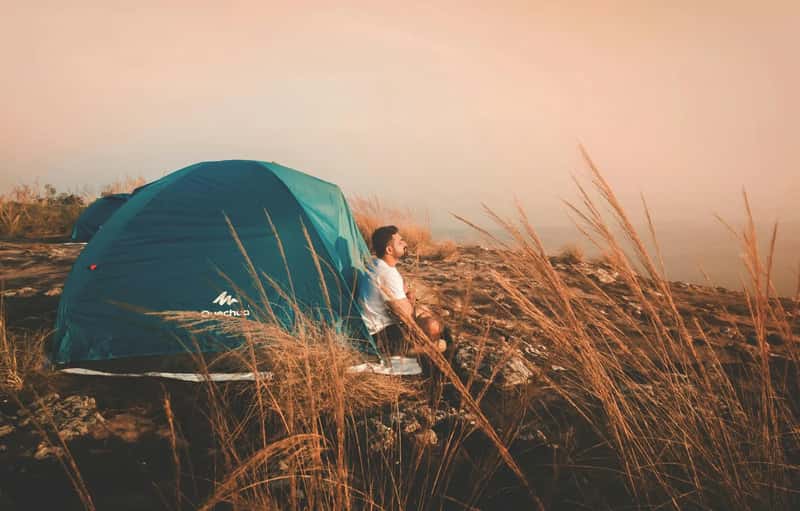
You do not merely prefer to make your own decisions. You are quietly allergic to decisions made for you.
This goes deeper than stubbornness. There is a unique sense of freedom when camping alone, as it allows one to make all decisions independently, from choosing the campsite to planning the daily activities. That sentence sounds simple. It isn’t. It describes an entire psychological operating system – one built on the belief that the self is the most trustworthy compass in the room.
Solo camping grants complete autonomy over decision-making processes, from macro-level itinerary planning to micro-level daily choices. This autonomy represents a departure from typical life circumstances where decisions often involve negotiation, compromise, or external constraints.
For the Autonomy Architect, group trips are not social experiences. They are endurance tests. Every “where should we eat?” is a small tax on the soul. Every group consensus is a quiet erasure. Out there alone, with only the topographic map and the temperature dropping, every choice is clean. Every consequence is yours. That ownership is not a burden. It is the point.
2. The Quiet Risk Calculator
People assume solo campers are reckless. They have it exactly backwards.
The solo camper is, by necessity, the most methodical person in any room. At its core, solo camping is an exercise in self-reliance. Without the safety net of companions, individuals must rely solely on their skills and judgment. This starts from the planning stage, where one must consider every detail, from route selection to gear preparation.
This is the paradox: the desire to be alone requires extraordinary preparation for not being rescued. You check the weather twice. You file a trip plan. You pack the redundant fire starter. You have already run through the quiet catastrophes in your mind – the turned ankle, the storm that arrives early, the bear encounter – and you have already decided, methodically, what you will do.
This is not fearlessness. This is fear, organized and respected. The Quiet Risk Calculator does not ignore danger. They have simply internalized it so thoroughly that their confidence looks, to the outside observer, like nonchalance.
3. The Solitude Connoisseur
There is a difference between being alone and being lonely. The solo camper has mastered this distinction at a cellular level.
Spending time alone doesn’t scare solo travelers – it energizes them. They enjoy quiet moments, whether it’s sipping coffee at a local café or watching a sunset in silence. This comfort with solitude reflects a high level of emotional maturity.
Research supports what the solo camper already knows in their bones. Time alone has been linked to increased life satisfaction, better emotion regulation, and reduced stress. It also creates conditions favorable to creativity, mental restoration, and deeper self-understanding.
The Solitude Connoisseur does not need noise to feel alive. They need the opposite – the specific, textured silence of a forest at 2 AM, where the only sounds are biological, honest, and indifferent to their presence. In that indifference, they find relief. No performance required. No social calculus running in the background. Just the body, the breath, and the dark.
4. The Internal Locus Holder
Ask a solo camper who is responsible for how their trip goes. They will not blame the weather. They will not blame the gear. They will look at you steadily and say: me.
This is the internal locus of control – the deep psychological conviction that outcomes are shaped by personal agency, not external fortune. Psychologists note that people with high self-reliance tend to have better resilience and adaptability. It’s not that challenges don’t happen to them. It’s that they know they can handle them when they do.
Solo backpackers must depend on their own resources, physical and mental stamina, and decision-making abilities. This inherent self-reliance fosters a sense of responsibility and capability that transcends the hiking trail.
This orientation is not arrogance. It is something quieter and harder to acquire: the willingness to own your outcomes completely. When the tent floods, you didn’t pack a better rain fly. When the trail is beautiful, you chose this trail. There is a profound, grounding dignity in that kind of total ownership that no group trip can replicate.
5. The Noise-Fatigue Refugee
I remember the moment I understood why I needed to be alone in the woods. I was sitting in a meeting that had been scheduled on top of another meeting, answering a message on my phone while someone talked to me across a desk, and I felt the specific, nauseating vertigo of a person whose attention is owned by everyone except themselves. I booked the campsite that night.
Digital saturation: constant notifications erode attention spans and increase background anxiety. Solo camping creates enforced downtime.
We are all collectively experiencing dopamine dysregulation in our society. We are constantly inundated with artificial stimulation, leaving our reward systems constantly seeking, and never satisfied. Camping offers a complete dopamine reset.
The Noise-Fatigue Refugee is not anti-social. They are pro-signal. They have simply reached the saturation point of modern connectivity and require – not prefer, require – periods of radical quiet to function as a full human being. The forest does not send push notifications. The fire does not need a response. That is not a small thing. That is everything.
6. The Resilience Builder
The solo camper does not go into the wilderness to be comfortable. They go to be tested – and to pass.
Being completely reliant on your skills and resourcefulness, and succeeding, brings a sense of accomplishment that very few other experiences can. The importance of problem-solving, critical thinking, and survival skills become more evident and fulfilling when solo camping.
Emotional resilience isn’t a trait you either have or don’t. It’s something that develops through experience, specifically through facing difficulty without collapsing and discovering, over and over, that you’re more capable than you feared. Solo travel creates those moments reliably.
Each small victory accumulates into a revised self-concept. You built the fire in the rain. You navigated the ridge in fog. You woke up at 3 AM to a sound you could not identify, held very still, and discovered it was only the wind. You survived your own fear. And that survival, repeated enough times, becomes a quiet, unshakeable confidence that no performance review can grant and no relationship can provide.
7. The Boundary Architect
Solo campers are exceptional at one social skill that most people spend decades failing to develop: the ability to say no without explanation.
No is a complete sentence. Solo travelers tend to internalize this early. They decline the group trip. They skip the crowded campsite. They choose the difficult trail that no one else wants to hike, not because they are antisocial, but because they have learned to distinguish between what they are genuinely drawn to and what they are merely guilted into.
Boundaries aren’t walls; they’re guardrails for well-being. They let you say an enthusiastic yes to what you do want.
Out in the field, this manifests as a clean, unambiguous relationship with personal limits. The solo camper knows when they are tired. They know when the weather window has closed. They know when to turn back. This self-knowledge is not timidity. It is the most honest form of self-respect – the kind that can only be learned when the only person you can disappoint is yourself.
8. The Present-Tense Practitioner
The solo camper is, almost by definition, a practitioner of involuntary mindfulness.
Living in the Present: Solo backpacking epitomizes the essence of living in the present. As backpackers focus on each step of the journey, each sound, and each sight, they leave behind the worries of the past and the anxieties of the future. This mindfulness brings a sense of peace and tranquility that can be elusive in our fast-paced world.
Camping is inherently mindful. With the natural environment rich in sensory experiences, it’s hard for our attention to not be organically drawn to the present moment.
When you are alone and responsible for your own survival, the past becomes irrelevant and the future collapses to the next hour. Did you hang the bear bag? Is the rain coming from the northwest or the south? How many miles to water? These are not distractions from real life. They are the purest form of it – a life stripped of abstraction, running entirely on the immediate and the sensory. The crackle of the fire. The weight of the pack lifting off the shoulders. The specific blue of the sky through the trees at 6 AM when everything smells like pine and cold.
9. The Self-Efficacy Accumulator
There is a particular species of confidence that can only be built in the absence of witnesses.
If you are someone who measures high on openness to experience, you are typically more curious, more independent, adaptable, willing to try new ideas, new values, new emotions, new experiences, and more adventurous. This openness to experience combined with something called high self-efficacy – which refers to our belief in our ability to influence our reality and to influence the outcomes we would like – essentially allows us to really trust in our agency and makes for the ideal solo traveler.
The American Psychological Association’s work on resilience points to autonomy and self-efficacy as foundational to psychological wellbeing. Solo travel delivers both in concentrated doses. Every small decision you make alone adds to a growing internal account of capability.
The Self-Efficacy Accumulator does not need applause. They need proof – and they collect it methodically, trip by trip, night by night. Each summit reached alone. Each storm waited out. Each dinner cooked over an open fire in the dark. The account grows quietly. And over time, it changes the fundamental answer to the question: what are you capable of?
10. The Identity Integrator
This is the heaviest one. The one that explains all the others.
The deepest pull toward solo camping is not about solitude, or nature, or self-reliance in any abstract sense. It is about the specific, ferocious need to exist without translation. When you are alone in the wilderness, there is no audience to perform for, no social role to maintain, no version of yourself to protect or project. The isolation allows for moments of reflection, which can lead to self-discovery and a better understanding of one’s goals and aspirations. As campers engage with their surroundings, they often find clarity regarding their life’s path.
Self-determined motivation for solitude reflects wanting time alone to find enjoyment and gain meaningful benefits from it – and for the Identity Integrator, that benefit is radical self-coherence. The bringing together of the private self and the public self until the gap between them narrows, until the person you are in the woods is not so different from the person you are in the world.
For adolescents and young adults, solitude serves a specific developmental purpose: it provides a context for gaining autonomy and forming a strong identity, two tasks that are difficult to accomplish when you’re constantly surrounded by peers and their expectations. But this work does not end at 25. It never ends. The Identity Integrator understands this. They return to the wilderness not to escape their life, but to see it clearly – from the distance of a ridgeline, without the distortion of social pressure, without the noise that makes it so difficult, back home, to hear themselves think.
They return changed in a way that is difficult to name and impossible to fake. A little more grounded. A little less negotiable about what they need. A little more honest about who they actually are, as opposed to who they have agreed to be.
There is something important happening in that gap between who you are when others are watching and who you are when they are not. Most people never examine it. They fill it with noise, with obligations, with the comfortable static of constant company. The solo camper does not fill it. They walk into it, deliberately, with a headlamp and a good knife and no return time, and they sit in it until it becomes familiar. Until it becomes home.
The forest does not know your name. The trail does not care about your resume. The dark asks nothing of you except your presence, and your presence is, in this one rare context, completely your own.
Maybe that is what you have been after all along – not the wilderness, but the version of yourself that only surfaces there, unhurried and unaudited, finally responsible only for the fire in front of you and the morning ahead.