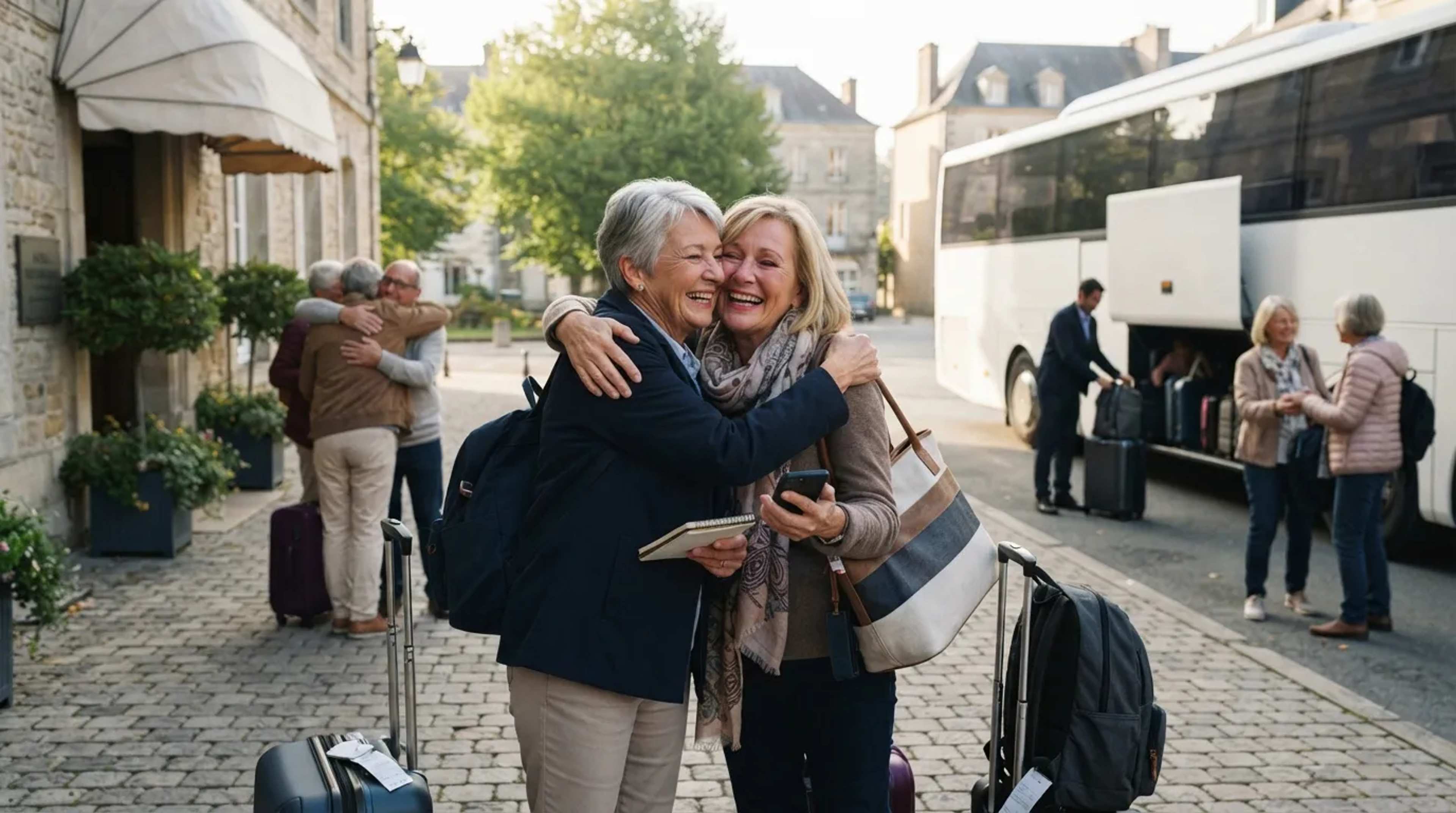
You land somewhere new. The air smells like someone else’s story.
You pull a carefully chosen jacket from your bag. Not a rain poncho. Never a rain poncho.
The map is on your phone, buried three screens deep so no one sees you searching.
You know the name of the neighborhood. You practiced the pronunciation.
You are a traveler. Not a tourist. The distinction feels, somehow, like survival.
There is a gap that opens the moment you leave home – a fissure between the self you’ve constructed over decades and the raw, unscripted person who doesn’t know where the Metro card machine is. Tourist identity refers to how individuals define themselves during travel, often influenced by the culture, experiences, and social interactions they encounter – and it encompasses the change in self-perception as tourists immerse themselves in new environments, deciding whether to blend in or stand out. Most of us, if we’re honest, are terrified of that second person. The one who doesn’t know. The one who asks. The one who looks lost.
The Costume of Competence
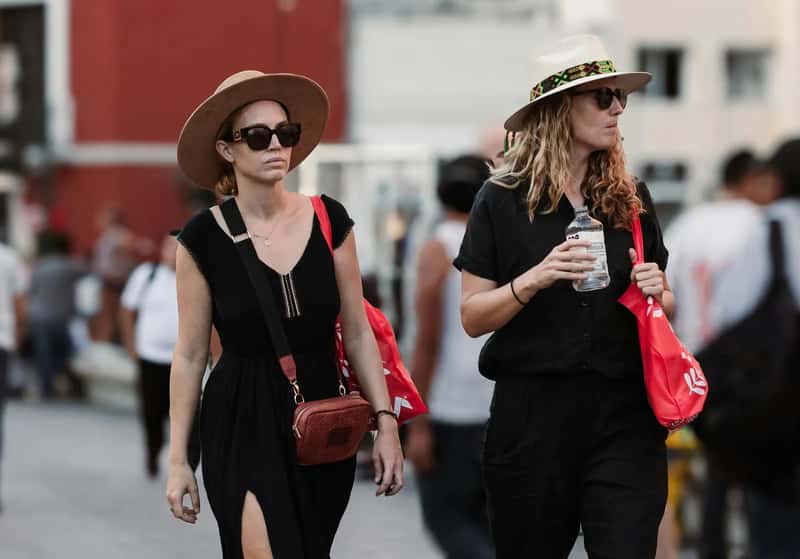
The anti-tourist wardrobe is not about fashion.
It never was.
It is a full-body argument against vulnerability. Every dark linen shirt, every inconspicuous leather sneaker, every scarf deployed with the precision of someone who has studied the locals – these are armor.
Clothing is part of our material environment. When chosen deliberately, it can function as a daily act of identity reinforcement. When chosen carelessly, it can fail to activate the identity the person actually wants to inhabit.
The traveler who refuses a fanny pack is not making a fashion choice. They are making a psychological declaration: I belong here. I know things. I cannot be read.
And yet the city does not care. The cobblestones do not yield for the well-dressed. The rain falls on the linen shirt all the same.
The Taxonomy of “Other”
There is a hierarchy on the road, and everyone who travels knows it, even if they refuse to say it aloud.
At the bottom: the tourist. Camera strap. Comfortable shoes. Guidebook.
One step up: the traveler. Slightly tortured. Reads fiction on trains.
Higher still: the wanderer, the nomad, the one who “used to live here.”
Identity tourism is inherently relational – it involves forming in-groups and perceiving out-groups. Social Identity Theory explains how in-group favoritism can lead to performative or appropriative behavior.
Clothing is the primary signal of which tribe you belong to. It is the passport inside the passport. And the fear of being filed into the wrong category – the category of the uninformed, the obvious, the average – can make a grown adult sweat in the Departures hall.
The Predator Logic
There is, of course, a rational argument buried somewhere in all of this.
Looking like a tourist can make you a target. It is not paranoia; it is pattern recognition. A fear of looking like a tourist often goes deeper than fashion concerns. Safety does play a role – scam artists can prey on naïve tourists, which is a reasonable motivation for blending in.
The ability to camouflage to blend in and ward off predators is a survival skill used by every species. National Geographic notes that “organisms use camouflage to mask their location, identity, and movement.”
But here’s what the predator logic doesn’t explain: the traveler who obsesses over their outfit in a perfectly safe Swiss village. The one who avoids the obvious café because it has an English menu. The fear lives past the point where the danger ends. That’s when you know it was never really about safety. It was about the self.
The Uninformed Body
To look like a tourist is, in the subconscious cartography of modern travel, to look like someone who doesn’t know.
And not knowing is its own species of shame.
The fear of the unknown – whether related to safety, language barriers, or cultural differences – can heighten anxiety before and during a trip, often making individuals imagine worst-case scenarios and amplifying their stress.
The white sneakers, the oversized backpack, the map held at arm’s length – these are not just visual markers. They are confessions. I am new here. I am learning. I might make a mistake. For a certain kind of traveler – the kind forged by years of performing competence – that confession is unbearable. The clothes become a wall between the world and the truth.
The Personal Inventory
I remember standing on a street in Lisbon once, deeply lost, wearing an outfit I had curated to suggest I was not deeply lost.
Dark trousers. Nondescript jacket. Not a lanyard in sight.
I walked past the same pastelaria three times. I refused to stop and look at my phone in public. I spoke Portuguese with a confidence I absolutely did not possess.
It took me forty minutes longer to find where I was going. The city, elegant and indifferent, watched me perform.
What I was protecting – I understand now – was not my safety. It was my story about myself. The story that says: I move through the world with ease. I am not rattled. I am not average. The clothes were the first line of defense for a narrative that travel kept threatening to dismantle.
The Social Media Mirror
The modern traveler does not just experience a city. They document it for a future audience.
And tourists do not get good engagement.
It’s interesting to explore how digital identity – through social media and travel blogs – intersects with traditional tourist identity. Many travelers document their journeys online, creating a virtual persona that can influence both their travel experiences and those of others who follow their journey.
The anti-tourist wardrobe is, in part, a content strategy. The photo cannot feature a fanny pack. The caption cannot admit confusion. The carefully considered outfit is not worn for the city – it is worn for the algorithm. And the algorithm rewards the performance of effortless belonging. Every tourist-adjacent garment risks collapsing the carefully constructed fiction of the seasoned, knowing wanderer.
The city becomes a set. The clothes are a costume. And underneath it all, the same unanswered question: who am I when no one is watching?
The Enclothed Mind
Here is the deeper science of it, the thing the nervous well-dressed traveler won’t admit over their airport Aperol Spritz.
What we wear changes how we think. It changes how we move. It changes what we dare.
Attire influences our psychology. The concept of enclothed cognition shows how clothing can alter our mental state, reflecting the deep connections between what we wear and how we live.
The traveler who dresses to signal expertise begins, slowly, to feel expert. The clothes become a scaffolding for the identity. And then the identity becomes a cage. Because the performance must be maintained. The shoes must stay clean. The guidebook must stay hidden. The wonder – the raw, open, beginner’s wonder that makes travel worth anything at all – gets quietly suffocated by the need to look like someone who has already seen everything.
The Exit Strategy
There is something particular about the traveler who cannot be caught looking.
They always have an exit route. A plausible explanation. A reason they’re standing here that isn’t I got lost and I don’t know what I’m doing.
Worrying about looking like a tourist is just a specific situation in which we fear being judged. We may fear being judged in the mornings by our next-door neighbors too, but traveling to a foreign land can magnify a fear of social judgment.
The exit strategy is exhausting. It requires constant surveillance of the self. It means never fully arriving anywhere, because arrival requires surrender – to the unfamiliar, to the awkward pause, to the moment where you have to ask someone for help in a language that makes you feel five years old. The clothes are just the most visible part of a much larger refusal to be seen as human.
The Temporary Identity
Travel is the only circumstance in which we are permitted – even expected – to become someone else entirely.
And most of us waste it trying to stay the same.
Clothing and style choices allow individuals to nonverbally communicate aspects of their personality, interests, and values. For many, travel offers a chance to reinvent their aesthetic and try new identities.
The temporary identity is not a threat. It is the gift. The version of you that doesn’t know the restaurant, that takes the wrong bus, that ends up somewhere more interesting than where they were going – that version is not inferior. That version is alive. The concept of tourist identity isn’t static. It evolves with each new destination and experience, continually reshaping a traveler’s outlook and self-perception. The anti-tourist wardrobe is, in its most tragic form, a refusal of that evolution. A decision to show up armored rather than open.
The Permission Slip
Nobody is coming to tell you it’s okay to not know things.
Nobody is going to hand you a document that says: you are allowed to be confused, curious, obvious, wide-eyed, and thoroughly out of your depth.
You have to write that one yourself.
Trying new styles and cultivating a travel wardrobe is more than just looking fashionable. It’s about using clothing to manifest inner confidence, openness, and adaptability. But real openness cannot be manufactured from a capsule wardrobe of strategic neutrals. Real openness looks like a person who wore the wrong shoes for the cobblestones and laughed about it. Who pulled out the map in front of everyone. Who sat in the obviously-for-tourists café and ordered the obviously-for-tourists dish and found it to be, against all curated expectation, genuinely wonderful.
Fear of losing control – feeling that something will go wrong and that you won’t be able to handle it – is, at its core, what the anti-tourist wardrobe is trying to manage. The outfit is not armor against strangers. It is armor against the self that might be revealed when every familiar coordinate is removed.
There is a version of travel that requires nothing from you except your presence. No performance. No curated neutrals. No practiced nonchalance in front of the monument that genuinely takes your breath away. Just the radical, uncool, completely average act of being somewhere new and letting it matter.
The fear of looking like a tourist is, in the end, the fear of being a beginner. And being a beginner – in a city, in a culture, in a version of yourself you haven’t met yet – is the only honest way to travel.
Put on the comfortable shoes. Let the city see you arriving.