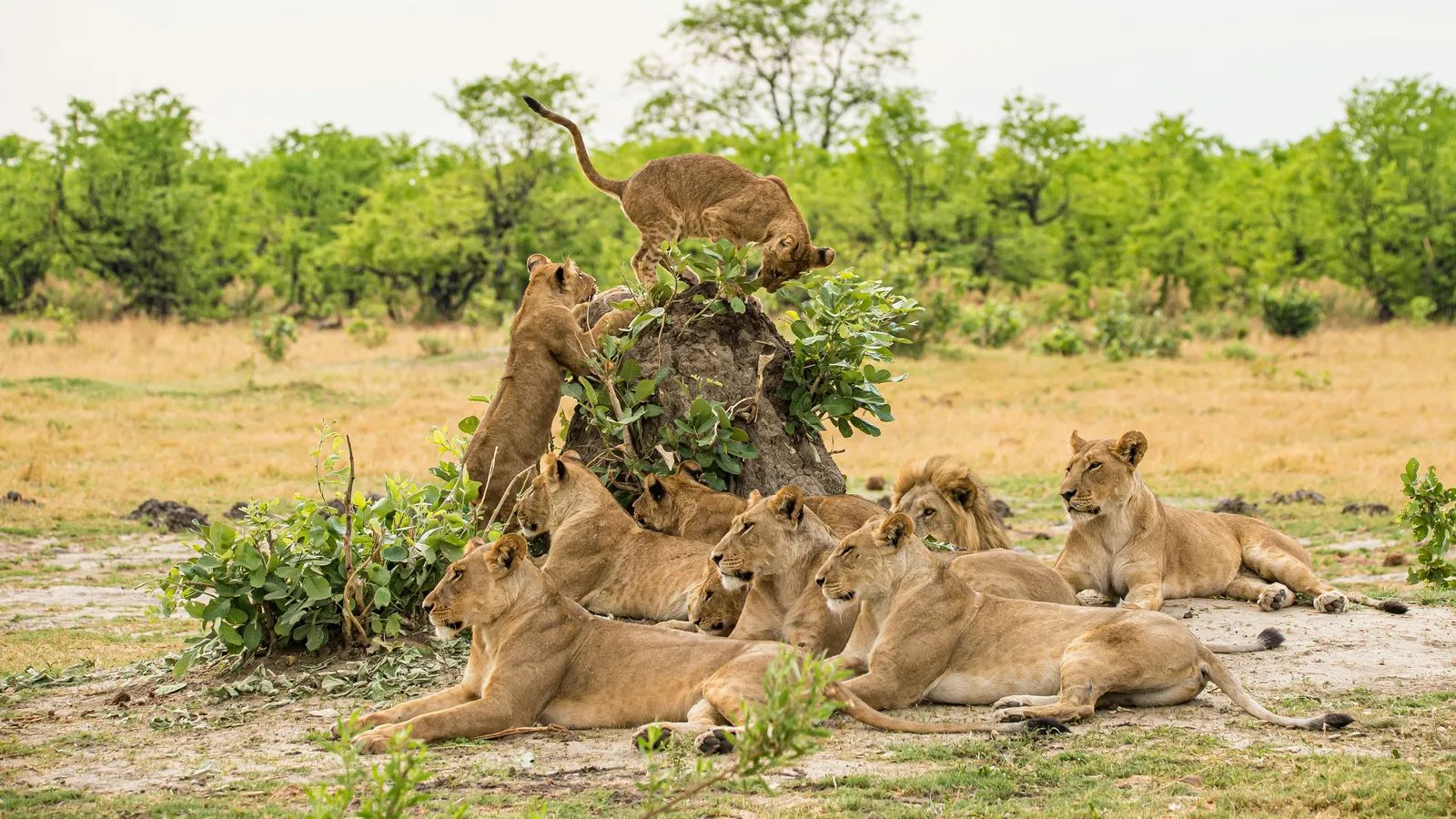
Two small communities on the edge of Botswana’s Okavango Delta now receive payments for photographs of elephants, lions and other animals that pass through their villages. The arrangement rewards residents for documenting wildlife movements while they continue to live alongside species that sometimes damage crops or livestock. The effort forms part of the Harmony with Wildlife program and involves the villages of Gogomoga and Tsutsubega, each home to fewer than 500 people and lacking paved roads, schools, shops or electricity. ([1])
Daily Pressures from Wildlife
Elephants frequently enter the settlements to feed on vegetable gardens and can damage water boreholes that require extensive fencing. Lions and other large predators also move through the area, creating risks for livestock. Despite these incidents, residents have shown consistent tolerance toward the animals that share their landscape.
The Okavango Delta supports a wide range of species, including hippos and numerous predators, while sustaining roughly 130,000 people, among them Indigenous San communities. Wildlife routinely crosses into village spaces, making regular contact part of daily life rather than an occasional event.
From Damage Reports to Camera Traps
In April 2024, local rangers began assisting residents with formal documentation of wildlife damage so claims could be submitted to Botswana’s wildlife department. That process highlighted the value of tracking animal movements more precisely and led to the installation of camera traps around the villages.
Teams positioned the cameras to record when and where elephants and other large mammals traveled without intruding on private areas. Over the following two years, footage revealed consistent patterns of wildlife passing through settled zones, providing data that informed both compensation claims and conservation planning.
Partnerships Behind the Payments
Wild Impact, a conservation nonprofit, and the safari company &Beyond developed the program in direct collaboration with the two villages. The arrangement recognizes the practical role communities play in allowing wildlife to move freely while absorbing the costs of coexistence.
Andrew Venter, chief executive of Wild Impact, noted that the communities remain remarkably tolerant even when animals cause losses. The payments aim to acknowledge that tolerance and give residents a direct financial stake in the continued presence of the animals.
Practical Results for Residents and Wildlife
The scheme supplies income tied to verified photographs rather than to losses alone. It also supplies clearer records of animal activity that can improve future compensation processes and reduce the need for reactive measures such as heavy fencing.
By linking payments to documented wildlife presence, the program creates an ongoing incentive for residents to maintain the cameras and share observations. This approach ties local livelihoods more closely to the health of the surrounding ecosystem without requiring major changes to daily routines.