Visiting a national park anywhere in the world comes with an unwritten rule: animals don’t owe you anything. You can prepare, hope, wait—and then hope again that the stars align. Khao Yai National Park is no exception. Wildlife sightings are never guaranteed, and that’s exactly why, when it works, it feels so extraordinary.
Khao Yai is Thailand’s oldest national park, established in 1962, and it remains one of the most biodiverse protected areas in the country. It’s vast—much more vast than what visitors usually perceive. While you move through forest roads and clearings, it’s important to know that the area accessible to tourists accounts for roughly 1% of the park’s total surface. The rest is deep, continuous wilderness. That single fact changes how you read everything you see. The park sits at the crossroads of several ecosystems: evergreen rainforest, deciduous forest, grasslands, bamboo groves, and river systems that feed waterfalls and valleys. It feels dense, and alive. But this is not a park you explore independently. The only real way to see it—and understand it—is with a guide, on an organized day tour, moving through the park in a specially equipped pickup truck.
The Day Tour: The Only Way That Makes Sense
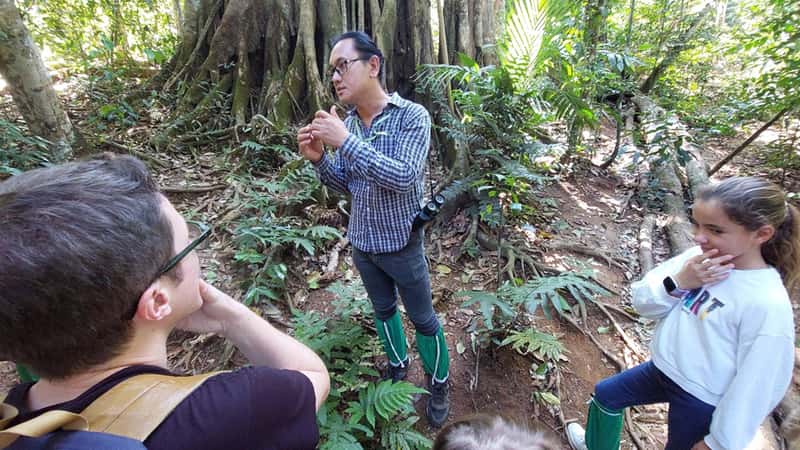
The day safari is, without question, the best way to experience Khao Yai. You spend hours driving slowly through different habitats, stopping constantly as your guide points out things you would never notice on your own. And that’s the key: the guide. Ours had worked in the park for years, and his knowledge went far beyond simply spotting animals. He explained tracks, sounds, feeding behavior, plant species, and the invisible logic that keeps the forest functioning. He could recognize bird species from calls we barely registered—sometimes from sounds we didn’t hear at all—and then, while still driving, locate them precisely and stop so we could see them through a telescope.
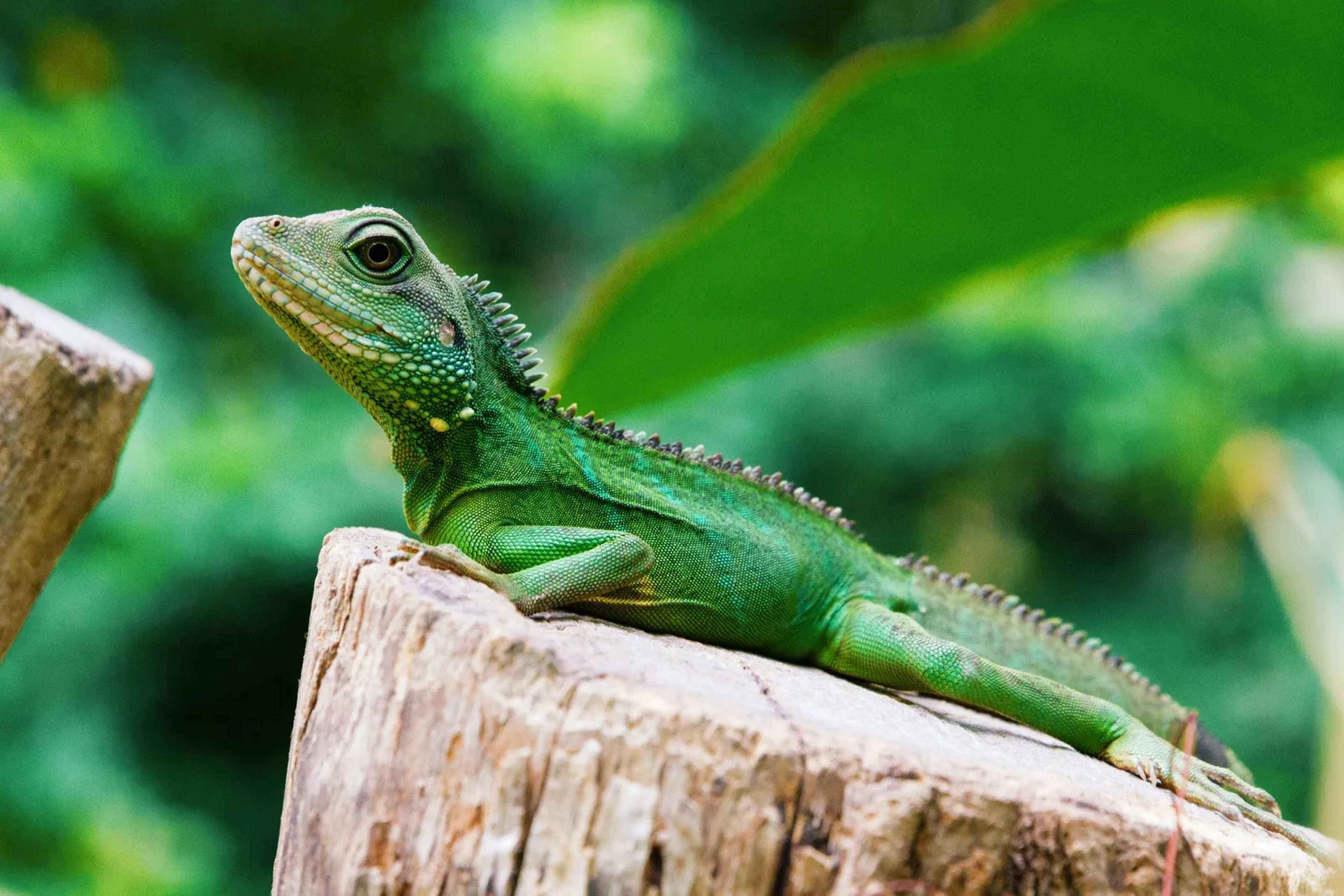
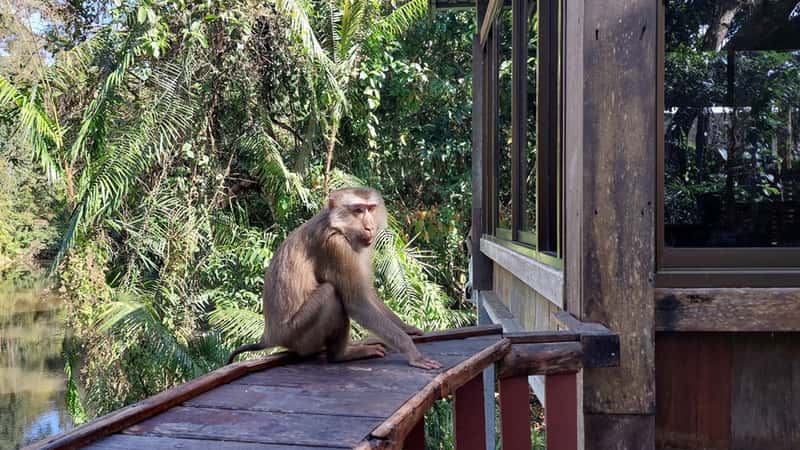
Once your eye is trained this way, the park begins to reveal itself. We saw hornbills flying overhead, macaques and gibbons moving through the canopy, deer crossing clearings, wild boar, monitor lizards, porcupines, and countless bird species. Even when animals weren’t immediately visible, the sensation of being inside a living, working ecosystem was constant. A special note goes to the monkeys—mainly macaques—which are incredibly numerous and very accustomed to vehicles. At times they run straight across the road, weaving between pickup trucks, and can get surprisingly close. It’s fascinating to watch, but it also calls for attention and respect: no sudden movements, no food, no interaction.
And Then There Were the Elephants
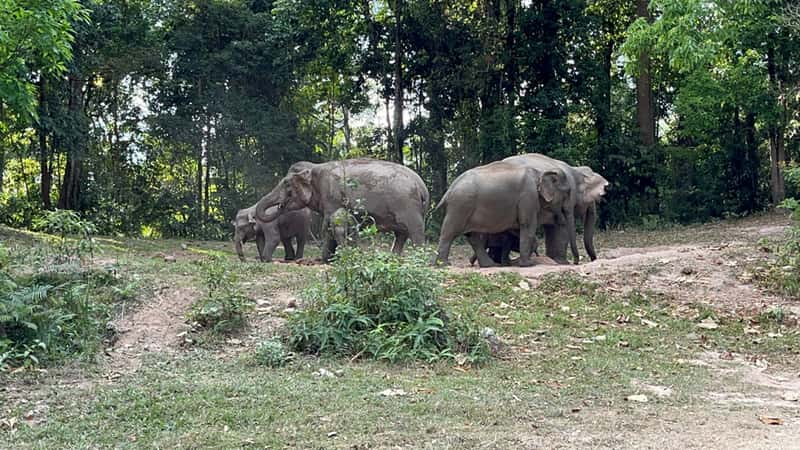
We had admitted it right from the start: seeing elephants was our biggest hope of the day. As the hours passed and the afternoon stretched on, that hope slowly began to fade. Toward the very end of the tour, when we were almost ready to accept that it wasn’t going to happen, the guides began talking to one another. Word started circulating—quietly—about the location of a herd.
Our guide didn’t hesitate. He took us there immediately, and before we got close, he explained the rules very clearly: absolute silence, no sudden movements, no shifting position. Respect first, always. The pickup stopped, the forest went still—and there they were. A family of wild elephants, calm, close, completely unbothered by our presence. No noise. No rush. No tension. Just them, moving slowly through the greenery, exactly as they should. It was one of those moments that makes you feel incredibly small—and incredibly lucky. They stayed in front of us for maybe five minutes, and then slipped back into the forest once again. As mysteriously—and as magically—as they had appeared, they were gone.
Haew Suwat Waterfall
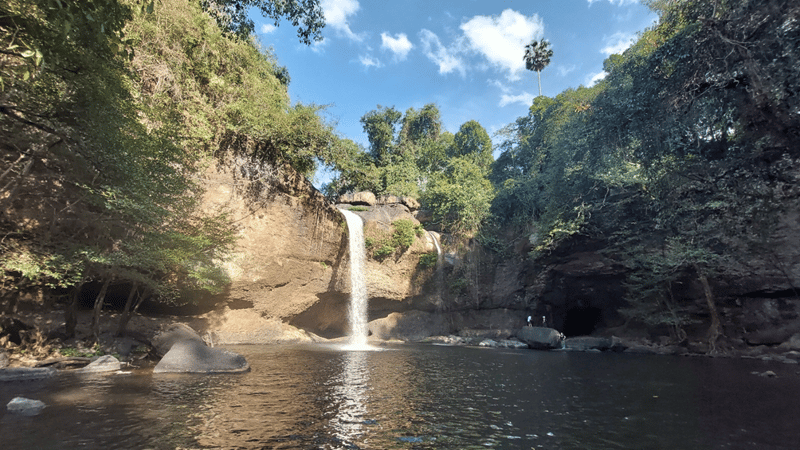
Beyond wildlife, Khao Yai is simply beautiful. The forest feels deep and layered, and there are scenic stops along the way, including Haew Suwat Waterfall, wide and powerful, set within dense, vibrant vegetation. The waterfall can be observed from multiple viewpoints, and you’re free to move around the surrounding rocks and paths, changing perspective as the water crashes down into the pool below.
It’s also a place with a small cinematic footnote: Haew Suwat was one of the filming locations for The Beach, and standing there, it’s easy to see why. More than a recognizable backdrop, it reinforces the idea that this park isn’t just about animal sightings—it’s about landscape, scale, and full immersion in a world that feels genuinely wild.
What Lives Here (Even If You’ll Never See It)
Talking with our guide added another layer to the experience. He told us that, in his opinion, tigers still exist in Khao Yai. They are officially considered extremely rare here, but given the size of the park and how little of it is accessible, he firmly believes they’re present in the deeper, untouched areas. There are many animals like that. Rarely seen, but documented. Leopards. Clouded leopards. Asiatic black bears. Dholes (wild dogs). Ocelots. Slow lorises. Civets. Pangolins. Otters. Python species. King cobras. And well over 300 species of birds.
Knowing this changes the experience. Even when you don’t see them, you feel them— possible, hidden just beyond the visible edge.
The Night Tour: Honest Impressions
We also did the night safari, and my judgement is: it’s not worth it. Compared to the day tour, it’s far less magical. Pickups move in a long line, very close to each other. Animals are spotted using artificial lights, which immediately creates distance rather than intimacy. Yes, you may see nocturnal species—civets, porcupines, owls, maybe a slow loris or night-active deer—but the atmosphere feels more mechanical.
Add to that the cold night air, the exhaust fumes from the vehicles ahead, and limited visibility, and the emotional impact drops. It’s interesting from a technical point of view, but if you have to choose, the day tour is absolutely the one not to miss.
Visitor Center and Facilities
Khao Yai has a well-organized visitor center and small museum that are genuinely useful. The exhibits explain the park’s ecosystems, wildlife, and conservation efforts clearly, without being overwhelming, making it an excellent place to orient yourself before heading out.
Inside the park, you’ll also find basic but well-managed facilities where you can eat, drink, and take a break: simple food stalls, seating areas, and bathrooms. One important detail to keep in mind, though—monkeys often hang around these spots and will actively try to steal food if given the chance. Keep everything well secured, pay attention, and never feed them. It’s essential both for your safety and for maintaining the animals’ natural behavior.
Practical Information
Where it is: Khao Yai National Park is about 110 miles northeast of Bangkok, roughly a 3-hour drive.
How to visit: A guided tour is essential. Day safaris are the best option; pickups are open-air and designed for slow exploration.
Best time: Early morning and late afternoon. Dry season offers better conditions, but animals follow their own rules.
Day vs night safari: Choose the day safari if you can only do one.
What to wear: Comfortable clothes, good shoes, layers (it can get cool), insect repellent.
Khao Yai is all about patience, attention, and a bit of luck. When everything aligns—as it did for us—it delivers moments of quiet intensity that stay with you long after you leave. The elephants alone would have been enough.
But add the forest, the birds, the guide’s deep knowledge, and the awareness that you’re moving through a much larger, mostly unseen world, and Khao Yai becomes one of those rare experiences that reminds you why wild places still matter—and why they should remain, as much as possible, unknowable.