The bunk bed is hard.
The stranger above you snores in a language you don’t speak.
And you – a grown adult with a mortgage application pending and a inbox full of decisions – are grinning in the dark like you just got away with something.
You have.
There’s a version of you that your life forgot to build. The one who was supposed to argue about music at 2 AM with people they’d just met. The one who was supposed to be chosen – not because they were useful, but because they were simply, effortlessly there. That version got interrupted. By a childhood that asked too much. By a family system that needed a fixer, not a kid. By the slow, quiet theft of adolescence that nobody in your house ever acknowledged.
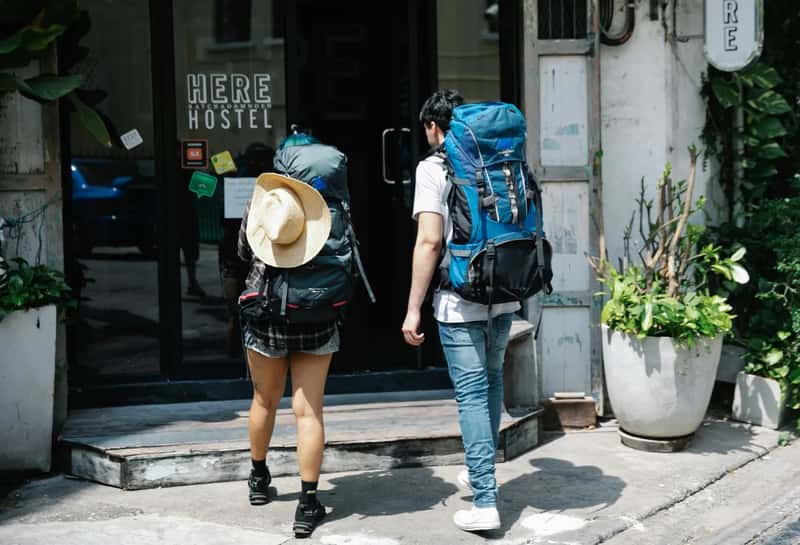
The hostel, for all its chaos and communal bathrooms and borrowed phone chargers, is where that version finally gets to show up.
1. The Stolen Adolescence
Here is the first truth, and it lands like a cold tile floor at 6 AM.
Parentified children are often required to place their own needs aside in an attempt to care for a parent, and are usually unable to engage in the usual tasks of childhood – including play, education, and building peer relationships.
That last one. Read it again.
Building peer relationships.
While your classmates were fumbling through the beautiful, low-stakes rituals of teenage belonging – the group chats, the lunch tables, the complete and utter social uselessness of a Friday night – you were managing a household. You were translating adult anxiety into something survivable. You were the emotional infrastructure of a family that had quietly outsourced its stability to you.
Some parentified youth discussed how greater maturity and independence relative to peers prepared them for a transition to adulthood, but these positive attributions were often accompanied by negative attitudes about forfeited childhoods and compromised adult outcomes.
The hostel, decades later, is not a quirky travel choice. It is a delayed arrival.
2. The Parentification Wound
Let’s name the wound precisely, because vague wounds stay infected.
Parentification is when a child is forced to take on the role of a supportive adult within their family – required, for example, to take care of younger siblings or referee parents’ arguments. These developmentally inappropriate situations arise when parents cannot fully care for themselves.
Inappropriate. That word does a lot of quiet work.
It means the role didn’t fit. It means you wore a coat that was three sizes too large, and you wore it so long that your shoulders curved to hold it. You got good at it. You got praised for it.
Adult children of parentification may seek validation from others excessively, as they were often praised for being caretakers in childhood – the way they got praise and attention depended on how well they were “helping” and being “good.”
The hostel is the first room where nobody needs you to be good. Nobody needs you at all. And something in you, something old and quietly starving, finds that devastating and magnificent at the same time.
3. The Missed Developmental Window
Erikson mapped this. He mapped it decades ago, and the map still holds.
Within Erikson’s framework, identity development is positioned as the central task of adolescence, laying the foundation for healthy adult functioning.
The mechanism is peer friction. Not conflict – friction. The slow, generative rub of being around other people who are also unsure, also constructing themselves, also trying on versions of who they might become.
Social acceptance and belonging – feeling accepted and fitting in with peers – can significantly affect an adolescent’s self-esteem and sense of identity. They are more likely to develop a strong, positive identity if they feel accepted and valued. Feeling excluded or marginalized may lead to role confusion and a struggle with identity formation.
The parentified child skips this entirely. They are not marginalized by peers. They are simply absent from the arena. The friction never happens. The identity never fully fires.
And so at thirty-four, at thirty-eight, at forty-one, they book a bunk bed in a city with a name they can barely pronounce. And the friction begins.
4. The Identity That Never Got to Negotiate
The hostel dorm is a strange and specific environment. It is not comfortable. That is entirely the point.
Backpackers engage in collaborative storytelling and social interaction within hostels, allowing them to reinforce and negotiate their identities. But the key word is negotiate. The identity is not fixed. It is not yet declared. It is, for a few nights, genuinely open.
You are not the competent one. You are not the responsible one.
You are not the person who called the landlord and sorted the insurance and remembered everybody’s birthday because somebody had to.
You are whoever you say you are at dinner on a Tuesday in a city that doesn’t know your name. The parentified adult has almost never experienced this. The relief of it is physical. It sits behind the sternum. It feels, faintly, like grief – because it arrives so late.
Parentification affects the individuation process required in a child developing a sense of self. The hostel, absurdly, picks that process back up.
5. The Communal Kitchen as Therapy Room
I need to tell you about a kitchen in Lisbon.
I was thirty-six. I had the private room option on the screen. I booked the dorm. Not because of money – because of something I couldn’t yet name. I sat at a communal table with a Norwegian graphic designer, a retired schoolteacher from New Zealand, and a twenty-three-year-old from São Paulo who laughed at everything. Nobody asked me what I did for work. Nobody needed me to solve anything. For four hours, I was just a person at a table.
I cried in the bathroom afterward. Not from sadness exactly. From the specific ache of receiving something you didn’t know you’d been waiting for.
This is the communal kitchen’s secret function. Designing places that facilitate community, a sense of we-ness, and belonging is crucial – and the hostel dorm is, almost accidentally, one of the most effective belonging-generating environments ever designed.
For the parentified adult, group support – hearing “me too” from others who understand – can be incredibly validating. The hostel delivers that validation without a co-pay.
6. The Hyper-Competence Trap
Here is the paradox that lives at the center of this.
The parentified adult is, by nearly every external metric, formidably capable. They are organized. They are empathetic to a fault. They are the first person called in a crisis and the last to ask for help in their own.
You might be skilled at solving problems and reading a room – but you might also struggle to ask for help, rest without guilt, or trust that someone else will show up for you.
This is the trap. The competence becomes a cage. The world keeps rewarding you for it, which means the world keeps demanding more of it, which means there is never a moment where you get to be simply adequate. Simply present. Simply someone who didn’t fix anything today and is fine.
The hostel strips that competence away. The Wi-Fi is unreliable. The locker key is stiff. Nobody is looking to you for answers. You are, for the first time in a very long time, allowed to be uncertain. Counterintuitively, placing yourself in uncertain situations ultimately builds greater confidence – travel increases our tolerance for uncertainty and enhances our psychological flexibility, contributing to a stronger sense of self.
7. The Peer Validation Hunger
Let’s be precise about what peer validation actually is, because it gets flattened into something shallow when it deserves to be taken seriously.
Peer validation is not applause. It is not flattery. It is the quiet, metabolic confirmation that you exist in the eyes of people your own size – people who owe you nothing, who have no history with you, who see you and choose to keep looking.
Parentified children learn to discount their own needs in pursuit of caring for their parent and often carry distorted scripts about the importance of being “unselfish.” Missed age-appropriate milestones – such as the formation of close peer groups – can lead to a lack of opportunity to build soft skills and can result in difficulties managing these relationships in adulthood.
The hunger that drives adults into hostel dorms isn’t nostalgia for youth. They never had the youth to be nostalgic about. It is hunger for the first experience of something that was supposed to happen at seventeen and simply didn’t.
These connections provided validation and a sense of belonging that supported the integration of new identity components and the travelers’ transformation. The bunk bed is just the delivery mechanism.
8. The Exit Strategy That Isn’t an Exit
People will tell you the hostel is escapism. They will say it with pity or envy, sometimes both in the same sentence.
They are wrong about the direction of travel.
International travelers often experience something far beyond the acquisition of new subject matter or cultural awareness – they undergo a personal paradigm shift. The person in the hostel dorm is not running away from themselves. They are running toward a self they buried for survival.
The parentified adult didn’t bury that self out of cowardice. They buried it out of necessity. The family system required a functioning adult, and they became one. Efficiently. Completely. At extraordinary personal cost.
When you cook dinner and calm a parent’s panic in the same evening, you learn that survival depends on performance. That learning can show up in adulthood as constant doing.
The hostel is the first place the doing stops. The exit is not away from life. The exit is a door. What’s on the other side is finally, quietly, themselves.
9. The Neurological Permission Slip
The brain is not passive in this process. It is, in fact, the point.
The brain thrives on exploration. When we step into unfamiliar territory, something remarkable happens – a profound neural awakening. Your brain loves novelty, and travel delivers it in abundance. Neuroplasticity – the brain’s ability to form new neural connections – flourishes during travel experiences.
For the parentified adult, whose early neural wiring was laid down under chronic stress and premature responsibility, novelty is not just pleasant. It is corrective. Parentified youth are expected to prematurely assume adult-like responsibilities during developmental stages marked by immature brain development – and brain development is negatively impacted by early and chronic stressors such as parentification.
The hostel, with its low-stakes chaos, its parade of strangers, its unstructured evenings – it is not a vacation. It is neurological rehabilitation in disguise. The brain gets to rehearse connection without consequence. It gets to practice being young.
10. The Soft Architecture of Belonging
This is the heaviest point. The one that asks the most of you.
Some adults revisit adolescent-style identity exploration when making career changes in midlife. But for the parentified adult, the revisitation is not about career. It is about something more foundational than that. It is about belonging – the specific, irreplaceable experience of being held inside a group of peers without earning it, without managing it, without being responsible for its survival.
Failing to form a coherent identity “on time” does not permanently hinder development – rather, some individuals reach later psychosocial milestones more gradually. The hostel at thirty-two, at forty-five, at fifty-one – it is not delayed. It is precisely on time for the life it was actually lived.
Being part of a group can instill feelings of connection and unity, giving individuals the comforting sense that they’re not alone in their experiences or perspectives. The parentified child spent decades being alone in their experience while surrounded by people who depended on them. The hostel reverses the polarity. You are surrounded by people who need nothing from you. And in that strange, temporary, bunk-bed grace – you finally get to receive.
There is a version of adulthood that looks, from the outside, like it has everything figured out. The lease. The competence. The calm. But underneath the calm is a developmental debt – a long-deferred invoice from a childhood that spent its entire peer-formation budget on someone else’s survival. The body carries it quietly. The psyche carries it loudly. And sometimes, without fully knowing why, a person opens a booking app at midnight and chooses the dorm over the private room.
That choice is not random. It is not budget-driven. It is the psyche doing what psyches do when they are finally safe enough – reaching back for what was left behind, navigating toward the friction and the noise and the beautiful, obligationless warmth of strangers who chose you for no reason at all. Chose you not because you were useful. Not because you were responsible. But simply because you were there, in the same room, at the same improbable moment in the same improbable life.
The bunk bed creaks. The snoring resumes. And somewhere between the jet lag and the laughter bleeding through the wall, you feel – perhaps for the first time in a very long time – like you are exactly the right age.