The notification comes in at 2 am.
You are not asleep.
You are scrolling through images of fog-wrapped Scottish highlands and rain-soaked castle courtyards, and something in your chest is loosening.
This is not wanderlust. This is something older. Something that knows the difference between a place and a feeling – and has decided that the modern world is running out of the latter.
The Identity Gap is not complicated to diagnose. It is the distance between who you perform yourself to be – optimized, responsive, perpetually online – and the person who still aches for something with stone walls and dark forest paths and silence that does not need to be filled. Every person, regardless of their job, social standing, appearance, race, or nationality, now carries an online, public persona entirely separate from who they really are. The gap between those two people is where the anxiety lives. And it is widening by the year.
1. The Permission Slip
Nobody asked for your suffering to be documented.
Nobody needed the data to confirm it.
But here it is anyway: more than seven in ten global travelers say they would potentially be interested in visiting a destination inspired by “romantasy” – enchanted castles, mystical forests, medieval banquets, and masquerade balls setting the stage for otherworldly retreats. That is not a niche preference. That is a majority verdict.
The verdict reads: the clinical world is not enough.
Psychology has a framework for this. One significant factor driving modern escapism is the rise in stress and mental health concerns. The pressures of work, financial insecurity, and social expectations have left many feeling overwhelmed, leading them to seek refuge in alternate experiences. The Romantasy travel trend is not a trend at all. It is a permission slip – signed by the exhausted, stamped by the desperate – to go somewhere that operates by different rules.
The castle does not need your productivity report.
2. The Narrative Hunger
A generation raised on algorithmic content is starving for story.
Not content. Not a feed. A story – with a beginning, a setting, a version of themselves they haven’t met yet.
The theory of narrative identity postulates that individuals form an identity by integrating their life experiences into an internalized, evolving story of the self that provides a sense of unity and purpose. This life narrative integrates one’s reconstructed past, perceived present, and imagined future. This is not soft philosophy. It is a psychological survival mechanism.
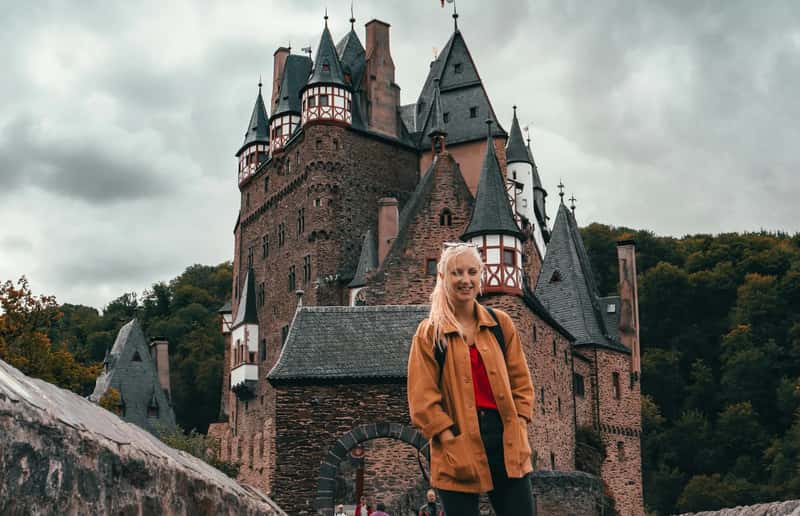
Romantasy travel feeds the narrative hunger directly. Inspired by the surge in “romantasy” literature and film, travelers are seeking immersive escapes set in mystical forests, castles, and storybook landscapes. They are not visiting places. They are entering chapters. They are casting themselves as protagonists in a story that the open-plan office and the group chat cannot provide.
The fog on the mountain is not atmosphere. It is plot.
3. The Awe Prescription
The modern world is surprisingly bad at producing awe.
Notifications produce anxiety. Metrics produce pressure. Glass buildings produce reflection – but not the revelatory kind.
Research from the University of California Berkeley tells a different story about what awe actually does. Experiences of awe have been proposed to be one of the pathways through which immersion in nature benefits mental and physical health. This thesis has been supported by recent scientific studies that found that awe in nature reduces rumination, reduces stress, and elevates well-being.
A misty forest produces awe.
An ancient castle – stone worn smooth by six centuries of human hands – produces awe.
In the experience of awe, there is the potential to induce positive effects characterized by increased social connectedness, heightened well-being, and greater life satisfaction. Awe can lead to delight, transcending oneself, and connecting with a broader human experience. The Romantasy traveler is not being frivolous. They are self-prescribing the one emotion modern life reliably fails to generate.
4. The Nervous System Knows
Your body is not confused about what it needs.
It has been trying to tell you for years.
Immersion in nature reorganizes the nervous system, evokes awe, and awakens something ancient within us. This is not metaphor. It is physiology. Research on shinrin-yoku – forest bathing – has consistently concluded that it reduces individuals’ heart rate and blood pressure, and increases relaxation levels.
The castle walk through damp morning air is not an Instagram opportunity first.
It is a recalibration. Nature environments engage what researchers call “soft fascination” – a gentle, restorative attention that allows the mind to recover from directed attention fatigue. This cognitive restoration is essential for individuals in mental health care and recovery. Nature provides space for processing emotions and developing healthy coping mechanisms without the overwhelming demands of urban areas.
The nervous system knows the difference between a forest and a fluorescent-lit corridor. The Romantasy traveler has simply started listening to it.
5. The Self You Left in the Story
I remember standing at the edge of a ruined medieval wall in central Europe, the kind of place that smells of cold stone and slow time, and feeling an acute and unfamiliar sensation: the sensation of being precisely the right size.
Not too much. Not too little.
Not performing.
Psychology has a name for this. In their efforts to find a meaningful identity for life, young men and women begin “to selectively reconstruct” their past and imagine their future to create an integrative life story – what psychologists today call a narrative identity. A narrative identity is an internalized and evolving story of the self that reconstructs the past and anticipates the future in such a way as to provide a person’s life with some degree of unity, meaning, and purpose over time.
That wall gave me a chapter I didn’t know I was missing.
Escapism in the form of personalized experiences gives this generation the freedom to explore their hobbies and interests. It gives them the power to shape their own realities and escape into worlds that fit with who they are as people. The Romantasy trip is not running away. It is running toward the self that got left in the story.
6. The Biophilia Debt
We owe the natural world a debt we have been ignoring at measurable psychological cost.
The term has a name. The practice of heading into the wilderness and leaving the trappings of modern-day living behind harkens to a concept called biophilia – a term coined by E.O. Wilson suggesting that humans have an evolutionary predisposition to connect with nature on a core level. The word is derived from Greek, meaning “life” and “love,” denoting a love of life and living organisms. This appreciation speaks to an aspect of mental health beyond diagnoses and pathology – a universal sense of meaning and connection that we all seek.
The misty forest is not decoration. It is a debt repayment.
The biophilia hypothesis argues that since our ancestors evolved in wild settings and relied on the environment for survival, we have an innate drive to connect with nature. The Romantasy traveler, standing at the treeline of an ancient wood, is not engaging in a trend. They are settling an ancient biological account – one that was opened long before smartphones, and one that collects psychological interest every year it goes unpaid.
7. The Slow Identity
Speed is a form of identity suppression.
Nobody finds out who they are between notifications.
In 2026, travelers are rejecting conventions and leaning into passions that feel distinctive and truly their own. Every trip becomes a bold expression of individuality and identity: this is who I am, this is what I want, and this is what I love. The Romantasy retreat is not merely a holiday. It is a deliberate deceleration – the act of choosing a world that moves at the pace of candlelight and cobblestone instead of 5G and quarterly reviews.
Psychology knows what slowness does to the self. Experiments have found that being exposed to natural environments improves working memory, cognitive flexibility, and attentional control, while exposure to urban environments is linked to attention deficits.
The castle asks nothing of your attention span. It simply stands there, older than your anxiety, outlasting every trend that ever tried to define you. And in that stillness, something underneath the performance begins to surface.
That is the slow identity. It was there the whole time.
8. The Community of the Misunderstood
Nobody travels to a fantasy-inspired destination alone, even when they go solo.
They travel into a shared language.
On TikTok, the BookTok community has helped propel romantasy titles into mainstream popularity, while creators increasingly point audiences toward lesser-known settings with dramatic interiors that their followers may not be aware of. This is not influencer culture for its own sake. This is the architecture of belonging – a community built around the shared acknowledgment that the real world is not quite enough, and that it is acceptable to say so.
As travelers, Gen Zers crave authenticity, escapism, safety, and memorability, and exhibit an awareness of social issues, the environment, and sustainability. The castle isn’t just a backdrop for a photograph. It is proof of a shared inner life. Evidence that the strangeness you feel inside – the mismatch between who you’re told to be and who you sense yourself to be – is not a personal failure. It is a generational condition. And others are walking the same fog-threaded path to find their way back.
9. The Autonomy Recovery
The modern world is extraordinarily good at removing autonomy while describing it as freedom.
You can work from anywhere. You are never not working.
You can be anyone online. You are never quite yourself.
With nearly seven out of ten adults feeling overwhelmed by changes taking place in the world, it is not surprising that physical well-being and mental health are being prioritized. Mental health has become an increasing priority for all ages, particularly the youngest generations. Over half of Gen Z indicate their own mental health is a source of stress, yet two-thirds are taking control by trying new mental health practices to cope with their fears.
The Romantasy trip restores autonomy in a way no productivity hack can replicate. 2026 is the year to travel your way – ditching the cookie-cutter itineraries and defining your personal style. While 2025 saw travelers throw the holiday rulebook out of the window, next year, it’s all about authentically embracing yourself through travel. Whether finding solitude through a new hobby or letting the stars guide your journey, it’s time to make your holidays truly unique. The forest has no algorithm. The castle turret has no comment section. For the first time in a long time, the decision of where to walk next belongs entirely to you.
10. The Survival That Looks Like Magic
This is the one that matters most.
Let’s call it what it is.
A generation navigating economic precarity, mental health crises, digital overexposure, and a world that has decided their feelings are a performance metric has developed a survival strategy that the clinical world keeps trying to dress up as escapism. The top motivators for Gen Z travelers are to relax, escape, or get away – but the data shows they are motivated to travel for adventure, mental health, and cultural experiences more than any older generation. They are not running from something. They are running toward the evidence that they are still capable of feeling wonder.
Guests are prioritizing calm, restorative environments away from crowded cities. The misty forest is not a fantasy. It is a field hospital. The castle is not a costume. It is a container – for grief that has nowhere to go, for identity that has been interrupted, for a version of the self that the modern world declared impractical and the nervous system refused to surrender.
The Romantasy traveler is not naive. They are precise. They have identified, with the accuracy of the chronically overwhelmed, exactly what their mind requires to survive.
And it turns out to require stone.
And moss.
And the sound of wind through a tree line that has been standing since before anyone thought to turn a human being into a personal brand.
There is something quietly devastating about a generation that has to travel to the medieval past to feel like a contemporary person. Something that deserves more than a trend report and a Booking.com statistic. Ultimately, we must ask ourselves: are we escaping reality because it’s unbearable, or because we’ve forgotten how to truly live in it? The Romantasy traveler is not answering that question. They are doing something wiser – they are stepping outside it entirely, into air cold enough to remind them that they have a body, past walls old enough to remind them that they have a history, into forests dense enough to remind them that they are allowed to be small.
The gap between who we pretend to be and who we are does not close in a therapist’s office or a productivity seminar or a carefully curated grid. It closes at the edge of something ancient. At the moment when the fog rolls in low across the valley and the only appropriate response is silence – not the silence of someone who has run out of things to say, but the silence of someone who has, for the first time in a long while, nothing left to perform.
The castle was there before you arrived. It will be there after you leave. And somewhere between the arrival and the departure – in a corridor of cold stone and pale light – something in you will have remembered its own name.