The gate closes at 6 AM.
You are already there at 4.
Coffee going cold. Terminal lights humming their flat, colorless hymn.
Everyone else looks impatient. You look relieved.
This is the tell. Not the passport stamps. Not the itinerary saved in three different apps. The tell is the relief – that specific, chest-loosening exhale that only happens when the geography of your real life starts to blur in the rearview mirror of a departures board.
Solo travel is often framed as an opportunity for liberation and self-discovery, but what receives far less attention is how solitude on the road can challenge long-held beliefs about identity – how unfamiliar cultural contexts create the psychological conditions for listening to an inner voice rather than external expectation.
That’s the clinical framing. But the lived experience is rawer than that. It’s the moment you realize you’ve been performing yourself for so long that you’ve forgotten what the original looked like.
1. The Temporary Identity
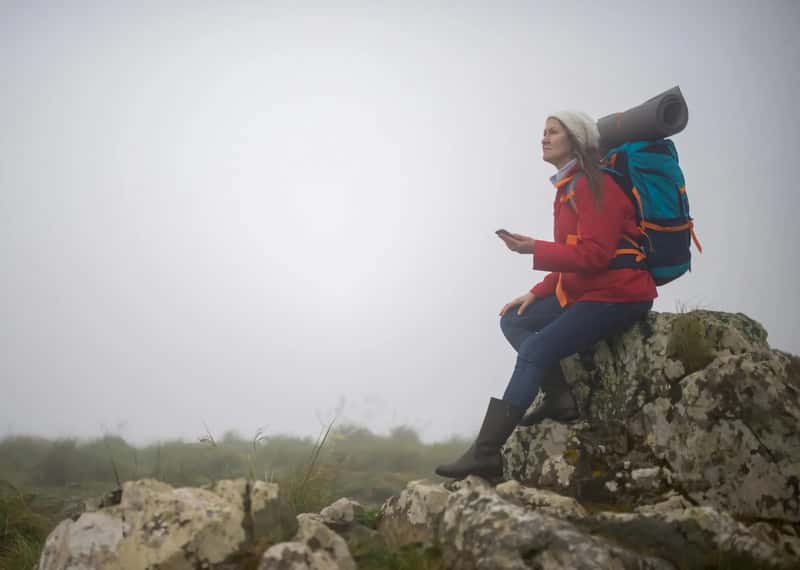
Research describes how travel provides a kind of “moratorium” – a temporary suspension of usual role expectations. Solo travel amplifies this effect by removing the immediate presence of people who know the traveler in their typical roles. This anonymity creates psychological freedom to explore different aspects of self without social consequences.
Think about what that means, really.
No one on that cobblestone street in Lisbon knows you as the responsible one. The difficult one. The one who always picks up the check or always needs to be managed.
You are, for a finite and precious window, nobody’s version of you.
Research documents how travelers often experiment with new behaviors, interests, and self-presentations while traveling alone – not out of deception, but out of the startling discovery that those behaviors were always theirs to begin with.
The temporary identity isn’t a fiction. It’s the draft that was never allowed to be published.
It arrives quietly. In the way you linger over a market stall. In the book you pick up that you’d never admit to wanting at home. In the hour you spend doing absolutely nothing, guilty about nothing.
That’s not a vacation personality. That’s you, decompressed.
2. The Social Mirror, Removed
We spend an almost criminal amount of energy managing how we appear to the people around us.
Psychologists call it impression management. The rest of us call it exhausting.
When traveling solo, travelers remove themselves from the continual negotiation that is often difficult with group dynamics. Travelers have control of the decisions and actions – what to eat, what to do, and when to have a break. Having this control removes perceived obligation and makes preferences resurface that might have become obscured by social obligation.
Remove the mirror and something strange happens.
You stop posturing. You stop performing the story of yourself. The small, accumulated deferences – to a partner’s restaurant preference, to a friend’s pace, to a colleague’s need to document everything for social media – they simply fall away.
With no regard for others’ potential thinking or expectations, travelers can really explore their own inclinations. Dislike of challenged social norms can also be a motivation for traveling – she might not want to start a day early, choose the bookstore over the busy museum, or want to spend a day without plans. Such unfiltered actions are a source of preference definition in the context of traveling.
The preferences that surface when no one is watching – those are not trivial. They are the architecture of the actual self.
3. The Autonomy Hunger
There is a specific kind of starvation that has no name in polite conversation.
It’s the hunger for self-directed choice. For a day where every single decision – the route, the pace, the meal, the silence – belongs entirely to you.
In Self-Determination Theory, autonomy refers to making self-directed and authentic decisions even when it differs from consensus. Most of modern life is a slow erosion of exactly that. Meetings that shape your mornings. Algorithms that shape your evenings. Relationships, beautiful as they are, that require the constant calibration of your wants against someone else’s.
Research expresses that ‘solo’ is characterised by selectivity, with many people choosing to travel alone to challenge themselves, demonstrate autonomy, and enjoy the freedom that comes with independent travel. In other words, in comparison to ‘alone,’ ‘solo’ is more of an active choice driven by a desire for autonomy and self-exploration.
The serial solo traveler isn’t running from connection. They are running toward competency.
Toward the lived proof that they can navigate the unfamiliar. Alone. Without asking permission.
The confidence gained from solo exploration is cumulative and self-reinforcing. Each small decision – from choosing a restaurant to asking for directions – results in a measurable outcome for which you are solely responsible. This clear cause-and-effect loop is incredibly empowering.
Autonomy hunger is real. Solo travel is, for many, the only place it gets fully fed.
4. The Identity Moratorium
Solo travel provides fertile ground for self-discovery, aligning closely with Erik Erikson’s psychosocial development theory. When you venture out alone, you’re thrust into an environment that challenges your sense of self and encourages introspection. This process of self-exploration often leads to a deeper understanding of personal values, beliefs, and aspirations.
Erikson’s concept of the moratorium – a deliberate pause in identity commitment – was originally applied to adolescence.
But psychology has been slow to admit that identity doesn’t stop shifting at twenty-two.
It shifts at thirty-four when your career turns hollow. At forty-one when a relationship ends. At fifty when the children leave and the house goes quiet and you sit with the very unsettling question of who, exactly, you’ve been building all of this for.
Research demonstrates that separation from familiar roles and extended self-reflection facilitates identity exploration and clarification. The solo traveler, whether consciously or not, is engineering a moratorium.
They are buying time – in the most literal, geographic sense – to try on a version of themselves that their ordinary life doesn’t have the square footage to accommodate.
5. The First Person I Recognized
I want to stop here.
Because theory without texture is just noise.
The first time I traveled alone – truly alone, not the performative kind where you text your location every two hours and curate the whole thing for an audience – I was in a city where I knew no one and no one knew me. And somewhere on the third day, eating lunch at a counter with a book I hadn’t been able to justify reading at home, I had a thought so quiet it almost didn’t register.
Oh. There you are.
Not enlightenment. Not revelation. Just recognition.
Somewhere between cities, one can meet the version of oneself that had always existed beneath the layers of responsibility, self-imposed pressure, and quiet standards carried for years. She wasn’t hidden by other people’s expectations. She was hidden by her own. Solo travel gave her space to breathe.
That recognition – quiet, private, unremarkable to anyone passing by – is the whole point. It doesn’t make the news. It doesn’t make the Instagram grid. It just makes you, finally, legible to yourself.
6. The Post-Travel Depression Nobody Talks About
You know the feeling.
The flight lands. The carousel delivers your bag. The taxi moves through familiar streets. And something – not sadness exactly, but its cousin – settles into the sternum.
Psychology has a name for this. It isn’t homesickness in reverse. It’s something more specific and more tender.
Some people have described this feeling as “post-travel depression,” where you miss not a place, but a person you became while traveling.
Read that again slowly. Not a place. A person.
When you return to a structured life with exceptionally predictable surroundings and limited choices, an old sense of predictability may seem suffocating.
The grief isn’t about the trip ending. It’s about the self – unburdened, curious, unhurried – being asked to fold back into a shape that no longer quite fits.
You might have new and different personal boundaries, a strong sense of self, as well as a clearer idea of what you want from life. But your living room doesn’t know that yet. Your inbox doesn’t know that yet. Your relationships, warm and real as they are, haven’t received the update.
The depression isn’t a malfunction. It’s information. It’s the self protesting its own compression.
7. The Solitude Recalibration
Most people are afraid of silence.
They fill it with podcasts, notifications, plans, the low-grade hum of other people’s presence. The serial solo traveler has a different relationship with quiet. They’ve sat inside it long enough to stop being afraid of what they might hear.
The solitude inherent in solo travel naturally creates space for self-reflection – a critical component of identity development. Without the constant social stimulation typical of group travel or daily life, solo travelers experience extended periods of introspection.
Without the distractions of familiar routines or the expectations of others, solo travelers often discover a deeper emotional clarity and mental resilience. The silence and solitude that accompany solo adventures create space for honest self-reflection, allowing you to process emotions, heal from past experiences, and cultivate a more mindful approach to life.
There is a recalibration that happens in sustained solitude. The internal noise – the self-criticism, the social comparisons, the rehearsed conversations – gradually loses its volume. What remains is quieter and more honest.
You learn the difference between loneliness and solitude, valuing quality of connection over quantity. That distinction, earned mile by mile, is one of the most psychologically sophisticated things a person can develop. And you cannot learn it in a crowd.
8. The Resilience Architecture
Nobody talks about the bad days on the road.
The missed connection. The hostile hostel. The hours spent in a strange city, sick, negotiating a pharmacist in a language you don’t speak. The moment you realize you booked the wrong date and you sit with the weight of a mistake that has no one else to absorb it.
These are not failures of the solo travel fantasy. These are the entire point.
Your brain registers each problem solved, building a reservoir of resilience. When challenges arise – lost luggage, language barriers, bad weather – you have no choice but to cope. Overcoming these hurdles alone proves your resilience to yourself in a way that group support cannot. This proven resilience becomes a psychological asset you carry forward, making future life stressors feel more manageable.
Every serial solo traveler has a story like this. A story about the day everything went wrong and they handled it.
That story rewires something deep. It becomes the internal evidence they return to in ordinary life when the stakes feel too high and the outcome too uncertain.
Solo travelers quickly learn to trust their instincts, solve problems independently, and adapt to the unexpected. This self-efficacy extends far beyond the journey itself, influencing all aspects of life.
9. The Authentic Social Connection Paradox
Here is the thing nobody tells you before the first solo trip.
You will talk to more strangers than you ever have in your life. And some of those strangers will see you – the real, unperformed you – more clearly than people who’ve known you for a decade.
Paradoxically, traveling alone often leads to richer, more authentic social interactions. Without the comfort of a travel buddy, you are more open to approaching locals or other travelers.
Meeting new people and interacting with them in any context, a traveler may assert their own uniqueness. Other, deeper assumptions and new perspectives may form from brief, yet powerful, interactions. Even the simplest of social situations – eating a meal, chatting in a hostel – may create deeper bonds that strip away the preconceptions seated deep inside.
When you travel with someone familiar, you navigate the world through the filter of that relationship. You see what you’ve always seen, slightly redecorated.
Alone, you arrive with no filter. No mediating personality between you and the moment. The stranger across the table gets the real one – unedited, unrehearsed, present.
That is an intimacy of its own kind. Brief, clean, and brutally honest. And it teaches the serial solo traveler what authentic connection actually requires: not history, not obligation – just presence.
10. The Person You Are When No One Is Watching
We arrive, finally, at the real question.
Not where you went. Not what you saw. Not the photograph on the cliff in the golden hour that got four hundred likes.
Who were you when no one was tracking it?
Solo travel is considered an act of resistance to and freedom from social-cultural and political limitations, as well as an activity that brings increased self-awareness and renewed social identity.
But beneath the academic framing lives something more primal. The serial solo traveler keeps returning not because the world keeps offering new destinations, but because the self keeps offering new disclosures.
The realization arrives gradually: the travel was never about escaping life, or even seeing the world. It was about meeting the parts of oneself that had never been given language.
Solo travel’s psychological value lies not in escaping life but in engaging more fully with it – confronting challenges, embracing uncertainty, connecting across differences, and discovering one’s capabilities and values.
The person you are when no one is watching is not a secret self or a hidden self. It is simply the self that exists before the performance begins. Before the role is assumed. Before the identity that other people need from you crowds out the identity that is actually yours.
The solo traveler goes looking for that person over and over again, not because they keep losing them – but because finding them, each time, feels like the most honest thing they’ve ever done.
There’s a particular kind of courage that doesn’t announce itself. It doesn’t summit mountains or cross deserts. It books a single ticket, sits alone at a gate at 4 AM, and chooses – quietly, deliberately, without witnesses – to spend a week being nobody’s version of itself. The world calls this wanderlust. Psychology calls it identity work. But the traveler, sitting with their cold coffee and their departures board, doesn’t have a name for it at all. They just know it’s necessary.
What the serial solo traveler carries home is not a collection of photographs or a list of coordinates visited. It is something far more portable and far more difficult to explain at dinner parties. It is the knowledge – embodied, not just believed – that they are capable of existing fully without an audience. That their preferences are real. That their voice, unhushed by the constant social negotiation of ordinary life, says things worth listening to. That who they are in the absence of performance is not a lesser version, but the truest available one.
The next time you see someone alone at a restaurant, eating slowly, watching the street with the quiet attention of someone who has learned to be their own best company – don’t assume they couldn’t find anyone to go with. Assume, instead, that they found someone far more interesting: the person they are when no one is watching, and they liked what they saw.