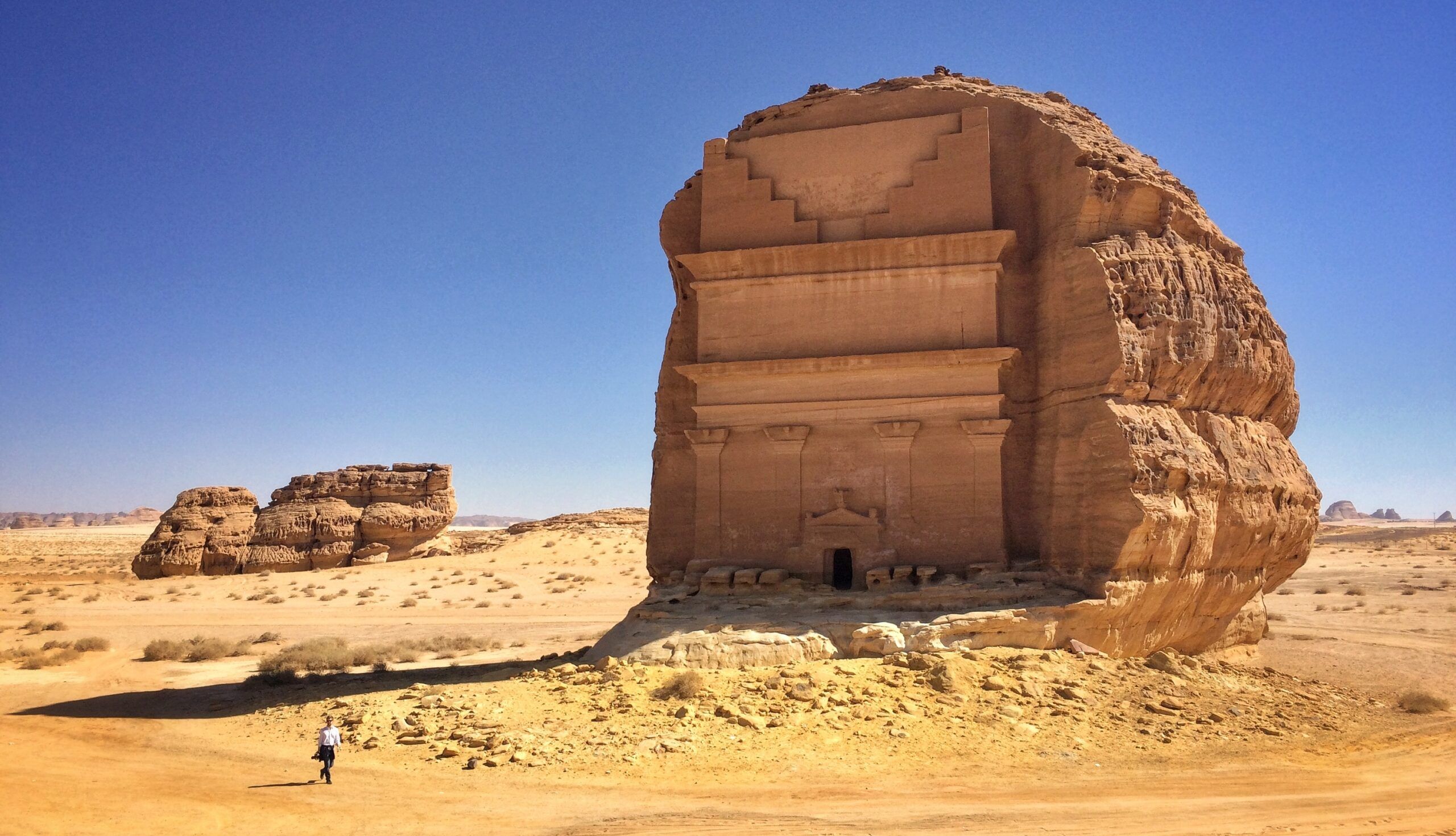
Walk across the flat desert floor at Hegra and one monument pulls your eye before any other. It isn’t hidden in a cliff face or tucked into a canyon. It sits by itself on an outcrop of sandstone, and it looks more like a building that was set down there than something cut out of the ground.
That’s Qasr al-Farid, the most photographed tomb in northwest Saudi Arabia. This gallery walks through it one frame at a time: what it is, how it was made, and why the parts that were left unfinished matter as much as the parts that were completed.
A Tomb That Stands Apart
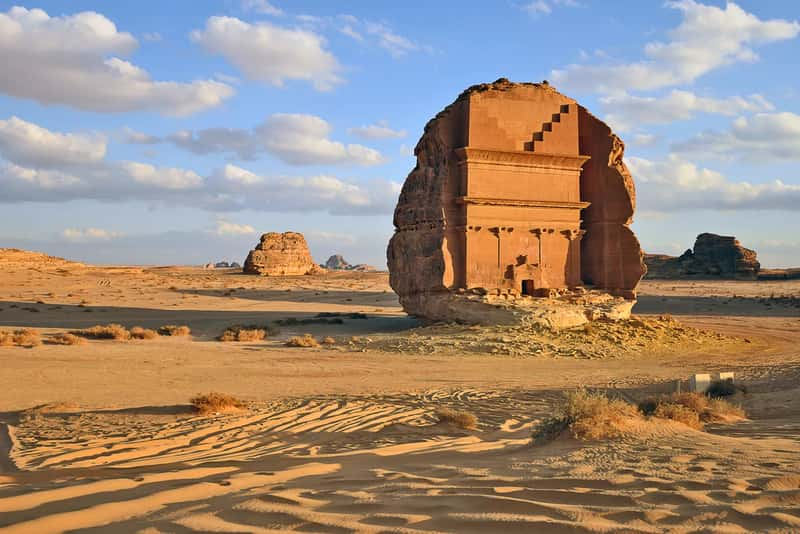
Qasr al-Farid lies in Hegra, also known as Mada’in Salih or Al-Hijr, in the AlUla region of Saudi Arabia. It is a Nabatean tomb carved into one huge rock, isolated from the rest of the tombs in the southeastern part of the site.[1] Most of Hegra’s facades are cut into continuous cliff faces or clustered along ridges, so this one reads as an exception.
Google Arts & Culture, drawing on UNESCO’s material, describes it as a single tomb that takes up a significant share of the volume of the isolated outcrop it’s carved into.[2] In other words, the rock and the monument are nearly the same thing. That is a big part of why it feels so singular from a distance.
What the Name Actually Means
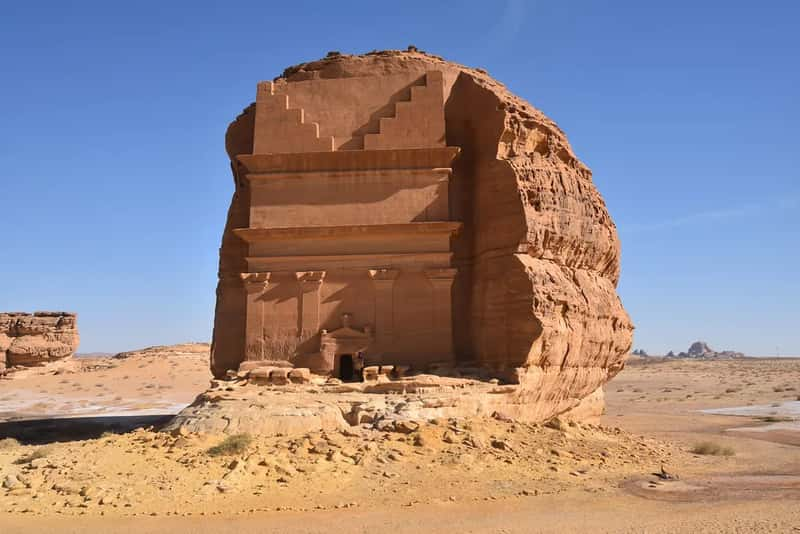
Qasr al-Farid is usually translated as the Lonely Castle. The Arabic name means the Lonely Castle, and the tomb was named that because it is completely isolated from the other tombs in the area.[3] Other sources translate the same word as unique or alone, and all of those readings fit.
The word castle is a bit misleading, since this was never a fortress or a palace. It’s a tomb whose grand facade invited a later nickname. The name also tells you something about how locals and later visitors experienced the place, as a lone shape on a wide plain.
Four Pilasters Where Two Were Standard
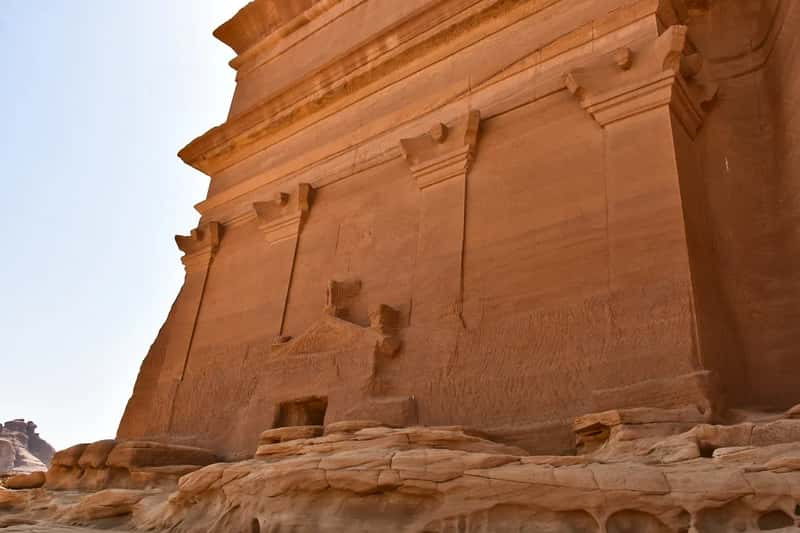
Look closely at the facade and you’ll notice a detail that sets it apart from its neighbors. The tomb features architectural elements not seen elsewhere at the site, including four pilasters on the facade instead of the usual two.[2] Pilasters are flat column shapes carved into the wall, not freestanding columns.
Arab News makes a related point, noting that the facade carries four columns topped by a single Nabataean crown instead of two.[5] The crow step crown at the top is one of the signature features of Nabatean tomb design. Seeing it on a monument that otherwise breaks the pattern makes the exception easier to read.
Carved From the Top Down
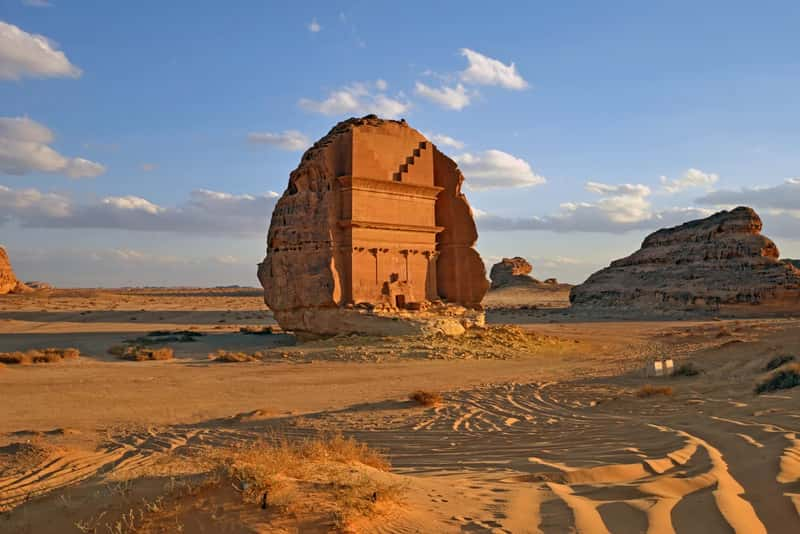
The unfinished state is where the tomb becomes a kind of open textbook. Google Arts & Culture says it is unfinished, with about a third left to be carved based on the depth of the entrance that was started.[2] The finished upper portion and the rough lower portion sit in the same frame.
That contrast shows the order of work. The Saudi Archaeology site notes that the heavily chiseled surface of the lower third documents how the tombs were fashioned from the top down.[6] Carvers worked from the summit toward the ground, which meant no scaffolding was needed to reach the highest parts later.
A Tomb That Was Never Used
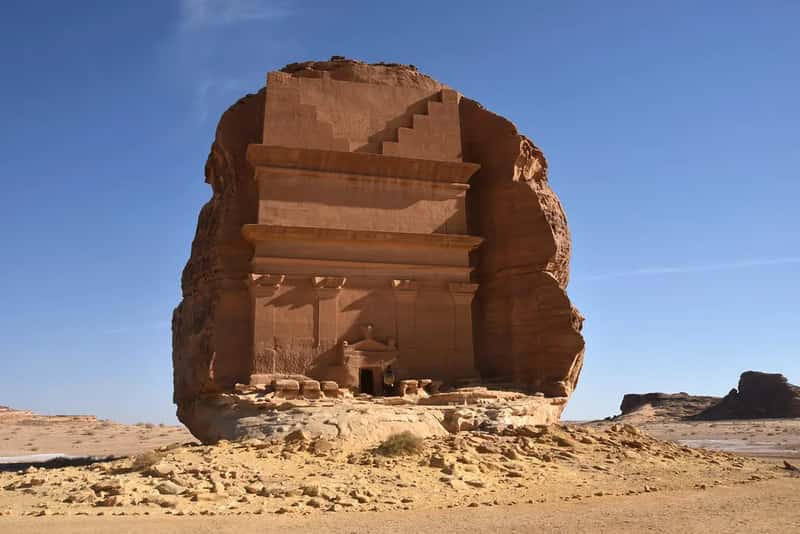
Many visitors assume a monument this grand must hold burials. According to Arab News, the tomb was never completed or used, and there are no traces of burial sites within it.[5] The interior was apparently never advanced far enough to receive anyone.
Why work stopped isn’t something the sources I reviewed settle, so it’s best left open. Possible reasons include the death of the patron, a change in circumstances, or something else entirely. What can be said is that the chisel marks stop partway, and the tomb stayed empty.
The Inscription and a Reading Puzzle
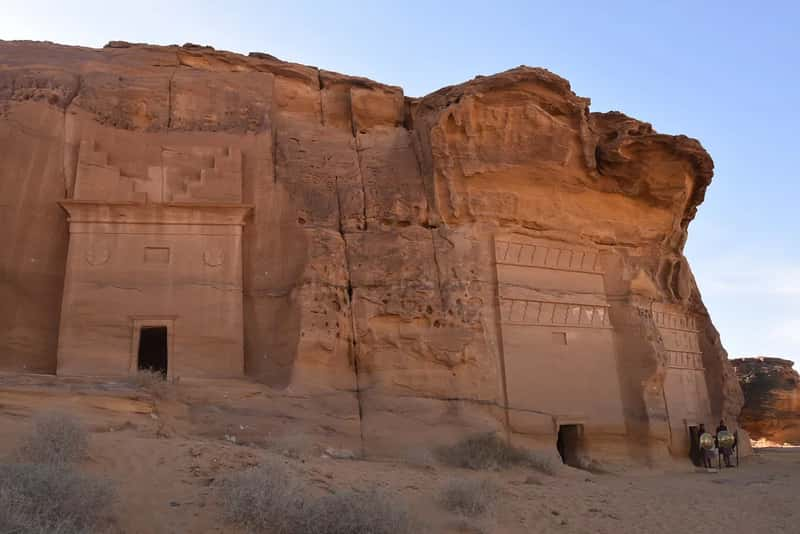
Above the doorway is a Nabatean inscription that names the tomb’s owner. Google Arts & Culture notes that it has been translated both as Lihyan son of Kuzza took it, and as For Hayyan son of Kuzza and his descendants.[2] The difference comes down to ambiguity over a single letter.
The same entry points out that the inscription above the door bears no date and follows a different formula from other known legal inscriptions.[2] That’s one reason the monument is hard to pin down. A few popular sites give other names and a specific regnal date, but I’d treat those with caution, since the UNESCO linked description is more careful about what the text does and doesn’t say.
Dating the Lonely Castle
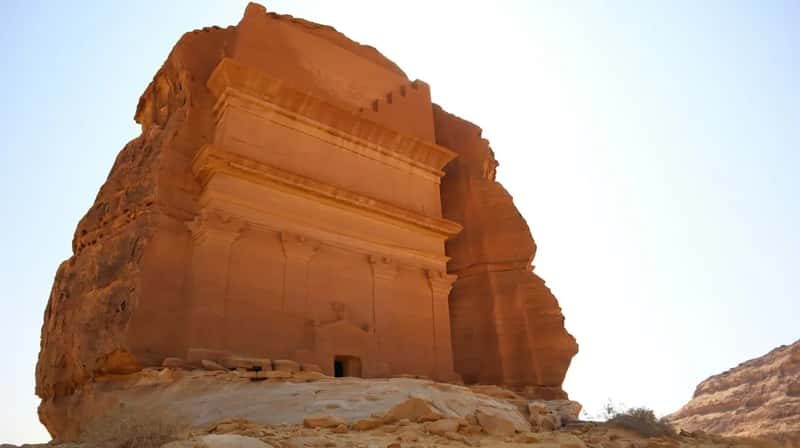
With no date on the inscription, scholars and guides rely on the broader context of Hegra. World History Encyclopedia describes the tomb as a first century CE Nabatean unfinished tomb carved into a single huge rock.[1] The Madain Project likewise says it is believed to date from the first century CE.[3]
That fits the wider picture of the city. Hegra, one tour operator notes, flourished from the first century B.C. to the first century A.D., when it was annexed by the Roman Empire.[7] So the tomb belongs to the late stretch of Nabatean prosperity, though a tighter date isn’t firmly established.
Hegra and the Nabatean World
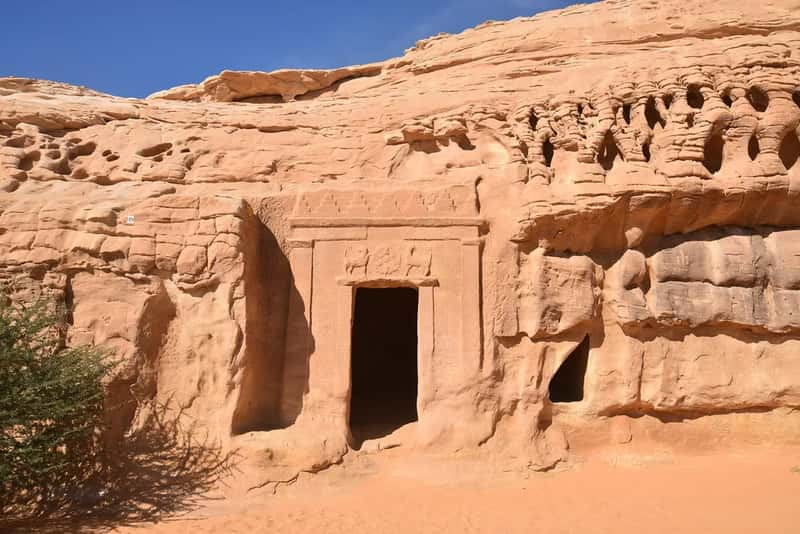
Qasr al-Farid makes more sense once you know what surrounded it. The Visit Saudi tourism site describes Hegra as a meeting point for trading caravans along the Incense Route, which connected the southern Arabian Peninsula with Greece, Rome, North Africa, and Asia.[8] Wealth from that trade helps explain why families could commission tombs on this scale.
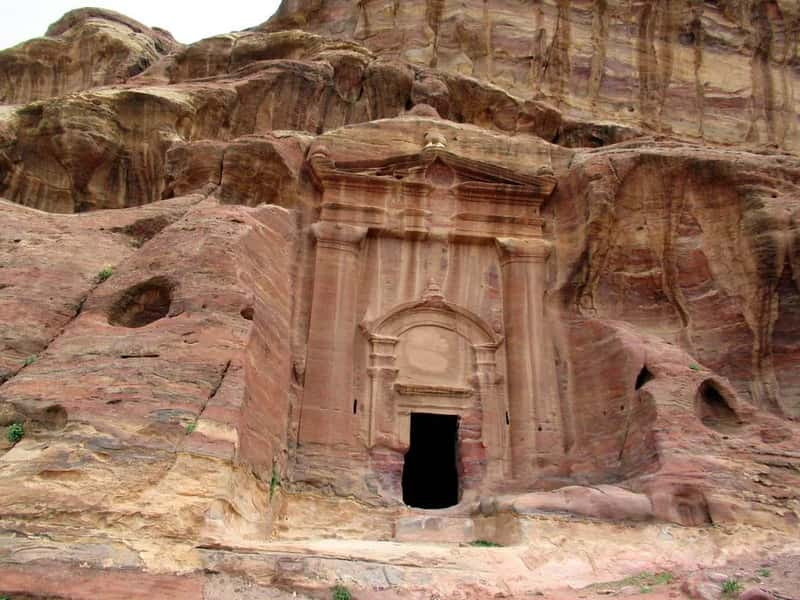
The site is often called Saudi Arabia’s Petra, though it feels different. Google Arts & Culture observes that while Petra is marked by close, deep red cliffs, Hegra is instead marked by the distance between its tombs and the landscape views across the site.[9] That openness is exactly what gives a freestanding tomb like this one room to dominate.
World Heritage Status and Ongoing Research
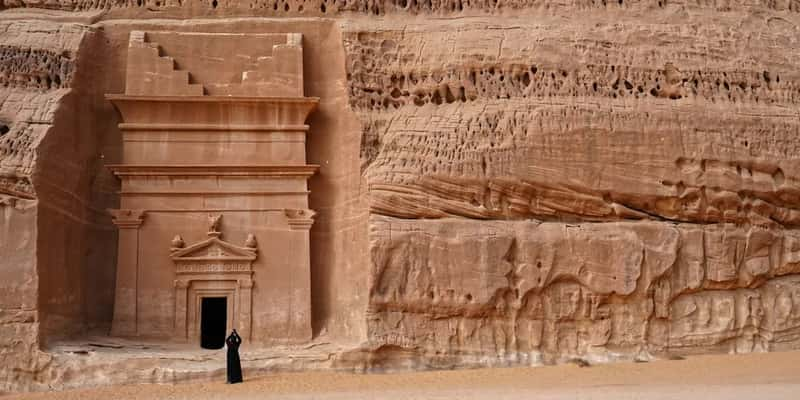
Hegra was inscribed on the UNESCO World Heritage List in 2008, and it was the first World Heritage property inscribed in Saudi Arabia.[5] The inscription was made under criteria two and three, according to the Google Arts & Culture record. The site contains more than 110 monumental tombs, most with decorated facades.
Research hasn’t stopped. A House of Saud guide says the Kingdoms Institute, established in 2021 within the Royal Commission for AlUla, continues archaeological research across the region.[10] The same guide notes that drones and professional filming gear need special authorisation, so check current rules and opening hours with official AlUla channels before you plan a trip.
Final Thoughts
Qasr al-Farid is memorable for two reasons that pull in opposite directions. It’s grand enough to be seen from across the site, yet it’s incomplete enough to show the carvers’ method plainly. Most finished tombs hide their process, and this one leaves it exposed.
There are still open questions about who it was for and why the work stopped. Those gaps are part of its pull. A lone tomb, half polished and half rough, tells you about ambition and about its limits.