You’d think checking into a hotel is the easy part: swipe the key, drop the bag, flop on the bed. Seasoned travelers do almost the opposite, and those first ten minutes in the room are where they quietly win the whole trip.
Their habits look a little strange from the outside, but each one guards against something specific, from bed bugs to a surprise charge at checkout. Most guests only learn them after something goes wrong, and the last one on this list could save you the most.
Let’s start with what they do before they even turn on the lights.
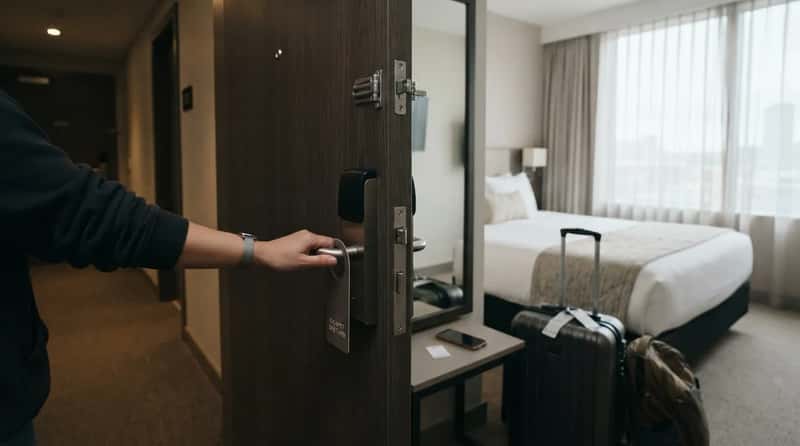
#15 – They Test the Locks Before They Do Anything Else
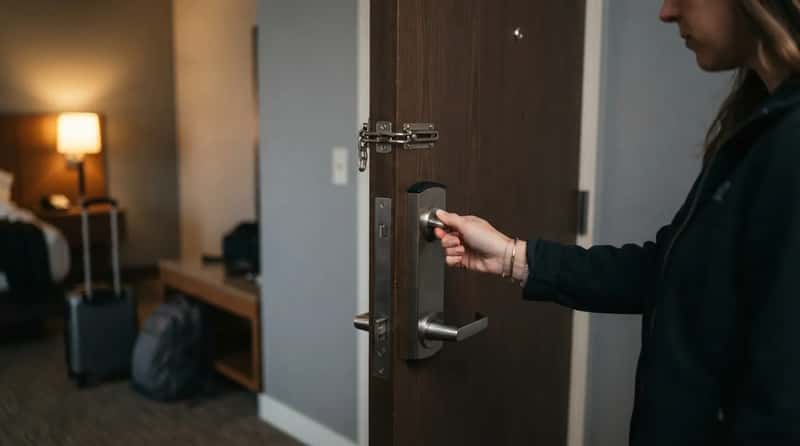
The door clicks shut behind them, and before the lights are fully on, experienced travelers are already testing the locks. Deadbolt, chain, and peephole all get checked first.
Hotel doors see thousands of guests, so a loose or jammed deadbolt is a red flag they never ignore. If a lock feels flimsy, plenty of them call the front desk on the spot.
They also make sure the deadbolt is actually thrown, because a door can look locked while just resting on the latch. That difference matters a lot at 2 a.m.
But locks are only one layer of protection. The next check is something most guests walk right past.
#14 – They Photograph Every Piece of Pre-Existing Damage
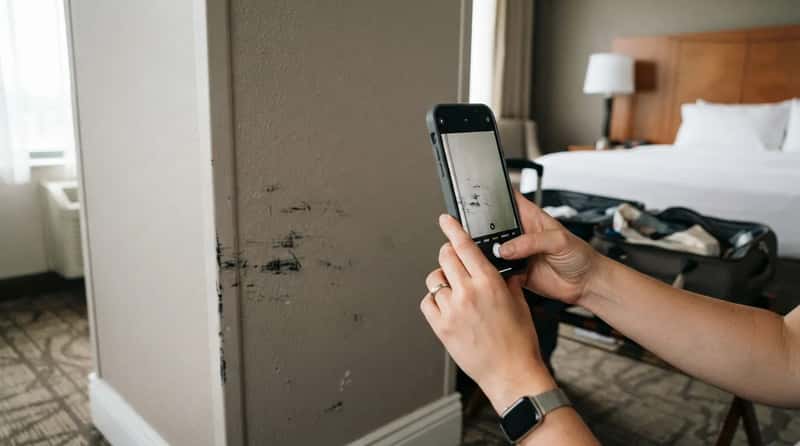
Scuffed walls, a stained carpet, a hairline crack in the mirror: experienced travelers photograph all of it before they unpack a single sock. It looks like overkill until a charge shows up that isn’t theirs.
Hotels do sometimes bill guests for damage that was already there, especially when housekeeping is rushed between checkouts. Without proof, it’s your word against the hotel’s.
A timestamped photo from check-in becomes instant evidence the moment a disputed charge lands on your bill. The whole thing takes under two minutes and costs nothing.
Most first-timers assume only obvious damage gets charged. Experienced travelers know that even minor marks can turn into line items.
With the room on record, they move on to a check most people would never think of. It has nothing to do with cleanliness.
#13 – They Confirm the Room Actually Matches the Reservation
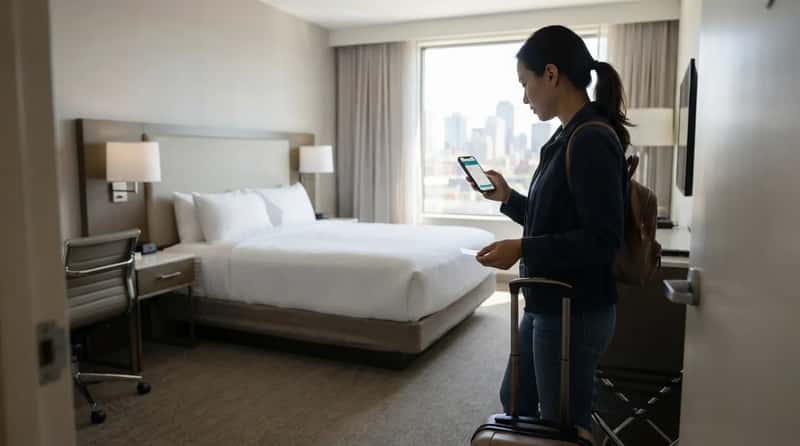
Room mix-ups happen more often than any hotel wants to admit, and self-service check-in can make them easier to miss. When an app or kiosk hands you a key, no human has glanced at whether the room fits your booking.
Experienced guests scan the room right away and confirm the bed type, view, and floor match the reservation. They do it before touching their luggage.
Catching a mismatch yourself is far easier than untangling it later. While your bags are still by the door, the front desk usually has more options to fix it.
The next habit looks like paranoia from the outside. It’s actually just smart logistics.
#12 – They Walk the Emergency Exit Route Before Unpacking
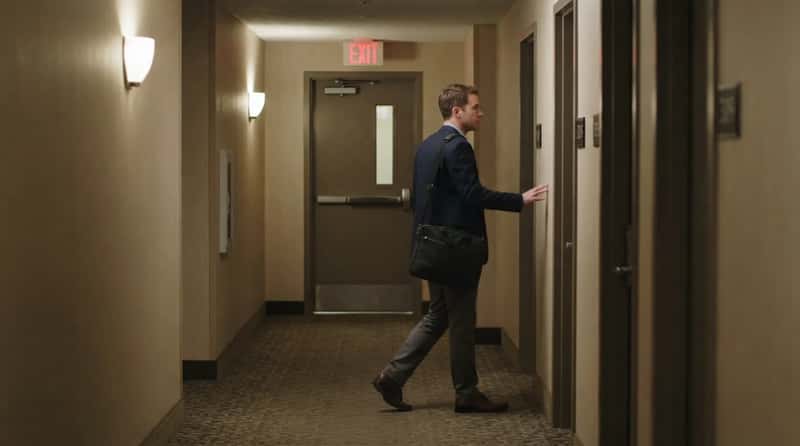
Frequent business travelers do something on the way back from dropping their bags that looks a little intense: they walk the route to the fire exit.
They count the doors between their room and the nearest stairwell. In a smoky hallway, you can’t count on seeing the exit sign.
Fast Facts
- The U.S. Fire Administration advises finding the two closest exits from your room and counting the doors to each.
- The National Fire Protection Association says to check that the exits are unlocked and report any that aren’t.
- Ask the front desk at check-in what the fire alarm sounds like.
- Keep your room key by the bed, and use the stairs, never the elevator, during a fire.
The room sweep comes later. The exit walk comes first, while the layout is still fresh in their heads.
The point isn’t fear, it’s muscle memory. Knowing you’re six doors from the stairwell is information you can act on without thinking, and it takes only a minute or two to learn.
Safety handled, they turn to the room itself. First comes a sweep that doubles as a hygiene check and a lost-property hunt.
#11 – They Open Every Drawer and Closet Before Unpacking
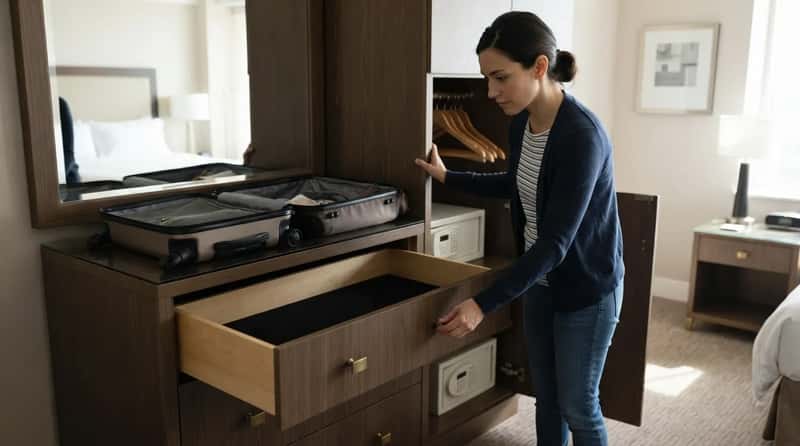
It looks like idle curiosity. It’s actually a quick inspection they run on autopilot.
They open every drawer and closet before unpacking, partly out of curiosity and partly out of caution. Chargers, jewelry, and other forgotten items sometimes turn up in hotel rooms long after the last guest has left.
The sweep also shows whether the room was properly cleaned. Someone else’s sock or a pile of used hangers is worth reporting right away.
It’s also the fastest way to find the safe, the extra pillows, and the iron before you need them at 11 p.m. First-timers skip it and spend the whole trip discovering the room piece by piece.
Finding what’s in the drawers is one thing. What’s sitting on the surfaces is more personal.
#10 – They Wipe Down the High-Touch Surfaces Immediately
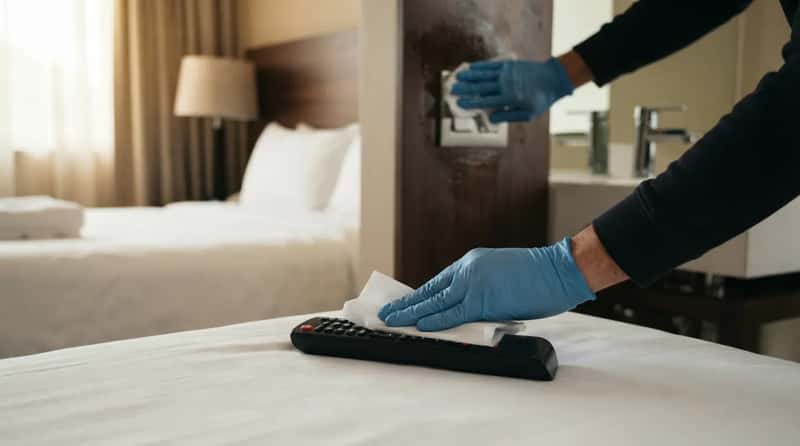
The remote, the light switches, the bathroom faucet handles: guests touch these constantly, and a rushed cleaning can easily skip them.
Remotes and switches show up again and again on lists of the grubbiest spots in a hotel room, for a simple reason. Everyone touches them, and few get scrubbed between guests.
Housekeepers work under tight turnaround times, and cleaning tends to focus on what guests notice first. Think crisp sheets, a made bed, and a polished mirror.
So experienced travelers pull out disinfecting wipes and hit the remote, the switches, and the bathroom counter. It takes under a minute.
Surfaces done, they turn to one hotel item almost every guest handles without a second thought. Most of them shouldn’t.
#9 – They Never Drink From the In-Room Glasses Without Rinsing Them

The glasses sitting polished on the bathroom counter look spotless. Experienced travelers don’t take that at face value.
Glassware and the coffee maker may not be washed as thoroughly or as often as you’d hope. Rinsing a glass with hot water first takes about ten seconds.
Glasses are easy to under-clean because they look clean even when they aren’t, and they get skipped in a fast turnover.
That’s why many seasoned travelers pack a reusable bottle and use the in-room glasses only after a rinse, or not at all. The lesson goes well beyond glassware: clean-looking and clean are not the same thing in a shared space.
That same skepticism about surfaces leads to something even more personal. Travelers who have learned this one the hard way never skip it.
#8 – They Check the Mattress Seams for Bed Bugs Before Touching the Bed
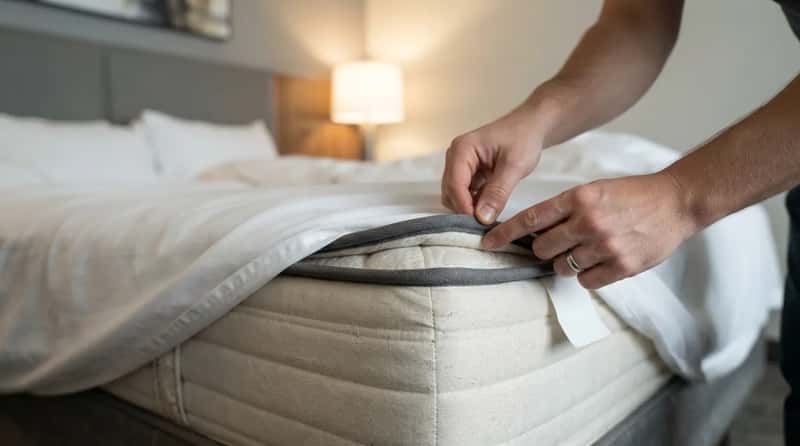
This is the habit most travelers know they should have and skip because it feels excessive. Experienced travelers don’t skip it.
They pull back the sheets and check the mattress seams, edges, piping, and tags. They’re looking for tiny dark spots, reddish-brown stains, shed skins, or the bugs themselves.
At a Glance
- Adult bed bugs are rusty red and about the size of an apple seed, roughly 1/4 to 3/8 inch, according to the EPA.
- Dark spots about the size of a pen dot can bleed on fabric like marker ink.
- Eggs and pale-yellow shed skins are only about 1 mm, so look closely.
- Prime hiding spots are the piping, seams, and tags of the mattress and box spring, plus the headboard.
Bed bugs can’t fly, and they don’t care whether it’s a budget motel or a five-star resort. They hitch rides from room to room on luggage, clothing, and bedding.
The check takes a few minutes, and it’s not how anyone wants to start a vacation. But it beats bringing home a problem that can take months and a lot of money to fix.
Once the bed checks out, they decide where the suitcase will live for the stay. It’s not where most people put it.
#7 – They Keep the Suitcase Off the Bed and Away From the Wall
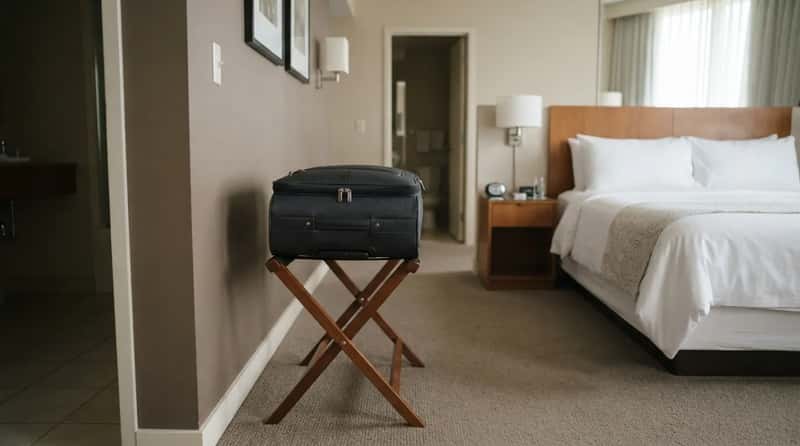
After a long flight, the instinct is to heave the suitcase onto the bed. Experienced travelers have trained that instinct right out of themselves.
They use the luggage rack and pull it a little away from the wall. That keeps the bag off the floor and away from the bedding.
It also makes it harder for insects to crawl from the wall into their belongings. They inspect the luggage again when they repack and once they get home, because bed bugs are great hitchhikers.
Until the room has been checked, many park the suitcase in the bathroom. Bed bugs are less likely to settle on hard, smooth surfaces like tile.
It all comes down to keeping the room organized so the stay stays clean and simple. That leads straight into the next habit.
#6 – They Keep All Toiletries Contained in a Single Bag
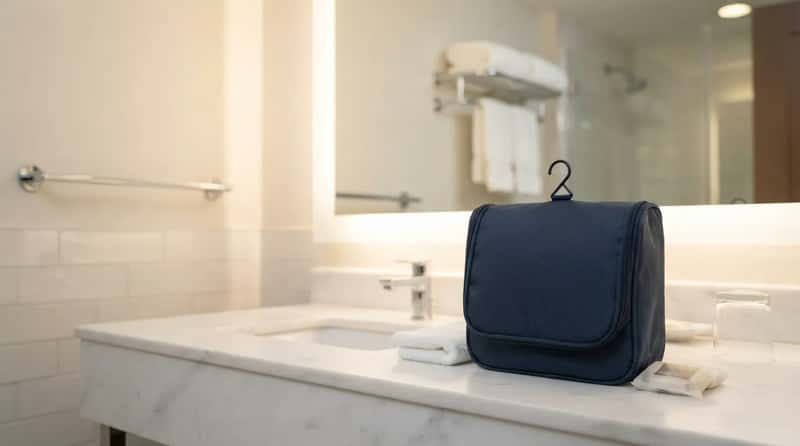
First-timers spread shampoo, toothpaste, and face wash across the bathroom counter. Experienced travelers never let their toiletries touch it.
They keep everything grouped in one toiletry bag, which also makes the space easier for housekeeping to clean around. It’s a small system that keeps the whole bathroom tidy.
A hotel counter looks scrubbed because it’s white and reflective, but it sees a lot of guests between deep cleans. A toiletry bag puts a barrier between your things and that surface.
It also makes checkout faster. Everything is already packed, so nothing gets left behind.
Bathroom organization is part of a bigger philosophy that shows up all stay long. Nowhere is it clearer than in how they handle tipping.
#5 – They Tip Housekeeping Daily, Not Just at Checkout
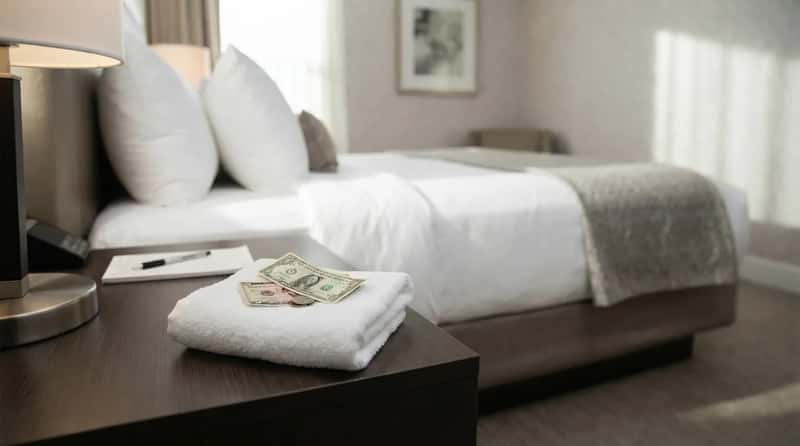
Most guests who tip at all leave one lump sum at the end. Experienced travelers know that often misses the people who actually did the work.
Different housekeepers may clean your room over a multi-night stay. Tip only at checkout, and just the last person on the rotation might get it.
Worth Knowing
- The American Hotel & Lodging Association recommends tipping housekeeping daily, since a different person may clean your room each day.
- Travel guides commonly cite a range of about $1 to $5 per day, with more at luxury properties.
- Cash is preferred, and gifts like food or leftover drinks may not be allowed by hotel policy.
- Kids, pets, and big messes are all good reasons to add a few extra dollars.
So many travelers leave a little each day, with a short note so it’s clearly meant for housekeeping. Everyone who cleaned the room gets recognized.
Beyond fairness, many travelers say it leads to better attention over a longer stay, like fresh towels, an extra amenity, or small details that show by night three. It costs very little and tends to give back a lot.
Tipping is about relationships. The next habit is purely defensive, and it protects something experienced travelers guard closely.
#4 – They Never Say Their Room Number Out Loud at the Front Desk
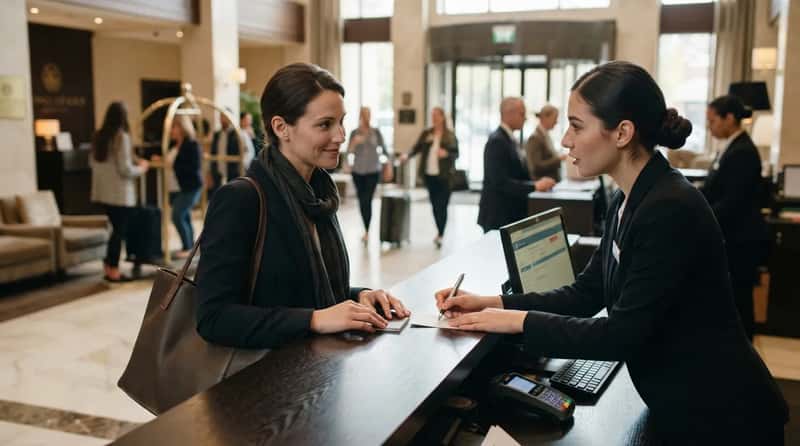
This one sounds like a spy-thriller move. It’s actually a simple security habit most guests break without realizing it.
If a front desk agent says your room number out loud in a busy lobby, anyone nearby can hear it. That’s a real gap, and hotels don’t always address it.
Experienced travelers ask the agent to write the number down, or they simply check the key sleeve quietly. If it gets announced anyway, some will politely ask for a different room.
It matters most for solo travelers. A stranger who knows your room number and knows you’re alone is a combination worth avoiding, and the fix takes two seconds.
That quiet confidence about asking for what they need shows up at every stage of the stay. The next habit proves it in a place most guests never think about.
#3 – They Save the Room Number and Hotel Address to Their Phone Lock Screen
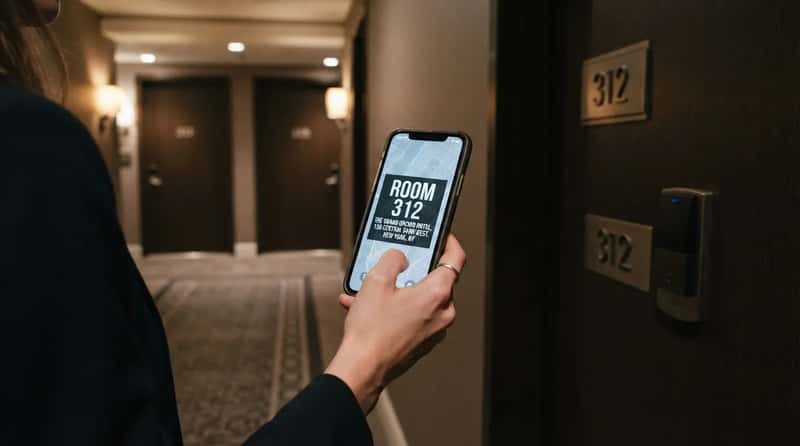
This one sounds almost too simple to mention. Experienced travelers say it saves them again and again.
The moment they get the key, they put the room number and hotel address on their phone’s lock screen. Long hallways, identical doors, and a jet-lagged brain make it shockingly easy to forget which room is yours after a late dinner.
It also helps if you get separated from a travel companion or need to direct a delivery driver. Frequent guests treat the phone, not their memory, as the backup system in unfamiliar buildings.
And in an emergency, having the full address visible without unlocking your phone removes one more obstacle at exactly the wrong moment.
That instinct to build in a backup shows up in one of the most overlooked habits of all. It’s also the one your feet will thank you for.
#2 – They Always Wear Footwear in the Room, Never Go Barefoot
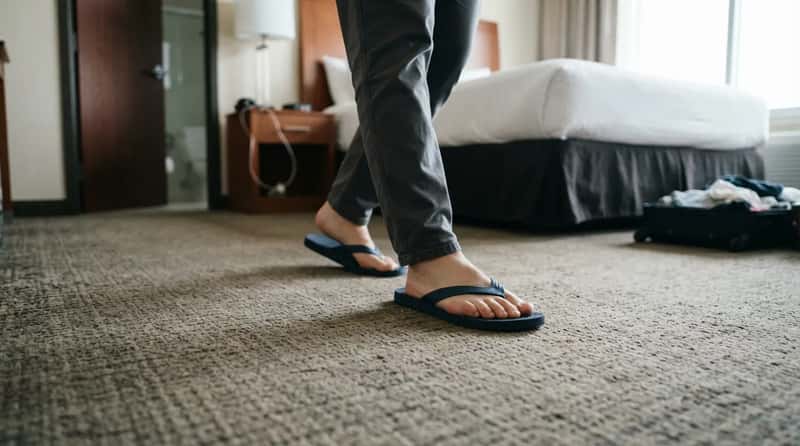
Hotel carpets look clean. They’re rarely as clean as they look, and experienced travelers act accordingly.
Carpets often go a long time between deep cleans, so they can hold dust, crumbs, and worse from previous guests.
That’s why seasoned travelers pack flip-flops or slippers by default, right next to the phone charger. If the hotel provides slippers, great, but they don’t count on it.
The same logic applies to the bathroom floor, since moisture helps bacteria grow on any surface that isn’t scrubbed between guests. Footwear is one of the cheapest hygiene habits a traveler can build, and it takes zero effort once it’s a packing default.
And now, the habit that separates truly experienced travelers from everyone else. It’s the one many people only discover after a stay goes wrong.
#1 – They Check That the In-Room Safe Actually Works – and They Use It Every Single Day
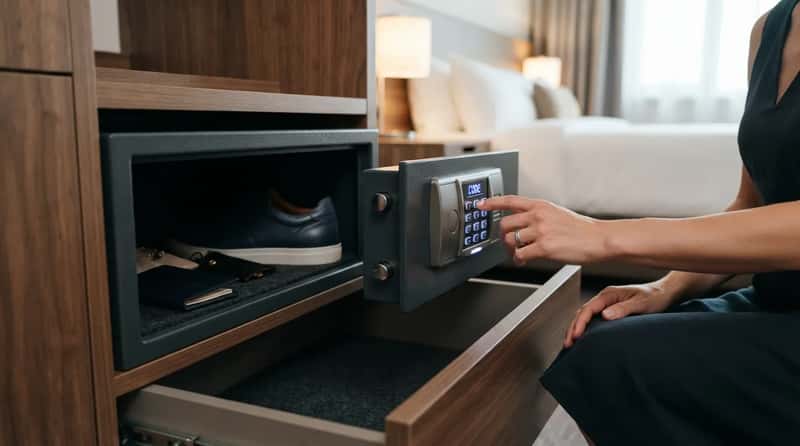
Most guests see the in-room safe as a nice-to-have. Experienced travelers treat it as essential, and the first thing they do is make sure it works.
They open it, set a test code, close it, and re-enter the code before anything valuable goes inside. Hotel safes are electronic and battery-powered, and a dead battery or jammed lock isn’t unusual.
Finding that out when you need your passport is a terrible moment. Better to learn it on day one, when it costs you nothing.
Some travel pros also leave a shoe in the safe so they don’t forget valuables at checkout. It’s a physical cue that’s harder to ignore than a mental reminder.
Every other habit on this list protects you while you’re in the room. The safe protects you while you’re not, which makes it the quietest and most important piece of any hotel stay.
The Bottom Line
Experienced travelers don’t build these habits out of fear. They build them out of experience.
A lock tested, a photo taken, an exit route memorized, a mattress inspected: none of it takes more than a few minutes, and each one closes a gap that first-timers discover the hard way.
The best habits on this list aren’t about luxury or paranoia. They’re about staying a step ahead of the small surprises that turn a good trip into a frustrating one.
Which of these do you already do, and which one surprised you most? Drop it in the comments.
Bonus: The Insider Trick Nobody Tells You
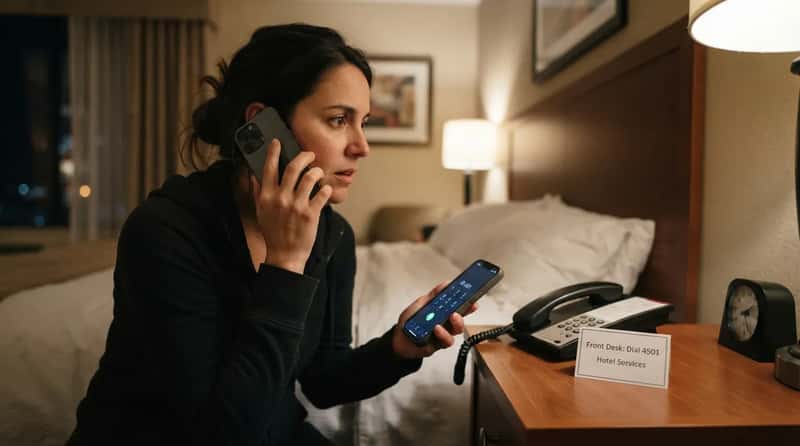
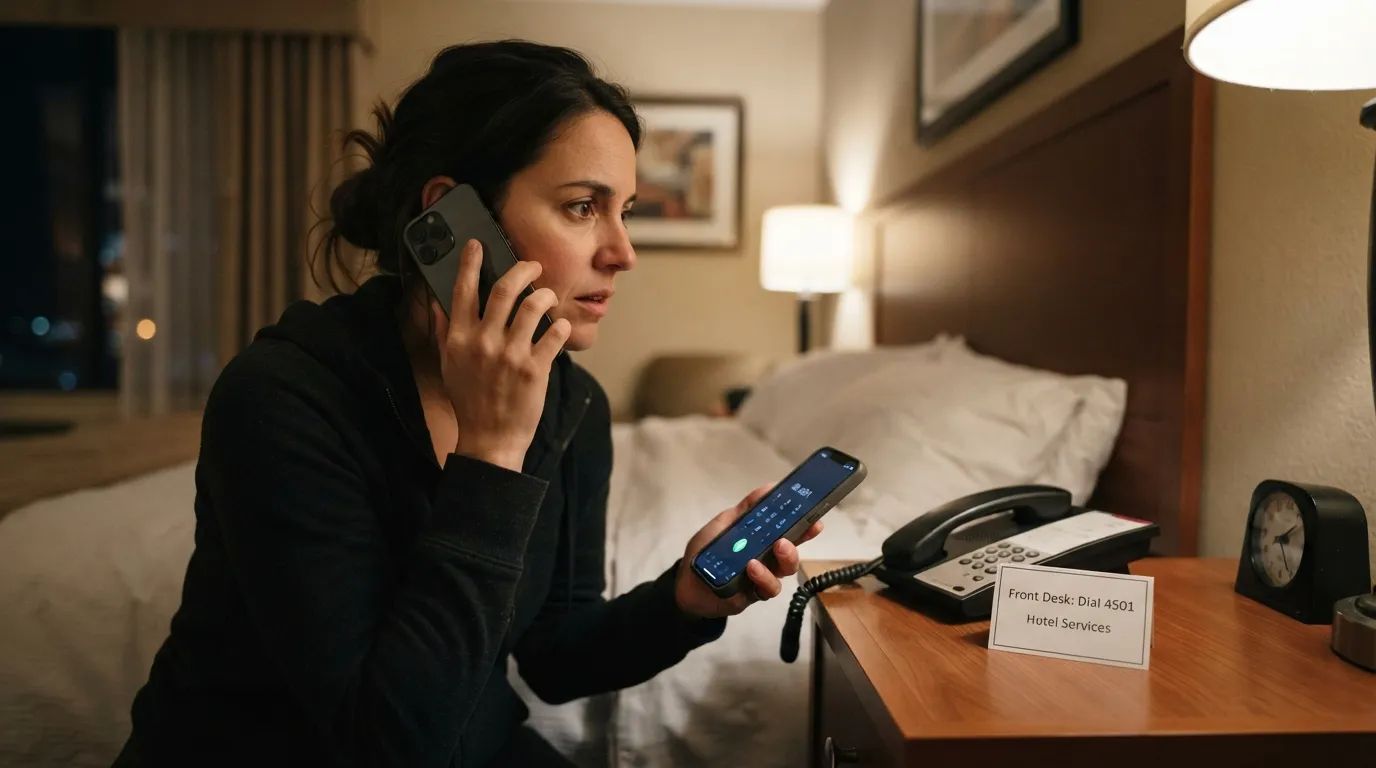
Never trust a call to your room that claims to be the front desk. A well-known hotel scam starts with a late-night call saying there’s a problem with your card and asking you to read the number out again.
Experienced travelers treat any request for payment details over the phone as a red flag, no matter how professional the caller sounds. Here is exactly what they do instead:
- Save the front desk’s direct number in your phone at check-in. Take it from the printed card or the hotel’s official website, not from anything a caller gives you.
- Hang up, then call back yourself. Dial the desk from that saved number, or walk down to the lobby, and ask if there is really an issue.
- Never read out card numbers, security codes, or your full name and room number to an incoming caller. A real desk agent can sort out a payment problem in person.
The same rule covers surprise knocks. If someone at your door says they are maintenance or delivering something you didn’t order, keep the door closed and call the desk first.
It takes about thirty seconds, and it stops a scam that depends on you being tired, rushed, and eager to be helpful.