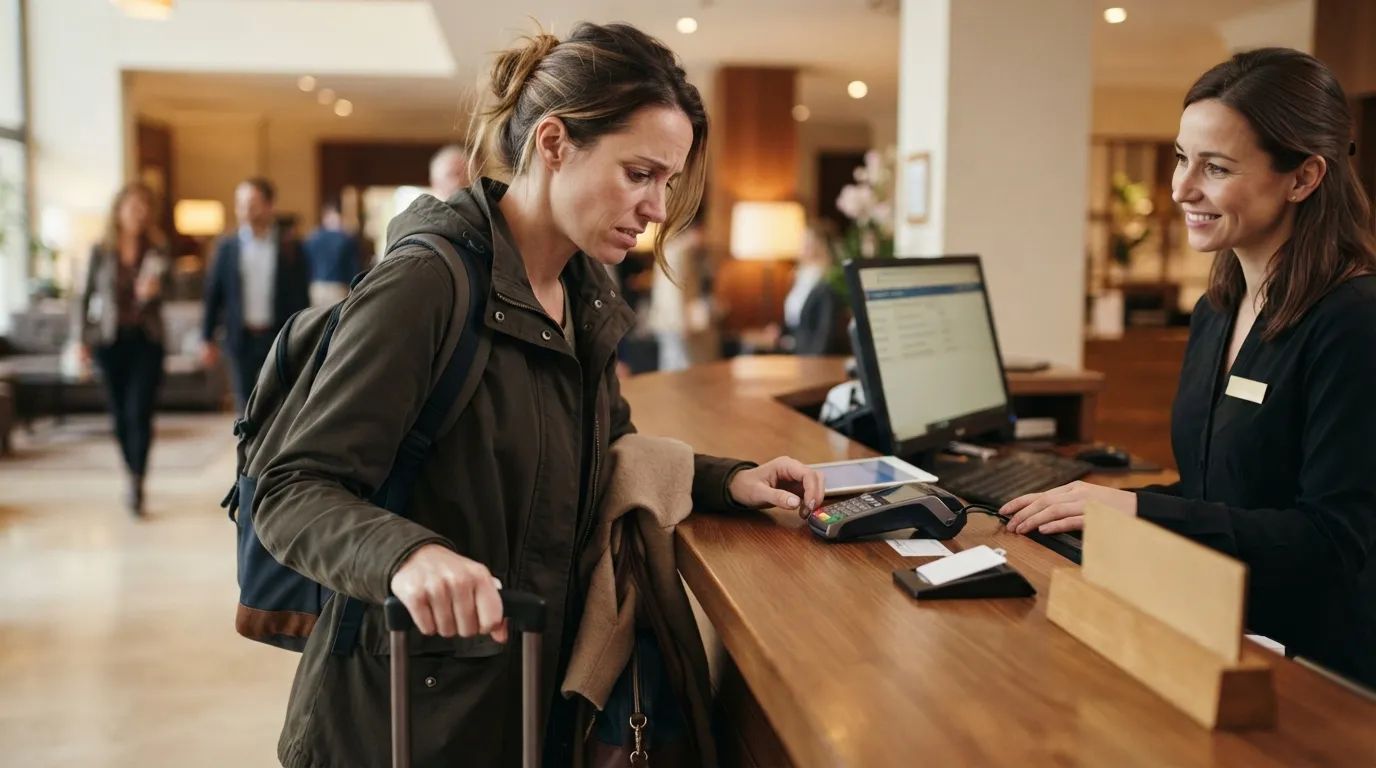
You probably think check-in is a boring handoff: ID, key card, elevator. But the person behind the counter has often sized you up before you finish spelling your last name, and that quiet read can shape your whole stay.
Front desk veterans have watched thousands of guests walk in, and their instincts are sharper than you’d guess. It isn’t gossip, it’s fast pattern-reading, and it starts before you ever reach the counter. The judgment sitting at the very top of this list is the one nobody says out loud.
#21 – The Moment You Walk Through the Door
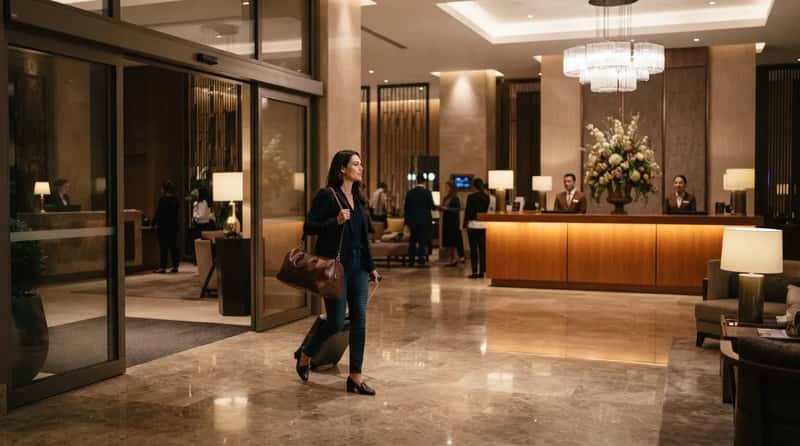
Most guests assume check-in starts at the counter. It starts the second the lobby doors slide open.
Slumped with exhaustion, striding in with confidence, scanning the room for the desk: your body language registers instantly. It isn’t judgment, it’s triage, because good hospitality means noticing what a guest needs before they ask.
Someone arriving at 11 PM after a cancelled connecting flight gives off something completely different than a couple strolling in for an anniversary weekend. Staff notice the difference, and they adjust.
Your entrance is the opening frame of the stay, and somebody is already watching it.
But what happens just outside the lobby may be even more revealing, and it’s waiting in #20…
#20 – How You Treat the Doorman, Valet, and Bellhop
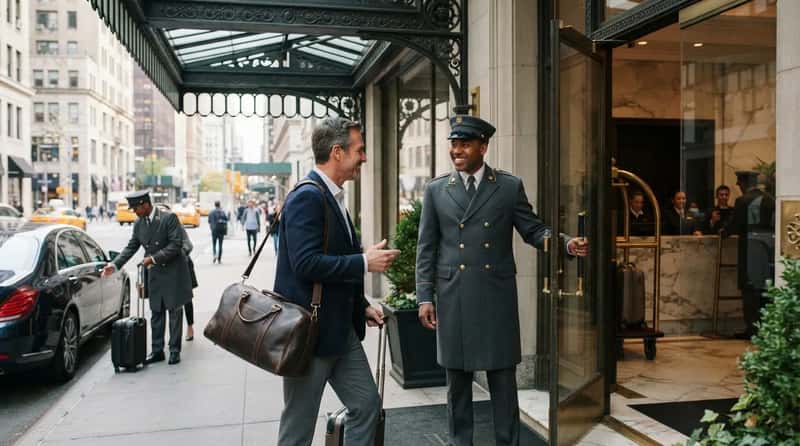
Front desk agents often know what kind of guest you are before you reach their counter. Their coworkers have already had a look.
The guest who barely acknowledges the doorman is sometimes the one making unreasonable demands at 2 AM. Valets, bellhops, and door staff are on the same team as the desk, and they talk.
Treat the valet poorly, and word can reach the lobby before you do. None of it is spite, it’s a job that depends on fast, accurate reads of strangers.
Your reputation in the building starts the moment your car pulls up, not the moment you speak.
Next comes a tell you can’t fake: what your body does before you say a word, in #19…
#19 – Your Posture and Walking Pace
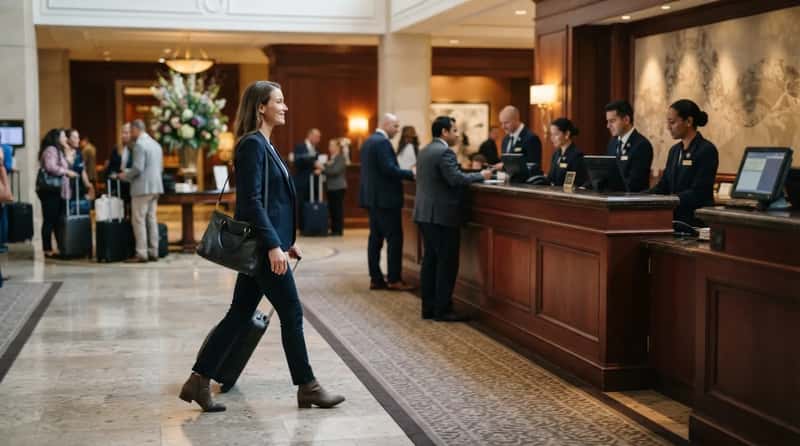
Staff are reading you long before you open your mouth.
Posture is one of the fastest, most subconscious signals a guest sends. When your body language doesn’t match your words, staff draw their own conclusions, and heavy slouching can read as disengaged or fed up.
The reverse is just as powerful. Standing tall and meeting someone’s eyes projects confidence, and agents tend to mirror that energy right back.
Posture is a silent first sentence, and it sets the tone for everything at the desk.
But your eyes may give away even more, as #18 shows…
#18 – Your Eye Contact (or the Lack of It)

Eyes are the fastest trust signal in hospitality.
Eye contact and a smile suggest a friendly guest in a good mood, which usually means a pleasant check-in. Tiredness and anxiety have their own tells.
What you don’t say out loud, staff often catch in your body language. Reading those subtle cues is a core skill in hospitality training around the world.
A guest who holds steady eye contact gets treated as engaged and cooperative. A guest who avoids it gets handled more carefully, and that shapes every conversation that follows.
And then there’s the device in your hand, which brings us to #17…
#17 – Whether You’re On Your Phone

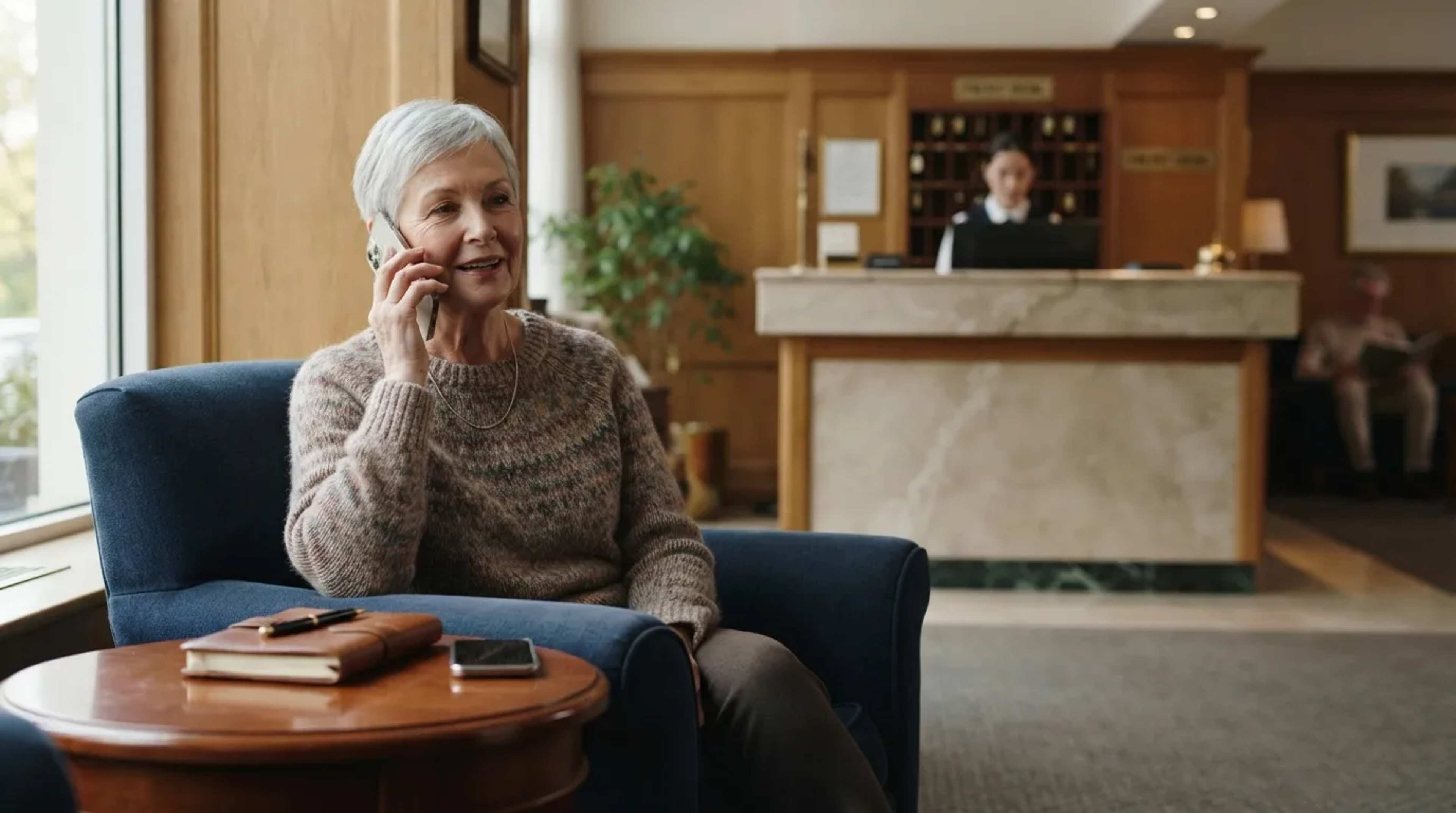
Walking up mid-call is one of the fastest ways to change how an agent decides to treat you.
Ever held up one finger to the clerk while you finish a conversation? They noticed. They also notice frantic texting, lobby-ceiling photos, and a phone tucked neatly away.
The phone is a behavioral signal that tells staff where your attention really is. Put it away and make eye contact, and you often get a warmer, more personal check-in.
One small gesture can shift an agent from transaction mode into real hospitality mode. Those are two very different stays.
Now for the tell you can’t fully control, in #16…
#16 – The Tension in Your Jaw and Lips

Your face can tell a story before your words even start.
Pursed lips often signal held-in tension, the quiet irritation of a guest who is unhappy but isn’t ready to say why. Agents learn to catch it early so they can soften their tone before anything is said.
That’s why a stiff-jawed guest sometimes gets a calmer, more careful greeting than a visibly relaxed one. Staff are trying to defuse a problem before it exists.
Skilled agents use that read to get ahead of complaints, which means the tense-looking guest can end up with the most attentive service in the room.
At a Glance
- Pursed lips often point to quiet, held-in irritation.
- A clenched jaw during small talk can mean the day has gone badly.
- Agents respond by softening their tone, not by pushing back.
- The goal is to head off a complaint before it ever forms.
But the counter itself reveals plenty too, starting in #15…
#15 – Whether You Know Your Reservation Details

How prepared you are at the counter says more than you think.
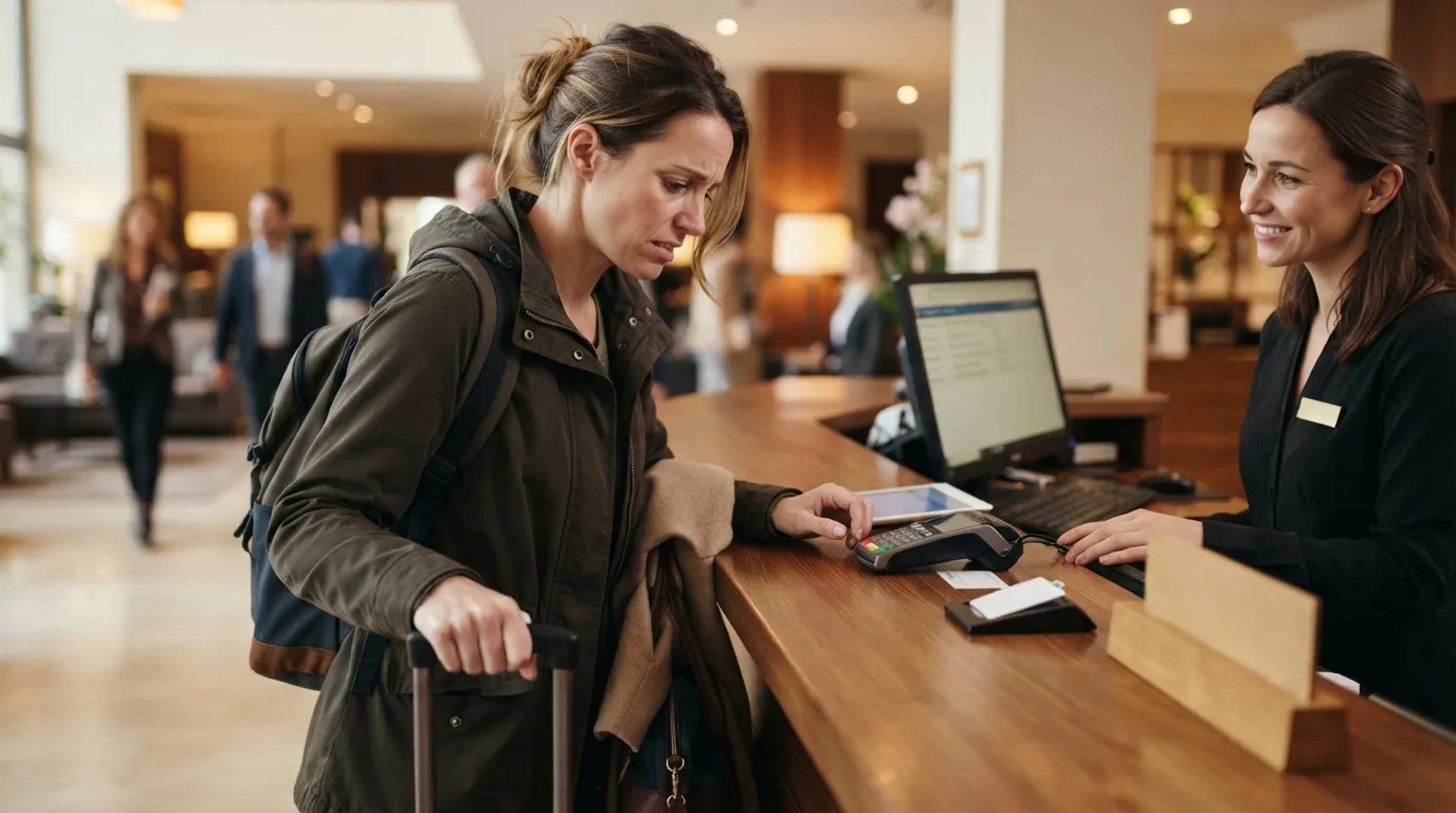
Having your confirmation number, loyalty account, and a credit card for incidentals ready matters. Fumbling through bags for a booking email while a line builds behind you rarely earns goodwill.
Staff read preparation as calm and experience. A guest who hands everything over in a smooth sequence looks like a regular traveler who won’t cause friction.
Three minutes digging through a backpack signals the opposite, and the agent adjusts expectations accordingly.
Then their eyes drift down to what you’re hauling, in #14…
#14 – The Amount and Condition of Your Luggage
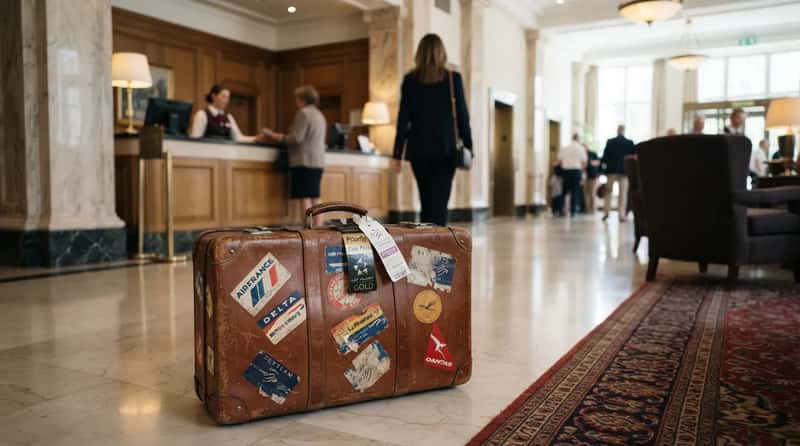
Your bags communicate before you do.
Hotel employees do take stock of your luggage as you cross the lobby, though the look is usually discreet. A worn carry-on plastered with airline stickers or an elite-status tag hints at a frequent traveler.
That kind of guest tends to know the system, ask for upgrades, and notice when something is off. Staff factor that in.
The opposite case gets attention too. A guest arriving with no bags at all may be asked for a card or payment up front, since some hotels treat that as a small risk flag.
Worth Knowing
- Airline stickers and elite tags often hint at a seasoned traveler.
- Frequent travelers tend to know the system and spot small misses.
- Arriving with no bags can prompt a request for payment up front at some hotels.
- The glance is usually quick and discreet, more a gauge than a stare.
But the biggest clue may be hiding in your reservation itself, in #13…
#13 – Your Booking Method

How you booked your room quietly decides how much effort the desk puts into personalizing your stay.
Hotels pay commissions on reservations made through third-party sites like Expedia, Hotels.com, or Booking.com. Those guests often aren’t a priority for upgrades, because the hotel has less of a direct relationship with them.
Your loyalty profile can also fail to attach to a third-party booking, so even guests with status may not show up as members. The desk sees all of this the moment your reservation pulls up.
Your booking source can rank you in the upgrade queue before you say a word.
And the first words out of your mouth matter more than you’d expect in #12…
#12 – The First Question You Ask
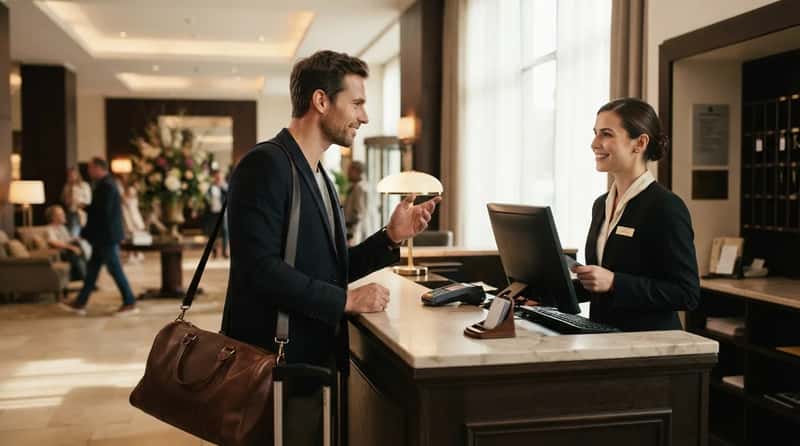
Your opening question is a louder signal than most guests realize.
Staff notice whether you wince at the mention of valet parking. They notice if you go straight to free breakfast or happy hour times.
Many front desk veterans say guests who are comfortable financially tend to ask about experiences rather than costs. Someone who opens with “What’s the Wi-Fi password?” is calibrating differently from someone who asks, “Is there anything special you’d recommend for dinner tonight?”
None of this is judgment. It’s information that shapes the conversation that follows.
But sometimes the agent has already read your file, as #11 shows…
#11 – Your Loyalty Profile Before You Arrive
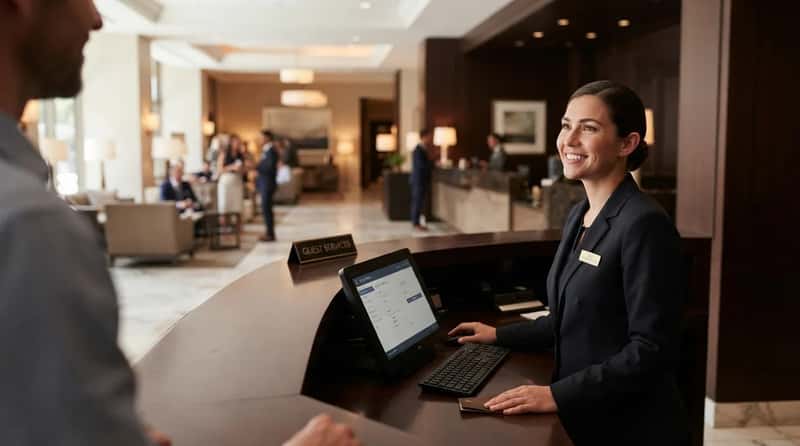
The front desk often knows who you are before you say a word.
Many hotels use guest data to personalize stays, from welcome messages to tailored recommendations. A thoughtful agent may already see your preferences and any past complaints.
Big chains like Marriott and Hyatt run loyalty programs that reward return guests, so your history is often one of the first things an agent checks. It’s a shortcut to what you like, what you expect, and what went wrong last time.
A loyalty profile is more than points. It’s a window into you, and staff use it immediately.
Then you finally speak, and #10 kicks in…
#10 – How You Greet the Agent

A greeting is never just a greeting behind a hotel desk.
Your body language, how you say hello, how you’re groomed, and the energy you bring all feed the first impression. Underneath it, the agent is trying to figure out how easy or challenging a guest you’ll be.
A warm greeting, using the agent’s name, and calm professionalism leave a lasting mark. Guests remember tone and body language far more than they remember procedures.
The guest who smiles and offers a genuine hello often unlocks a level of service that the silent guest behind them never sees.
Quick Compare
- Warm hello, agent’s name used: reads as easy, friendly, and memorable.
- Silent or distracted arrival: reads as neutral at best, and service stays strictly by the book.
- Calm professionalism: sets a steady tone that tends to last the whole stay.
But there’s something you may be trying to hide in #9…
#9 – Your Stress Level and Emotional State

Experienced front desk staff read fatigue and anxiety faster than you’d expect.
They get good at spotting clenched jaws during pleasant conversation, white knuckles on a luggage handle, and forced cheerfulness that doesn’t reach the eyes. They notice when you’re running on empty.
Good staff respond to what they see, not to what you’re pretending. They might steer you to a quieter floor, point out the fastest room service option, or simply give you space to drop the act.
An exhausted guest who gets a friction-free check-in and a warm acknowledgment often remembers that moment longer than the room itself.
And if you’re traveling with someone, #8 gets personal…
#8 – Couple Dynamics and Group Tension
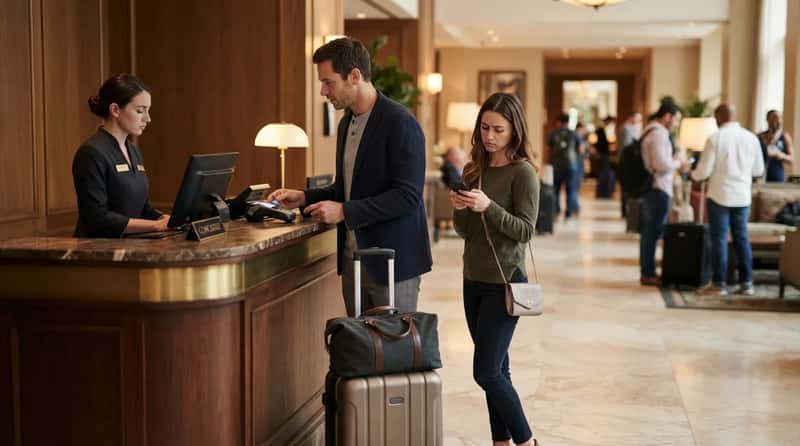
Staff can read the state of your relationship before you’ve said a word to them.
The way couples stand together or apart at the desk tells a story. Many concierges say they can tell within seconds whether a couple is celebrating or barely surviving.
Happy couples tend to touch casually while checking in, like a hand on the lower back or fingers intertwined. Couples in conflict put luggage between them, or one person handles everything while the other vanishes into a phone.
That read can shape the tone of the whole interaction, and even which services get mentioned. Some never come up at all.
Then the money talk begins, in #7…
#7 – How You React to the Credit Card Hold
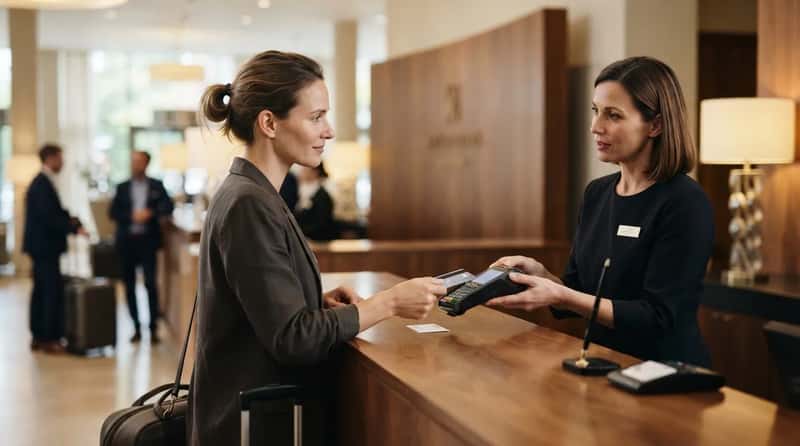
The incidental deposit conversation is one of the most revealing moments in any check-in.
It’s a small moment that shows a lot, because how you react when staff explain the hold on your card gets noticed. The line staff draw isn’t between asking and not asking, it’s between asking and demanding.
A guest who calmly accepts the policy reads as experienced and low-risk. One who argues, expresses disbelief, or tries to negotiate reads as someone who may create friction all stay long.
That read goes into an unwritten mental file, and it follows you.
But there’s one more label they quietly assign, and it’s waiting in #6…
#6 – Whether You’re an Experienced Traveler or a First-Timer

Inexperienced travelers stand out, and staff respond right away.
The front desk grapevine passes along notes about guests who may need extra attention. If someone looks new to hotels, the agent may walk them through policies in more detail and pass that note to the rest of the team.
Signs include not knowing which documents are required, asking questions the welcome card already answers, or being genuinely surprised by routine things like a resort fee or parking charge.
It isn’t a negative read. Staff shift into a more patient, thorough mode, but it does change the script they use with you.
Fast Facts
- Unsure which documents are required? That’s a common first-timer tell.
- Questions the welcome card already answers stand out quickly.
- Surprise at a resort fee or parking charge is another giveaway.
- The result is usually a slower, more detailed walkthrough, not a colder one.
Then there’s a detail printed right on your ID, in #5…
#5 – Your Address and Home Location
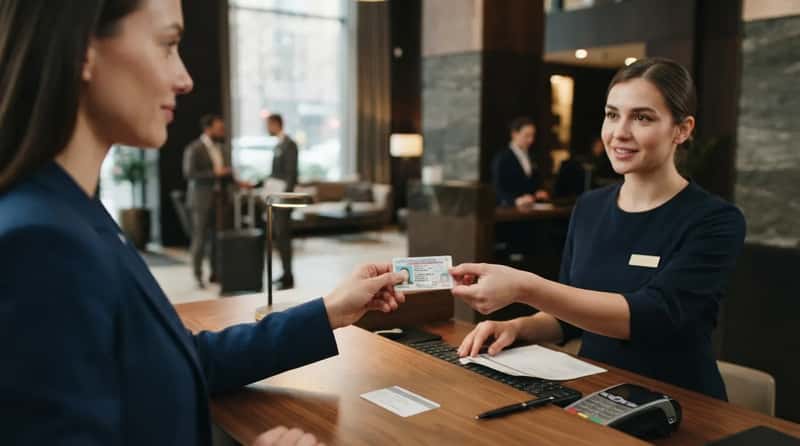
Where you’re from tells staff more than most guests would guess.
When you hand over your ID or fill in a registration form, your address is one of the first things an agent sees. In some cases they can even see it in advance, right when the reservation is made.
A local address raises questions an out-of-town one doesn’t. Some staff are trained to pay closer attention to guests booking a hotel in their own city, since it can occasionally point to parties or uses outside hotel policy.
It’s not an accusation. It’s a data point that can quietly change how closely your stay is watched.
And now the one every guest secretly wants to know about, #4…
#4 – Whether You’re Upgrade-Worthy Right Now
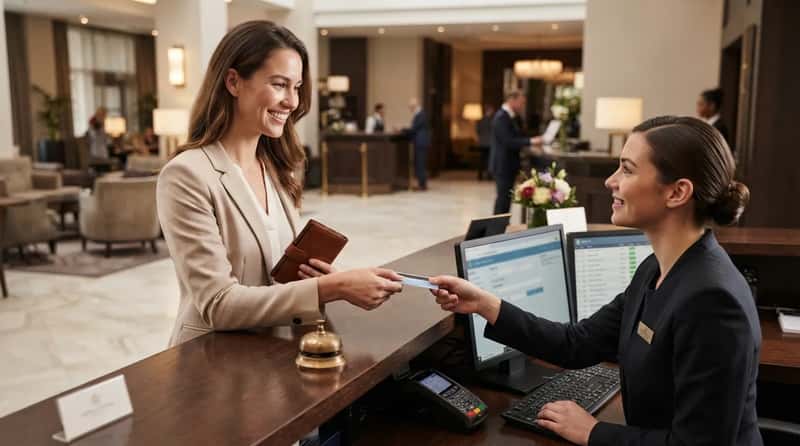
The upgrade decision isn’t random. It’s made in seconds, and it leans heavily on how you act at check-in.
Asking doesn’t guarantee one, but front desk staff often say it’s worth the thirty seconds. Hotels frequently have unsold premium rooms, and agents often have some discretion to move guests up, especially polite and friendly ones.
Many hotels also work from daily arrival and availability lists showing which room categories are open and which guests deserve priority. Upgrades at upscale properties are rarely arbitrary.
Politeness, loyalty status, booking channel, and your first minute at the desk all feed a snap judgment. It takes the agent about as long as it takes you to hand over your ID.
But the read that decides how smooth your stay stays is still ahead, in #3…
#3 – Whether You’re Likely to Complain Later

Front desk staff are quietly predicting your complaint probability in the first ten seconds.
First impressions color everything else. A friendly, efficient welcome creates a halo effect, where guests read the entire stay more generously even when small problems pop up.
The opposite happens too. A guest who arrives visibly irritated, quizzes the agent on policy, or opens with a bad prior stay gets read as high complaint risk, and that read travels quickly through the team.
Front desk interactions weigh heavily on overall guest satisfaction, so staff have every reason to gauge your mood early and head off anything that could become a one-star review.
Why It Stands Out
- It’s a prediction about your future behavior, not just your current mood.
- A warm welcome can make you more forgiving of small hiccups later.
- Visible irritation or opening with a bad prior stay raises the flag.
- Early mood-reading is how staff try to prevent a one-star review.
But that’s still not the biggest consequence. Read #2…
#2 – How Hard They’ll Work for You During Your Entire Stay
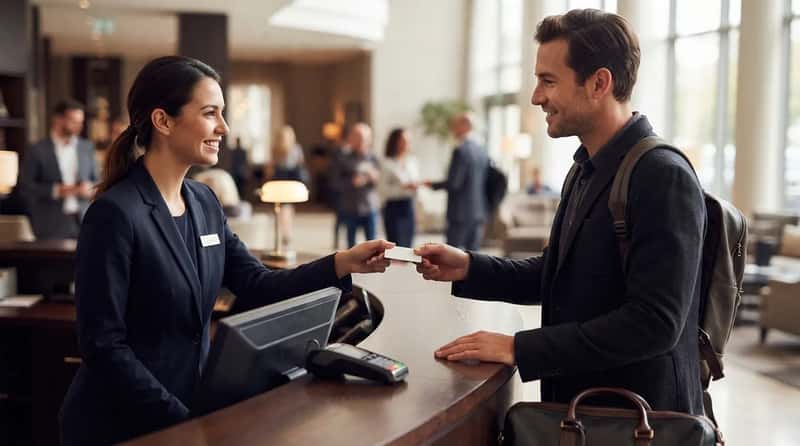
Your first ten seconds don’t just shape check-in. They shape everything.
Your attitude at the desk says a lot. Be kind, and most staff will jump through hoops to make you happy, while a suspicious vibe triggers vigilance instead.
A guest who registers as difficult, entitled, or dismissive in the first half-minute often gets the minimum required service for the rest of the stay. It’s polite and professional, but without the extras.
First impressions are famously hard to change. The agent’s snap judgment becomes the lens for every interaction that follows.
None of that, however, compares to the single most important thing they decide about you in #1…
#1 – Whether You’re a Safe Guest or a Risk to the Property

This is the read that sits underneath all the others, and it happens faster than any other judgment on this list.
Beyond ease, the front desk is running a rapid security check every time a new guest approaches the counter. No training manual spells it out plainly, but experienced agents understand it instinctively.
Some guests report being asked to settle their bill periodically during a stay instead of at the end. Housekeeping, meanwhile, is often expected to report anything suspicious back to the desk.
Staff pick up on signals most of us never notice, and those observations shape everything from service to upgrades. The risk read can quietly follow you from the lobby to the elevator to checkout, and you’ll never know it happened.
The Bottom Line
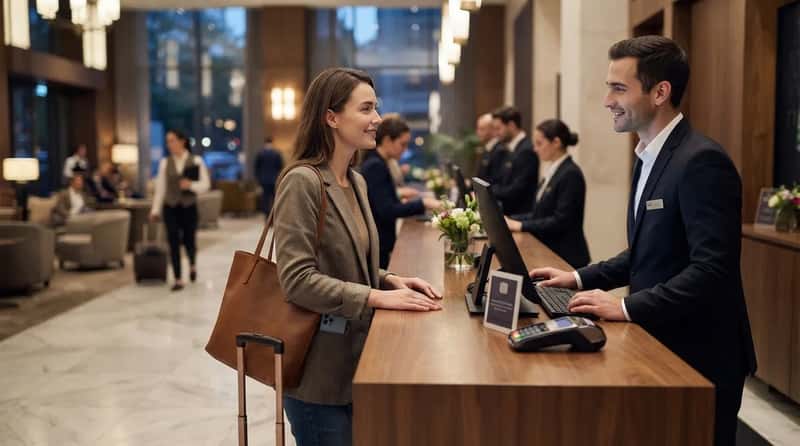
Front desk staff aren’t passively waiting for your ID. They’re reading a stack of signals, from your posture and phone to your luggage, booking source, loyalty file, and even the tension in your jaw.
Friendliness, competence, and efficiency at the desk shape a guest’s first impression, but the street runs both ways. The impression you make in those ten seconds is just as real, and far more consequential than most travelers realize.
The guests who get the best rooms and the quiet extras they never asked for are rarely the loudest or the most demanding. They walk in calmly, pocket the phone, say hello, and let the moment be human.
That’s the real secret: ten seconds costs you nothing, and it may be the best-spent ten seconds of your trip.
#22 – The Bonus Tip Nobody Shares: Give the Desk a Head Start

The best first impression happens before you arrive. Reach out to the hotel directly a few days ahead and let the desk build a positive picture of you on paper.
- Book direct and add your loyalty number. Join the hotel brand’s free loyalty program, then make sure your number is attached to the reservation so the desk sees you as a member the moment your file opens.
- Send one short, friendly note. Use the hotel’s website, app, or a call to the property itself (not a booking site’s call center). Mention your arrival time and, if it’s true, a real occasion like an anniversary or a birthday.
- Make one specific, flexible request. Ask for something like a quiet room away from the elevator or a higher floor, and say you’re happy with whatever they can do. A small ask with room to say yes is far easier to grant than a demand.
- Thank the agent by name at check-in. Reference your note, smile, and let them connect the friendly message to the calm guest in front of them.
Requests are never guaranteed, but you’ve turned a stranger into a guest they already know and want to take care of.