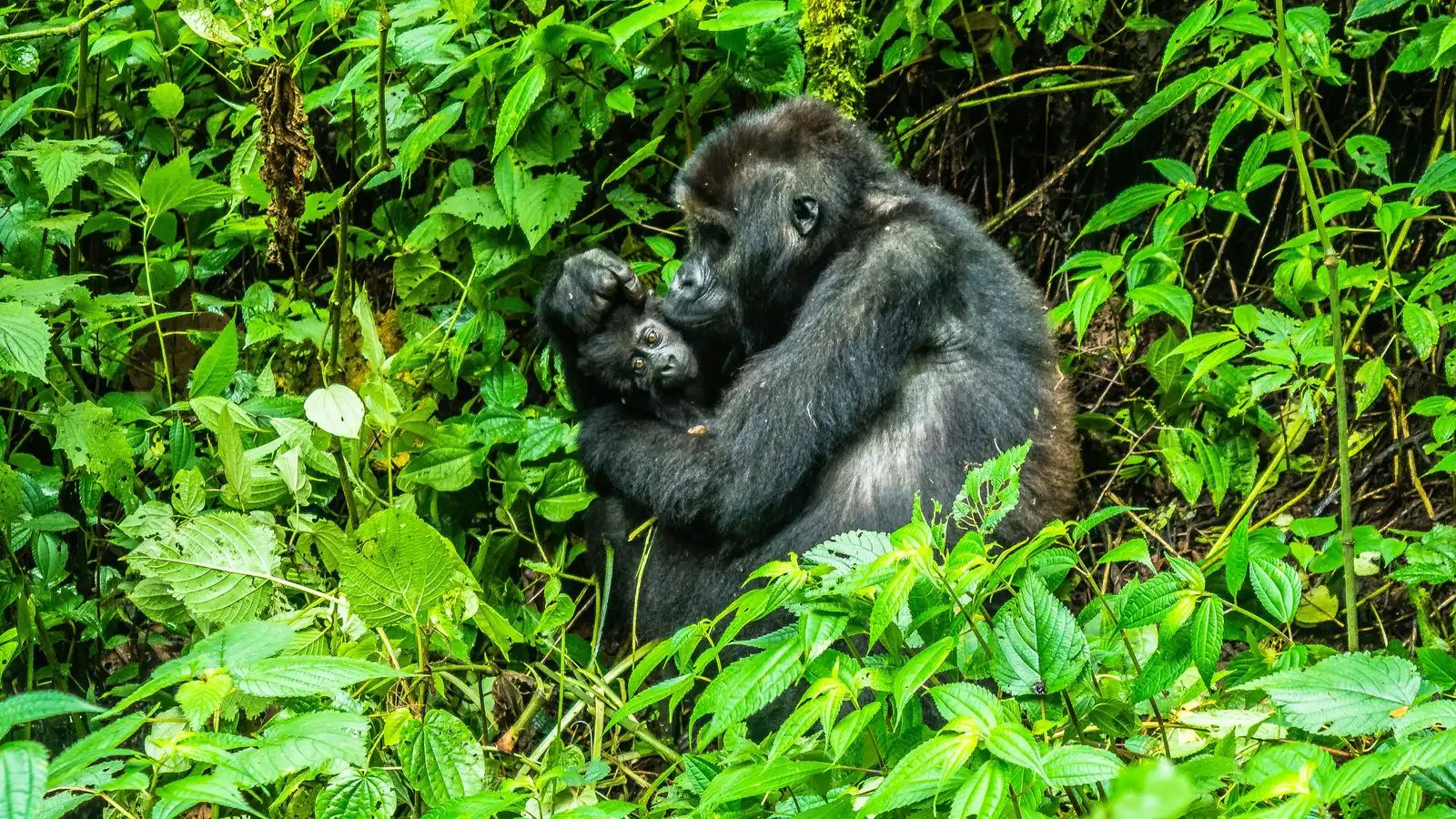
Virunga National Park in the Democratic Republic of Congo has recorded a quiet but meaningful success. A Grauer’s gorilla named Lulingu, returned to the wild in 2024 after years in rehabilitation, gave birth to a healthy infant in May 2026. The development has lifted spirits among the teams that rescued and prepared her for life outside captivity.
A Rescue That Led to Freedom
Lulingu entered the care of the Gorilla Rehabilitation and Conservation Education Center, known as GRACE, in 2016. She was just 18 months old when authorities seized her from an illegal wildlife trafficking network. The Congolese Wildlife Authority and Gorilla Doctors brought her to the 16-hectare sanctuary, where she grew up alongside other rescued gorillas under the guidance of surrogate mothers. The facility sits in a setting designed to mirror natural conditions as closely as possible. Staff focused on building her social skills and confidence before any release. By the time she left for the wild, Lulingu had spent nearly eight years in that structured environment.
Return to Mount Tshiaberimu
In 2024, conservationists chose a remote section of Virunga National Park near Mount Tshiaberimu for her reintroduction. The area offered suitable habitat while remaining relatively isolated from heavy human pressure. The move formed part of a broader effort to restore gorilla numbers in forests that had lost many of their original residents. Jackson Kabuyaya Mbeke, country director for GRACE, described the outcome as deeply personal for the team. He noted that staff had known Lulingu since she was a baby and had watched every stage of her recovery. The birth of her own infant confirmed that the long process of rehabilitation had succeeded.
Signs of Successful Adaptation
Both mother and newborn are reported to be in good health. The arrival of the infant demonstrates that Lulingu has adjusted to foraging, navigating the terrain, and forming the social bonds required for survival in the park. Such milestones remain rare for reintroduced great apes. The sanctuary’s approach combines rescue with eventual release. Staff view each successful reintroduction as a step toward repopulating areas where gorilla populations had declined sharply. Lulingu’s story illustrates how sustained care can translate into new generations living freely.
Hope for a Critically Endangered Subspecies
Grauer’s gorillas rank among the most threatened primates on the planet. Habitat loss, poaching, and conflict have reduced their numbers dramatically across eastern Congo. Every verified birth in the wild adds a small but tangible measure of resilience to the remaining groups. Teams at GRACE and partner organizations continue to monitor Lulingu and her infant. Their progress offers a practical example of what targeted rehabilitation can achieve when paired with protected habitat. The event underscores the value of long-term commitment to individual animals whose survival can influence the broader population.