The world is experiencing a profound shift in how people relate to religion. Over the past two decades, we’ve witnessed something remarkable happening across every continent. Countries that were once deeply religious are now watching their congregations dwindle, their younger generations increasingly disinterested in traditional faith practices. This trend is raising fascinating questions about the future of organized religion and what happens when societies collectively turn away from belief systems that have defined cultures for centuries. Let’s dive into the data and see which nations are leading this secular transformation.
China and East Asia Lead Global Secularism

In the Asia-Pacific region, China and Japan are the most secular countries, with 3% and 10% of individuals considering religion important in their lives, respectively. China is home to more than 50% of religiously unaffiliated people in the world, and only 9% of the country considers itself religious, while 67% claims to be atheist. This makes China an undeniable leader in the global secular landscape. Japan follows a similar path, where 62% of Japanese don’t hold to any religion at all, despite maintaining many cultural and spiritual traditions. Japan and Taiwan are two of the most secular countries in the world, showcasing a broader East Asian trend toward irreligion.
Nordic Nations and Western Europe Embrace Secularization
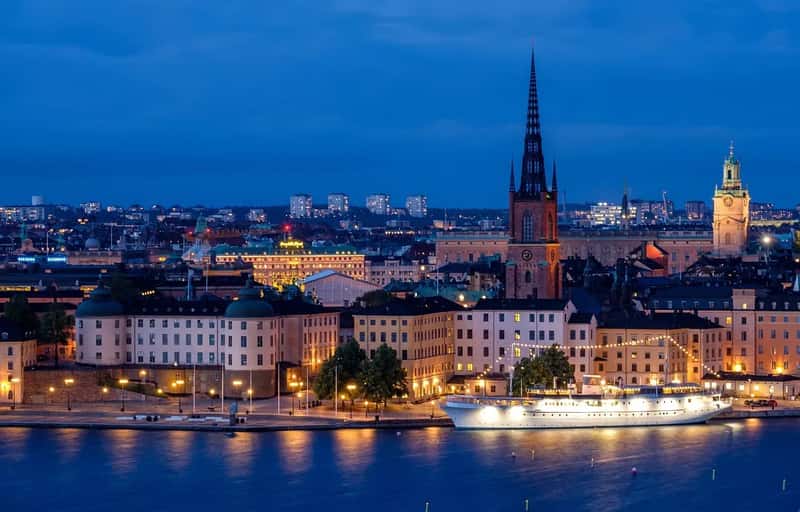
Sweden is the most secular country in the world, according to multiple global rankings. A 2023 Gallup International survey found that Sweden was the country with the highest percentage of citizens that stated they do not believe in a god. Western Europe emerged as the most secular region, with only 37% identifying as religious, while 44% of respondents in this region stated they were not religious and 14% identified as atheists. Nordic countries like Denmark, Norway, and Iceland share this secular trajectory. Denmark is heavily Lutheran in its roots, but attendance at church and individual religious belief are low, and matters of religion have rarely influenced public policy.
America’s Rapid Secularization Catches Up with Europe

The 17-percentage-point drop in U.S. religiosity over the past decade is among the largest declines measured in the Gallup World Poll. There has been a 17-percent drop in the number of U.S. adults who say religion is an important part of their daily life between 2015, when it was 66%, and 2025, when it is 49%. This dramatic shift places America in a unique position. 53% of residents of the USA considered religion important, while the statistics for Canada stood at 27%, which translates to Canada being twice as secular as the US. Meanwhile, Uruguay stands out in Latin America. With 45% of its population responding as nonbelievers in the 2021 census, it’s become the most secular nation in the Americas.
The Three-Stage Pattern of Religious Decline

Secular transition happens in three steps: first, public ritual participation declines; second, the importance of religion to individuals declines; and third, people shed religious affiliation. This pattern, called the Participation-Importance-Belonging sequence, has been documented across more than 100 countries by researchers from Pew Research Center and academic institutions. The proportion of people identifying as religious declined from 68% in 2005 to 56% in 2024, while the share of those identifying as not religious increased from 21% to 28%, and convinced atheists rose from 6% to 10%. In countries that are moderately religious, adults under 40 attend services less frequently than their elders, are less likely to say religion is important in their lives and are less likely to identify with any religion.