Somewhere between the postcard fantasy of a villa on the Algarve and the practical reality of foreign tax forms sits a question that trips up almost every retiree planning a move overseas. Should you buy the dream home right away, or should you rent first and figure things out as you go? The answer is rarely as simple as either camp likes to claim, and the right choice often depends on details that don’t show up in glossy retirement brochures.
What follows is a closer look at how renting and buying actually compare once you factor in residency rules, currency swings, local ownership laws, and the kind of maintenance headaches that feel very different when you’re managing them from another continent. Some of this will confirm what you already suspected. Some of it might change your plans entirely.
Why the calculation changes once you cross a border

At home, the rent versus buy debate usually comes down to mortgage rates, local price trends, and how long you plan to stay put. Overseas, a whole new layer of variables gets added on top of that, including visa eligibility, currency exposure, and legal systems that may treat property contracts nothing like the ones you’re used to. A good local lawyer, a cross border tax advisor, and someone who has actually guided foreign buyers through the process before become the three relationships that prevent the most common mistakes.
For retirees specifically, the stakes shift too. You’re no longer thinking about decades of career moves or growing a family into a bigger space. Financial planners increasingly frame the decision around cash flow and flexibility rather than pure equity building, since the rent-vs-own debate intensifies in retirement because the calculus changes: you’re no longer building equity for its own sake, flexibility matters more, and the opportunity cost of tying up capital in real estate is real.
The honest case for renting first

Real estate professionals who work with retirees abroad tend to agree on one point almost universally. Renting rather than buying can be very cost effective for older people wishing to retire abroad. It buys you time to learn a neighborhood’s rhythms, its noise levels, its grocery stores, before locking yourself into a purchase you can’t easily undo.
This is especially true the farther you’re moving from home. Renting makes sense when retirees move, allowing for less commitment and more flexibility before purchasing a home, and in general, the farther away you move, the better it is to rent first and see if you like your new location. That logic applies with extra force when the move crosses an ocean, not just a state line, and financial advisors note it holds especially true when relocating outside the U.S. to popular retirement destinations such as Portugal or Costa Rica.
The honest case for buying instead
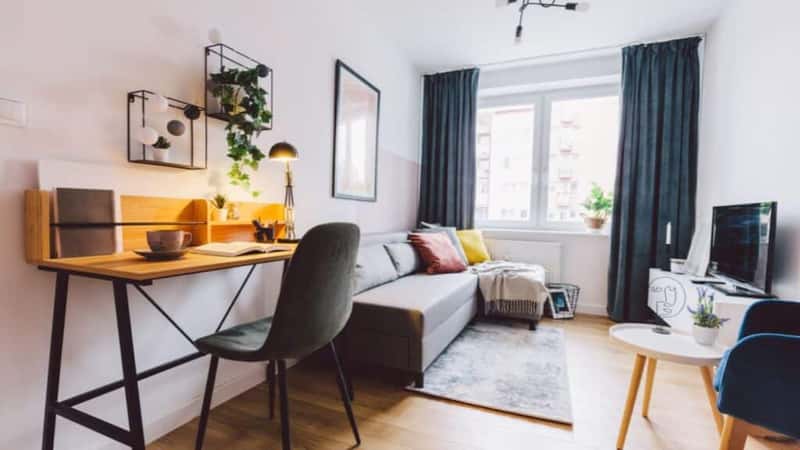
Buying isn’t just about sentiment, even though owning a home abroad does carry a certain emotional pull. There’s a real financial argument too, particularly in markets that have appreciated steadily. In places that have become popular with retirees, property values have often risen significantly over the past decade, and those who bought in Portugal ten or fifteen years ago have not only enjoyed living in their chosen home but also benefitted from capital appreciation.
Ownership also gives you control that renting simply can’t. If you already know a region well, perhaps through repeated visits or family ties, that familiarity changes the risk calculus considerably. And if mobility needs are likely to evolve with age, owning means you can make adjustments, installing an elevator, creating a step-free shower, or adapting spaces so that you can continue to enjoy your home for the long term, something a landlord may never allow.
What renting actually costs in popular destinations

Numbers help ground this debate, and southern Spain offers a useful snapshot. A comfortable single retiree lifestyle in Malaga currently runs €1,800 to €2,300 per month for one person, with rent making up a significant chunk of that. One bedroom apartments in desirable areas rent for €850 to €1,300, though other towns along less touristy coasts are more budget friendly, with lower rents found in older buildings and inland towns.
Renters also sidestep costs that owners can’t avoid. In most markets, renters usually don’t pay property taxes, homeowners insurance or HOA fees, at least not directly, and they don’t have to pay for major repairs either. Over a decade or two of retirement, avoiding those recurring bills can free up meaningful cash for travel, healthcare, or simply peace of mind.
What buying actually costs before you even move in

Buying looks straightforward from a distance and gets complicated fast once you’re actually in the process. Closing costs alone vary wildly depending on the country, ranging anywhere from about 2 to 22 percent of the purchase price depending on where you buy. On the cheaper end, Qatar, Croatia, Panama, and Bulgaria have some of the lowest closing costs, while on the expensive end, Belgium, Singapore, and France rank among the most costly for foreign buyers.
Financing adds another wrinkle most first time buyers underestimate. It’s common in many overseas markets that it can be difficult to secure a mortgage as a non-local, and cash payments are common. That means retirees often need to either liquidate assets at home or arrange financing before they even start house hunting abroad, which changes the entire timeline of a purchase.
Ownership rules that can complicate the decision entirely

Not every country treats foreign buyers the same way, and some of the restrictions catch people off guard. In Mexico, purchasing near the coast or a border requires a fideicomiso, a bank trust arrangement, because the constitutional restricted zone rule prevents foreign individuals from holding direct title to land within 50 kilometers of the coast and 100 kilometers of international borders. The trust isn’t a loophole either. It’s the officially sanctioned method endorsed by the Mexican government and required by the Constitution.
Thailand takes a different approach entirely, since foreigners cannot legally own land outright in Thailand, though they are permitted to own condominiums under certain conditions, with foreign ownership in a condo development capped at 49 percent of total unit area. Vietnam, the Philippines, and Indonesia go further still, largely limiting foreigners to leasehold arrangements rather than outright ownership. Meanwhile, countries like Portugal, Spain, and France impose few or no restrictions at all, making the buying process there far closer to what an American might expect at home.
Currency risk and the math that changes month to month

A retirement budget built on a fixed pension or Social Security check is vulnerable to something renters and buyers alike often overlook, exchange rate movement. If your income arrives in dollars but your bills are paid in euros, pesos, or baht, your purchasing power can shrink or grow with little warning. Buying property abroad using local currency financing can actually offer some protection here, since your dollar based retirement income is also better buffered against currency exchange rate movements that otherwise could increase your cost of living beyond affordability.
Renters face this exposure more directly, since monthly rent is typically renegotiated or adjusted more frequently than a fixed mortgage payment would be. That’s part of why some financial advisors point to real estate as a way to add stability to an income stream, noting that currency exposure and the stability of euro denominated investments matters for retirees weighing property decisions in the eurozone specifically. It’s not a reason to buy on its own, but it’s a factor worth putting on the scale.
Visas, residency, and how housing ties into your paperwork

Housing decisions and immigration rules are more tangled together than most people expect going in. This question touches on how quickly you want to settle, how much flexibility you wish to keep, and even which visas you may qualify for. Some countries actively reward property purchases with smoother residency pathways, while others couldn’t care less whether you own or rent.
Healthcare, insurance, and the costs nobody budgets for upfront

Housing choice doesn’t exist in a vacuum, and healthcare access often ends up shaping the decision just as much as square footage or rent price. This matters enormously for Americans specifically, since Medicare generally doesn’t cover medical care delivered outside the U.S., making it critical to figure out how you’ll pay for healthcare if you retire abroad. Whether you rent or buy, that expense has to be planned for separately, and it can be substantial.
Spain offers a useful example of how manageable private coverage can be for retirees who plan ahead. A healthy couple in their early sixties might expect to pay around €297 per month total for private insurance, a number that rises with age but still compares favorably to private coverage costs in the U.S. Choosing to rent in a well connected neighborhood near hospitals and pharmacies, rather than buying somewhere remote and scenic, can end up mattering more for long term wellbeing than the property itself.
Estate planning and what happens to the property later

It’s an uncomfortable thing to think about, but owning property abroad complicates matters for whoever eventually inherits it. Foreign real estate isn’t handled the way a bank account is. Real estate complicates estate planning, since properties must be appraised, potentially sold, and proceeds distributed, and disagreements among heirs about what to do with a family home can create lasting conflict.
There are tax consequences too that catch American sellers by surprise. Selling foreign real estate triggers U.S. capital gains tax even if you have already paid local capital gains in the country of sale, though a Foreign Tax Credit can usually offset the double hit. Renting avoids this entirely, since renting eliminates this burden, leaving heirs with liquid assets that are straightforward to divide. For retirees who care deeply about leaving a simple, low conflict inheritance, that alone can tip the scale toward renting no matter how much they love the property they’re currently living in.
Final thoughts
There’s no universal winner in this debate, and anyone who insists otherwise probably hasn’t dealt with a fideicomiso paperwork delay or a landlord who suddenly wants to sell the apartment out from under them. Renting buys patience and reversibility. Buying buys permanence and, sometimes, appreciation. The retirees who tend to land happiest are usually the ones who rent first, learn the place properly, and only buy once the decision feels boring rather than exciting, because boring, at that point, means certain.