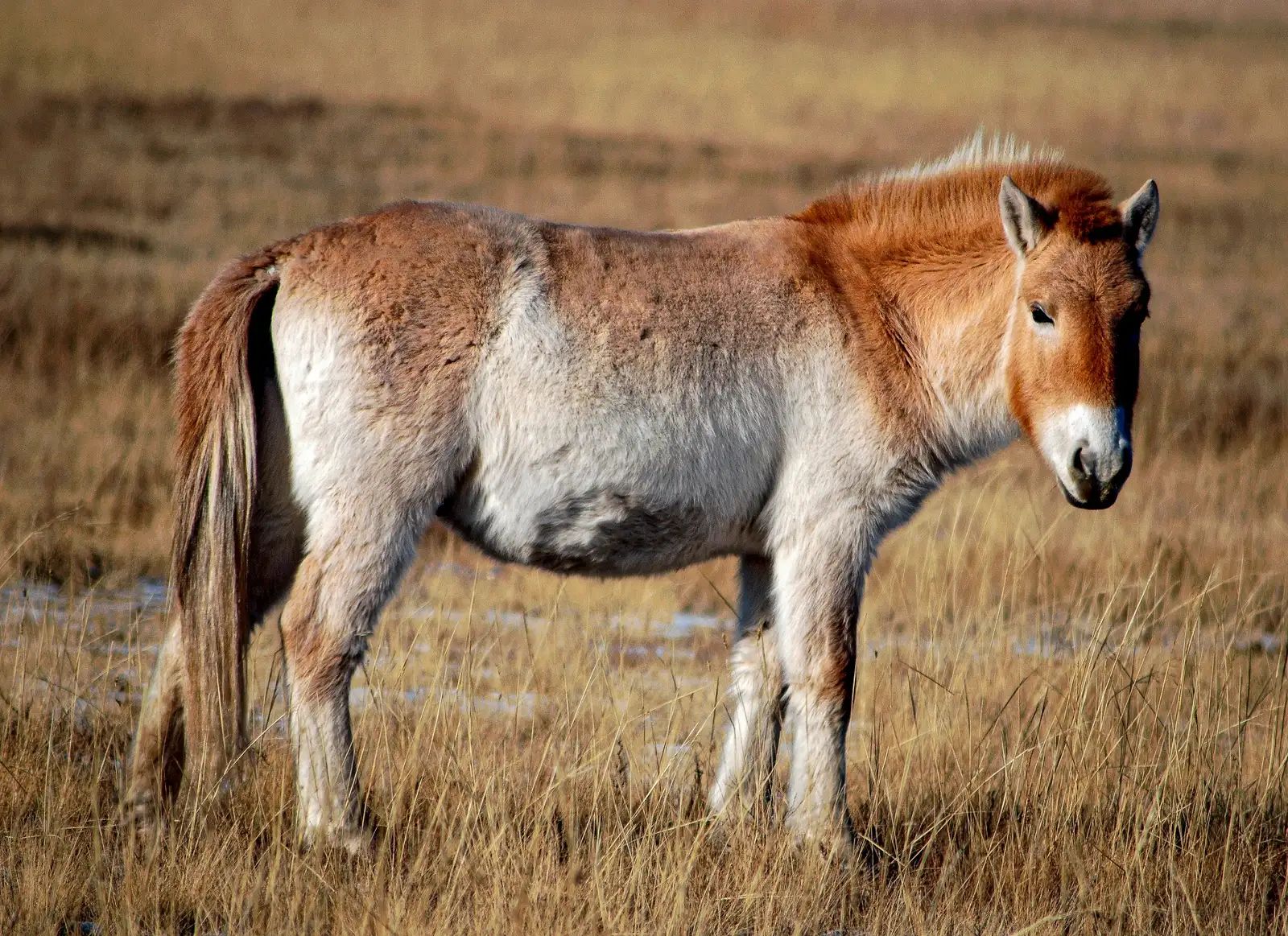
San Diego Zoo Wildlife Alliance scientists have brought two Przewalski’s horses into the world using genetic material frozen decades earlier. Kurt arrived in August 2020, followed by Ollie less than three years later. Both were carried by domestic horse surrogates after their species vanished from the wild in the 1960s. The work draws on samples stored at the alliance’s Frozen Zoo, one of the largest collections of its kind. ([1])
Two Foals From a 40-Year-Old Line
The births mark the first successful cloning of Przewalski’s horses from preserved cells of their own species. The donor DNA had remained viable in liquid nitrogen for roughly four decades. Researchers thawed the material, created embryos, and transferred them to surrogate mothers. The resulting foals carry the genetic profile of animals that disappeared from their native range long before either was born. This approach demonstrates how stored samples can support species recovery when wild populations no longer exist. The two horses now live at the San Diego Zoo, where staff monitor their health and development. Their arrival shows that long-term genetic storage can produce living animals rather than remain an abstract archive.
Inside the Frozen Zoo’s Daily Work
Staff collect and process tissue, blood, and reproductive cells from animals and plants across the globe. Samples enter tanks cooled to minus 196 degrees Celsius, a temperature that halts biological decay. The collection also includes a separate native plant gene bank and a broader tissue and DNA repository. Together these resources form the alliance’s biodiversity banking program. Katie Heineman, conservation program leader for biodiversity banking, describes the effort as “saving DNA for the future.” She notes that the work represents an optimistic act to conserve biodiversity for a time when threats to nature have been addressed. The program supports both immediate conservation needs and longer-term scientific study.
Practical Uses Beyond the Zoo
Biodiversity banking aids recovery of threatened species by supplying genetic material when wild numbers drop too low. It also helps maintain diversity within populations that remain small and fragmented. Researchers can draw on the samples to study disease resistance, reproductive biology, and evolutionary relationships. The urgency stems from ongoing habitat loss and species decline. Heineman and colleagues emphasize the need to expand similar facilities worldwide so more genetic material can be secured before it disappears. Without wider capacity, opportunities to restore or reinforce populations may be lost.
What Comes Next for Stored Genetics
– Expand sample collection from under-represented regions and species.
– Improve techniques for thawing and using older material.
– Partner with other institutions to share knowledge and capacity.
– Apply stored genetics to additional species facing similar pressures. These steps could turn isolated successes like Kurt and Ollie into routine tools for conservation. The horses themselves serve as living proof that material collected long ago can still produce healthy animals today. Their presence at the zoo offers visitors a direct connection to both past extinctions and present efforts to reverse them.