Every airport has that one person who glides through security like it’s nothing, while everyone else fumbles with belts, boarding passes, and half-empty water bottles. Security screeners say they can spot that person almost instantly, and it has nothing to do with expensive luggage or a confident stride.
The real tells are smaller and stranger than most people expect: the way someone empties their pockets, the exact words they use with an officer, even how they react to bad news at the gate. Here’s every habit screeners say gives away a true frequent flyer, counted down to the single biggest one.
#22 – Their Boarding Pass Is Already Glowing Before They Reach The Podium
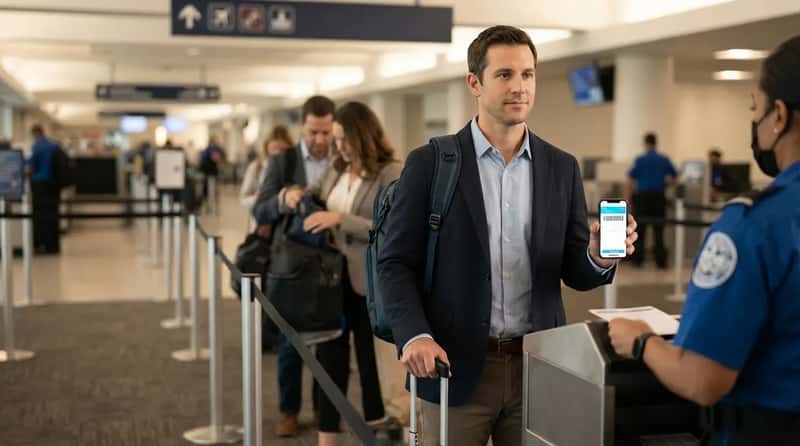
Genuine frequent flyers pull up their boarding pass and unlock their phone before they’re even three people back in line. There’s no fumbling through email, no “hold on, let me find it” moment that stalls everyone behind them. It’s a tiny habit, but it tells screeners everything they need to know in half a second.
Screeners notice this instantly because it’s rare. Most delays at the identification podium come from people searching for documents they should have had ready two minutes earlier. Frequent flyers have simply eliminated that step from their routine entirely, and it shows the moment they step up.
#21 – They Stay Polite But Never Chatty With The Officer
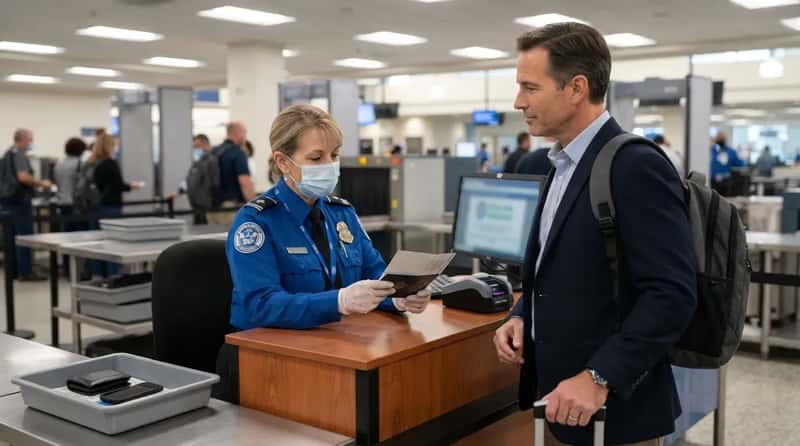
It sounds backwards, but being overly friendly with a screener can actually work against you. Overly friendly passengers draw an officer’s eye, since there’s rarely a real need for small talk at a security checkpoint. Being too chatty can even come across as an attempt to disarm the person checking your ID.
Real frequent flyers have learned this the hard way, usually after one too many awkward secondary screenings. Polite but neutral is exactly the tone experienced travelers strike without even thinking about it. No jokes, no oversharing, no charm offensive – just a nod and a straight face.
#20 – Their ID Matches Their Boarding Pass Down To The Letter
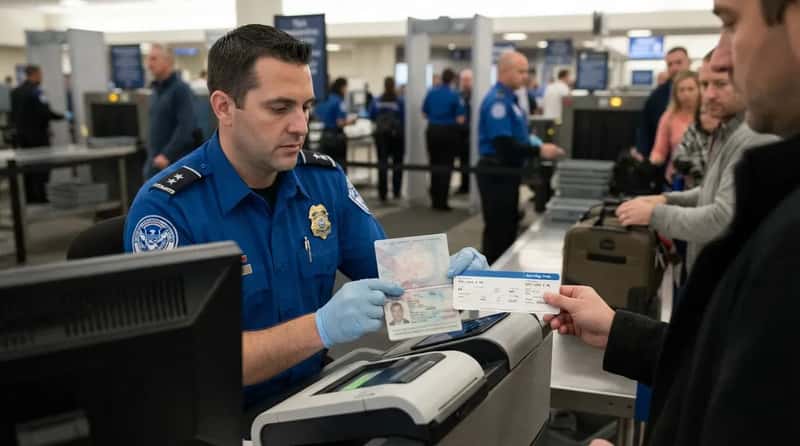
One of the first things officers check at any checkpoint is whether your ID matches your boarding pass, right down to the letter. When the details don’t align, officers may pull a passenger aside for questions that eat up precious minutes. Frequent flyers know this cold, because they’ve watched it happen to someone else in line.
They double-check name spelling, middle initials, and birthdates against every reservation before they even leave the house. If they’ve recently changed their name, they make sure every booking matches the legal ID exactly before arriving at the airport. It’s a five-second check that saves a twenty-minute headache.
#19 – They Never Weave Between Security Lanes
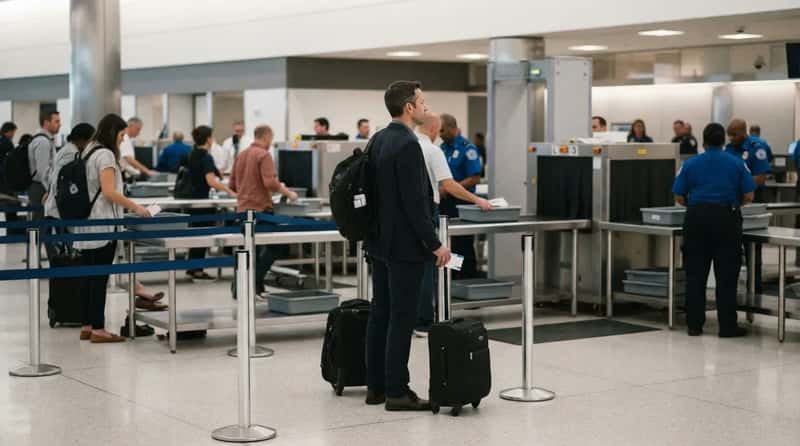
Jumping lanes to shave off thirty seconds feels harmless enough. To a trained screener, it reads completely differently. Weaving in and out of security lines can quietly flag someone for extra attention, since it can look like an attempt to dodge a particular line or officer.
Experienced travelers pick a lane and stay in it, even when the neighboring line looks faster. They’d rather lose sixty seconds than get pulled into a conversation about their motives. It’s a small discipline most casual flyers never bother developing.
#18 – Their Pockets Are Empty Before They Reach The Bin
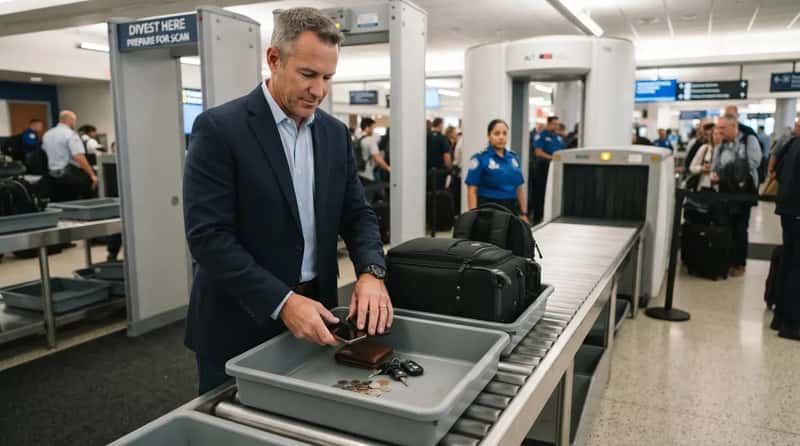
Watch a genuine frequent flyer approach the checkpoint and you’ll notice something right away: their pockets are already empty. They dump keys, coins, and phones into their bag or jacket before they’re even in line, not after an officer tells them to.
This isn’t just tidiness. Items left in pockets often trigger alarms during body scans, leading to pat-downs and extra screening that eat up everyone’s time. One overlooked coin can turn a two-second scan into a two-minute ordeal.
#17 – They Dress For The Scanner, Not For Comfort
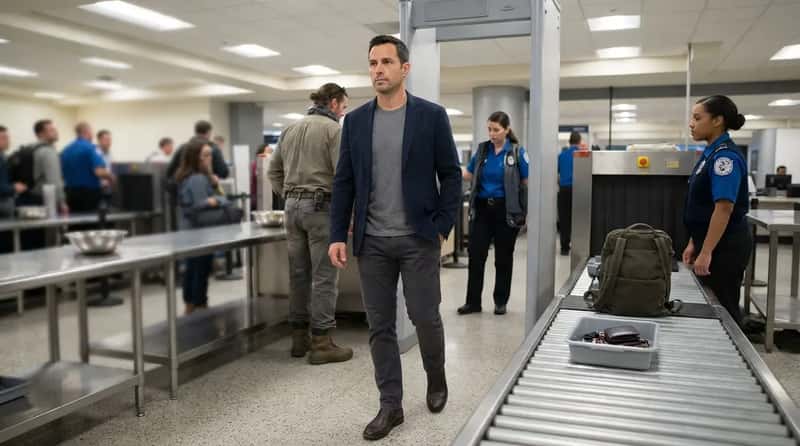
Belts with big buckles, boots with metal shanks, jackets full of zippers – casual travelers wear whatever’s comfortable and pay for it at the checkpoint. Slip-on shoes, no belt, and pockets already emptied into a bag – experienced travelers plan their outfit around the scanner before they even think about comfort at 30,000 feet.
They also know exactly which pocket holds their ID and which holds their phone, so there’s no patting themselves down under pressure. It’s not fashion, it’s logistics. The goal is a checkpoint that feels routine instead of an obstacle course.
Fast Facts
- Metal belt buckles almost always trigger a secondary wand check
- Boots with metal shanks can read as a solid block on the scanner
- Zip-up jackets often force a “please take that off” moment
- Slip-on shoes and beltless outfits typically clear the scanner without a beep
#16 – Their Carry-On Actually Fits The Sizer
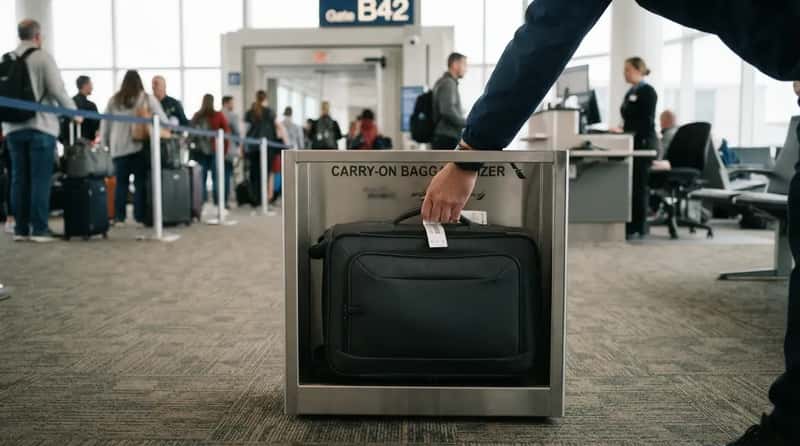
Nothing outs a rookie faster than a bag that doesn’t fit the metal sizer cage at the gate. Rolling a bag up only to have it rejected in front of a full boarding line is one of the most avoidable embarrassments in air travel, yet it happens constantly.
Frequent flyers measure their carry-on against airline specs before they ever leave the house, because they’ve been burned once and refuse to repeat it. A rejected bag at the jet bridge means a mandatory checked-bag fee and a delayed boarding process for everyone standing behind them.
#15 – Their Devices Are Spaced Out, Not Tangled Together
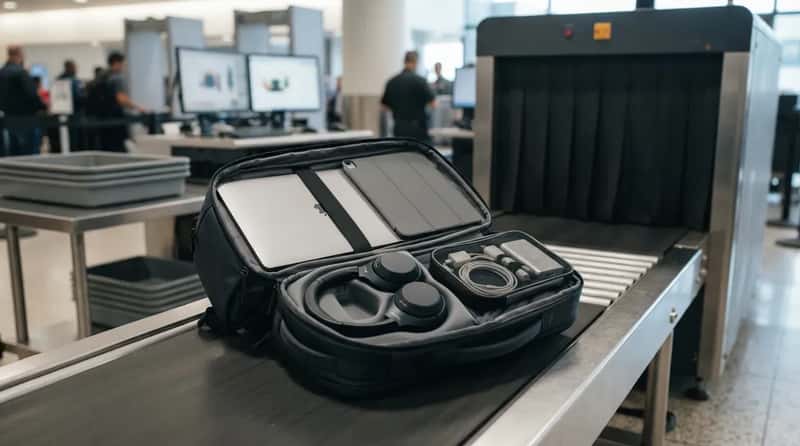
Tossing a laptop, tablet, headphones, and charger cables into one messy pile might feel efficient. Screeners see it as the opposite. Officers need a clean visual on what’s inside a bag, and a tangle of devices makes that much harder to read from a single scan.
Genuine frequent flyers separate their electronics into distinct pouches or compartments long before they reach the X-ray belt. A single tangled mess of wires is one of the most common reasons a bag gets pulled for a manual search. It’s an easy fix most travelers never bother making.
#14 – They Announce Medical Devices Before The Beep, Not After
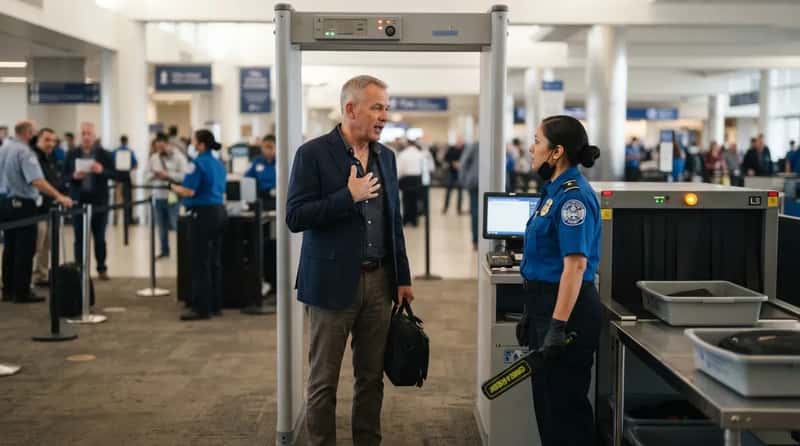
A pacemaker, a metal implant, or a bone growth stimulator will set off a scanner every single time, and screeners already know it. Travelers are asked to inform the officer of any metal implants, stimulators, pacemakers, or defibrillators before they step through.
People who fly constantly say it out loud before they ever approach the machine, not after the beep goes off. That one sentence turns a potentially awkward secondary screening into a thirty-second formality instead of a five-minute delay.
#13 – They Don’t Hesitate To Ask For Private Screening
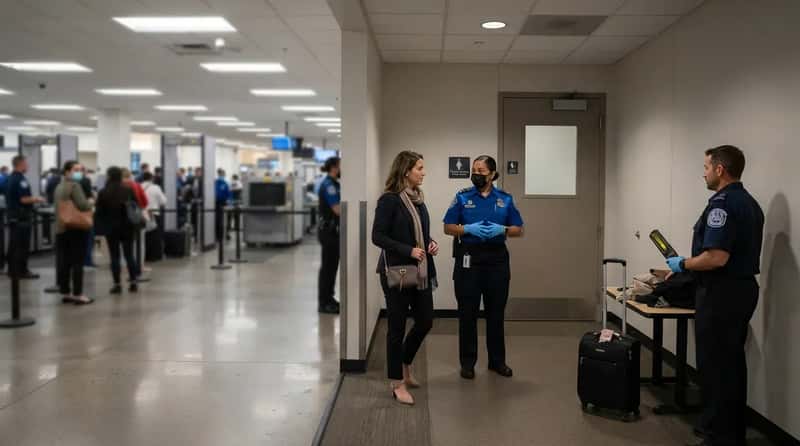
Most travelers assume a pat-down has to happen in front of a packed security line. It doesn’t, and frequent flyers know it. A public pat-down isn’t the only option – travelers can request private screening with a companion of their choice and a same-gender officer.
If a personal search is required, passengers can choose to stay in public view or move somewhere private instead – it’s entirely their call. Casual flyers rarely realize this option even exists, which is exactly why it separates the pros from everyone else.
#12 – They Stopped Reaching For Their Shoes Months Ago
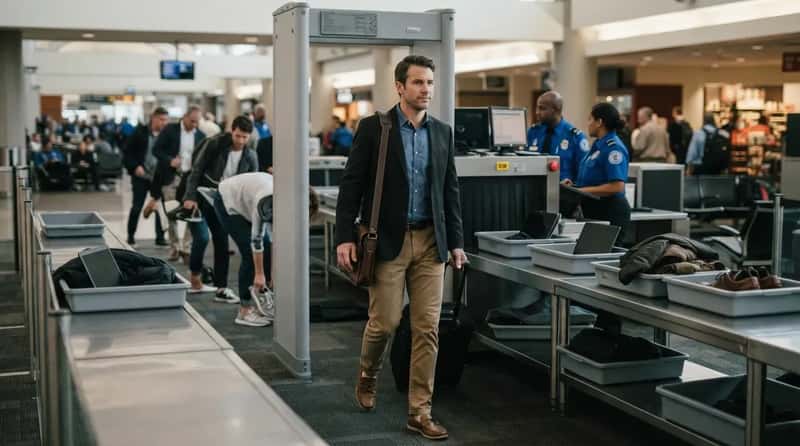
Old habits die hard, but frequent flyers adapted fast when the rules changed. TSA eliminated the shoe-removal requirement nationwide in July 2025, yet plenty of travelers are still bending down out of pure muscle memory months later.
Plenty of travelers are still doing it anyway, simply because nobody told them to stop. Genuine road warriors clocked the change immediately, and walking through without breaking stride is now one of the clearest giveaways of someone who flies constantly.
#11 – They Stack TSA PreCheck And CLEAR Together
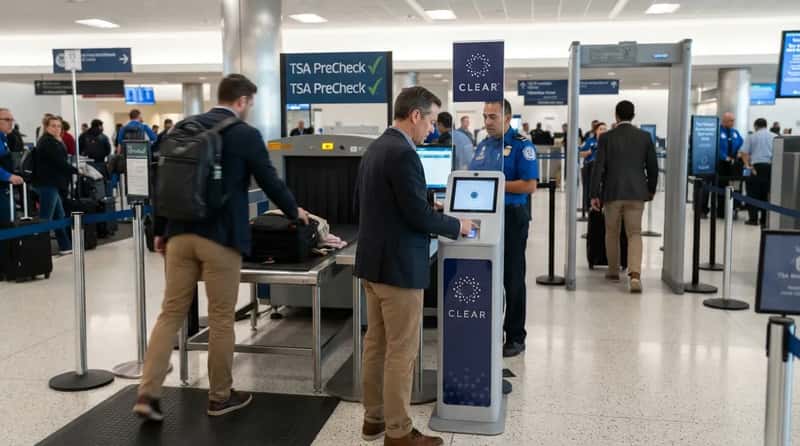
Casual travelers pick one program, if any. Frequent flyers combine two. Stacking CLEAR Plus with TSA PreCheck actually works because CLEAR skips the ID line while PreCheck speeds up the physical screening.
Together, the combination can save 20 to 40 minutes at a busy airport – nearly a full boarding window on travel days when every minute counts. Screeners notice these travelers moving through two separate express lanes without a moment of confusion about where to go.
Quick Compare
- CLEAR: skips the ID-check line using fingerprint or eye verification
- PreCheck: speeds up physical screening – no shoes, belt, or laptop removal
- Stacked together: can save 20 to 40 minutes at a busy airport
- Used alone: each program only solves half of the checkpoint bottleneck
#10 – Their Known Traveler Number Is Saved Everywhere
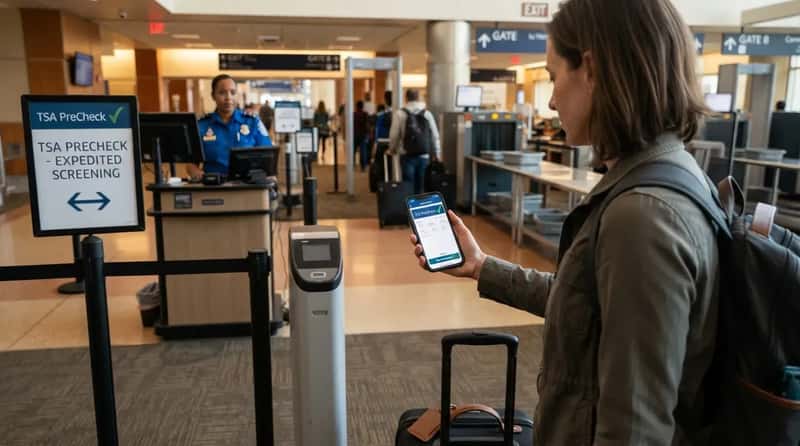
Nothing signals a rookie faster than a boarding pass without the PreCheck logo, despite the traveler swearing they signed up years ago. Once approved, travelers receive a Known Traveler Number that has to be saved to their airline profile or entered into every reservation.
Genuine frequent flyers save that number to every airline account they own, not just their primary carrier. One missing digit means losing the fast lane entirely on that trip, and they’ve learned to never let that happen twice.
#9 – They Time Their Arrival Around A Very Specific Statistic
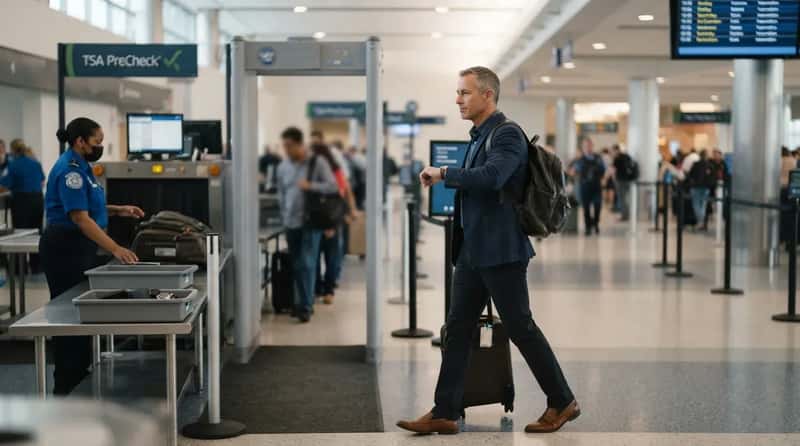
Casual travelers guess how early to arrive. Frequent flyers calculate it. With PreCheck, travelers skip removing shoes, belts, and laptops, and TSA reports that about 99% of participants wait less than 10 minutes.
That single statistic changes how people plan their whole morning. They arrive precisely when the math tells them to, not a minute earlier out of anxiety. It’s a quietly confident habit that only comes from flying enough times to trust the data over the nerves.
#8 – They Map Their Routes Around CLEAR Airports
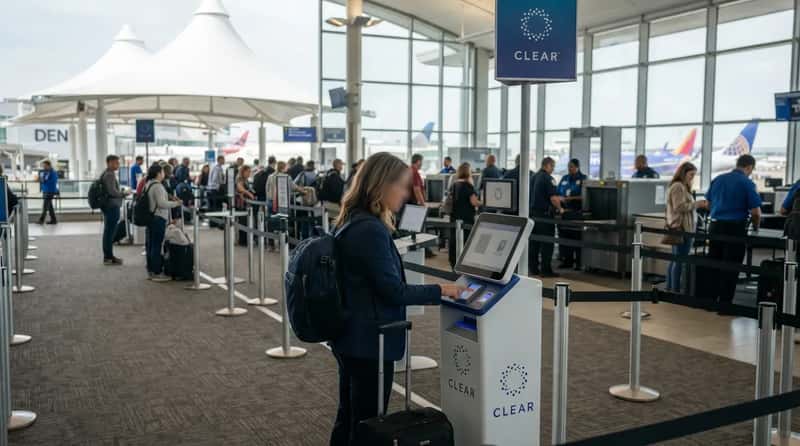
Not every airport offers the same shortcuts, and frequent flyers plan their connections accordingly. Over 50 U.S. airports offered CLEAR services as of 2025, and that number keeps climbing every year.
CLEAR can make a huge difference at major hubs like Atlanta, Denver, or Orlando, where security bottlenecks are notorious. Travelers who fly constantly quietly steer their connections through these specific airports whenever a choice exists – a habit almost nobody outside the frequent-flyer world thinks to develop.
#7 – They Don’t Panic When Pulled For Secondary Screening
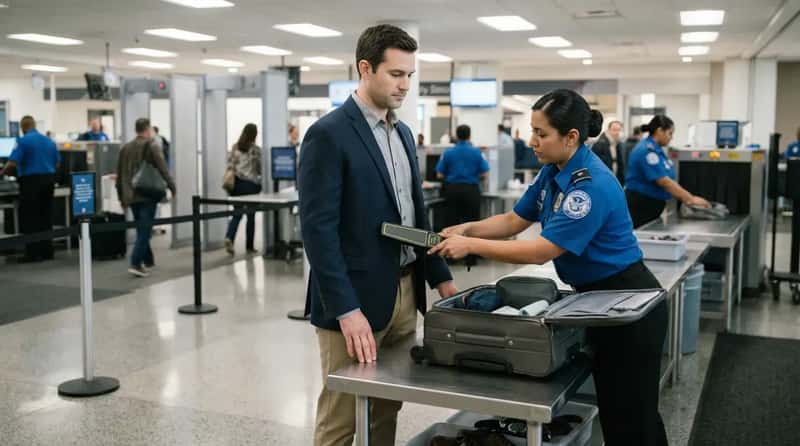
Getting pulled aside rattles casual travelers immediately. People who fly every week barely react. Being flagged for secondary screening does not automatically mean someone has done anything wrong.
Secondary screening – even when it’s triggered by nothing more than an involuntary reflex an officer noticed – simply helps rule out anyone involved in something nefarious, even the completely innocent. Genuine frequent flyers understand this instinctively, so they cooperate calmly instead of arguing or looking wounded.
#6 – They Track TSA’s Record-Breaking Travel Days And Avoid Them
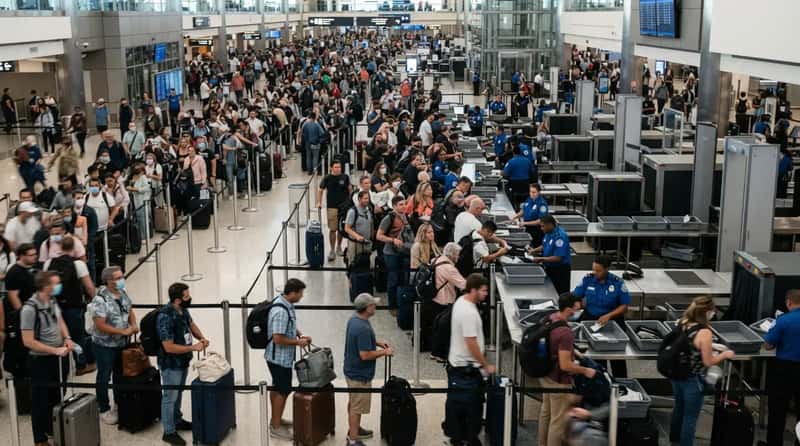
Some travelers stumble into the worst travel day of the year completely by accident. Frequent flyers check first. TSA screened 2,971,217 passengers on the Friday before Labor Day 2025 alone – the highest volume ever recorded for that specific day.
That single day ranked as the 15th busiest in the agency’s nearly 24-year history, right behind the record set on June 22, 2025, with 3.09 million screenings. Real road warriors quietly shift their travel dates by a single day whenever they can, just to dodge the surge.
#5 – They Stay Physically Calm, Even When They’re Not Feeling Calm
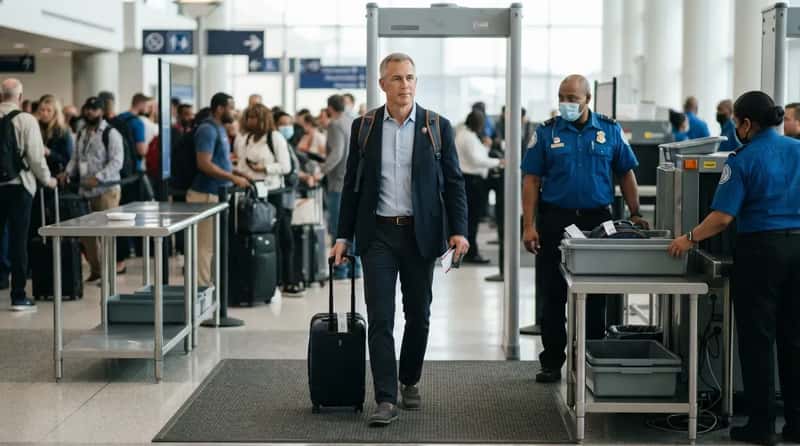
Screeners aren’t just watching bags, they’re watching bodies. Officers are trained to specifically note passengers who show high stress, deception, or fear at the checkpoint, and internal guidance even flags exaggerated yawning as a behavior worth monitoring.
Excessive nervousness, unusual body language, or visibly tense behavior can raise concerns and trigger additional screening. Genuine frequent flyers move at a steady, boring pace through every step of the process. Boring is exactly the goal.
#4 – They Keep Their Cool Even During Delays And Cancellations
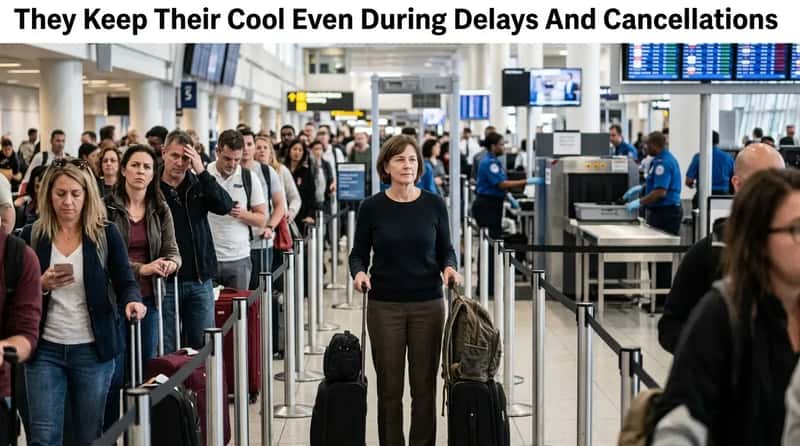
A canceled flight is stressful for anyone, but how a traveler reacts at the checkpoint says everything. Aggressive behavior is one of the fastest ways to raise a red flag, even when someone is completely justified in being upset about a delay.
People who fly constantly have learned this lesson through painful trial and error. A frustrated outburst at the checkpoint has never once made a delayed flight take off any sooner, so experienced travelers save their complaints for the airline app instead of the security line.
#3 – They Calculate The Real Dollar Value Of Every Program They Own

Casual travelers guess at whether PreCheck or CLEAR is “worth it.” Frequent flyers actually run the numbers. Current PreCheck members say they’d pay up to $120, with the heaviest flyers willing to spend up to $150, while non-members guess it costs around $87 – more than the real price.
TSA PreCheck runs $78 for five years, CLEAR Plus runs $189 a year, and Global Entry costs $100 for five years and includes PreCheck plus expedited customs. Genuine frequent flyers know these numbers by heart and pick the exact combination that matches how often they actually fly.
At a Glance
| Program | Cost | What You Get |
|---|---|---|
| TSA PreCheck | $78 / 5 years | Faster physical screening |
| Global Entry | $100 / 5 years | PreCheck + expedited customs |
| CLEAR Plus | $189 / year | Skips the ID-check line |
#2 – Ironically, They’re The Ones Most Likely To Miss A Flight
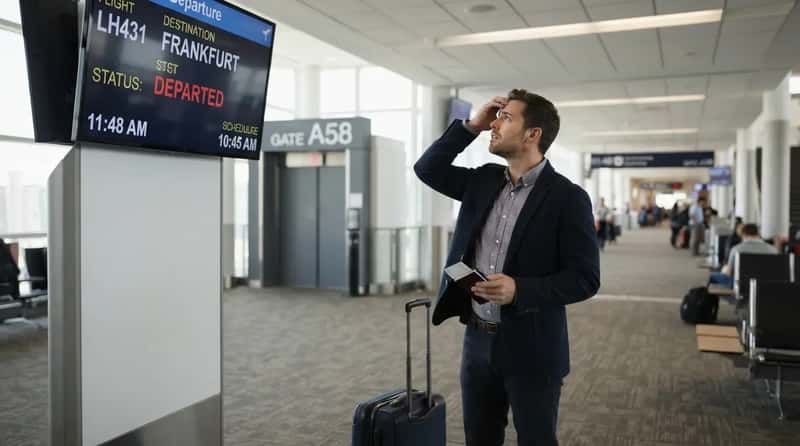
Here’s the twist nobody expects: flying constantly doesn’t make someone immune to cutting it too close. Only 3% of TSA PreCheck members overall have missed a flight due to security delays, but that number jumps to 18% among frequent flyers who travel multiple times a month.
Only 4% of non-PreCheck members have missed a flight this way, yet 11% of frequent non-PreCheck flyers have experienced it too. Confidence built from experience is exactly what makes frequent flyers push their arrival times dangerously tight – and it occasionally backfires in a very expensive way.
Fast Facts
- 3% of all PreCheck members have missed a flight due to security delays
- 18% of frequent-flying PreCheck members have missed one
- 4% of non-PreCheck members have missed a flight this way
- 11% of frequent non-PreCheck flyers have experienced the same
#1 – They’ve Stopped Treating The Airport Like An Emergency
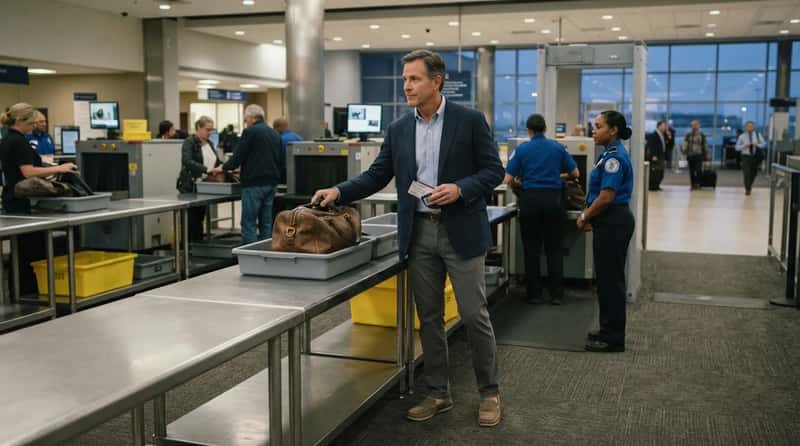
After everything else on this list, the biggest tell is almost invisible: genuine frequent flyers have simply stopped being afraid of the airport. They know the ID rules, the PreCheck math, the shoe policy, the private screening option, and the exact minute they need to walk through security.
That calm isn’t luck. It’s the accumulated result of every habit above, repeated hundreds of times until none of it feels like a decision anymore. Screeners say it’s the single easiest way to spot someone who’s done this a thousand times before – not their gear, not their outfit, just the total absence of panic.
None of these habits are secret tricks or insider hacks. They’re small, repeatable choices that pile up after enough trips through the checkpoint – from knowing exactly which pocket holds the ID to understanding that even seasoned flyers occasionally cut it too close.
Screeners don’t need to see a boarding zone number to know who flies constantly. The body language, the timing, and the quiet, boring confidence give it away every single time.