Most people assume a cruise ship is an almost silent floating resort – a gentle hum, maybe some waves, and that’s it. Engineers know otherwise: guest services fields at least one noise complaint almost every single voyage.
Nothing is actually wrong. But nobody explains what these sounds are, so every bang, moan, and groan starts to feel like the opening scene of a disaster movie. Here’s what the engineers really say – starting with the sound almost nobody notices until it’s 2 a.m.
#15 – The Never-Ending Low Hum Through the Floor
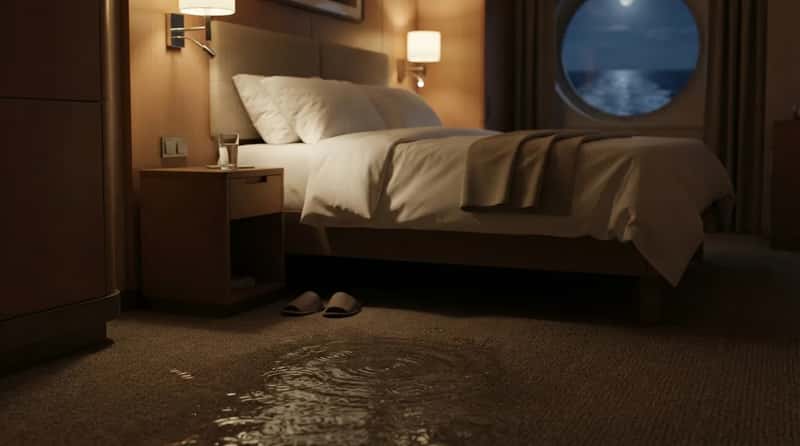
That low, persistent vibration under your mattress at 2 a.m. isn’t a problem. It’s the ship working exactly as designed.
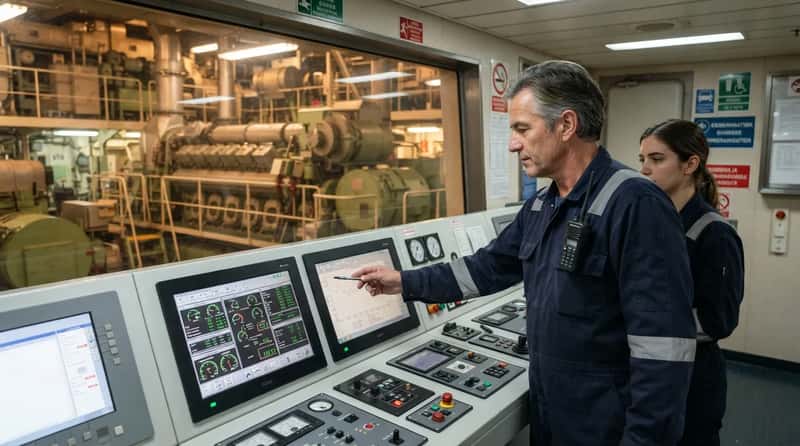
A modern cruise ship runs four to eight engines at once – main engines for propulsion, auxiliary engines for power. All of them run simultaneously, day and night, at sea.
Those engines generate constant vibration, and it has to go somewhere. It travels straight into the ship’s structure, including the floor under your feet.
The hum is actually structural – it travels through steel, not just air. Low-frequency noise moves through a ship’s frame far more efficiently than through open air, so insulating the engine room alone can’t stop it.
Main engines power propulsion; auxiliary engines run lights, AC, elevators, and kitchens. Both types typically run at the same time, even overnight while guests sleep.
Engineers hear this complaint constantly from lower-deck cabin guests. The answer is always the same: perfectly normal, never stopping, entirely by design.
Light sleepers who pick midship cabins on higher decks rarely notice it at all. But that’s nothing compared to what’s waiting at #14 – a sound like the ship is being torn apart.
#14 – The Thunderous Chain Crash at Anchor

It sounds like a catastrophic collision – a thunderous chain of metallic bangs followed by a deep rattle that shakes nearby cabins. That’s the anchor chain running out.
A large cruise ship’s anchor and chain can collectively weigh well over 100 tonnes. Individual links can weigh over 100 kg and slam through the hawsepipe at speed.
Most cruise ships carry two anchors, one on either side of the bow. A single chain link on a big vessel can weigh up to roughly 130 kg, with one shackle of chain measuring about 27 metres.
Crews typically pay out five to seven times the water depth in chain. Guests in forward cabins on lower decks hear this more intensely than almost anywhere else on the ship.
Fast Facts
- Anchor and chain combined: well over 100 tonnes on a large ship
- Heaviest chain links: up to roughly 130 kg each
- One standard shackle of chain: about 27 metres long
- Chain paid out at anchor: 5 to 7 times the water depth
It only happens in port, and it only lasts minutes – but guests who don’t recognize it have left reviews convinced the ship suffered a mechanical failure. Now you know: forward cabin means anchor noise, plain and simple.
But #13 is far subtler – and it keeps far more people awake across the whole voyage.
#13 – The Crackling Gravel Sound Under the Stern
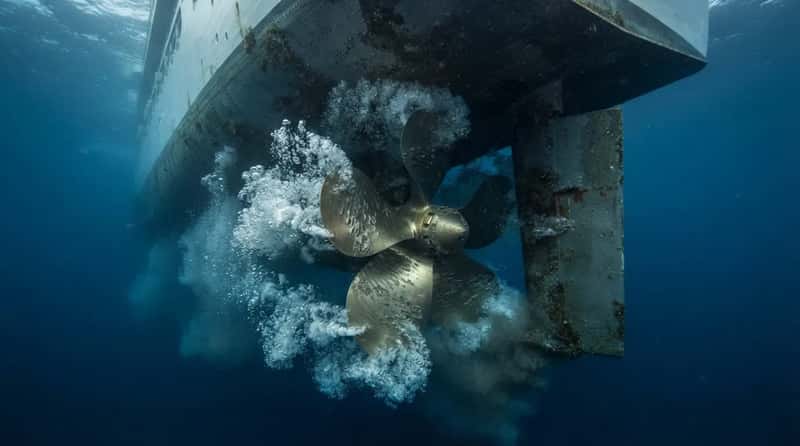
Guests in stern cabins sometimes describe it as gravel being thrown against the hull, or a prolonged crackling just below the waterline. It’s unsettling precisely because it’s hard to place.
What they’re hearing is propeller cavitation. If pressure around the propeller blades drops too low, the surrounding water vaporizes into bubbles.
As those bubbles collapse, they implode violently – producing a crackling sound like stones repeatedly striking the hull.
That structure-borne vibration travels through the hull and radiates as noise from decks and bulkheads in the accommodation areas above. Engineers consider this one of the most misunderstood noises on any ship.
Guests assume something is scraping the hull. Nothing is – it’s just physics doing what physics does under immense pressure.
You’ll never mishear it again. But #12 is the one that catches guests completely off guard in the middle of the night.
#12 – The Violent Underwater Bang (Water Hammer)
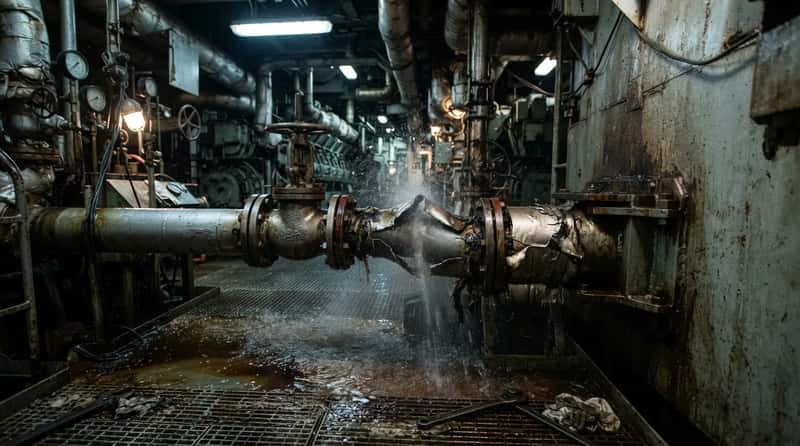
This one hits without warning: one loud, concussive bang – deep, metallic, and felt as much as heard. Guests have called it everything from an underwater explosion to a whale strike.
The crackling from #13 is cavitation. The bang is something different: water hammer.
Water hammer happens when a fast-moving column of liquid in a pipe is suddenly forced to stop or change direction. The kinetic energy has nowhere to go, so it slams into the pipe wall or valve like a battering ram.
A ship carries hundreds of kilometres of pipework for fuel, water, and waste – so the conditions for water hammer are constant. A single event can generate a pressure spike many times greater than normal operating pressure.
Quick Compare
- Cavitation (crackling): continuous, gravel-like, tied to propeller speed and location aft
- Water hammer (bang): a single sudden jolt, tied to pipe flow changes anywhere onboard
- Cause: cavitation comes from collapsing water bubbles; water hammer comes from stopped liquid momentum
Engineers isolate it with expansion joints and pressure relief systems. But on older ships, or when a hundred guests flush at once after a show, it still breaks through – harmless, jarring, and entirely physics.
And #11 is the noise that triggers the most panic calls to guest services, every single sailing.
#11 – The Deafening Roar at the Bow During Docking
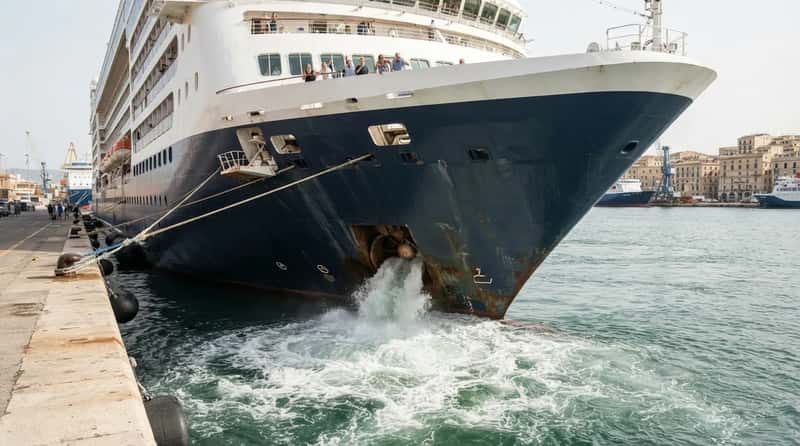
You’re docked, everything seems calm, and then: a sound like a jet engine firing up directly beneath the bow. Guests have bolted from their cabins convinced something catastrophic just happened.
That’s the bow thruster – a propeller mounted sideways in a tunnel through the hull, used to push the ship’s nose left or right during docking. Every hull produces an echo in a certain frequency range, and that structure-borne noise carries.
Even when the thruster room itself is heavily sound-dampened, those noise-reduction values don’t hold true for the accommodation areas above – or even cabins far away from it.
Forward cabins on lower decks bear the full brunt. Engineers know this well; booking teams rarely mention it.
Stay curious, because #10 sounds like the entire ship is cracking open at the seams.
#10 – The Hull Groaning and Creaking in Open Seas
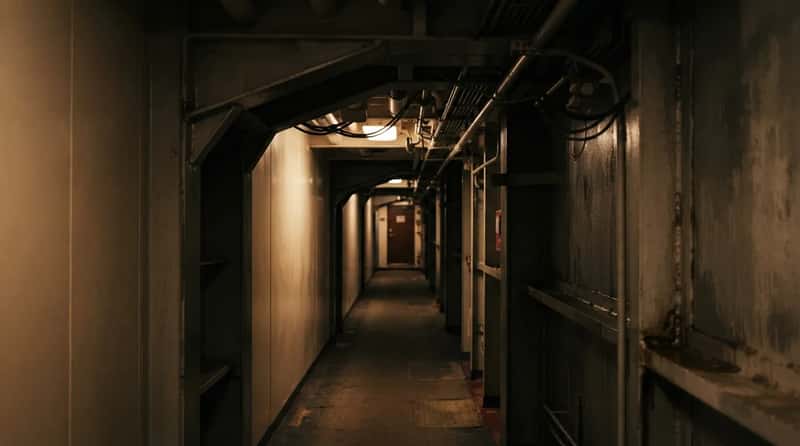
Somewhere between midnight and 3 a.m. in open water, the ship starts groaning – long, low, structural moans mixed with random metallic ticks. It sounds like the hull is giving way.
It isn’t. A cruise ship hull is steel plates welded together, but steel flexes.
In open ocean swells, the bow rises and falls, the stern twists slightly relative to the bow, and the whole structure bends – by design. That low-frequency vibration travels through the structure more than through the air, which is why insulating the engine room alone never stops it.
Naval architects actually design a calculated amount of flex into the hull – a completely rigid ship would crack under wave stress. What guests hear is that flex happening in real time: steel plates working against each other, frames shifting, welds transmitting load.
The groan is the ship doing its job. The silence would be the actual problem.
And #9 will surprise you, because it sounds biological, not mechanical.
#9 – The Rhythmic Thumping Pulse Felt Through the Bed
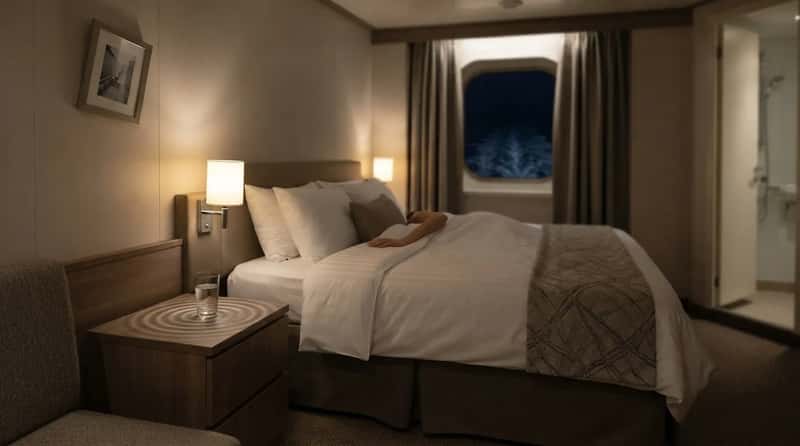
Thump. Thump. Thump. Steady as a heartbeat, deep as a bass drum.
Guests in aft cabins often describe it as someone rhythmically kicking the wall below them, or a massive washing machine one deck down. That’s the propeller blade passing frequency.
Every time a propeller blade sweeps past the ship’s hull appendages, it generates a pressure pulse. On a large ship with five or six blades turning at controlled RPM, that beat stays rhythmic and persistent – the faster the ship travels, the faster the beat.
The thumping is most intense directly above and around the propeller shafts, which puts aft cabins on lower decks squarely in the zone. Engineers call this the single most predictable noise complaint on any sailing.
It doesn’t go away, and it doesn’t vary much – it simply is. Guests who know what it is usually tune it out within 24 hours; guests who don’t can spend the whole cruise convinced something is wrong.
What’s at #8 surprises people because it sounds like it’s coming from inside the walls, not the sea.
#8 – The Hissing and Rushing Sound Inside the Cabin Walls
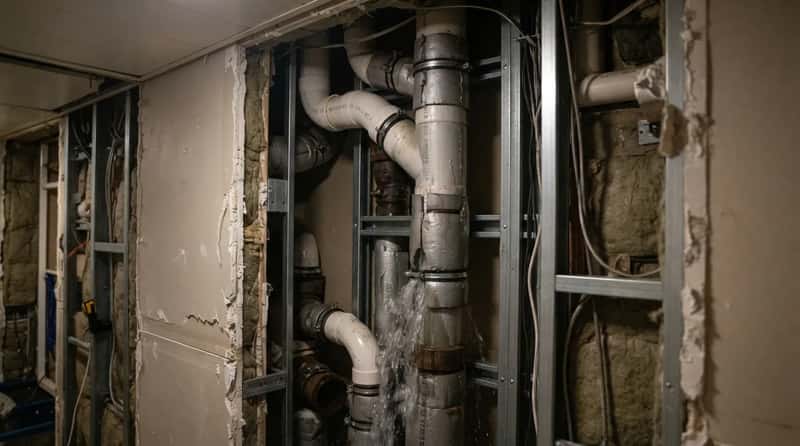
Guests hear it at night when the ship is quiet: a sustained hiss, or a sudden rushing gurgle, seemingly inside the wall itself. Some have assumed burst pipes.
One common review described it as “someone pouring water down the wall.” It’s actually the ship’s grey water and waste drainage system.
On a vessel carrying several thousand guests, those systems are massive and constantly active. Drainage stacks run vertically through the ship, and when toilets flush or showers drain above you, the water column drops fast.
The air displaced by that rushing water has to go somewhere – it vents audibly through pipes that share your wall cavity. A large cruise ship can process over a million gallons of wastewater per voyage.
The pipe network to handle that rivals a small city’s infrastructure. The wall hiss is almost always drainage – normal, constant, and never a leak.
But #7 is the noise that has genuinely convinced guests they’re hearing something supernatural.
#7 – The Mysterious Tapping or Knocking With No Source
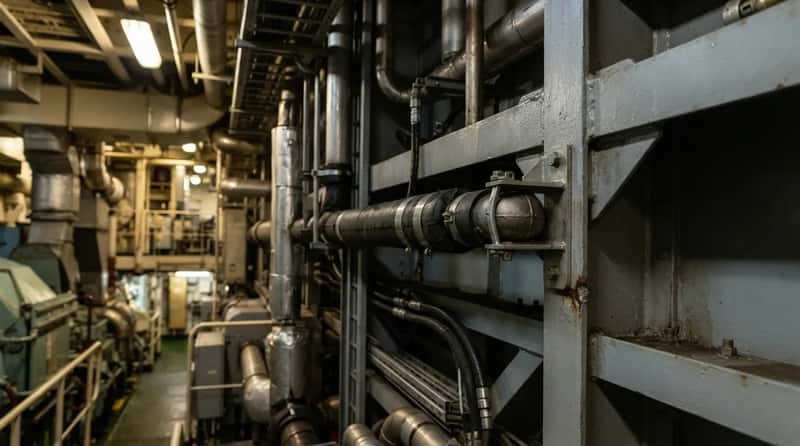
It’s random. It stops when you listen for it, then starts again the moment you fall asleep.
Guests have reported it as everything from someone knocking on the wall to, in a few cruise forums, something far more dramatic. The culprit is almost always thermal expansion.
Metal pipes, cable conduits, and structural bracings all expand and contract as temperatures change – from a hot sunny port to the cool open sea, or simply the ship’s internal heating and cooling cycles. HVAC equipment shifting, fuel and water moving in tanks, and the hull’s “oil canning” flex under wave stress can all cause it.
The tapping tends to intensify when the ship changes speed or course, because those moments shift the thermal and mechanical load across the whole structure at once. Engineers find this one almost comically simple to diagnose.
The random pattern that makes it feel eerie is actually the signature of irregular thermal cycling, not randomness at all. Once you know that, it’s far less unsettling.
And #6 is one most guests never expect to hear, because it seems like it should only happen to old ships.
#6 – The Loud Pop or Crack From the Superstructure
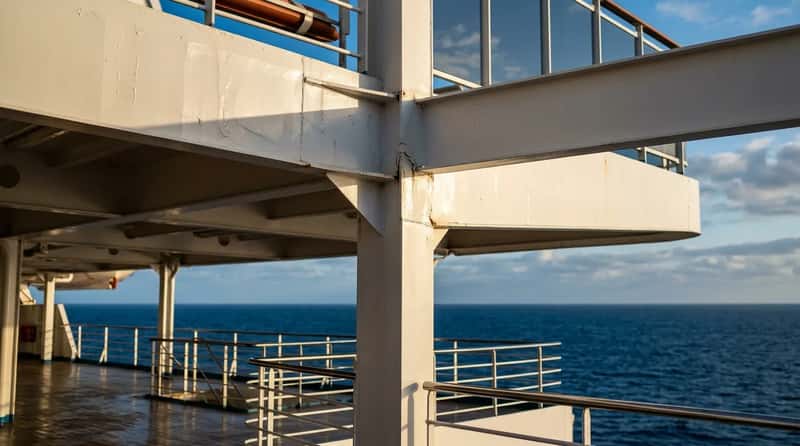
You’re on deck or in your cabin and there’s a sharp, loud crack – like a rifle shot – coming from the hull or superstructure. Then silence, then maybe another one 20 minutes later.
The ship has been docked for hours in a warm, sunny port, then gets underway again. Within the first hour at sea, passengers hear random, isolated pops and creaks from the superstructure.
That’s large steel sections re-equalizing their thermal stress as the ambient temperature drops and the ship flexes back into its underway shape. Steel expands at roughly 12 millimetres per 100 metres for every 10°C change in temperature – and a large ship is 300+ metres long.
That’s nearly 4 centimetres of expansion across the hull in a typical port-to-sea temperature swing. When that energy releases suddenly rather than gradually, it pops – loudly.
Worth Knowing
- Steel expands about 12 mm per 100 m for every 10°C temperature swing
- A 300+ metre ship can stretch nearly 4 cm between a warm port and the open sea
- Pops happen when that stored stress releases suddenly instead of gradually
- Most common within the first hour after leaving a hot, sunny port
Engineers hear it so often it’s background noise to them. To a first-time cruiser it sounds like structural failure; it’s actually the opposite – the ship settling into its natural state.
Get ready, because #5 is a noise that engineers say should reassure you, but almost never does.
#5 – The Foghorn Blast at 2 a.m.
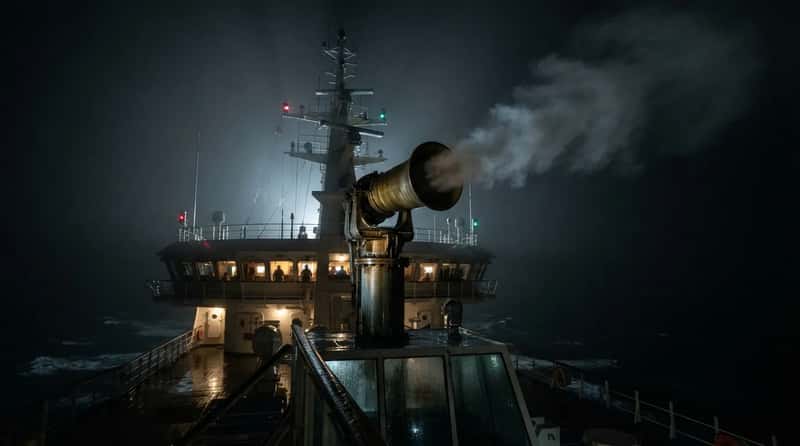
You’re deep asleep. Then a sound like the wrath of a minor deity erupts from somewhere above you – a horn blast so loud it physically vibrates the cabin.
Guests have described it as “the most terrifying thing I’ve ever heard while trying to sleep.” The foghorn is the law.
International maritime regulations require ships to sound their horn at specific intervals in reduced visibility – fog, heavy rain, or restricted sight – regardless of the time of day. The intervals are mandated by COLREGS, the International Regulations for Preventing Collisions at Sea.
A cruise ship horn operates at around 100–110 dB at distance, and the bridge horn sits directly above the ship, making it inescapable. Engineers have zero control over this one, and the captain has zero discretion over it either.
It isn’t a courtesy – it’s a legal requirement. The next time it wakes you up, the correct reaction is to go back to sleep knowing the bridge is doing exactly what it’s supposed to do.
But #4 will genuinely shock you, because this one isn’t coming from the engines at all.
#4 – The Ocean Rushing Past the Hull (Audible in Inside Cabins)
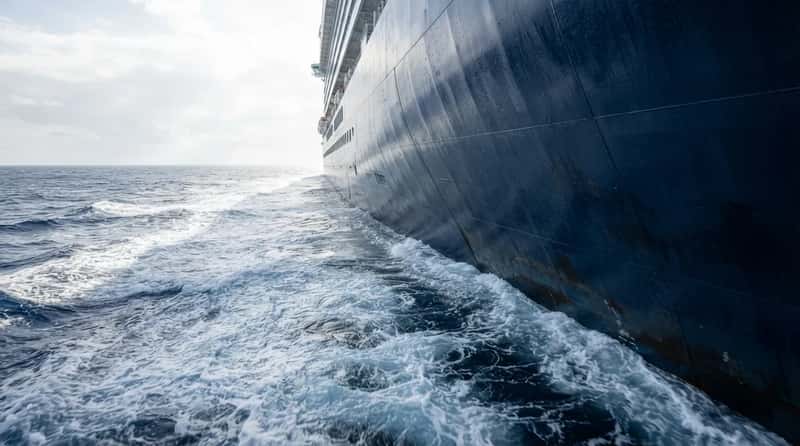
Guests in inside cabins on lower decks sometimes hear what sounds like a river just inches from their head. A sustained, rushing white noise, present only when the ship is moving at speed.
This is simply the bow wave and hull wake passing the length of the vessel. A ship at cruising speed pushes a huge volume of water, and that water travels along the hull plating rather than just moving away.
The hull plating acts like a drum skin, amplifying the sound straight into the cabin.
Engineers note that guests in inside cabins are often surprised the sea is audible at all – they expected total silence. Those who find it soothing often say it’s the best sleep aid on the ship.
Most guests who dislike it initially end up preferring it to a quiet cabin by night two. It’s arguably the most natural noise on this entire list – the ocean doing what oceans do, separated from you by a few centimetres of steel.
And #3 is the one noise on this list that engineers say genuinely needs your attention, even if it usually turns out to be nothing.
#3 – The Rolling Bang That Moves With the Ship’s Motion
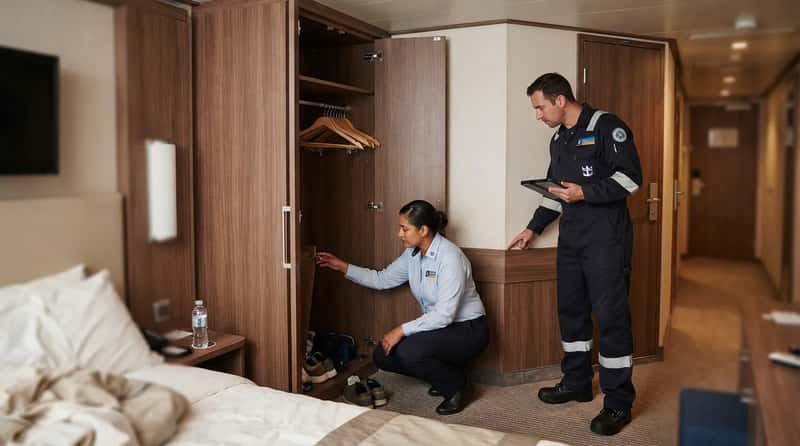
One Royal Caribbean passenger described it this way: “In my stateroom, I hear this loud banging noise that seems to roll with the side-to-side movement of the ship.” It’s one of the most reported cabin noise complaints – and it has a range of causes.
The most common: unsecured items in drawers or wardrobes rolling or shifting with the ship’s motion. The second most common: the cabin’s own furniture or door not fully latched, swinging with each roll.
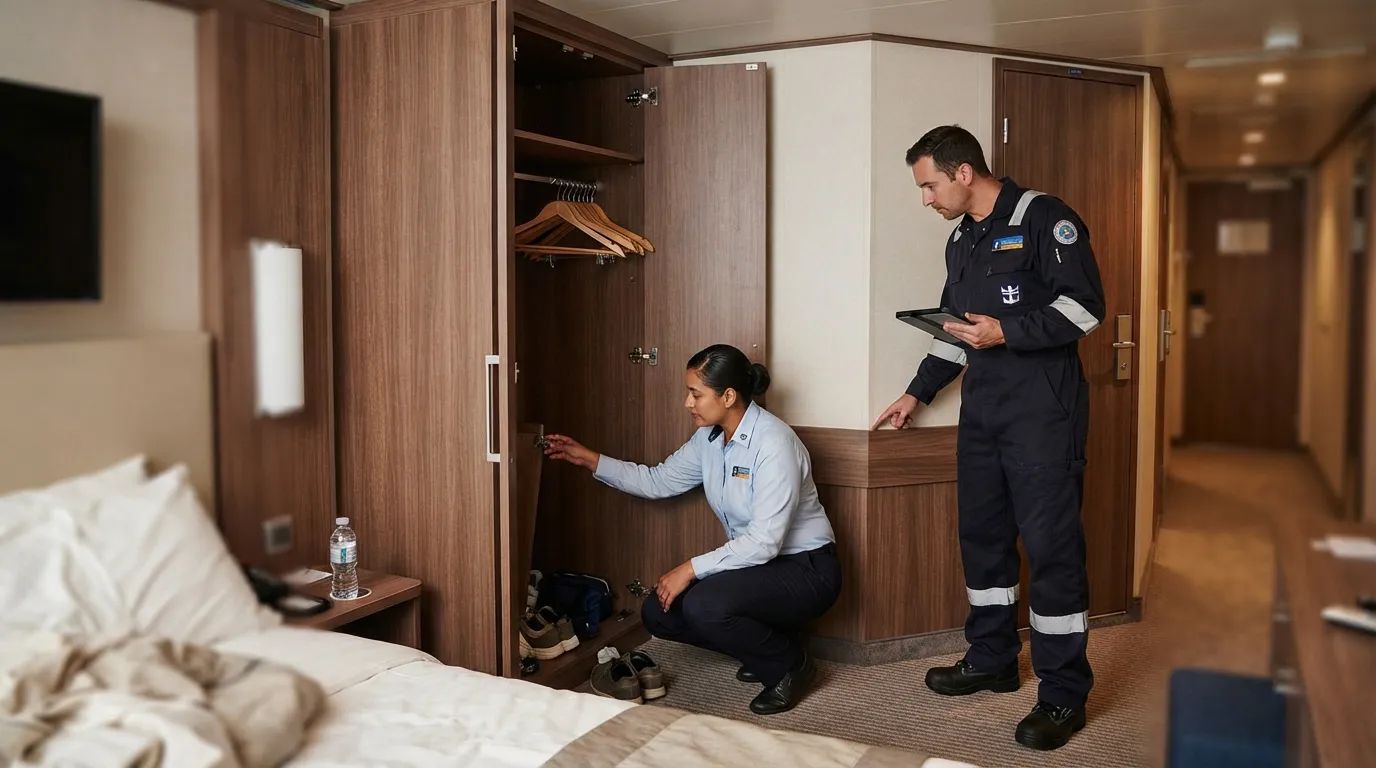
But the third cause is the one engineers take more seriously – loose fittings or panels within the cabin’s own structure, which can indicate maintenance issues worth reporting.
Engineers may investigate whether the sound is mechanical or coming from within the room itself. Unlike most noises on this list, a rolling bang you genuinely cannot source is worth telling guest services about.
Not because it’s dangerous, but because it’s fixable – and they’d rather fix it than have you lose three nights of sleep over a loose bracket. The #2 spot belongs to a noise so counterintuitive that even experienced cruisers get it wrong every time.
#2 – The HVAC System That Sounds Like Wind – or Breathing
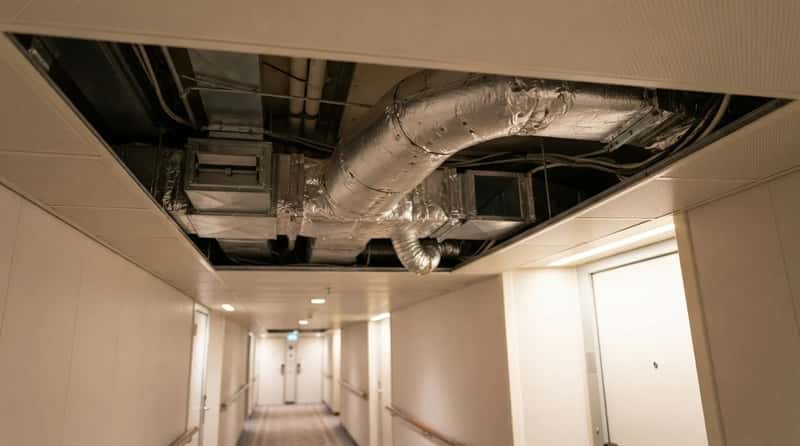
It starts gently – a faint rushing, almost like wind through a narrow gap. Then it builds, fades, and builds again, rhythmic enough to seem almost biological.
Guests have described it as everything from “breathing” to “someone running a hair dryer two rooms down.” That’s the ship’s HVAC system cycling through pressure equalization.
Engineers keep the engine room well-insulated and add sound-reduction technology throughout, but HVAC ducting runs through the entire ship. The moment a zone’s dampers open or close, airflow redistributes audibly through shared ducts.
A large cruise ship’s HVAC system moves millions of cubic feet of air per hour across thousands of spaces. Pressure shifts when demand changes – a theatre fills up, a restaurant empties, a deck seals for weather – and that shift moves through the ducts like a breath.
It’s most noticeable at night, when ambient noise drops. It is never a problem – it’s simply the ship breathing.
And #1? Engineers say this is the noise guests are most embarrassed to ask about, because once they hear the answer, they feel they should have known all along.
#1 – The Stabiliser Deployment Thud
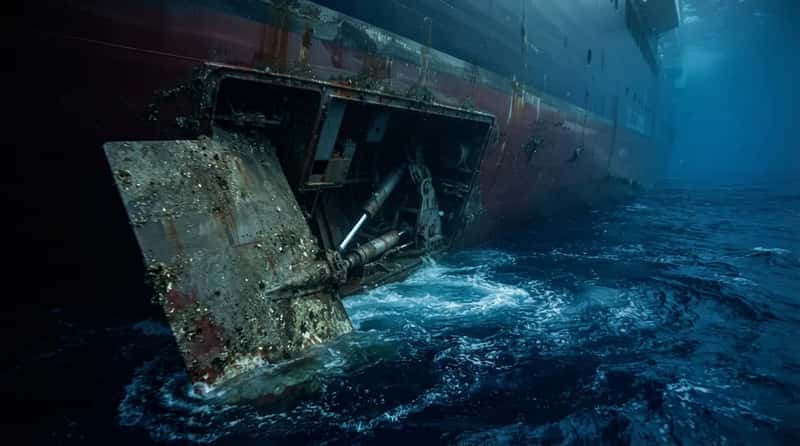
Somewhere in your first night at sea, there’s a deep, resonant thud – felt more than heard – followed by a subtle change in the ship’s rolling motion. Then another thud.
Some guests assume it’s cargo shifting. Some assume a collision. Some simply lie awake convinced no explanation will satisfy them.
Fin stabilisers are far more efficient at higher speeds and lose effectiveness below a minimum velocity. So as the ship accelerates out of port into open water, the stabiliser fins extend from the hull under hydraulic pressure – and that deployment sends a thud through the structure.
Every time the fins adjust angle to counteract an incoming swell, there’s a micro-thud. This is the one noise that actually signals the ship actively protecting your comfort – the stabilisers deploying mean the system is working to reduce roll and keep your dinner on the table.
Why It Stands Out
- Fin stabilisers only work well above roughly 6 to 10 knots
- They extend automatically as the ship picks up speed leaving port
- Fins continuously adjust angle to counter incoming swells
- It’s the only sound on this list that means the ship is actively working for your comfort
Guests who understand what it is almost universally switch from alarmed to reassured in seconds. It’s the most misread sound on any ship, and the most welcome, once you know what it means.
The Bottom Line
Every noise on a cruise ship has an engineering reason – none of them signal disaster. Most of what guests hear is the residue of enormous mechanical energy, filtering up through insulation, steel, and water.
The anchor chain crashes, the propeller cavitates, the stabilisers thud, and the foghorn sounds because the law says it must. Engineers who sail for a living almost never book a cabin at random.
They pick location first, before price or view, because it silences most noise sources before they ever start – getting as far as possible from the bow thrusters, anchor chain, propellers, and engine room. Go midship, go higher, sleep better.
Have you heard a ship noise that baffled you on board? Drop it in the comments – someone here almost certainly knows exactly what it was.