Nobody had “global aviation meltdown” at the top of their 2026 travel worries list. Most of us were already navigating tariff-fueled price hikes and pricier hotels. Then, on February 28, 2026, the world shifted again – a joint U.S.-Israel military strike on Iran ignited one of the most disruptive geopolitical events for travelers in years. Suddenly, a holiday that seemed locked in felt dangerously uncertain.
If you have a trip booked – or you’re thinking about booking one – this guide is exactly what you need. From flight cancellations to insurance gaps to where it’s still genuinely safe to go, we break it all down clearly. Let’s dive in.
1. What Actually Happened – And Why Travelers Should Care
On February 28, 2026, a major and active military conflict unfolded in the Middle East following joint U.S.-Israeli strikes into Iran, aimed at regime change and the overthrow of the Iranian government, resulting in the death of Iran’s Supreme Leader, Ayatollah Ali Khamenei. This wasn’t a localized skirmish. The ripple effects spread fast and wide.
Iran’s counterattacks targeted not just Israel, but also the United Arab Emirates, Qatar, Kuwait, Bahrain, Saudi Arabia, Oman, Jordan, and Lebanon, among others. Think of it like a stone thrown into a lake – the shockwave hit every country in the region almost simultaneously. For travelers, this translated immediately into chaos at airports.
The Iran war is the most severe military conflict this year, but it’s one of a series of obstacles that have threatened travel demand and profits for hotels, airlines and cruise companies, as well as local economies that depend heavily on travel. Honestly, the scale of this thing caught almost everyone off guard.
2. The Flight Cancellation Numbers Are Staggering
According to the flight-tracking service Cirium, more than 12,000 flights to and from destinations throughout the Middle East – including Israel, the UAE, Saudi Arabia, Kuwait, Oman, Bahrain, Iraq, and Iran – had been canceled as of early March. That number kept climbing from there.
The war has had massive operational impacts on airlines in the region, with nearly 50,000 flights canceled since February 28, according to aviation analytics firm Cirium. That is an almost incomprehensible figure. To put it in perspective, think of every single seat on every flight for days on end – simply gone.
As of March 2026, over 1 million passengers have been stranded due to airspace closures in Qatar and the UAE. These were real people. Families on holiday. Business travelers. People trying to get home. Many of them stuck, with nowhere to go.
3. Dubai and Doha: The World’s Busiest Hubs Have Been Hit Hard

Dubai International Airport saw a record 95.2 million passengers in 2025. It is, in short, the beating heart of global transit. So when it closed, the world felt it immediately.
The Dubai Airport was damaged by drone debris in the counter-strikes, leading it to be closed for three days in a row, stranding hundreds of thousands of passengers. Even luxury wasn’t safe. Two luxury hotels in Dubai were reportedly hit by retaliatory strikes, including a fire at Fairmont The Palm, injuring four people.
Hamad International Airport in Doha suspended all flights from March 1 to 6 and is still operating at a fraction of its usual traffic. These two airports alone handle connections for travelers from every continent. Their disruption cascaded through virtually every international itinerary that passed through the Gulf.
4. What This Means for Oil Prices and Your Airfares

Here’s where it gets personal for travelers who aren’t even going anywhere near the Middle East. Rising oil means rising jet fuel. And rising jet fuel almost always means higher ticket prices – eventually.
The conflict disrupted approximately 20% of global oil supplies transiting the Strait of Hormuz, causing prices on the Brent Crude oil market to rise from around $70 to over $110 per barrel within days. Ten days into the war, U.S. jet fuel prices were up roughly 45% on average, amounting to an extra $1.17 per gallon, according to the Argus U.S. jet fuel index.
A one-way trip to Quebec City from Newark on March 11 aboard Air Canada nearly tripled to $1,499 compared to a week ago, according to data from Google Flights. Flights from Los Angeles to Lima on LATAM Airlines rose to $2,125, compared to $499 in the same period. Those are not typos. Some routes have seen extraordinary price spikes in a matter of days.
Sharply elevated fuel prices caused by the Iran war have the potential to wipe out anticipated U.S. airline profits in 2026 and send airfares rising, while taking a particularly heavy toll on already weakened discount carriers. Budget airline fans, take note. The carriers with the thinnest margins face the hardest choices.
5. The $56 Billion Blow to Middle East Tourism
The tourism sector in the Middle East was supposed to be booming in 2026. Forecasts were optimistic, growth was expected. Then February 28 happened and everything changed.
Oxford Economics estimates inbound arrivals to the Middle East could decline between 11% and 27% year on year in 2026 due to the conflict, representing 23 to 38 million fewer international visitors and a loss of $34 billion to $56 billion in visitor spend. That is an almost incomprehensible wipeout for an industry that had only recently bounced back from the pandemic years.
The disruption is costing the tourism sector at least $600 million a day in lost international visitor spending, according to the World Travel and Tourism Council, which before the conflict had forecast travelers would spend $207 billion in the region in 2026. Six hundred million dollars. Per day. Let that sink in for a moment.
6. Government Travel Advisories – Who Is Telling You Not to Go

The State Department urged Americans to “DEPART NOW” from 14 countries in the Middle East, including the UAE, Saudi Arabia, Egypt, Jordan, Israel, Kuwait, Oman, and Qatar “using available commercial transportation, due to serious safety risks.” That kind of blanket departure order is rare. It signals genuine, serious concern.
The UK’s Foreign, Commonwealth and Development Office issued a string of advisories warning travelers about rising tensions, advising against all travel to Iran, Iraq, and Israel, and against all but essential travel to the UAE, Qatar, and Kuwait. Warnings were also issued for parts of Saudi Arabia, Lebanon, and Jordan.
Foreign offices warn that your travel insurance could be invalidated if you travel against their advice – meaning going to areas where they have issued a no-go warning currently covering Iran, Iraq, Israel, the UAE, Qatar, and Kuwait. If you do so, you are likely to be left without coverage for incidents, including medical emergencies and evacuations. That last point is critical, and many travelers don’t realize it until it’s too late.
7. The Uncomfortable Truth About Your Travel Insurance

I think a lot of people assume travel insurance is a magic safety net. In normal times, it mostly is. But war? That’s a different story entirely.
As the war in Iran grounds flights worldwide, hundreds of thousands of travelers scrambling to get home are discovering a harsh reality: their travel insurance won’t cover replacement flights or extended hotel stays. Standard policies have a war exclusion buried in the small print, and right now, it’s being triggered on a massive scale.
It’s important for travelers to note that standard travel insurance policies exclude cancellation coverage related to acts of war and military action. Cancel For Any Reason (CFAR) and Interruption For Any Reason (IFAR) coverage are the only types of travel insurance that can still protect you for situations excluded by your standard cancellation and interruption coverage. If you haven’t bought CFAR coverage yet, it may already be too late – policies taken out before a major event becomes widely known may still provide some protection, but once an event is considered a “known event,” insurers typically won’t cover new claims linked to it.
8. How Flight Routes and Connections Are Being Rerouted Globally
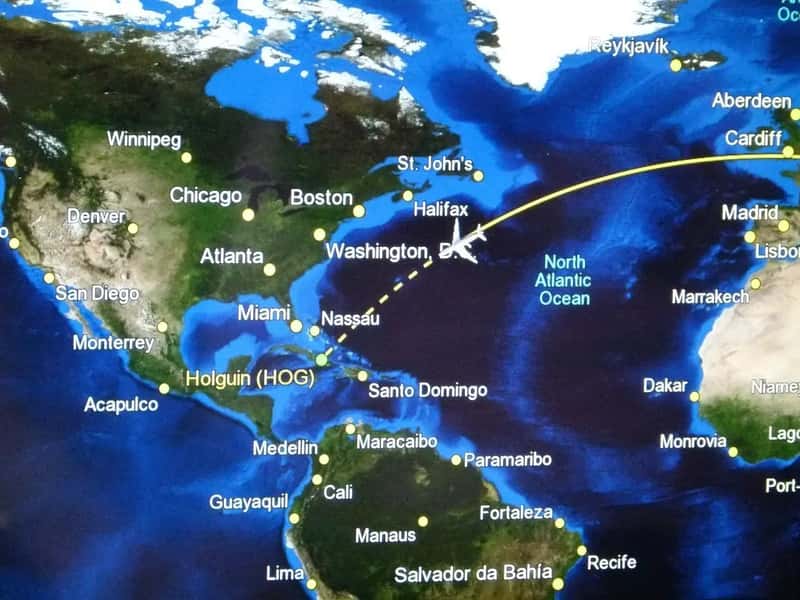
Even if you’re flying from, say, London to Tokyo or Sydney to Frankfurt, you may be feeling the effects of this conflict. That’s how interconnected the Middle East is to global aviation routing.
The Middle East is a major global transit hub, with its airports accounting for around 14% of global international transit activity – making knock-on impacts outside the region inevitable. Many flights from Asia and Africa, which often route through the Middle East, are also affected.
For those booking future flights from Europe to Asia, travel advisers are now routing passengers through places such as Bangkok and Hong Kong to avoid connecting in the Middle East. Think of it like a blocked highway – when the main road is shut, every other route gets congested. Expect longer flight times, more stopovers, and potentially higher prices as alternative routes fill up.
9. Which Destinations Are Still Considered Safe – And What to Book Instead
Let’s be real – most of the world is not in a conflict zone. Plenty of incredible destinations remain perfectly accessible and safe, and some travelers are now pivoting plans smartly.
For those hesitant about high-risk regions, many safe and enriching alternatives exist. European capitals, Mediterranean islands, East Asian cities, and Caribbean resorts offer excellent cultural and recreational experiences with low safety risks. Japan, Portugal, the Greek islands, Vietnam, Colombia – these are all seeing interest surge right now.
Some travel advisers say they’d currently go anywhere not subject to a travel advisory – and for those booking future flights from Europe to Asia, routing through Bangkok and Hong Kong instead of the Middle East is now a practical strategy. Flexibility is king right now. Book refundable fares where you can, and build contingency time into any itinerary.
10. So Should You Actually Book Travel Right Now?
Here is the question everyone is asking. The honest answer is: it depends entirely on where you’re going and how much flexibility you have. This is not the moment for rigid, non-refundable bookings to anywhere even adjacent to the region.
U.S. President Donald Trump has said that the military campaign in Iran could last for four or five weeks to achieve its aims, but has warned it could “go far longer than that.” Uncertainty over the conflict’s duration is the single biggest planning headache. Nobody knows when regional airspace fully reopens, or when oil prices calm down.
What goes for business travelers goes for leisure travelers too. The advice from risk analysts is to have a good think about where you’re going, why you’re going there, and where you need to go in that place – follow government advice and make sure you’re insured for the reasonable things that could go wrong. That is genuinely sound, practical guidance. If your destination isn’t under an advisory and your routing avoids the Gulf, there’s no reason to cancel your plans altogether. Just go in with eyes open, read the fine print on your insurance, and keep a backup plan.
The world has always been a place where a single event can scramble your best-laid plans. This one just happens to be bigger than most. What would you have done if you’d already booked a Dubai layover for next month? Tell us in the comments.